

Denmark
The southernmost and cosiest of the Nordic countries — home of Andersen, LEGO, hygge and New Nordic cooking. Copenhagen is a city of bicycles, canals, design and Michelin restaurants, where even the street hot dogs are a small work of art. Denmark is expensive, but it repays the traveller with free museums, superb architecture and a culture in which happiness is a way of life rather than a theory.
Where to go
#
Copenhagen
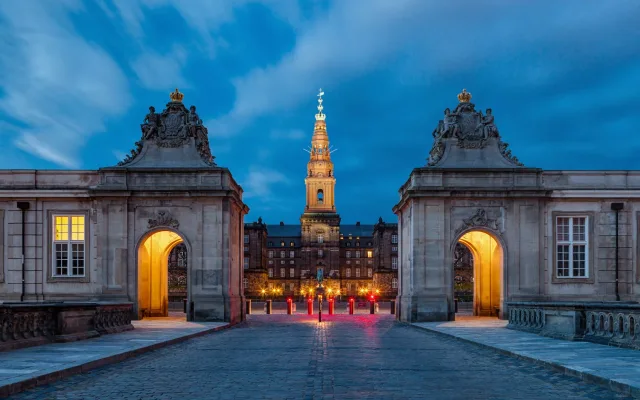
Copenhagen is the capital of Denmark, known for its canals, the Nyhavn waterfront, the Tivoli amusement park, and Kronborg Castle an hour up the coast.
Aarhus
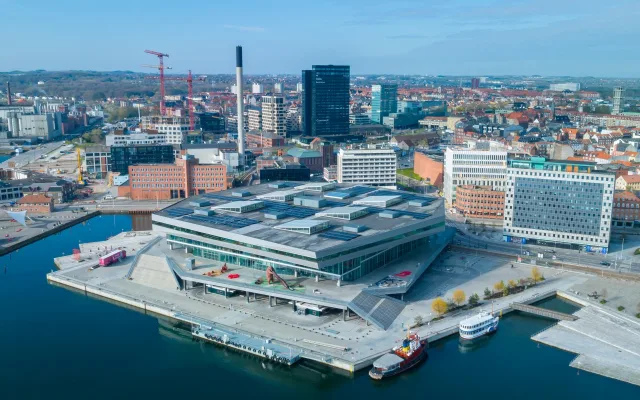
Aarhus is Denmark's second-largest city, known for the ARoS art museum and the open-air history museum Den Gamle By. The city also has a thriving youth culture.
Odense
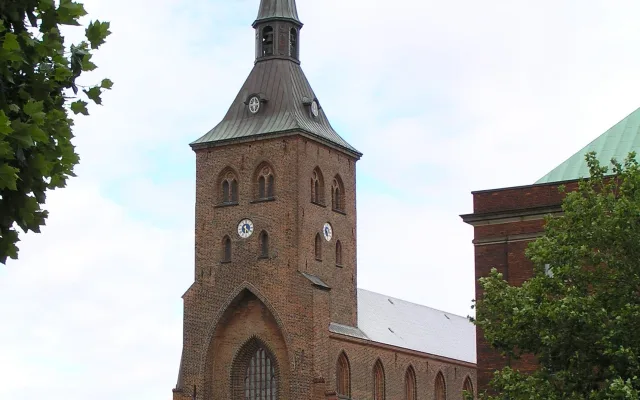
Odense is a city in Denmark, best known as the birthplace of Hans Christian Andersen. It is home to the storyteller's museum, the house where he grew up, and an annual festival dedicated to his fairy tales.
What to see
#Legoland in Billund: Where to go as a family, a park built from eighty million bricks, with the Minifigure Speedway coaster opening in 2026.
Nyhavn: The thing to see in the capital, with its coloured facades and old ships. Come at dawn if you want a photograph without several hundred people in it.
Christiansborg Tower: The free viewing platform gives the best panorama in the city, beating several paid alternatives on both height and the quality of the all-round view.
Kastellet: This star-shaped citadel gets overlooked, though walking its green ramparts past the windmill is one of the most atmospheric hours in Copenhagen.
Louisiana Museum: Worth a trip north of the capital for modern architecture and art set into a wild stretch of coastline. Allow most of a day.
Christiania: A long-running social experiment and art quarter, and the place to see the alternative side of the city along with some genuinely odd buildings.
Tivoli Gardens: One of the oldest amusement parks in the world, worth visiting for the permanent-festival atmosphere even if you never board a ride.
Prices
#Currency: Denmark uses the Danish krone, pegged tightly to the euro, but shop prices are always in kroner only. Do not assume euros will be accepted.
Cards: Visa, Mastercard, Apple Pay and Google Pay work in the smallest shops, street kiosks and farmers' markets. This is close to a cashless country in practice.
Wise and Revolut: Genuinely useful here, since every transaction converts from your home currency and the markup adds up quickly over a week of card payments.
Tipping: Service is included in restaurant bills by law, so nothing extra is expected. Rounding up is plenty if you want to.
Cash: Notes are rarely needed, but carry a small amount for private sellers and flea markets. ATMs are on every second corner if you run short.
| Item | Price (USD) |
|---|---|
| Pølser hot dog | 6 |
| Beer in a bar | 10 |
| Legoland ticket | 50 |
| Copenhagen Card 48h | 125 |
| Bike hire | 15 |
| Metro ticket | 5 |
| Smørrebrød | 12 |
| Coffee in a café | 6 |
| Dinner for one | 45 |
| Hotel per night | 180 |
| Bottled water | 3 |
| Tivoli entry | 22 |
| Litre of petrol | 2.1 |
| Train to Billund | 40 |
Getting around
#Integrated network: S-tog trains, the metro and buses in Copenhagen all run on one ticket with a zone system that is easy to understand within about five minutes.
Bikes: The best way to move around. Rent through the Donkey Republic app, and the bright orange bikes are parked essentially everywhere.
Harbour buses: The yellow boats on routes 991 and 992 let you see the city from the water for the price of an ordinary bus ticket.
Copenhagen Card: The Discover version gives unlimited travel across the whole capital region, including the airport run and the outer suburbs.
Metro: Line M2 runs 24 hours and gets you from the airport to the centre in fifteen minutes, which matters for a late arrival.
Trains: Intercity services are fast and very comfortable. Buy at machines or through the DOT app rather than at a counter.
Getting there: Copenhagen has direct flights from across Europe and non-stop services from New York, Chicago and Toronto. It also connects to Sweden by train over the Øresund bridge in about half an hour.
Where to stay
#Neighbourhoods: Vesterbro and Nørrebro are where actual city life happens, and prices are noticeably lower than the dead centre.
Guesthouses: Small family-run places often deliver far more warmth and a better breakfast than the chain properties at a similar rate.
Design hostels: Copenhagen's modern shared-accommodation scene is unusually good, and central locations become affordable if you are happy to share space.
City hotels: Modern buildings offer minimalist comfort, but rooms are frequently very compact because land in the centre costs a fortune.
Østerbro: Quiet and green, a good choice if you want calm and proximity to the larger parks rather than nightlife.
Timing: In May and September accommodation runs about twenty per cent below midsummer rates while the weather stays perfectly good for walking.
Facilities: Fast Wi-Fi is universal, and the environmental agenda means hotels have largely stripped out single-use plastic, so bring your own toiletries.
What to eat
#Hot dogs: The pølsevogn carts serve the legendary Danish hot dog and remain the cheapest quick meal in the country by a wide margin.
Supermarkets: Netto and Rema 1000 are how you survive Denmark on a budget. Lunch assembled there costs a fraction of any café.
Smørrebrød: Do not call it a sandwich. It is an engineered construction on dark rye and it is eaten with a knife and fork, which is not optional in company.
Food markets: Torvehallerne and Reffen serve genuinely good food from a range of cuisines at prices well below restaurant level.
Alcohol: Bar prices are painful, which is why locals buy beer at a supermarket before heading to sit by a canal. Doing the same is entirely normal.
Tap water: Exceptional quality, so carry a refillable bottle and use the public fountains rather than buying anything.
Lunch deals: The dagensret set menu at restaurants is often half the evening price for the same plate. Eat your main meal at midday.
Safety
#Overall: Denmark is among the safest countries anywhere, though it is still worth staying alert in crowds at the main stations.
Pickpockets: They work the central station area and Nyhavn. Keep bags closed and phones out of back pockets in those two spots specifically.
Cycling: The main hazard for visitors is breaking the traffic rules on a bike. Signal turns and stops clearly with your hand, because the flow is dense and fast.
Christiania: The free town has its own rules, and photographing people or stalls on Pusher Street is firmly prohibited. Put the camera away before you enter.
Weather: It changes in minutes and a sea wind can turn warmth into cold rain without warning. Always carry a light waterproof.
At night: Streets are very well lit and regularly patrolled, so walking after dark is not a concern in any of the cities.
Advisories: Check your own government's travel advisory before you go, though for Denmark it will be routine.
Etiquette and culture
#Hygge: The idea of cosiness runs through everything, from candles on café tables to blankets left out on summer terraces along the water.
Cycling culture: A bike is transport, not a hobby. Every household has one and they are used in any weather, which is why the infrastructure is so good.
Design: Danes take function and aesthetics seriously, and it shows in the interior of any guesthouse and even in how a car park is laid out.
Environment: Careful waste sorting and low resource use are normal, and locals expect visitors to follow the same standards.
Reserve: People are polite but keep their distance. Do not expect effusive warmth from strangers in the street, and do not read it as coldness.
Punctuality: Transport and public institutions run to the clock. Serious delays are unusual, so plan tight connections with some confidence.
Equality: Displaying wealth is frowned on, which is why expensive hotels often look extremely plain from the outside.
Connectivity
#Language: Danish is the official language, but essentially everyone from schoolchildren to pensioners speaks fluent English.
Signage: Timetables, menus and all important information are duplicated in English, so navigating the country presents no real difficulty.
Tak: In Copenhagen you will constantly hear tak, meaning thank you. It is one syllable and it opens doors, so use it.
Wi-Fi: Free access is available at stations, on trains and across most public spaces without any complicated registration.
eSIM: You can activate an eSIM with a local number and a large data allowance before you land, which is simpler than finding a shop.
Apps: Almost every service here runs through an app, so your phone is the single most important tool you carry.
Offline tools: Offline maps and dictionaries work well, though Danish pronunciation is close to impossible to imitate convincingly.
Phrasebook
#| English | Danish | Pronunciation |
|---|---|---|
| Hi | Hej | hai |
| Thank you | Tak | tahk |
| You're welcome | Vær så god | ver saw GO |
| Yes | Ja | ya |
| No | Nej | nai |
| How are you? | Hvordan går det? | vor-DAN gor deh |
| Sorry | Undskyld | OON-skool |
| Goodbye | Farvel | far-VEL |
| The bill, please | Regningen, tak | RAI-ning-en tahk |
| Beer | Øl | url |
| Bread | Brød | brurdh |
| Bicycle | Cykel | SU-kel |
| Cool (slang) | Fedt | fet |
| Cosy (slang) | Hyggeligt | HU-geh-lit |
| What? | Hvad? | va |
| Help | Hjælp | yelp |
| Shop | Butik | boo-TEEK |
| Where is the toilet? | Hvor er toilettet? | vor er toy-LET-et |
| One | En | ehn |
| Two | To | toh |
| Cheers! | Skål | skol |
Good to know
#DOT app: Indispensable for buying transport tickets and planning routes across the whole country in real time.
Rejsekort: For a longer stay, the blue rechargeable travel card gives a meaningful discount on every journey compared with single tickets.
Water: Never buy bottled. Refill from the public drinking fountains, which are clean, plentiful and free.
SIM cards: The simplest place to buy one is a 7-Eleven, which are open around the clock at all the main stations.
Clothing: Dress in layers. A sea wind can turn a warm afternoon into cold rain within minutes, in any month of the year.
Free museum days: Check official sites in advance, since many museums run free entry on a fixed weekday, often Tuesday or Wednesday.
Legoland app: Tracks ride queues and overall park capacity in real time, which genuinely changes how you plan the day.
Frequently asked questions
#Denmark is in the Schengen area, so standard Schengen rules apply. Many Western passport holders enter visa-free for up to 90 days in any 180-day period, but check your own passport's requirements before booking.
Take a regional train to Vejle, then the local bus that runs to the Billund gates. The whole journey takes about three hours and tickets are cheaper bought in advance through the official app.
It pays for itself if your plan includes more than three paid museums in a day plus heavy use of public transport. It is particularly good value for families, since it covers two small children free.
Barely. Cards and phone payments work everywhere including street food carts and market stalls, and many places no longer handle notes at all. Carry a small amount for flea markets and nothing more.
Danish tap water is among the cleanest in the world and passes very strict quality controls. Drink it freely in hotels and guesthouses, and refill your bottle at the public fountains along the waterfront.
May or September, when accommodation drops by around a quarter and the weather is still warm enough for long days on foot. Crowds are much lighter and everything major stays open.
Skip the exchange offices at the airport and the main station, whose rates are poor. Withdraw kroner from a bank ATM instead, though in practice you will barely need cash at all.
Basic entry to the historic gardens runs around 150 kroner, which does not include the rides. If you plan on going on more than a couple, buy the unlimited day wristband at the gate instead.
Yes, but with restrictions. Registration is mandatory for drones from 250 g — lighter models can fly without it. You also need to pass a test and hold a pilot certificate. Common EASA rules apply: operator registration is required for drones from 250 g, and for any drone with a camera — which covers virtually every consumer model. You also need the free A1/A3 online test, and the operator ID must be stuck on the drone. One registration is valid across the whole EU. Rules for other countries are in the drone ranking by country.
It depends on where your licence was issued. Car rental starts at 21. EU licences work as they are. With Russian or other non-European licences rental companies usually ask for an IDP — without one they may refuse to rent and police may fine you. A 125 cc scooter is available on a category B licence after three years of driving experience. Rules for other countries are in the driving and rental table.
You can rent a bike; whether you need an international driving permit depends on where your licence was issued. A scooter up to 125 cc can be ridden on category B; anything bigger needs category A. A helmet is compulsory. Bike rental usually starts at 18. A 125 cc scooter needs category B with three years of experience; anything bigger needs category A. Helmets are mandatory across the EU. Rules for other countries are in the driving and rental table.
Updated
The data on this page goes out of date. Visa rules and permitted stays, border requirements, prices and budgets, transport and local conditions all change fast, and we do not re-check every page every day. We show the date of our last check where we have one, but before you travel, verify with official sources: the country’s consulate, its immigration service, its e-visa portal and your carrier.