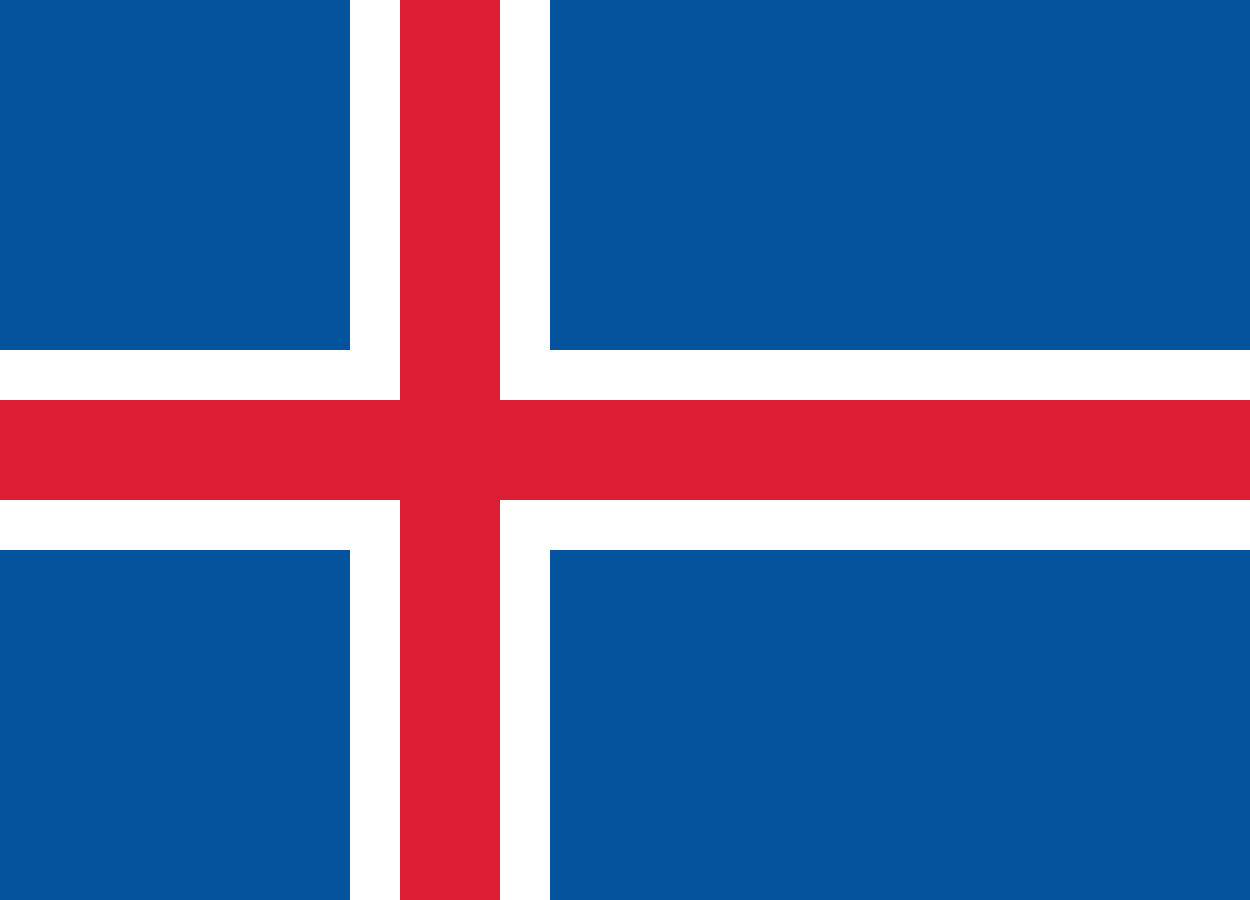
Iceland
An island of volcanoes, glaciers, geysers and northern lights, straddling North America and Europe. Iceland is among the most spectacular places on earth: a single day can take in waterfalls, black beaches, hot springs and glacier lagoons. The country is expensive, but the landscape is free and unrepeatable. It is also the safest country in the world, with fewer than 400,000 inhabitants.
Where to go
#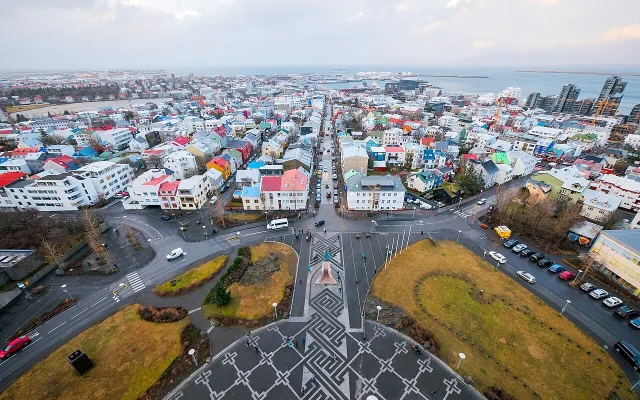
Reykjavik
Reykjavík is the world's northernmost capital, known for natural attractions such as the Blue Lagoon and the northern lights, as well as the Golden Circle day-trip route.
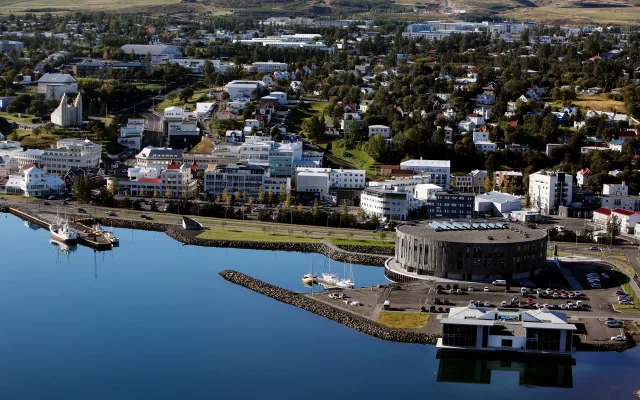
Akureyri
Akureyri — Iceland's "Capital of the North," a base for exploring Eyjafjörður fjord, the Goðafoss waterfall, and the Hlíðarfjall ski resort.
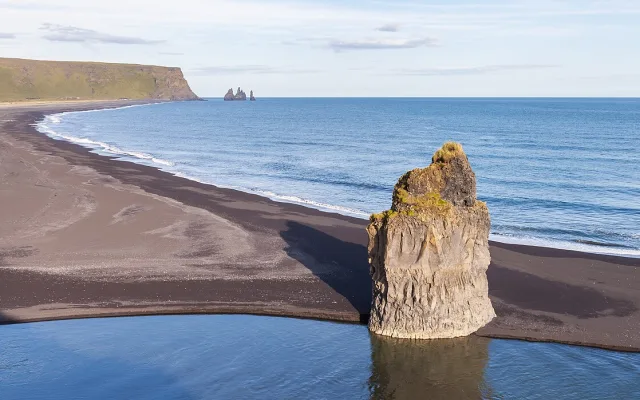
Vik
Vik is Iceland's southernmost village, known for the black beach at Reynisfjara, its basalt columns and its puffins.
What to see
#The Golden Circle: The classic route, easily done in a day from the capital. It takes in Þingvellir park on the meeting of two tectonic plates, the Strokkur geyser and the powerful Gullfoss waterfall. It is the compulsory programme for a first visit.
Jökulsárlón: Go to the glacier lagoon for the enormous drifting icebergs that the current pushes onto Diamond Beach. Blue ice on black volcanic sand looks unreal and is the best photograph in the south.
The Blue Lagoon: The most heavily marketed spot, all warm milky-blue water among lava fields. Book far ahead, because slots for specific dates go weeks in advance. Entry runs around a hundred dollars, which many people consider steep.
Seljalandsfoss: A rare waterfall you can walk behind and watch the world through the falling water. Bring a waterproof, since the spray soaks you in seconds. The less crowded but equally beautiful Kvernufoss hides nearby.
The northern lights: Hunt the aurora from September to March, well away from street lighting. Success depends on a clear sky and solar activity. Intensity should be high in 2026 because of the peak in the solar cycle.
Fjaðrárgljúfur: Worth visiting for its emerald mossy walls and the river winding along the bottom. The clifftop path takes about an hour and delivers views often called the most dramatic in Iceland.
Prices
#Cards everywhere: Iceland has essentially abandoned cash. You can pay by card for a toilet or for parking at a remote waterfall. Locals go years without handling banknotes, relying entirely on contactless.
What to bring: A Visa or Mastercard is all you need, and Amex is accepted less widely. Make sure you know your PIN, because unstaffed fuel pumps and some machines will ask for it rather than accepting a tap. A Wise or Revolut card saves you real money on the króna conversion.
Exchange: If you want any cash at all, change dollars or euros at the airport on arrival. Ordinary shops do not take foreign currency, and provincial banks keep short hours and close at weekends.
Tipping: Service is always included in the bill, so leaving extra is simply not the custom. If you were delighted, say so. In self-service cafés a tip causes visible confusion.
| Item | Price (USD) |
|---|---|
| The famous hot dog | 7 |
| Cappuccino | 6 |
| Litre of petrol | 2.3 |
| Beer in a bar | 12 |
| Lunch in a food hall | 25 |
| Dinner for two | 150 |
| Skyr at Bónus | 2 |
| Flybus ticket | 30 |
| Souvenir magnet | 9 |
| Cereal bar | 3 |
| Loaf of bread | 5 |
| Havarti cheese | 8 |
| Box of eggs | 6 |
| Kilo of apples | 3 |
Getting around
#City buses: The capital runs the Strætó system at about five dollars a ride. Intercity routes are infrequent and thin out further in winter. Use the official app with its live map for planning.
Flybus: Shuttles run between the airport and Reykjavík timed to flights. The trip takes about 45 minutes and costs 30 dollars, which is the sensible option given that a private taxi asks at least 140.
Domestic flights: Services from the capital to Akureyri or Ísafjörður often cost less than the petrol for the same distance. Small aircraft fly several times a day and save up to seven hours of snowbound mountain driving.
Car hire: A car is necessary for the Ring Road, but remember the severe speeding fines. Ordinary cars are prohibited on F-roads leading into the interior, where a 4x4 is genuinely required.
Tolls: Almost every road is free, with the single exception of the Vaðlaheiði tunnel in the north. Payment must be made online within three hours either side of your passage, or a large fine goes to the registered owner.
Bike and foot: These are options only for well-prepared people, thanks to the storm-force wind. The weather turns in minutes and can convert a walk into a fight for survival. Even in Reykjavík, walking between districts can be miserable in freezing rain.
Where to stay
#Apartments with a kitchen: In Reykjavík, book somewhere with a stove so restaurants do not bankrupt you. Rooms start around 130 dollars a night. Stay central for access to discount supermarkets and the shuttle stops.
Guesthouses: A popular format along the highways, where you stay in a private house with shared facilities. Icelanders keep them immaculate, and it is a good way to feel what life on a remote farm is like.
Camping rules: Sleeping in a vehicle or tent outside official sites is strictly illegal. Police patrol the popular spots and the fine for unlawful overnighting can reach 400 dollars. Campsites have kitchens and hot showers.
Book early: Summer accommodation should be found six months out. In popular places like Vík or Höfn, rooms are gone by winter. Miss it and you will drive enormous detours looking for a bed.
Mountain huts: In summer, simple huts for hikers open in the interior. Conditions are spartan, with shared dormitories and no electricity, but it is the only way to sleep in the middle of the island. Places need booking a year ahead.
Winter: In low season many rural guesthouses close, so build your route around the larger settlements. Check for heating and insulation, because Icelandic wind strips warmth out of even stone buildings.
What to eat
#Hot dogs: The cheapest fast food, sold at every filling station and at the famous stand in the capital. The sausages are made with Icelandic lamb, which gives them their particular taste. Ask for it with everything, including the crisp fried onion.
Skyr: This thick cultured dairy product, close to yoghurt, is a national symbol. It is high in protein and cheap in any shop, making it the ideal breakfast or roadside snack on a budget.
Buying alcohol: Spirits and wine are sold only through the state Vínbúðin chain. Ordinary supermarkets stock nothing above 2.25 percent. Buy in the Duty Free on arrival, where prices are about a third of what you pay in town.
Bónus: Look for the pink pig sign, which marks the cheapest supermarket chain. Shopping there and cooking in a shared kitchen cuts your food costs several times over.
Traditional oddities: Visitors are often offered hákarl, fermented shark. It is a dubious pleasure with a sharp ammonia smell that locals rarely eat, and the whole ritual is usually overrated.
Fresh fish: Cod and Arctic char here are superb and available in every coastal town. Look for fish and chips places on the harbourfront for a fresh and filling meal, from about twenty-five dollars.
Safety
#Weather: The real danger here is not crime but the weather. Always check the meteorological service before setting out. Storm winds can tear a car door off its hinges or knock an adult over in an exposed place.
The beaches: Reynisfjara's shoreline is notorious for sneaker waves. They can surge far beyond the normal waterline and pull someone into open sea. Never turn your back on the ocean, however good the photograph would be.
Road traps: Take great care on single-lane bridges and gravel sections. In winter the roads carry black ice, which is effectively invisible. Braking hard in those conditions puts you in the ditch.
The 112 app: Install the official app for contacting rescue services. It sends exact GPS coordinates if your car breaks down or you are injured on a trail, and in remote areas it is the only reliable way to call for help.
Hot springs: Water temperature in wild springs is unregulated and can reach ninety degrees. Test it before getting in. Tourists are seriously scalded every year by ignoring the warning signs.
Wildlife: Iceland has no dangerous predators, but nesting birds get aggressive. Do not pet Icelandic horses at farms without the owner's permission. Moss takes decades to recover, so walking on it is strictly forbidden.
Etiquette and culture
#Elves: Many Icelanders take the legends of the "hidden people" seriously. Construction firms occasionally reroute a road to avoid disturbing a rock where trolls supposedly live. Treat the belief with respect, because it is part of the identity here.
Pool culture: Every settlement has a public geothermal pool, and it is the main place locals meet and unwind. There is one iron rule: before entering you must shower thoroughly without a swimsuit, and ignoring it is not an option.
Names: Icelanders have no surnames, only patronymics. Everyone is addressed by first name, including the president and university professors. It reflects a deep social equality with no room for titles.
The environment: Buying bottled water or littering is considered poor form. Icelanders are proud of their ecology and use geothermal energy for everything from heating houses to running greenhouses.
Language: Icelandic has barely changed since the Viking age, and people avoid loanwords, inventing native terms for new technology. At the same time almost everyone on the island speaks excellent English.
Temperament: Locals value quiet and dislike fuss. Talking loudly in public or imposing yourself on strangers is not done. Icelanders can seem closed, but they will always help if you are genuinely in trouble.
Connectivity
#Networks: The main operators are Síminn and Nova. A SIM with a data package is available at the airport or any filling station. Coverage along the whole Ring Road is excellent, though it drops in deep canyons and fjords.
Wi-Fi: There is internet in every guesthouse, café and many long-distance buses. Speeds are usually high enough for navigation and everything else, and nothing is blocked here.
English: Iceland is among the world leaders for English as a second language. You will have no difficulty in shops, pharmacies or at a car rental desk, and both younger and older people speak it fluently.
eSIM: If your phone supports it, load a plan before you land and skip the kiosk entirely, which matters when you are picking up a hire car straight from the airport.
Apps: Download offline maps, since the signal is unreliable in the mountains. Aurora forecast and cloud cover apps are genuinely useful, and most services on the island can be booked online.
Etiquette: Icelanders prefer text messages to unannounced phone calls. To book a restaurant table or a tour, use the online form, which is how nearly everything works here.
Phrasebook
#| English | Icelandic | Pronunciation |
|---|---|---|
| Hello | Halló | ha-LOH |
| Thanks | Takk | tahk |
| Yes | Já | yow |
| No | Nei | nay |
| Please, here you are | Gjörðu svo vel | GYUR-thu svo vel |
| Sorry | Fyrirgefðu | FIR-ir-gev-thu |
| How much is it? | Hvað kostar það? | kvath KOS-tar thath |
| Where is the toilet? | Hvar er salernið? | kvar er SA-lert-nith |
| Water | Vatn | vahtn |
| Beer | Bjór | byohr |
| Coffee | Kaffi | KAF-fi |
| Food | Matur | MA-tur |
| Good | Gott | gohtt |
| Goodbye | Bless | bless |
| Help! | Hjálp! | hyowlp |
| How's it going? | Hvað segirðu? | kvath SAY-ir-thu |
| I don't understand | Ég skil ekki | yeh skil EK-ki |
| It'll work out (slang) | Þetta reddast | THET-ta RED-dast |
| Awesome (slang) | Geggjað | GEG-yath |
| Hot dog | Pylsa | PIL-sa |
Good to know
#Weather forecast: Vedur.is should become your primary tool. It publishes not just temperature but critically important wind warnings. Red-level alerts are not to be ignored, because they genuinely can cost you your life.
Road conditions: Road.is tracks the state of every highway in real time. Sections close in winter for drifting snow and in spring for meltwater, so check your route against it before leaving your hotel.
Drinking water: Tap water anywhere on the island is pristine and drinkable. Do not waste money on plastic bottles, which baffles locals. Just refill your own bottle wherever you are.
Plugs: Iceland uses the standard European type F socket with two round pins. Continental chargers need no adapter, while UK, US and Australian ones do. Voltage is 230.
Daylight: Remember the white nights in summer and the very short winter days. In December the sun is up for about four hours, which sharply limits sightseeing time. In summer it barely sets, so pack an eye mask.
Leave no trace: Take all rubbish with you and use designated bins. Never build cairns from stones, which damages the landscape and the moss. Rules about behaviour in nature are strict and breaking them carries heavy fines.
Frequently asked questions
#Iceland is in the Schengen area, so UK, US, Canadian, Australian and many other passport holders enter visa-free for short stays. Everyone else applies for a Schengen visa in advance. Travel insurance with at least 30,000 euros of cover is a firm requirement at the border, so carry the policy in English.
Keflavík airport is served year-round by Icelandair and PLAY plus international carriers, with direct flights from London, Copenhagen, Amsterdam, New York and Boston among many others. From most of Europe and eastern North America it is a single flight, and fares are lowest outside the June to August peak.
Yes, universally. Iceland is effectively cashless and you can pay by card for parking, toilets and remote petrol pumps. Bring a card with a PIN you remember, since unstaffed machines ask for one.
The window runs from late September to early April. You need a genuinely dark, cloudless night and high solar activity, which you can track through dedicated apps.
You can, but your range will be limited to Reykjavík and the nearest Golden Circle stops. Intercity public transport is thin, so reaching remote waterfalls means group tours or domestic flights.
Iceland is among the most expensive countries in the world, with a modest café dinner at 30 to 40 dollars a head. To save, shop at Bónus or Krónan and cook in a guesthouse kitchen.
Yes, and it is exceptional, coming straight from natural glacial sources. Buying bottled water makes no sense at all; fill a reusable bottle anywhere.
For the main Ring Road, an ordinary car is fine. A 4x4 is mandatory only for the F-roads into the highlands, and strongly advisable in winter because of snowdrifts.
Yes, but with restrictions. Registration is mandatory for drones from 250 g — lighter models can fly without it. You also need to pass a test and hold a pilot certificate. Common EASA rules apply: operator registration is required for drones from 250 g, and for any drone with a camera — which covers virtually every consumer model. You also need the free A1/A3 online test, and the operator ID must be stuck on the drone. One registration is valid across the whole EU. Rules for other countries are in the drone ranking by country.
It depends on where your licence was issued. Car rental starts at 21. EU licences work as they are. With Russian or other non-European licences rental companies usually ask for an IDP — without one they may refuse to rent and police may fine you. A 125 cc scooter is available on a category B licence after three years of driving experience. Rules for other countries are in the driving and rental table.
You can rent a bike; whether you need an international driving permit depends on where your licence was issued. A scooter up to 125 cc can be ridden on category B; anything bigger needs category A. A helmet is compulsory. Bike rental usually starts at 18. A 125 cc scooter needs category B with three years of experience; anything bigger needs category A. Helmets are mandatory across the EU. Rules for other countries are in the driving and rental table.
Updated
The data on this page goes out of date. Visa rules and permitted stays, border requirements, prices and budgets, transport and local conditions all change fast, and we do not re-check every page every day. We show the date of our last check where we have one, but before you travel, verify with official sources: the country’s consulate, its immigration service, its e-visa portal and your carrier.