
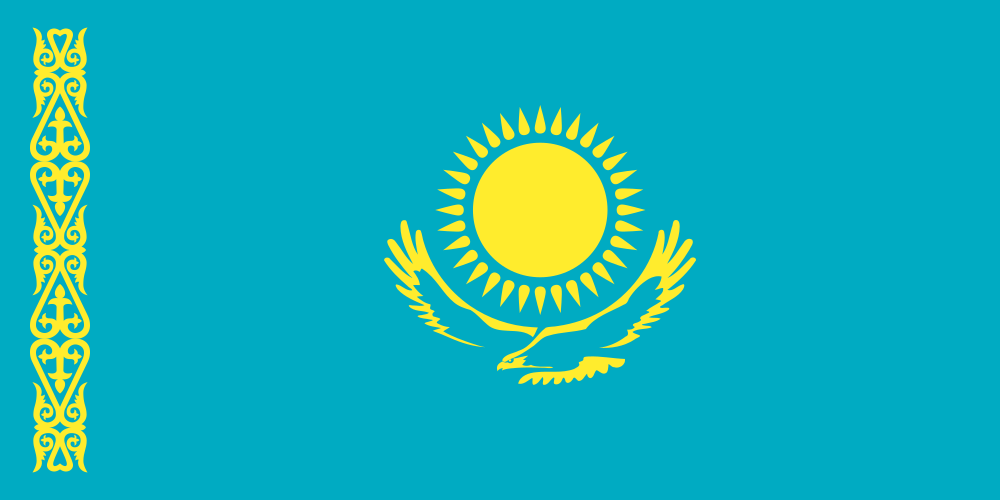
Kazakhstan
The ninth-largest country in the world — from futuristic Astana to the Tian Shan trails above Almaty and the Martian canyons of Charyn. Visa-free entry for citizens of many countries and low prices make it one of the easiest destinations in Central Asia. In a week you can take in the Baikonur cosmodrome, endless steppe and turquoise lakes, and eat beshbarmak in a real yurt.
Where to go
#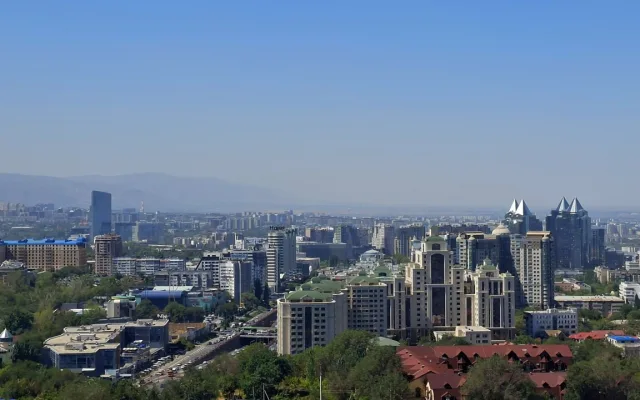
Almaty
Kazakhstan's largest city and former capital, spread along the foot of the Alatau: ski slopes, glacial lakes and gorges half an hour from the centre.
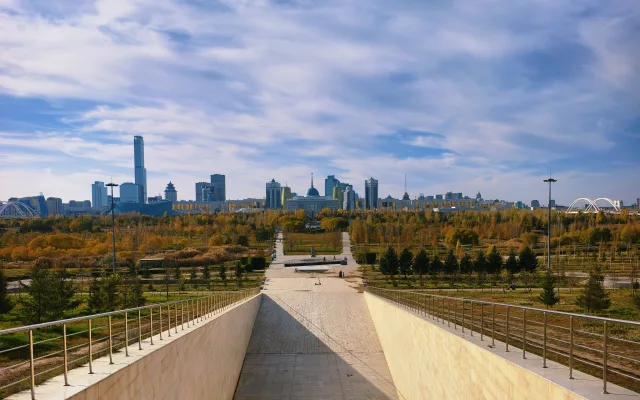
Astana
A capital invented and built from nothing on the bare steppe: Bayterek, Khan Shatyr and a parade axis of glass towers.
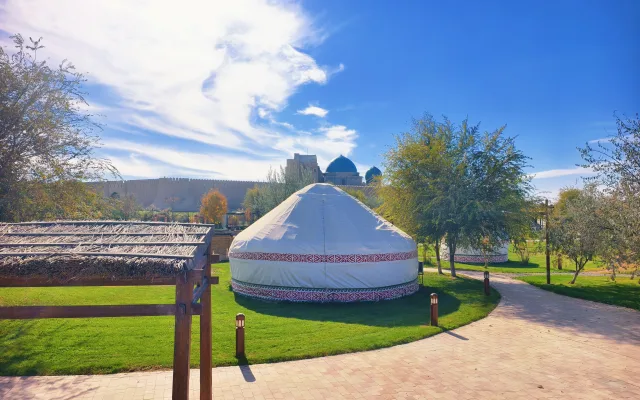
Turkestan
The spiritual capital of the Turkic world: Timur's unfinished mausoleum of Khoja Ahmed Yasawi, a UNESCO World Heritage Site in southern Kazakhstan.
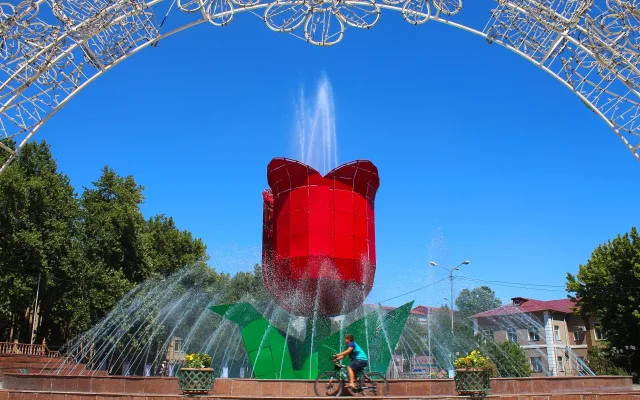
Shymkent
Shymkent is Kazakhstan's third-largest city, known for its lively bazaars. It sits close to Turkistan and to Tashkent across the Uzbek border.
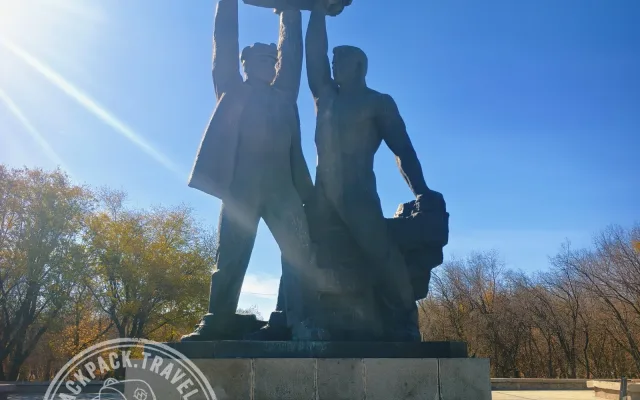
Karaganda
A mining city in central Kazakhstan that grew up on coal and on the camp history of Karlag. Known for its monument to Viktor Tsoi and for the Russian saying "where, where — in Karaganda".
What to see
#Martian landscape: The first thing to see is Charyn Canyon, three hours' drive from Almaty. Its Valley of Castles, all red rock towers, looks like the American southwest and costs a fraction as much to reach.
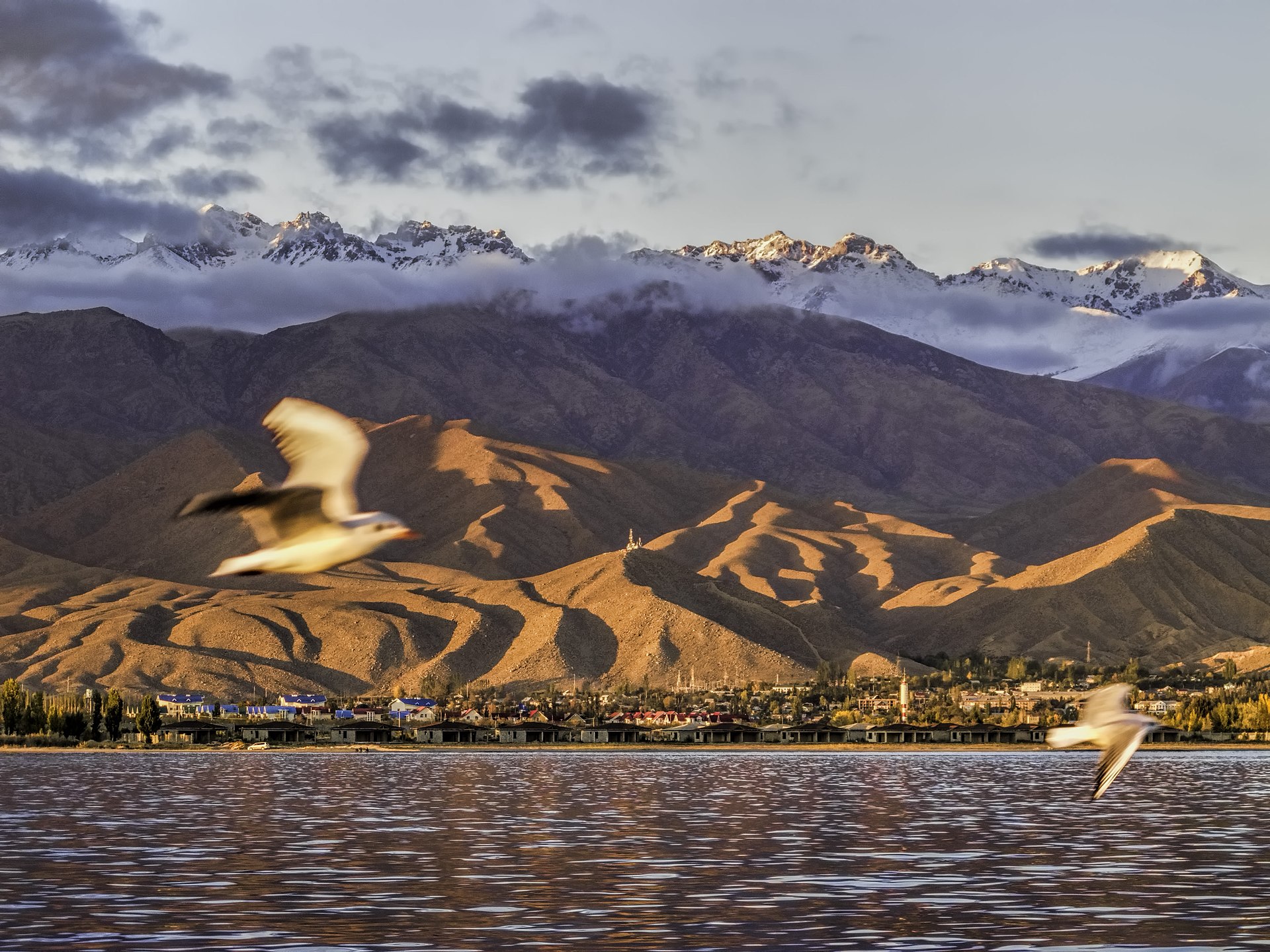
A mountain mirror: Big Almaty Lake is worth the trip purely for the unreal turquoise of the water. The last stretch of road is rough gravel, so go in something with clearance rather than a city hatchback.
The cosmodrome: Getting into Baikonur independently is complicated and requires a permit arranged through operators a couple of months ahead. Watching an actual rocket leave the pad, though, is a memory that stays with you.
White cliffs: For genuine wilderness, head to Bozzhyra in the far west. You need a properly equipped 4x4 to get there, but the view over the chalk outcrops justifies the effort and the dust.
Drowned forest: Kolsai and Kaindy lakes make a strong day out, the second with the trunks of submerged spruce standing up out of turquoise water. Sleep over in a guesthouse in the quiet village of Saty and see them in the morning light.
Underground mosques: Head for the Shopan-Ata necropolis or the Beket-Ata mosque, both carved directly into the rock of Mangystau. These are places of real spiritual weight, and the silence of the desert around them is total.
Prices
#Currency: Everything is priced in tenge, trading at around 475 to the US dollar in 2026. Exchange offices are on every other street and take dollars and euros without paperwork or fuss.
Cards: Visa and Mastercard are accepted almost everywhere in the cities, from supermarkets to small cafes, and contactless is standard. Amex is rarely usable, so do not make it your only card.
QR payments: The country runs largely on the Kaspi app and its QR codes, which is how locals pay in the smallest shops. Visitors cannot easily open a Kaspi account without a local tax number, so keep a card and some cash as your fallback.
ATMs: Halyk Bank and Kaspi machines are the most reliable and dispense tenge on foreign cards without trouble. Withdraw in the cities, because in the steppe cash machines effectively do not exist.
Tipping: Most restaurants add a 10 percent service charge to the bill, so there is no obligation to leave more. In taxis and small cafes rounding up is appreciated.
| Item | Price (USD) |
|---|---|
| Lunch at a canteen | 6.50 |
| Dinner for two | 42.00 |
| Cappuccino | 2.80 |
| Samsa from the tandyr | 0.90 |
| Hostel dorm bed | 11.00 |
| Hotel room | 52.00 |
| Rented apartment per night | 38.00 |
| City bus ticket | 0.25 |
| Taxi across town | 3.80 |
| Litre of petrol | 0.60 |
| Train, sleeper compartment | 32.00 |
| Domestic flight | 65.00 |
| National park entry | 2.50 |
| SIM card with 10GB | 5.50 |
Getting around
#City taxis: Install Yandex Go, which works flawlessly in every major city here. For intercity runs, InDrive is the popular alternative and lets you negotiate the fare with the driver directly.
Trains: KTZ rail is an excellent way to cover the enormous distances cheaply. The most comfortable option is the Talgo service, which does Astana to Almaty in 13 hours against a full day on the ordinary train.
Flying: Air Astana and the budget carrier FlyArystan handle domestic routes. Book ahead on the official sites, because popular runs to Aktau or Turkistan sell out quickly.
Public transport: Almaty has a single metro line with genuinely handsome stations, and buses take payment via the Onay card. Paying cash costs twice as much, so buy the card on day one.
Navigation: The 2GIS app is essential, since it knows every bus route and which door of a building to use. Google Maps is updated less often here, so trust the local maps.
Car hire: Renting for city use is easy, but Mangystau demands a serious off-road vehicle. Beyond the main highways petrol stations are rare, so carry a spare jerrycan.
Getting in: Almaty and Astana both have wide international networks, with connections through Istanbul, Dubai, Frankfurt and Seoul among others. Air Astana also flies long-haul to a handful of European cities directly.
Where to stay
#In the cities: The big cities have everything from private apartments to international chains. Booking through the usual aggregators works, but check whether the property will accept cash on arrival.
Renting a flat: For a stay of a week or more, look at the local portal Krisha.kz. You get a kitchen and a lower nightly rate, which matters a lot on a longer trip.
Guesthouses: In villages near the sights, Saty being the obvious example, you stay in family guesthouses. Home-cooked breakfast and dinner are usually included, and conditions are simple but the welcome is not.
Choosing a district: In Almaty, try to stay above Abai Avenue, closer to the mountains and the cleaner air. In Astana the Left Bank is the convenient side, near Bayterek and the main malls.
Mountain lodges: Shymbulak and Medeu have bases aimed at winter sports. Prices run above the city, but you get onto the slope or the ice before the crowds arrive from the centre.
Yurts and glamping: In remote regions and at Charyn you can sleep in a glamping dome or a real yurt. It is not the cheap option, but it delivers a version of nomadic life with a proper bed in it.
What to eat
#Meat first: The national dish is beshbarmak, sheets of boiled dough with meat in a rich broth. Portions are enormous, and horse meat is regarded as the most refined of all, so know what you are ordering before it arrives.
Kazy: Try kazy, a natural horse-meat sausage with garlic and spices. It is sold boiled at any bazaar and travels well, which makes it the standard edible souvenir.
Fast food: Samsa baked in a tandyr oven, filled with meat and onion, is sold everywhere and costs almost nothing. It is the most reliable way to eat quickly while you are out covering ground.
Fermented drinks: For the adventurous there is kumys from mare's milk and shubat from camel's. Both are an acquired taste and both are startlingly effective at killing thirst in the summer heat.
Tea: Tea is drunk constantly, usually with milk and a pile of baursak, small pieces of fried dough. Refusing the second cup is close to impossible once your host gets going.
Where to eat: The cheapest and most authentic food is in the canteens called ashana. In the evening, head to the Green Bazaar in Almaty or the southern cafes of Shymkent for the best plov you are likely to eat.
Safety
#General picture: Kazakhstan is a calm destination for independent travel, including for women travelling alone. Police patrol the streets and locals will readily help a visitor who looks lost.
Crowds: Watch your pockets and bags in bazaars and packed buses. Pickpocketing is rare but it exists in crowded places, so keep valuables out of sight.
Mountains: Weather in the hills turns in minutes and avalanche risk in winter is real. Never hike remote trails alone without registering your route with the rescue service first.
Traffic: Drivers in the big cities treat the rules as suggestions, so cross roads with full attention. If you rent a car, expect an aggressive style around you and drive defensively.
Health: Tap water is not recommended for drinking, so buy bottled from any supermarket. Travel insurance is worth having, since paying out of pocket for anything serious gets expensive fast.
Climate: Astana in winter delivers extreme cold with wind, which demands serious clothing rather than a warm coat. Summer in the south and west is punishing, so a hat and high-factor sunscreen are not optional.
Etiquette and culture
#Hospitality: Nomadic tradition is still alive and a guest in the house is considered a blessing. If you are invited for tea, clear the afternoon, because it will involve a great deal of food and conversation.
Respect for elders: Giving up your seat on public transport is expected, and older people are treated with marked deference. It is a real part of local etiquette and visitors are expected to follow it.
Religion: The state is secular but most of the population is Muslim. Dress conservatively when visiting a mosque and take your shoes off before you go in.
Languages: Kazakh and Russian are both in daily use, and in the cities you will hear more Russian than anything else. English is spoken by younger people in Almaty and Astana and in tourist-facing businesses, but it thins out fast in the regions, so keep a translation app handy.
Nauryz: The most vivid time to be here is Nauryz at the end of March, when yurts go up on the city squares and ritual soup is cooked in the open. It is the best chance to see traditional games, costume and live dombra playing.
Photography: Do not photograph military installations, airport interiors or anyone in uniform without permission. Otherwise people are relaxed and open about cameras.
Connectivity
#Operators: The market leaders are Beeline, Kcell and Tele2, with solid 4G in the cities and along the main highways. Any phone shop will sell you a physical SIM on presentation of your passport.
eSIM: If your handset supports it, activate an Airalo or Yesim plan before you travel. That spares you the shop visit and the device registration process on arrival.
Device registration: Local law ties a phone number to your identity and your handset when you buy a physical SIM. It takes a few minutes at the counter, but skipping it means the connection gets blocked after about a day.
Wi-Fi: Free wireless is in almost every cafe and hotel and the password comes on request. You will still want mobile data for maps and taxis, and packages are inexpensive.
Apps: Download Yandex Go for taxis and 2GIS for navigation before you arrive. Between them they cover most of what a visitor needs day to day.
Calling home: Use messaging apps rather than international calls, which are priced absurdly. The internet is unrestricted and nothing extra is needed to reach any normal service.
Phrasebook
#| English | Kazakh | Pronunciation |
|---|---|---|
| Hello (formal) | Сәлеметсіз бе | sa-le-met-SIZ be |
| Thank you | Рахмет | rakh-MET |
| Please | Өтінемін | o-ti-ne-MIN |
| Hi (informal) | Салам | sa-LAM |
| How are you? | Қалайсың? | ka-LAI-syn |
| Enough / done | Болды | bol-DY |
| How much is it? | Қанша тұрады? | kan-SHA tu-ra-DY |
| Expensive | Қымбат | kym-BAT |
| Yes / no | Иә / Жоқ | ya / zhok |
| Water | Су | soo |
| Bread | Нан | nan |
| Tea | Шай | shai |
| Meat | Ет | yet |
| Help! | Көмектесіңіз! | ko-mek-te-si-NIZ |
| Beautiful | Әдемі | a-de-MI |
| Delicious | Дәмді | dam-DI |
| Where is the toilet? | Дәретхана қайда? | da-ret-kha-NA kai-DA |
| Goodbye | Сау болыңыз | sau bo-ly-NYZ |
| Friend | Дос | dos |
| Good / fine | Жақсы | zhak-SY |
| I don't understand | Түсінбеймін | tu-sin-bey-MIN |
| Welcome | Қош келдіңіз | kosh kel-di-NIZ |
Good to know
#Buying tickets: Rail tickets are easiest through tickets.kz or the official KTZ site. For flights, watch the aggregators and FlyArystan directly, which regularly discounts overnight departures.
Route planning: The official Kazakh Travel site has itinerary ideas, but for current conditions read recent traveller reports. Information about the state of steppe roads changes often and the official version lags.
Off-road rental: For Mangystau, use established 4x4 outfits such as Redmaya. Ordinary city rental firms forbid leaving the tarmac, which turns any breakdown into a large bill.
Emergencies: The single number for all services is 112 and it works even with no SIM in the phone. It reaches ambulance, fire and police anywhere in the country.
Offline maps: Always download the regions you need in 2GIS and Organic Maps before leaving the city. In the canyons and deep steppe there is no signal at all, and paper maps are essentially unobtainable.
Registration: Stays over 30 days require registration with the migration service, normally handled by your hotel or landlord within three working days of arrival. Keep the confirmation, as you may be asked for it on departure.
Frequently asked questions
#Kazakhstan has one of the most open visa regimes in Central Asia, and citizens of the EU, UK, United States, Canada, Australia and many other countries enter visa-free for short tourist stays. Rules vary by nationality and change periodically, so confirm yours before booking, and note that stays beyond 30 days require registration with the migration service.
Visa and Mastercard are accepted widely in Almaty, Astana and other cities, and ATMs at Halyk Bank and Kaspi dispense tenge without difficulty. Much of local life runs on Kaspi QR payments, which visitors cannot easily join, so carry cash for bazaars, village guesthouses and anywhere off the main routes.
The easiest option is a hire car or a taxi, with about three hours' driving each way. Weekend group tours from Almaty cost considerably less than a private car and include the drive down into the Valley of Castles.
If your phone takes an eSIM, activate Airalo or Yesim before you travel and skip the paperwork entirely. For a physical SIM, Beeline or Tele2 both have desks in the airports and shopping centres, and 10GB costs around five dollars.
May to June and September to October are ideal, with comfortable mountain temperatures and no extreme heat. Winter suits skiing at Shymbulak, while high summer is best spent at the cool Kolsai lakes rather than in the southern cities.
The distances are enormous, so both have a place. The Talgo train from Astana to Almaty takes 13 hours in a proper sleeper for about 32 dollars, while a domestic flight covers the same ground in under two hours for around 65.
In Almaty and Astana, younger people and anyone working in tourism generally speak usable English. Outside the two big cities you should expect Russian and Kazakh only, so a translation app on your phone earns its place quickly.
Yes, but with restrictions. Registration is mandatory for a drone of any weight. Registration is mandatory for foreign visitors regardless of weight. Border and restricted zones are closed, and Astana and Almaty require clearance. Rules for other countries are in the drone ranking by country.
No — your national licence is accepted for a car. Car rental starts at 18. National licences are accepted and no IDP is required. Rules for other countries are in the driving and rental table.
You can rent a bike and your national licence is enough. A helmet is compulsory. Bike rental usually starts at 18. Rules for other countries are in the driving and rental table.
Middling: tourist areas are calm, but some districts are best avoided. Intentional homicides: 2.551 per 100,000 a year (UNODC, 2022 data). Do not drink tap water — stick to bottled. The general emergency number is 112. Ratings for other countries are in the safety table.
Updated
The data on this page goes out of date. Visa rules and permitted stays, border requirements, prices and budgets, transport and local conditions all change fast, and we do not re-check every page every day. We show the date of our last check where we have one, but before you travel, verify with official sources: the country’s consulate, its immigration service, its e-visa portal and your carrier.