
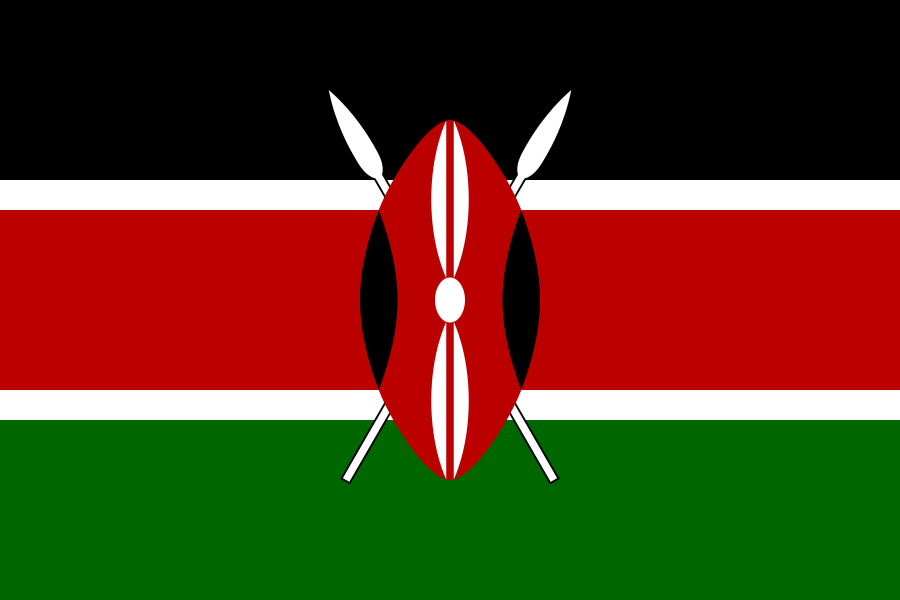
Safety in Kenya
A rating built from four independent indices, plus scams, laws and what to do when something happens
Rating calculated from the indices below
Indices checked on 10.08.2026
Specifically: the Somali border area.
This marker describes where fighting physically takes place, not the country’s role in the conflict. The rating measures risk to a visitor, which differs several-fold between parts of the country.
Position in global indices
Save these before you fly
The general picture
Cities: Nairobi requires real attention because of pickpocketing and street robbery. Do not display expensive equipment or large amounts of cash, and after dark take a taxi even for short distances.
Wildlife: On safari, never leave the vehicle without your guide's permission. Hippos and buffalo kill more people than any predator in Africa, and their apparent calm means nothing at all.
Malaria: Mosquitoes carrying malaria are active on the coast and in the lowlands, so prophylaxis and repellent are essential rather than optional. Take out insurance that covers private clinics and transfers.
Hustlers: Markets and busy streets attract insistent "helpers" who then demand payment for a service you did not want. Refuse politely but firmly, and always agree a taxi fare before you set off.
Border areas: Do not travel independently to the regions bordering Somalia, where terrorism remains a threat. The tourist routes in the centre and south are well protected and considered safe. Check your own government's travel advisory before finalising a route.
Sun: The equatorial sun burns even on overcast days and on a cool savannah morning. Use high-factor sunscreen and wear a hat to avoid both burns and heat exhaustion.
How tourists get scammed
Kenya is a country of strong contrasts: safaris and the coast are excellently organised, while Nairobi demands urban caution.
Fake safari operators. The largest financial loss a tourist suffers in Kenya. An agency sells a tour, takes a deposit and disappears, or delivers you to a camp of a quite different standard. Check membership of the Kenya Association of Tour Operators, do not pay the full amount in cash upfront, and read reviews away from the agency's own site.
The "friend" on a Nairobi street. An introduction, a chat about your country, an invitation for a drink, then either a bill or missing belongings. Locals are wary of strangers who start conversations in central Nairobi too.
Matatus. The minibuses are cheap and colourful, but pickpockets work them and the driving is dangerous. Use Uber or Bolt to move around the city.
Curios and "ebony". "Blackwood" figures are often dyed. Prices at souvenir markets are inflated several-fold and haggling is compulsory.
ATMs. Skimming occurs. Use machines in banks and malls.
M-Pesa. Mobile payments are more developed in Kenya than cards. Schemes involving mistaken transfers and requests to "send the money back" are widespread.
What gets you fined or jailed
Plastic bags are banned. Kenya introduced one of the world's strictest bans: importing, producing or using a single-use plastic bag carries heavy fines and even imprisonment. Tourists are checked at the airport and bags are confiscated. Remove them from your luggage before you fly — it is the most common complaint against visitors.
Drones. These require an operator licence and device registration, which is effectively unattainable for a tourist. Bringing one in without paperwork means confiscation at customs.
Wildlife. Exporting ivory and animal products is a serious offence with long sentences. In national parks, leaving your vehicle outside designated areas is prohibited.
Photography. Military installations, police officers, the parliament building and the president's residence are off limits. So are people without permission: in Maasai villages a photograph is normally paid for, and this is agreed in advance.
Drugs. The law is strict, cannabis included.
Same-sex relations are criminalised.
The north-east. The districts bordering Somalia — Garissa, Mandera, Wajir and the area around Lamu — carry a genuine terrorist threat. People do not go there, and organised tours do not either.
Health: vaccines, medicines, care
Yellow fever. A certificate is required from arrivals out of endemic countries, and you may need one to enter certain neighbouring states after Kenya. Check in advance.
Malaria is the trip's main medical subject. Risk exists on the coast (Mombasa, Diani, Malindi), in the Maasai Mara and around Lake Victoria. Nairobi at 1,795 metres is considered low risk. Prophylaxis is prescribed by a doctor for your specific route and does not replace repellent and a mosquito net. A fever after you get home is a reason to tell your doctor immediately that you were in Africa.
Vaccinations. Hepatitis A, typhoid and rabies are advised, plus meningococcus for longer stays.
Water. Bottled only, including for brushing your teeth.
Altitude. Nairobi sits at nearly 1,800 metres, and climbing Mount Kenya means 5,000: altitude sickness there is real.
Healthcare. Nairobi has good hospitals — Aga Khan, Nairobi Hospital. Safari camps have none. Many visitors take out AMREF Flying Doctors membership: air evacuation from the bush to Nairobi, inexpensive and genuinely functional in Kenya. Insurance is essential.
Emergency numbers: 999, 112 and 911 all work.
Police: how to handle them
Kenya ranks low on the Corruption Perceptions Index, and "kitu kidogo" — a request for something small — is part of daily life.
Traffic police. Checkpoints on the highways are numerous. Foreigners are usually waved through, but a hire car can attract attention. Calmly ask for an official report.
Tourist police. Operating in Nairobi, Mombasa and the main resort areas.
Reporting theft. Your insurer needs a police report; these are issued, but the process is slow and a "paper fee" is sometimes requested.
Nairobi. The centre is busy and broadly normal by day, but a tourist has no need for Eastleigh or Kibera, and after dark people move around the city only by car. Walking in the evening is not an option.
Safaris. Rangers provide security in the parks and the standard of organisation is high. Most incidents stem from tourists breaking the rules themselves: leaving the vehicle, feeding animals, approaching water.
Emergency numbers: 999 and 112.
What else to check
The rating is built from open international indices and foreign-ministry advisories; links to the primary sources are in the cards above. Conditions change faster than annual reports come out — check current travel advice before you go.