Latvia
LVA Baltic gem of grand Art Nouveau, medieval castles and white-sand beaches. Riga is one of the handsomest cities in northern Europe, and beyond the capital lie the wild forests of the Gauja, easygoing Jūrmala and old Livonian strongholds. The country is compact and cheap: a week covers the main points without emptying your wallet. Latvian cooking means hearty country dishes, fresh fish and the famous Riga Black Balsam.
Where to go #
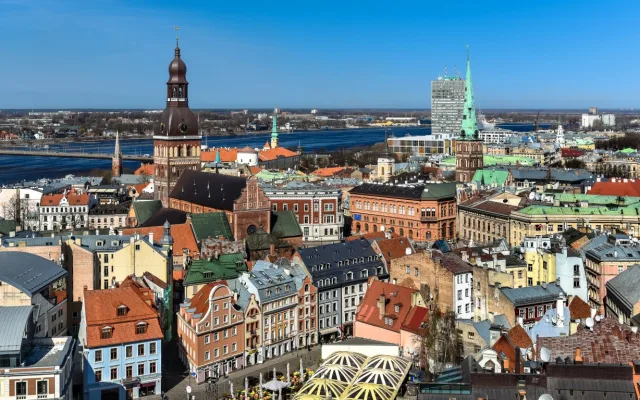
Riga
Art Nouveau capital of the Baltics with the world's largest collection of Jugendstil buildings, a UNESCO Old Town, and a bustling central market.
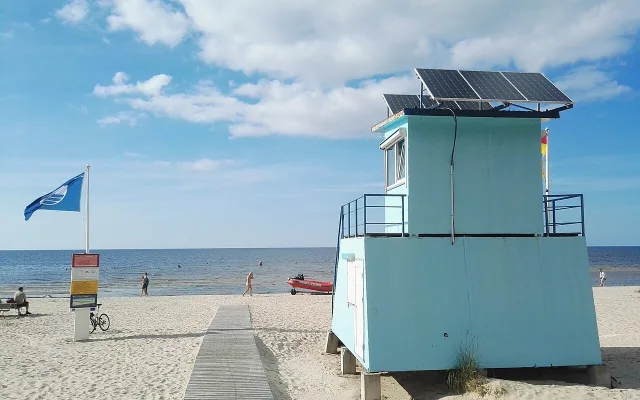
Jurmala
A Baltic resort near Riga — some 26 km of pale sand, pines at the water's edge, wooden Art Nouveau villas and the bog boardwalk at Ķemeri.
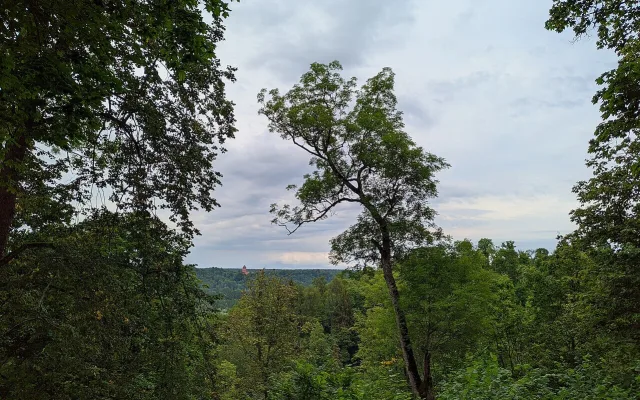
Sigulda
Latvia's Switzerland in the Gauja valley — three castles, a bobsled run, and Turaida park.
What to see #
What to see in Riga: Start with Vecrīga for the Dome cathedral, the Swedish Gate and the Three Brothers houses. For the best view over the red roofs, climb the tower of St Peter's church.
The art nouveau district: Walk out to Alberta iela, where the most extraordinary facades are concentrated, thick with sculpted masks and floral motifs.
Where to go for a day trip: Head to Sigulda for Turaida Castle and the ruins of the Livonian Order. The autumn colours in the Gauja valley are considered the finest in the country.
Rundāle: Rastrelli's magnificent baroque palace astonishes people with its state rooms and formal French garden. It is essential for anyone who likes palace history.
Ķemeri in a day: Walking the boardwalks through bog and low pine looks genuinely otherworldly, particularly at dawn when the mist sits on the water.
Gauja National Park: You can take a canoe out or walk the sandstone cliffs that line the river, which is the easiest way to see the landscape properly.
Museums worth the time: Visit the medical history museum, or the oldest natural history museum in the Baltics, both right in central Riga.
Prices #
Currency: The currency is the euro. Riga has plenty of exchange offices, though bank branches usually give a better rate than the booths.
Cards: Visa and Mastercard are accepted essentially everywhere, including small cafés and market stalls, and contactless is the default. Amex is patchier. Latvia is close to cashless, so you rarely need to plan around notes.
Cash: Keep a small reserve of euros for markets and for small guesthouses in the countryside, where card terminals occasionally fail. Bus drivers and some rural sellers still prefer it.
Tipping: Around ten percent in restaurants if a service charge was not already added. Nobody pursues you for it and rounding up is fine.
| Item | Price (USD) |
|---|---|
| Coffee | 4 |
| Lunch at Lido | 15 |
| Dinner for two | 65 |
| Fast food | 8 |
| 0.5L beer | 6 |
| Train to Jūrmala | 2 |
| 90-minute transit ticket | 1.8 |
| Day travel pass | 6 |
| Taxi in the centre | 5 |
| 3-star hotel | 55 |
| 4-star room | 100 |
| Apartment | 45 |
| Castle entry | 7 |
| Bottle of water | 1.2 |
Getting around #
In the city: Riga runs a genuinely convenient system of trams, trolleybuses and buses on a clear timetable.
Tickets: Buy through the Rīgas satiksme app or at Narvesen kiosks, because you can no longer pay cash on board.
Trains: Vivi services are the best way to reach Jūrmala or Sigulda, with tickets from the counter or the Mobilly app.
Intercity coaches: Ecolines and Lux Express run comfortable services linking Riga with Liepāja, Daugavpils and Tallinn at low fares.
Taxis: Use the Bolt app, which is the most reliable and affordable option with the fare fixed before you set off.
Bikes: Good cycle paths run along the sea and through central Riga, and you can rent through the usual mobile services.
Airport: Bus 22 gets you into the centre in half an hour, and the driver takes card payment only.
Where to stay #
Where to stay in Riga: The old town is unbeatable for atmosphere but gets loud, thanks to the density of bars and nightlife.
Quieter options: The Centrs district offers beautiful apartments in art nouveau buildings and a much calmer night.
Budget: The area around the station suits early departures and has plenty of inexpensive guest houses with private rooms.
Jūrmala: Choose Majori or Dzintari to be close to the beach and the main pedestrian promenade.
Sigulda: Small hotels and spa complexes sit right beside the national park trails, which is exactly what you want here.
Apartments: Studios with a kitchen are easy to find through the international platforms and cut your food costs noticeably.
Seasons: Rooms in Jūrmala and Sigulda get scarce and expensive in July and August, so book well ahead for the summer.
What to eat #
The national dish: Try grey peas with speck, a heavily filling peasant dish that became the country's culinary symbol.
Where to find food: In the fish pavilion of Riga Central Market you will find the freshest smoked Baltic herring, flounder and eel. Buy from the busy stalls, since turnover is what keeps it good.
Baking: Buy a sklandrausis, a rye pastry case filled with carrot, and for dessert take the sweet bread soup with cream.
The famous drink: Riga Black Balsam, made with 24 herbs, is drunk in small measures with coffee or mixed into hot berry cocktails.
Affordable eating: The Lido chain offers an enormous range of home-style food at moderate prices, self-service style.
Craft beer: Riga has a strong brewing culture; drop into Folkklubs Ala Pagrabs for local music alongside the drinks.
Rye bread: Latvians bake superb dark bread with caraway, treated almost as sacred, and it stays fresh for a remarkably long time.
Safety #
Overall: The country is very calm, with a street crime rate below that of many European capitals.
Pickpockets: In the tourist crowds by the Dome cathedral or at the market, keep a proper eye on wallets and phones.
Nightlife: On Friday evenings central Riga fills with drinkers, so give noisy arguments a wide berth rather than getting involved.
Maskačka: The area behind the market is fine by day, but walking there after dark is not advisable for visitors.
Ticks: From May to October ticks are active in forest and long grass. Use repellent and check your clothing after any walk.
Emergencies: For anything serious call 112, where operators speak English and respond quickly.
Traffic: Latvian drivers are polite and stop for pedestrians, but wait for the green signal all the same, since jaywalking is fined.
Etiquette and culture #
Līgo: On the night of 24 June the whole country heads out of town to light bonfires, sing and eat caraway cheese. It is the single biggest night of the year.
Choral singing: Every five years an enormous song festival brings thousands of performers together into one vast choir.
Visiting a home: Never step on the threshold as you enter a house, and never bring an even number of flowers.
Sauna: The traditional pirts, with oak and birch whisks, is an important ritual for health and for time with friends.
Character: Latvians can seem reserved at first, but they are warm towards anyone who respects their culture and language.
Religion: Lutheranism, Catholicism and Orthodoxy coexist peacefully here, which is visible in the variety of church architecture.
Nature: People are genuinely proud of their landscape, and littering in a forest or on a beach carries heavy fines.
Connectivity #
Networks: LMT, Tele2 and Bite operate here, and 4G coverage is excellent even deep in the forest.
Tourist SIMs: A card with a data package costs 5 to 8 euros at a phone shop or a Narvesen store.
eSIM: Services like Airalo, Orange or Yesim let you connect data before you even reach passport control.
Free Wi-Fi: Hotspots exist in almost every café, shopping centre and hotel, and on city public transport.
Apps: Install Bolt for taxis, Mobilly for parking and train tickets, and Rīgas satiksme for city transit tickets.
Roaming: EU SIM cards work at home rates here. Travellers from the UK, the US or Australia should check their plan first, since charges can be steep.
Language: Younger Latvians speak good English, and so does anyone in hospitality. Signage in Riga is bilingual and menus are usually translated, so you will not struggle.
Phrasebook #
| English | Latvian | Pronunciation |
|---|---|---|
| Hi | Sveiki | SVAY-kee |
| Hello (formal) | Labdien | LAHB-dyen |
| Thank you | Paldies | PAHL-dyes |
| Please | Lūdzu | LOO-dzu |
| Yes / No | Jā / Nē | yah / neh |
| Sorry | Atvainojiet | at-VY-no-yet |
| Help! | Palīgā! | PAH-lee-gah |
| Where is the toilet? | Kur ir tualete? | koor ir too-a-LE-te |
| How much is it? | Cik maksā? | tsik MAHK-sah |
| Tasty | Garšīgi | GAR-shee-gi |
| I don't understand | Es nesaprotu | es ne-SAH-pro-tu |
| Beautiful | Skaisti | SKY-sti |
| The bill, please | Rēķinu, lūdzu | REH-kyi-nu, LOO-dzu |
| Good | Labi | LAH-bi |
| Left | Pa kreisi | pa KRAY-si |
| Right | Pa labi | pa LAH-bi |
| Beer | Alus | AH-lus |
| Bread | Maize | MY-ze |
| No problem | Nav problēmu | nav pro-BLEH-mu |
| All good (slang) | Viss čotka | viss CHOT-ka |
Good to know #
Consular help: Most countries keep an embassy in Riga; note the address and out-of-hours number in case you lose your documents.
Official portal: The latvia.travel site is the main resource for planning routes and finding what is on culturally while you are there.
Bus station: Riga's coach terminal sits next to the market, and both international and regional buses leave from there.
Trains: Current timetables for Jūrmala and Sigulda are always on the official vivi.lv site, which is worth checking before you set out.
When to come: June to August is beach and festival season, October is the best month for the Gauja valley colours, and winter brings Christmas markets and short daylight.
Police: In case of theft or an incident, go to the nearest station or call 110, which is the direct police line.
Discount cards: In Sigulda the Sigulda Card is worth buying for reductions at museums and on the activities.