

Mongolia
A country of endless steppe, the Gobi desert and a nomadic culture in which riders still live in gers out in open country. Mongolia is the homeland of Genghis Khan and one of the emptiest places on earth: 3.5 million people across a territory the size of western Europe. Summer brings Naadam, the great festival of wrestling, horse racing and archery; winter drops below −30 °C. Travelling here means nights in a ger, riding across the steppe and a night sky like nothing you have seen.
Where to go
#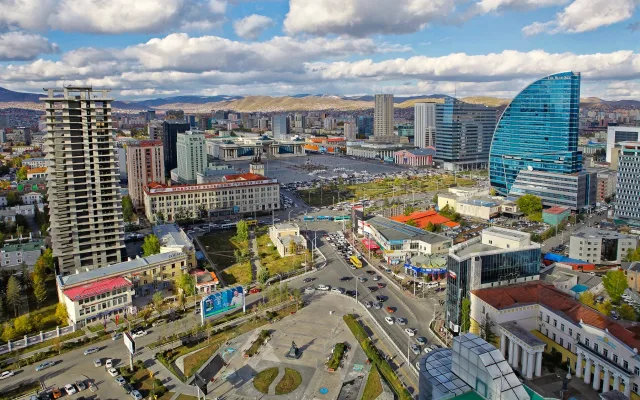
Ulaanbaatar
The capital of Mongolia: Gandan Monastery, the Chinggis Khaan Museum, Sukhbaatar Square and the gateway to the open steppe.
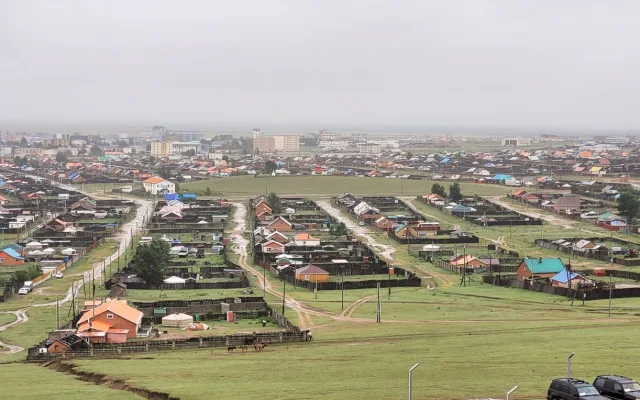
Kharkhorin
The ancient capital of the Mongol Empire — the Karakorum site and Erdene Zuu monastery in the Orkhon valley.
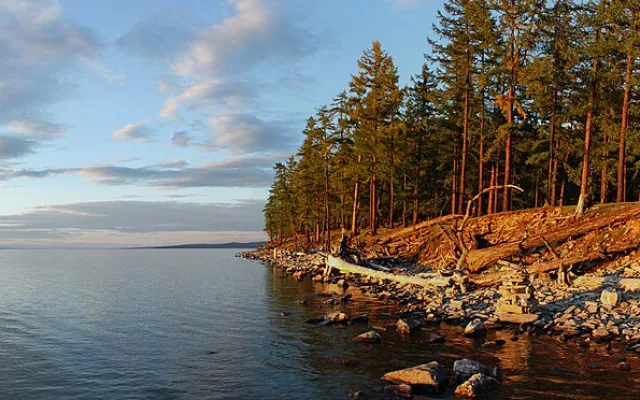
Khatgal
A village on the southern shore of Lake Khövsgöl — the blue pearl of Mongolia, horse tours and Tsaatan shamans.
What to see
#The Gobi desert: the Khongoryn Els dunes and the Bayanzag cliffs are what to see. Look for dinosaur remains and the ice canyon that survives even the fiercest heat.
The Genghis Khan statue: the enormous horseman at Tsonjin Boldog is easily done in a day. Climb to the viewing platform for the steppe panorama and look into the museum inside the plinth.
Lake Khuvsgul: clean water in the north, ringed by taiga. Ideal for camping, fishing and meeting shamans in the remotest districts.
Gorkhi-Terelj park: the closest wild landscape to the capital, with the famous Turtle Rock. Here you can step out of a car and into a saddle within an hour and sleep in a proper ger camp.
Gandan monastery: the main spiritual centre, with its golden statue. Come in the morning to hear the monks chanting and spin the prayer wheels for luck on the road ahead.
The Orkhon valley: waterfalls and petroglyphs at the heart of ancient Mongolia, where herds still graze and nomadic life carries on in felt gers.
Prices
#Currency: the tugrik (MNT), trading around 3,600 to the dollar in 2026. Bring dollars or euros in clean notes to change.
Cards: Visa and Mastercard work in Ulaanbaatar shops, hotels and restaurants, but the moment you leave the city it is cash only. Draw everything you need before heading into the steppe, because there are no machines out there.
ATM quirk: at Khan Bank machines, a four-digit PIN sometimes has to be followed by two zeros. It catches out almost every visitor once.
Exchange: the best rates are at the banks along Peace Avenue. At the airport change only enough to get into town.
Tipping: frequently already included in the bill. If not, 10% is generous, and in canteens nobody expects anything.
| Item | Price (USD) |
|---|---|
| Lunch in a canteen | 5.00 |
| Water 1.5 l | 0.60 |
| Bus fare | 0.30 |
| Litre of petrol | 1.00 |
| Ger at a camp | 35.00 |
| SIM card | 5.00 |
| Restaurant dinner | 15.00 |
| Market fridge magnet | 3.00 |
| Cappuccino | 2.50 |
| Taxi ride | 4.00 |
| Hostel bed | 10.00 |
| Museum ticket | 6.00 |
| Cashmere scarf | 40.00 |
| Scooter hire per minute | 0.10 |
Getting around
#Getting there. Ulaanbaatar is reached by air through Istanbul, Seoul, Beijing, Tokyo or Bangkok, so from Europe or North America you connect once or twice. The romantic alternative is the Trans-Mongolian railway, which runs into the capital from Beijing in about thirty hours and is a destination in itself.
City buses. Cheap, at 1,000 tugriks a ride. Pay with a UMoney card, bought at any CU convenience store or at the airport.
Taxis. Use the UBCab app so you can see the fare. The flag fall is around 1,500 tugriks and each kilometre adds roughly another thousand.
Intercity. Services to every province leave from the Dragon terminal. Buy a day ahead for popular routes, since seats in the minivans go quickly.
Trains. The Trans-Mongolian line is a good way to reach Sainshand. Carriages are clean, departures punctual and tickets easy to buy online through the railway site.
Car hire. Driving yourself is not really on offer; what you rent is a jeep with a driver. That is justified, because the steppe has no road markings and navigating without local knowledge is close to impossible.
Domestic flights. Hunnu Air saves you days of jolting about. Book Dalanzadgad or Murun well ahead, because summer demand always exceeds supply.
Where to stay
#Hostels. The capital's centre is full of cheap options. Ten dollars buys a bed plus real help arranging trips into the steppe.
Guesthouses. Often simply large apartments with a domestic feel. The hosts feed you breakfast and tell you where the cheapest khuushuur in the neighbourhood is.
Ger camps. Traditional felt tents on concrete bases with proper beds. A comfortable way to sleep in the steppe, with a shower block and a restaurant, though the bathroom is shared.
Wild camping. Mongolia is a paradise for tents and you can pitch almost anywhere for free. There is no private ownership of land; the only rule is to take your rubbish with you.
Staying with herders. The most authentic option is asking a herding family to take you in. It costs almost nothing, but conditions are hard: sleeping on the floor and no shower.
Apartments. The booking platforms list flats in the capital's new blocks. Handy if you want your own kitchen and fast domestic Wi-Fi.
Language. Hostels and ger camps aimed at travellers work in English; family guesthouses and herder stays do not, so a translation app matters.
What to eat
#The basis. Mongolian cooking is a hymn to meat and dough. Vegetables are scarce, but the mutton is always fresh, which makes even a plain dish enormously filling.
Buuz. Steamed dumplings of chopped meat, eaten with the hands after drinking the broth inside. Be careful ordering: portions are huge and three is usually plenty for a newcomer.
Khuushuur. The deep-fried version, and the perfect street food, sold on every corner. It handles hunger well on long drives across the steppe.
Tsuivan. Fried noodles with meat, the drivers' favourite. It can taste a little dry, but the calories carry you through a full day on the road.
Drinks. Try the salted milk tea with butter. It is closer to soup than tea, and it deals with thirst in the Gobi better than anything else.
Dairy. In summer, herders always have airag, fermented mare's milk. Try aaruul too, hard dried curd that you gnaw on instead of dessert.
For vegetarians. It is genuinely hard outside Ulaanbaatar, where Korean and Indian restaurants are plentiful; in the countryside, carry your own supplies.
Safety
#In the city. Watch for pickpockets in Ulaanbaatar markets and on buses. Keep your wallet deep and do not flash a thick roll of notes in a crowd.
In the steppe. The dangers are climate and the absence of any signal. Always carry offline maps and a water reserve, because in the desert you can go a full day without meeting anyone.
Dogs. Mastiffs guard the herds around every ger. Never approach one without shouting to the owners first, or the meeting with the guard ends badly.
Confrontation. Villages have their drunken groups. Do not argue, and avoid unlit outskirts of the capital at night.
Roads. Steppe tracks shift constantly. Do not attempt to drive yourself; the risk of getting lost or bogged in sand with no phone signal is too high.
Medical care. Good clinics exist only in the capital. Take insurance covering active travel and assemble a medical kit with anything you personally need.
Advisories. Check your own government's travel advice before booking, and make sure the policy covers horse riding, which is how most visitors get hurt here.
Etiquette and culture
#Ger etiquette. Step over the threshold with your right foot. Inside, always move clockwise and never point your feet towards the family altar.
Hospitality. Refusing food in a nomadic household is rude. Just sip the tea or take a piece of cheese with your right hand to show respect.
Naadam. The great July festival, when Mongolians compete in wrestling, archery and horse racing. It is the best time to visit, and accommodation must be booked months ahead.
Religion. Most people are Buddhist. In monasteries stay quiet, do not photograph without asking and walk around the shrines clockwise only.
Ovoo. The stone cairns on mountain passes are sacred. Tradition says to circle one three times and add a stone, so the road ahead treats you kindly.
The land. For nomads the earth is sacred and digging holes is frowned upon. Leave no fire rings and carry every scrap of rubbish out with you.
Photographing people. Ask before photographing herders or monks, and accept a no gracefully; a printed photo sent back later is remembered for years.
Connectivity
#Networks. Mobicom and Unitel are reliable and their desks are easy to find in the arrivals hall. Data packages are cheap and all you need is your passport.
Coverage. 4G works across Ulaanbaatar. In the steppe the signal disappears entirely, turning a modern phone into a brick with a torch.
eSIM. A profile from Airalo or a similar provider gets you online the moment you land, which is convenient for a short stay, though a local SIM costs less.
Wi-Fi. Hotel internet in the capital is quick. At remote tourist camps there may be none at all, or one weak access point in the restaurant ger.
Apps. Install UBCab for taxis and Maps.me for offline navigation. An offline translator rescues you where no English is spoken, which is most of the country.
Power. Bring a power bank. Sockets in gers are rare, and camp generators often run for only a couple of hours in the evening.
English. Common enough among young people in the capital and in the tourism trade, and essentially absent in the countryside.
Phrasebook
#| English | Mongolian | Pronunciation |
|---|---|---|
| Hello | Сайн байна уу | sain bain-OO |
| Thank you | Баярлалаа | ba-yar-LA-la |
| Yes / No | Тийм / Үгүй | teem / oo-GOOY |
| How much is this? | Энэ хэд вэ? | en-eh HED veh? |
| Expensive | Үнэтэй | oo-neh-TAY |
| Felt tent, home | Гэр | ger |
| Water | Ус | oos |
| Milk tea | Сүүтэй цай | SOO-tay tsai |
| Friend | Найз | naiz |
| Delicious! | Амттай! | amt-TAI! |
| Help! | Туслаарай! | toos-LAA-rai! |
| Where is the toilet? | Жорлон хаана вэ? | jor-LON haa-na veh? |
| Okay, fine | За | dza |
| Awesome! | Гоё! | go-YO! (slang) |
| Sorry | Уучлаарай | ooch-LAA-rai |
| Goodbye | Баяртай | ba-yar-TAI |
| Steamed dumplings | Бууз | booz |
| Fried meat pastry | Хушуур | hoo-SHOOR |
| Car | Машин | ma-SHEEN |
| I don't understand | Би ойлгохгүй байна | bee oyl-GOH-gui bain |
Good to know
#Transport card. A UMoney card is the only way onto a city bus. Top it up with cash at CU or GS25 stores by handing the card to the cashier.
Delivery. In Ulaanbaatar the UBeats and Songo apps work well. You can have buuz delivered to the hotel when the traffic is impossible.
Pharmacies. Look for the sign reading "Эмийн сан". Most medicines are sold without prescription, but bring a photo of the packaging of anything you rely on.
Shopping. For the best cashmere go to the Gobi stores or the Nomin department store. The Naran Tuul market has outdoor gear, but you must haggle hard.
Translation. Download the Mongolian offline pack. Locals genuinely appreciate an attempt at their language and it opens doors everywhere.
Your embassy. Only a limited number of countries maintain a mission in Ulaanbaatar, and several cover Mongolia from Beijing. Check which one handles your nationality and save the contact.
When to go. Mid-June to late August is the window, with warm weather and the Naadam festival. September already brings night frosts to the steppe, and winter in the capital drops to minus forty.
Frequently asked questions
#Many nationalities enter visa-free for stays of up to 30 days, while others apply for an e-visa in advance, so check your own passport's rules before booking. Your passport must be valid at least six months from the date of entry.
Fly into Ulaanbaatar via Istanbul, Seoul, Beijing, Tokyo or Bangkok, which covers most routings from Europe and North America. The Trans-Mongolian train from Beijing takes about thirty hours and is an experience in its own right.
Yes, in Ulaanbaatar's shops, hotels and restaurants, and ATMs there dispense tugriks against foreign cards. Outside the capital it is entirely cash, so withdraw everything you need before leaving the city.
A filling lunch in a simple canteen is five to seven dollars, and dinner in a good restaurant fifteen to twenty per person. Portions are traditionally enormous and one dish often feeds two.
Effectively no, because there are few real roads and navigation in the steppe is difficult. Almost every operator rents a four-wheel drive with an experienced driver who handles route-finding and repairs.
Mobicom and Unitel lead the market with the best coverage and reasonable tourist tariffs. For a short trip, an eSIM activated before arrival is the simplest route.
The central districts are reasonably safe, but avoid unlit streets and the ger districts on the outskirts. The main risks are pickpockets in crowds and drunken groups in the evening.
Mid-June to the end of August, when the weather is warm and the Naadam festival takes place. September brings frost to the steppe at night, and winter temperatures in the capital reach minus forty.
Yes, but with restrictions. Registration is mandatory for a drone of any weight. Foreign visitors need registration and a pilot licence. Drones over 15 kg require CAAM inspection, with a 25 kg ceiling. Rules for other countries are in the drone ranking by country.
Updated
The data on this page goes out of date. Visa rules and permitted stays, border requirements, prices and budgets, transport and local conditions all change fast, and we do not re-check every page every day. We show the date of our last check where we have one, but before you travel, verify with official sources: the country’s consulate, its immigration service, its e-visa portal and your carrier.