

Nigeria
The most populous country in Africa — chaotic, vivid and charged with energy. Lagos is one of the most dynamic megacities on the planet, with a restless nightlife and a world-class art scene. Nigeria is the home of Nollywood, of Afrobeats and of an extraordinary street-food culture. Travelling here takes preparation and caution, but the experience is like nowhere else.
Where to go
#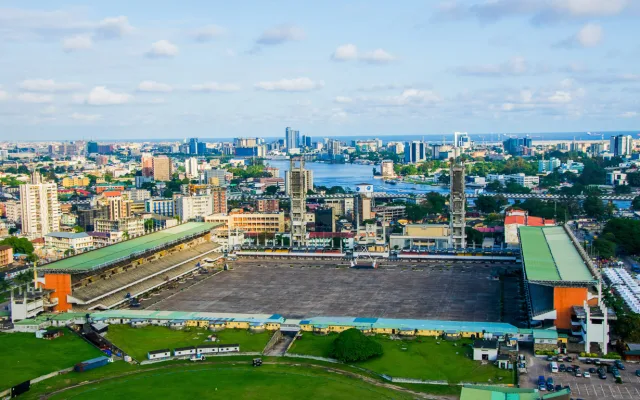
Lagos
Africa's largest megacity and its pulsing heart: the fashionable districts of Lekki and Victoria Island, sandy beaches, a world-class Afrobeats scene, and the National Arts Theatre.
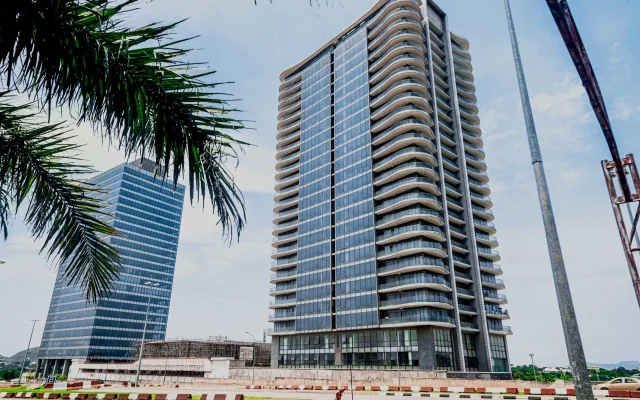
Abuja
Nigeria's purpose-built capital, laid out on a grand scale: the granite monolith of Aso Rock dominates the skyline, while the city centre is home to the striking National Mosque and National Museum.
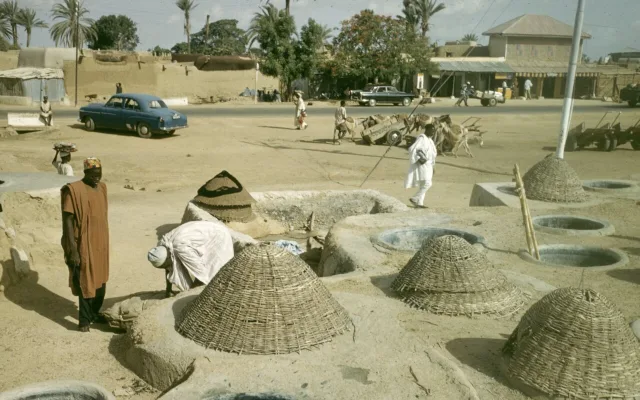
Kano
The ancient Hausa capital in the north of the country, living to its own rhythms: mud city walls, the bustling Kurmi Market and the old Kofar Mata dye pits, where cloth has been dyed with indigo for centuries.
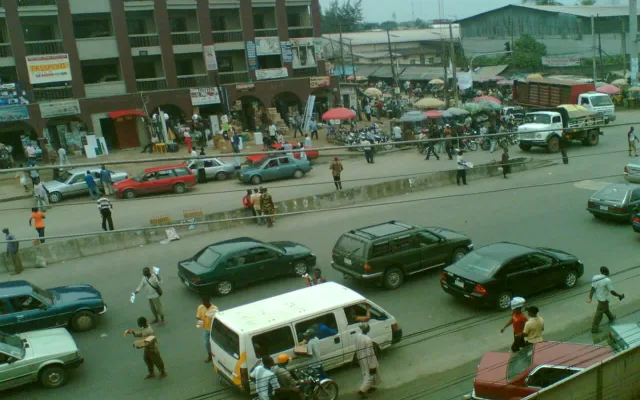
Port Harcourt
The country's oil capital in the Niger Delta: a busy port, a green botanical garden and a convenient starting point for the labyrinths of the mangrove forests.
What to see
#Nike Art Centre: This four-storey treasury of Nigerian art in Lagos is compulsory, and the volume of paintings and sculpture is genuinely overwhelming. Entry is free and the atmosphere lets you spend half a day there talking to the artists.
Lekki Conservation Centre: Worth a visit for Africa's longest canopy walkway strung above the jungle. It is a fine escape from the city noise and you see monkeys and giant tortoises inside the metropolis itself.
Zuma Rock: The giant monolith at the entrance to Abuja is startling for its scale and for the human face that emerges from the folds of the stone. You can simply admire it from the highway or climb it with a guide for the panorama.
Osun-Osogbo grove: A dense forest full of strange sculptures and shrines hidden among the trees. The place is saturated with Yoruba spirits and tradition, which makes a walk through it a real immersion in local magic.
Yankari: If you have the time, get out to Bauchi state to see elephants in the wild and swim in the warm Wikki springs. It is the country's best safari option, though the drive from the capital is a slog.
Calabar Carnival: You cannot cover everything in a day, as the festival runs the whole of December. The grand parade at the end of the month is the peak, when the city turns into one enormous dance floor of feathers and sequins.
Kano dye pits: The ancient Kofar Mata pits never stop, dyeing cloth deep indigo by techniques five hundred years old. It is living history you can literally touch, and you can buy a length of cloth from the dyer himself.
Prices
#Currency: The local money is the naira (NGN). The 200, 500 and 1,000 naira notes are in general circulation, and the smaller denominations are often filthy and falling apart.
Exchange: The country has an official rate and a market rate. It pays to change money at a licensed Bureau de Change and to avoid the men who approach you in the street or at the airport.
Cards: Visa and Mastercard are taken in supermarkets and big hotels, though markets are cash only and Amex is rarely useful. ATM withdrawals work but are frequently capped around 50,000 naira per transaction, so plan for several trips or bring dollars.
Foreign currency: US dollars are the practical reserve to carry, in clean, recent, large-denomination notes, which fetch a noticeably better rate. Change money in tranches rather than all at once, because the rate can move sharply within a week.
Digital payments: Nigerians live on apps like OPay, but as a visitor you will find a dollar reserve plus a Wise or Revolut card the simplest combination for keeping fees down.
| Item | Price (USD) |
|---|---|
| Lunch at a street buka | 3 |
| Restaurant dinner for two | 40 |
| 0.5l bottle of water | 0.25 |
| Local beer in a bar | 1 |
| Uber ride across Lagos | 6 |
| BRT bus ticket | 0.4 |
| Kilo of fruit at the market | 2 |
| SIM card with data | 5 |
| Flight Lagos to Abuja | 100 |
| Night in a budget hotel | 20 |
| Souvenir mask | 15 |
| Cup of coffee | 3 |
| Nike Art Centre entry | 0 |
| Climbing Zuma Rock | 10 |
Getting around
#Getting here: Lagos and Abuja both have busy international airports, reached direct from London, Paris, Frankfurt, Istanbul, Doha, Addis Ababa and several US cities. From North America there are nonstops to Lagos from New York and Atlanta, and fares spike around December for the carnival and holiday season.
Domestic flights: For moving between states, Air Peace or Arik Air are the sensible choice. They save enormous time and effort, since Lagos to Abuja takes little more than an hour.
Coaches: Long-distance travel is handled by operators of the calibre of GIGM and ABC Transport. They have modern terminals, air conditioning and app booking, which makes planning straightforward.
Trains: The country is building rail hard, and the fast train from Lagos to Ibadan is the most comfortable way to move. Tickets are cheap and the carriages look modern and clean next to anything else on offer.
City taxis: Uber and Bolt both work well in the big cities. They are safer and more transparent on price than flagging a car down, though be ready for old vehicles with no air conditioning.
Danfo and keke: The yellow danfo minibuses are chaos on wheels but the cheapest way around Lagos, running to no schedule and packed to the roof. Three-wheeled keke are indispensable for short hops within a neighbourhood, and you settle the price before you climb in rather than after.
Where to stay
#Where to stay in Lagos: Base yourself on the islands, Victoria Island or Lekki Phase 1. These are the safest areas with good food options and working street lighting, while the mainland can be overwhelming.
Booking: The main accommodation platform in the country is Hotels.ng, whose database of local hotels is far deeper than the international sites. It carries real reviews and current room photographs, which matters here.
Power: When booking, always confirm the building has a proper generator. Blackouts are constant, and without backup power your hotel has no air conditioning, no water and no working sockets.
Apartments: Airbnb is growing fast in the upmarket districts of Abuja and Lagos and offers a high standard. It often beats hotels if you are travelling as a group or staying a week or more in one city.
Guesthouses: In the provinces and the north the hotel stock is thinner, so choose established guesthouses attached to missions. They tend to maintain basic hygiene and security and the staff treat guests well.
Seasonality: Around the holidays, and above all during the Calabar carnival, rooms go months in advance. December prices double, so lock in your booking early and confirm it by phone with the hotel itself.
What to eat
#Jollof rice: The iconic dish of rice with tomato and pepper that everyone has to try. Nigerians are fiercely proud of their version and consider it the world's best, especially cooked over an open fire for the smoke.
Suya: The number one evening street food is spicy beef skewers heavily dusted with a peanut and spice mix. They are sold at the roadside, the hot meat wrapped in old newspaper with raw onion rings.
Heat: Nigerian cooking is extreme for an unprepared stomach, so always ask for "no pepper". Even then it can burn, so keep water or a Chapman to hand to put the fire out.
Soups and fufu: Try egusi, a thick melon-seed soup with greens and meat, eaten with fufu. Fufu is a dense yam paste you pinch off, roll into a ball and dip into the soup in place of bread.
Pepper soup: A rich, spicy broth with fish or goat, considered a genuine restorative. Every local bar serves it and it is the perfect accompaniment to a cold beer after a long hot day.
Breakfast and drinks: In the mornings, akara, puffy fried bean-flour cakes, are cooked on the street for almost nothing, and they are safe as well as filling if you watch them come out of the oil. Beyond beer, try palm wine, sweet and lightly fizzy when fresh, and order a Chapman, the Nigerian mix of soft drinks, grenadine and fresh cucumber.
Safety
#General rules: Nigeria demands attention to detail and an understanding of local security realities. Do not wave an expensive phone around in the street and leave jewellery at home so you are not marking yourself out in a crowd.
Moving around: Rule out walking after dark entirely, even in the better districts. For any night-time movement use only established taxi services booked through an app to your door.
No-go areas: Cut the north-eastern states and the Niger Delta interior out of your itinerary altogether, because of kidnapping and terrorism risk. The borders with Cameroon and Niger are also considered highly unstable for a lone traveller, and you should read your own government's travel advisory before you commit.
Health: Malaria is a genuine threat, so use repellent and sleep under a net. At the first sign of fever or unexplained weakness, get to a clinic for a rapid test.
Water: Never drink tap water and do not even brush your teeth with it in cheap hotels. Buy only bottled water from known brands and check the seal on the cap before you drink.
Photography: Be very careful with a camera and always ask permission before photographing people. Shooting government buildings, military installations and bridges is strictly forbidden and can lead to arrest.
Etiquette and culture
#Greetings: The handshake here is an important ritual and it will not be rushed. Ask after the other person's health and family before getting to business, which reads as good manners and respect.
The right hand: The left hand is considered unclean, so do everything with the right. Hand over money, take food and gesture with your right hand to avoid causing offence.
Religion: The country divides clearly between the Muslim north and the Christian south, and that shapes how you behave. In the north observe a strict dress code and forget alcohol; in the south things are much looser, though propriety still counts.
Bargaining: At markets and private shops haggling is not merely allowed, it is necessary if your budget is to survive. Push the price down by half or two-thirds and do it with a smile, turning it into a conversation.
Respect for elders: Older people carry real authority, are given way and are greeted first. Addressing a stranger as "sir" or "madam" smooths out an astonishing number of everyday problems.
Time: Nigerian time means an hour late is roughly punctual. Do not expect the bus to leave on schedule or a meeting to start when it said, and simply settle into that rhythm.
Connectivity
#Networks: Three giants operate here, MTN, Airtel and Glo, and their SIMs are sold everywhere. MTN is considered the best for coverage, particularly if you are heading beyond the largest cities.
Registration: By law a SIM purchase requires a NIN registration number, but visitors are registered on their passport instead. The process takes time, so do it in an official operator's office rather than a street kiosk.
Internet: In Lagos and Abuja 4G is reasonably stable and handles maps and messaging without trouble. Signal often vanishes inside buildings, and rural speeds drop to almost nothing.
Messaging: All the usual services work without restriction and Nigerians are devoted to WhatsApp. It is the main channel for business, taxi bookings and talking to guesthouse owners, so keep it to hand.
Wi-Fi: Free internet in cafes is rare and even expensive hotels may charge for it or serve it very slowly. Buy a 5 to 10GB mobile data bundle instead, which is cheaper and more reliable.
Language: English is the official language, so you will be understood everywhere, but the street speaks Pidgin, a distinctive blend of English and local tongues. Picking up a few Pidgin phrases makes you an instant insider with market traders.
Phrasebook
#| English | Nigerian Pidgin | Pronunciation |
|---|---|---|
| Hello, how are you? | How you dey? | How yoo DAY? |
| I'm fine | I dey fine | Ah day FINE |
| Thank you | Thank you | Tank yoo |
| Please | Abeg | ah-BEG |
| How much is it? | How much? | How MUCH? |
| Food, to eat | Chop | Chop |
| Friend, mate | Paddy | PAD-dee |
| Foreigner, white person | Oyibo | oh-YEE-bo |
| Trouble, problem | Wahala | wa-HA-la |
| Quickly, right now | Sharp-sharp | Sharp-SHARP |
| I don't understand | I no understand | Ah no un-da-STAND |
| Yes / No | Yes / No | Yes / No |
| Where is...? | Where ... dey? | Where ... DAY? |
| Help me! | Help me! | Help mee! |
| Water | Water | WOH-ta |
| Sorry | Sorry | SOR-ree |
| Be alert, watch out | Shine your eye | Shine yor EYE |
| It's delicious | E sweet | Eh SWEET |
| Goodbye | Bye-bye | Bye-BYE |
| Let's go, okay | Oya | OH-ya |
| It's finished | E don finish | Eh don FIN-ish |
| I'm coming (back shortly) | I dey come | Ah day COME |
Good to know
#Health: Take out insurance that covers hospitalisation, though the best private clinics in Abuja will still want cash up front. Buy medicine only from large chains like HealthPlus, so you do not end up with a counterfeit.
Plugs: The country uses British type G plugs with three flat pins, so buy an adapter before you fly. Voltage fluctuates badly, so a surge protector is worth having for expensive electronics.
Domestic flights: Buy internal tickets on the airlines' own sites, because aggregators frequently miss cancellations. Get to the airport at least three hours early, since the security and check-in queues can be endless.
Apps: Install Bolt for taxis, Google Maps for navigation and Hotels.ng for finding rooms on the ground. GIGM's app is useful too if you decide to take a long-distance coach.
Clothing: Pack light natural fabrics, since Nigeria is hot and humid all year. Keep one set of conservative, fully covering clothes for mosques in the north or for official offices.
Contacts: Find out where your own country's high commission or embassy sits in Abuja or Lagos and note the emergency number down on paper. Relying solely on a smartphone in a crisis is a bad idea.
Frequently asked questions
#Yes, virtually every nationality needs a visa, obtainable electronically through the official migration portal or at a Nigerian mission. The e-visa costs more but removes the need to appear in person if your paperwork is in order, and you should check your own passport's rules well ahead of travel.
Abuja is generally considered the calmest and best organised place in the country, thanks to the heavy police presence and the government districts. Calabar also stays relatively safe for foreigners, especially during the annual carnival.
Visa and Mastercard are accepted in supermarkets, better restaurants and larger hotels, but markets and small businesses want cash. ATM withdrawal limits are low, so bring US dollars to change and keep a card with cheap foreign transaction fees as backup.
An international yellow fever vaccination certificate is essential for legal entry. Without it you can be turned back at the airport or refused boarding at your point of departure.
Domestic flights between the main hubs of Lagos, Abuja and Kano remain the fastest and safest option. On a budget, use the established coach operators with modern buses and secure enclosed terminals.
Yes, especially the famous suya, but choose stalls where the meat is cooked in front of you over a fierce fire. Keep your hands clean and drink only sealed bottled water to avoid infection.
The main events of Africa's biggest street festival run through December and peak in the final week of the year. That is when the largest parades happen, so book accommodation and travel to Calabar several months ahead.
For a safe stay pick Victoria Island or Lekki Phase 1, where the best hotels, restaurants and secure residential compounds are concentrated. The mainland is far more chaotic and can be unsafe for a visitor without a local escort.
Yes, but with restrictions. Registration is mandatory for a drone of any weight. An NCAA permit is mandatory and expensive; flying without one is illegal. Rules for other countries are in the drone ranking by country.
Updated
The data on this page goes out of date. Visa rules and permitted stays, border requirements, prices and budgets, transport and local conditions all change fast, and we do not re-check every page every day. We show the date of our last check where we have one, but before you travel, verify with official sources: the country’s consulate, its immigration service, its e-visa portal and your carrier.