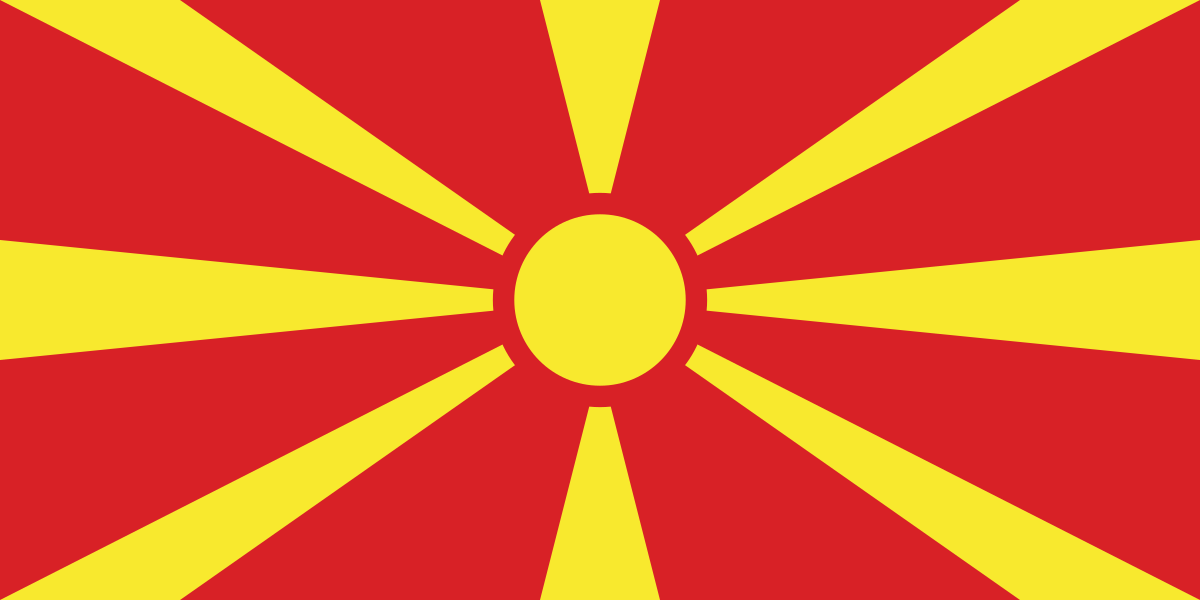
North Macedonia
MKA small Balkan country of ancient lakes, Ottoman bazaars and mountains covered in monasteries. North Macedonia is one of the cheapest destinations in Europe: a filling lunch runs to about $5 and a good room to $30. Lake Ohrid is the jewel of the Balkans and a UNESCO site, while the capital, Skopje, startles with its giant statues and eclectic architecture. The country is compact enough to see the best of it in a week.
Where to go #
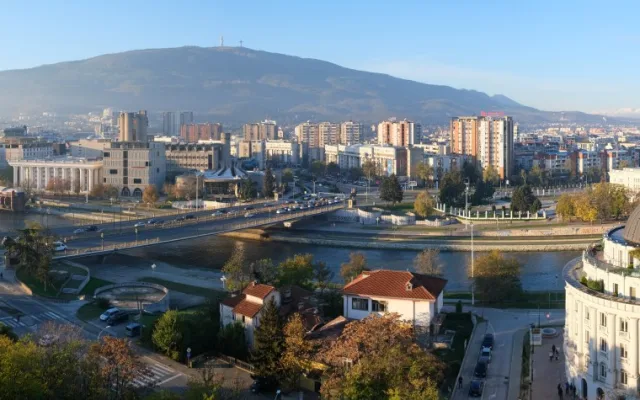
Skopje
The capital of North Macedonia, home to the bombastic "Skopje 2014" urban project, a historic Ottoman bazaar, and the Kale fortress above the Vardar river.
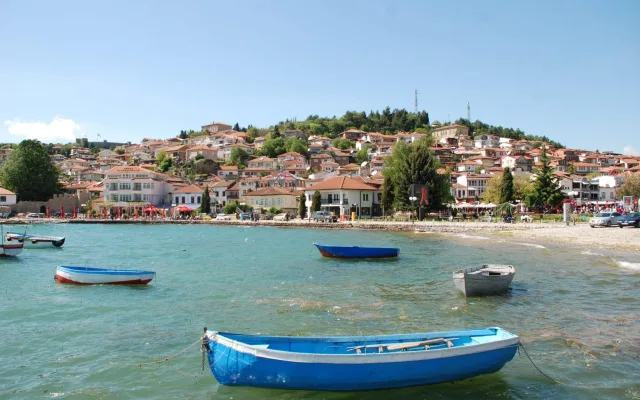
Ohrid
The Orthodox Jerusalem of the Balkans on the shores of crystal-clear Lake Ohrid — a tectonic marvel and UNESCO double World Heritage Site.
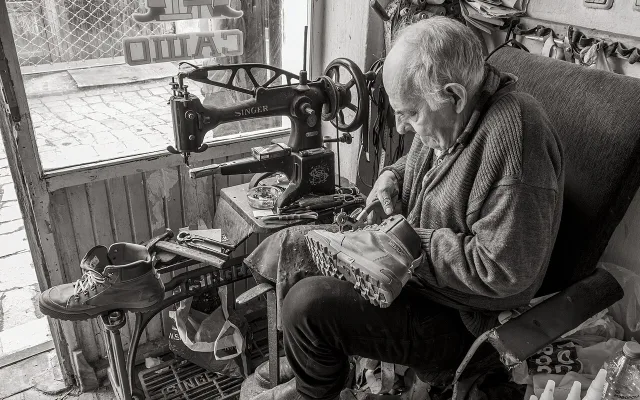
Bitola
The city of consuls in the south of the country — Širok Sokak, the ancient ruins of Heraclea and the Pelister ski slopes.
What to see #
Matka Canyon: Right next to the capital and compulsory for anyone who likes landscape. You can rent a kayak or take a boat out to the Vrelo cave, with emerald water below and sheer rock above.
Lake Ohrid: The oldest lake in Europe and worth seeing with your own eyes in any season. A pleasure boat takes you to the monastery of Saint Naum, where peacocks wander the grounds among the springs.
Heraclea: The ancient site at Bitola is impressive for the excellent condition of its Roman mosaics and its amphitheatre. It lets you touch the era of Philip II and Alexander without the crowds you would face elsewhere.
Samuel's Fortress: The fortress above Ohrid gives the best panorama of the town and the water. Climbing the old walls is the simplest way to grasp the scale of the ancient settlement and the height of the mountains behind it.
The canyon trail: The three-kilometre path through Matka runs along the gorge directly above the water. Walking the rock ledges is free but needs proper shoes and your own water, because there are no shops along the way.
Saint John at Kaneo: The church on the cliff is the single most recognisable image in the country. Photographs from here are remarkable, particularly in the orange light of sunset reflecting off the lake.
Prices #
Currency: The local money is the denar, pegged firmly to the euro. Bring euros in cash if you are bringing anything, since dollars are exchanged less willingly and at a noticeably worse rate in private bureaux.
Cards: Visa and Mastercard work in hotels, supermarkets and city restaurants, and ATMs are common in the towns. Amex is rarely accepted, and plenty of small shops, market stalls and family taverns still want cash, so keep denars on you.
Exchange: Change money at the street bureaux in the town centres marked "менувачница", where the rate is best. Banks take longer, often want your passport and may charge a fee on each transaction.
Withdrawals: Local ATMs frequently add their own charge on top of your bank's, so take out larger sums less often. A Wise or Revolut card removes the conversion markup entirely and is the easiest way to handle a short trip.
Tipping: Restaurants expect around ten percent, or simply rounding the bill up. Macedonians are genuinely warm and do not generally try to overcharge a visitor for being one.
| Item | Price (USD) |
|---|---|
| Lunch in a cafe | 6.00 |
| Dinner for two | 30.00 |
| Cup of coffee | 1.80 |
| Glass of beer | 2.50 |
| Burek | 1.20 |
| Litre of petrol | 1.40 |
| Taxi across town | 4.00 |
| Bus ticket | 0.80 |
| 1.5l of water | 0.50 |
| Car hire, per day | 25.00 |
| Fortress entry | 2.70 |
| Fridge magnet | 2.00 |
| Bottle of wine | 5.00 |
| Kilo of figs | 1.50 |
Getting around #
Getting here: Skopje airport has low-cost links to London, Vienna, Milan, Basel, Istanbul and a spread of German cities, and Wizz Air in particular keeps fares low. Ohrid has a small seasonal airport, and many travellers arrive overland instead by coach from Sofia, Belgrade, Pristina or Thessaloniki, all within a few hours.
Car hire: This is the most efficient way to see the country in a short time. Cars are cheap, roads are in good condition, and most foreign licences are accepted, though an International Driving Permit is worth carrying if yours is not in the Latin alphabet.
Coaches: Intercity buses run between towns operated by various companies. Buy tickets at the station in advance, because online timetables do not always match reality.
City transport: Skopje runs distinctive red double-decker buses. You pay with an electronic card bought at a kiosk, since drivers very rarely take cash.
Taxis: Rides within towns are cheap, but always ask the driver to use the meter. In tourist parts of Ohrid you may be quoted an inflated flat fare, so do not be shy about negotiating.
Trains and tolls: The railway network is thin and the trains are very slow, so Skopje to Bitola takes far longer than the coach and only suits people who want the experience. Motorways are tolled with frequent payment points, and you can pay in denars, by card or in euros, though change in foreign currency comes at a poor rate.
Where to stay #
Guesthouses: In Ohrid and Bitola this is the warmest option. The owners often live in the same building, serve you homemade coffee and help with the compulsory registration at the police station.
City hotels: Skopje offers everything from budget rooms to international chains in the centre. Book ahead through the established platforms that let you lock in a rate without prepaying.
Apartments: Renting an apartment saves noticeable money on food, since you can make your own breakfast. Finding somewhere decent in the centre for forty euros a night is realistic even at the height of the season.
Unusual stays: In central Skopje there are galleons moored on the Vardar that have been converted into hotels. They are stage-set ships with comfortable rooms inside and views over the main bridges.
Parking: If you hire a car, look specifically for accommodation with its own parking. Old town streets are narrow and the tow trucks work fast and without mercy.
Comfort: In private rentals check for air conditioning, because Balkan summers get seriously hot. In winter ask what the heating is, since central heating is far from universal in residential buildings.
What to eat #
The national dish: You have to try tavche gravche, baked beans served in a clay pot. It is filling, cheap, considered a national treasure and served in every tavern in the country.
Grilled meat: Pleskavica is an enormous grilled patty, often served with cheese inside. Portions in the kebab houses are always substantial, the meat is fresh and it comes with a mound of vegetables and fresh bread.
Bakeries: Burek is sold in pekaras on every corner from very early in the morning. Flaky pastry with meat or spinach alongside local yoghurt is the best breakfast a hungry traveller on a budget can get.
Fish: In Ohrid order the trout, but note that menu prices are often quoted per hundred grams. It is an expensive delicacy and better value in restaurants slightly out of the centre.
Ajvar: This thick roasted pepper relish is eaten by locals with everything. A jar of homemade ajvar makes an excellent edible souvenir that survives a suitcase.
Drinks: Rakija arrives with lunch and strong Turkish coffee closes the meal. Wines from the southern Tikves region cost very little and are of genuinely high quality.
Safety #
The general level: The country is calm and welcoming to independent foreigners. Serious crime is rare and people treat visitors with real hospitality and are always ready to help.
Pickpockets: Pay attention in the crowds of Skopje's Old Bazaar and on Macedonia Square. Keep an eye on bags and never carry a large amount of cash in a back pocket.
Taxis: Minor scams occasionally happen on rides from stations and the airport. Insist on the meter or agree the fare clearly in advance to avoid an argument at the end.
Dogs: Cities have plenty of strays, generally chipped and not aggressive. After dark on the outskirts it is still worth being careful and not provoking them.
Mountains: Hiking in Matka or in the national parks, never leave the marked trails. Mountain weather changes fast and mobile signal drops out at exactly the wrong moment.
Driving: Balkan driving has its own logic and locals routinely ignore rules and indicators. Be extremely careful on mountain switchbacks, particularly in heavy rain or thick fog, and check your own government's travel advisory before the trip.
Etiquette and culture #
Religion: Orthodoxy and Islam coexist peacefully here and it shows in the architecture. Visiting churches and mosques, observe the dress code: covered shoulders and knees for everyone.
Hospitality: Macedonians are sociable and in no hurry whatsoever. If you are invited for coffee, try not to refuse outright, because it is a real part of local etiquette and a way of showing respect.
Pace: The governing concept is "polako", which means slow and relaxed about everything. Waiting for the bill in a restaurant can take a while, and you simply accept it as part of the Balkan character.
Topics to avoid: Do not start political arguments about the country's name or its relations with its neighbours. It is a raw subject for many people and best steered around.
Bargaining: At markets and in the souvenir shops of the Old Bazaar you can and should haggle. A discount of ten or fifteen percent is normal if you are polite and smiling.
Holidays: On public holidays the cities go quiet and many shops close. Plan your shopping ahead if your trip falls on an important national or religious date.
Connectivity #
SIM cards: You can buy a local SIM from A1 or Telekom at the airport or any city shop. Registration needs your passport and takes no more than ten minutes.
Mobile data: 4G coverage is good almost everywhere except deep mountain gorges and the national parks. Data bundles are cheap, and a local number is genuinely necessary for paying for street parking.
Wi-Fi: Free access is standard in cafes, popular restaurants and city hotels. Speeds are usually good enough to work or make video calls without trouble.
Language: Young people generally speak decent English, and menus and signs in tourist areas are commonly bilingual. Macedonian is written in Cyrillic, which takes a moment to adjust to, but the tourist infrastructure is well used to English speakers.
Apps: Install offline maps such as Maps.me, which know the small mountain and canyon trails far better than the alternatives. For intercity buses the station website helps, though asking at the ticket window remains more reliable.
Roaming: EU visitors roam here at reasonable rates and everything works without restriction, so there is no need for a VPN. An eSIM from a provider like Airalo is the quickest option if you want data the moment you land.
Phrasebook #
| English | Macedonian | Pronunciation |
|---|---|---|
| Hello | Здраво | ZDRA-vo |
| Thank you | Благодарам | bla-go-DA-ram |
| Please | Молам | MO-lam |
| Yes / No | Да / Не | Da / Ne |
| How much is it? | Колку чини? | KOL-ku CHI-ni? |
| The bill, please | Сметка, молам | SMET-ka, MO-lam |
| Tasty | Вкусно | VKUS-no |
| Beer / Wine | Пиво / Вино | PI-vo / VI-no |
| Water | Вода | VO-da |
| Help! | Помош | PO-mosh |
| Where is the toilet? | Каде е тоалет? | KA-de e to-A-let? |
| Sorry | Извинете | iz-VI-ne-te |
| Good | Добро | DO-bro |
| Slowly, take it easy | Полако | PO-la-ko |
| Cheers! | На здравје! | Na ZDRAV-ye! |
| Beautiful | Убаво | U-ba-vo |
| Friend | Другар | dru-GAR |
| How are you? | Како си? | KA-ko si? |
| Bro (slang) | Бате | BA-te |
| Dude (slang) | Типе | TI-pe |
| Top, the best (slang) | Врв | Vrv |
| I don't understand | Не разбирам | Ne raz-BI-ram |
Good to know #
Registration: Every foreigner must be registered with the police within 72 hours of arrival. Hotels do this automatically, but in a private rental you go to the station with your host.
Information: The official Exploring Macedonia tourism portal gives only broad information about the country. For practical advice you are better off with forums and blogs written by people who have actually travelled here.
Insurance: Carry travel insurance with adequate medical cover, as some nationalities must show it at the border. Healthcare for foreigners is charged for and expensive, and even a routine consultation makes a dent in a budget.
Power: Sockets are the standard European type C and F at 230 volts, so continental European travellers need no adapter while UK and North American visitors do.
Water: Tap water in the main cities is considered drinkable, though bottled is the safer habit. In the mountains there are many built stone springs, cheshmi, where you can fill up with excellent water for nothing.
Souvenirs: Beyond homemade ajvar and wine, look at jewellery made with genuine Ohrid pearl. Buy it only from certified shops in the old town so you do not end up with an imitation.