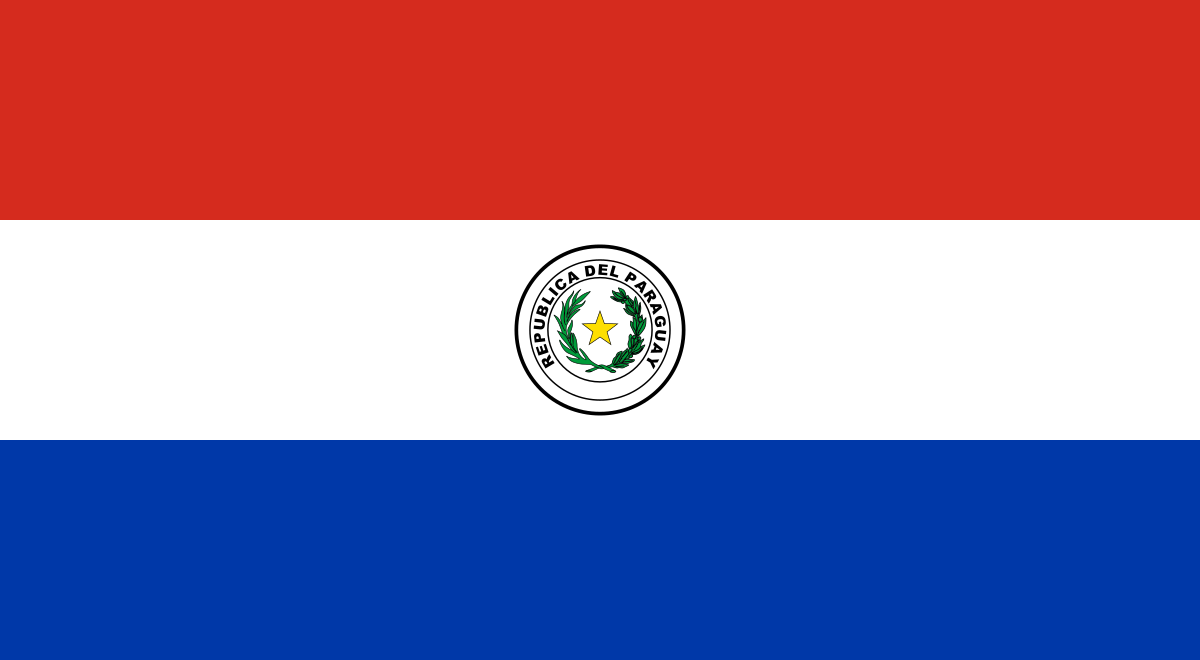
Paraguay
PYOne of the least known countries in South America, where Guaraní is not only the currency but also an official language. Paraguay is the great ruined Jesuit missions, the endless plains of the Chaco, the roar of Itaipú and a culture in which Indigenous and Spanish have fused completely. It is startlingly cheap: a filling asado for $3, a comfortable hotel for $25. There are no crowds of tourists here, only South America without the gloss.
Where to go #
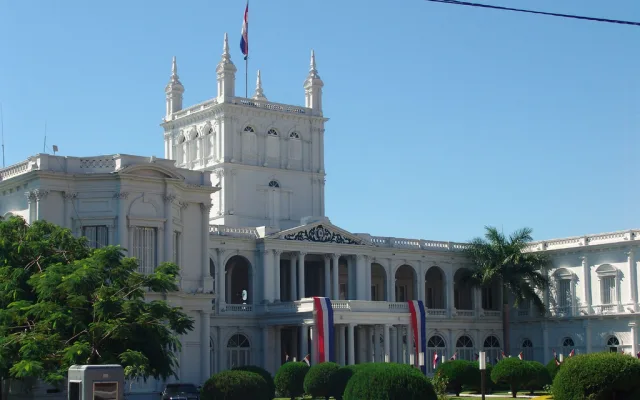
Asunción
One of the oldest continuously inhabited capitals in South America, with an affordable way of life, a colonial waterfront, and warm locals.
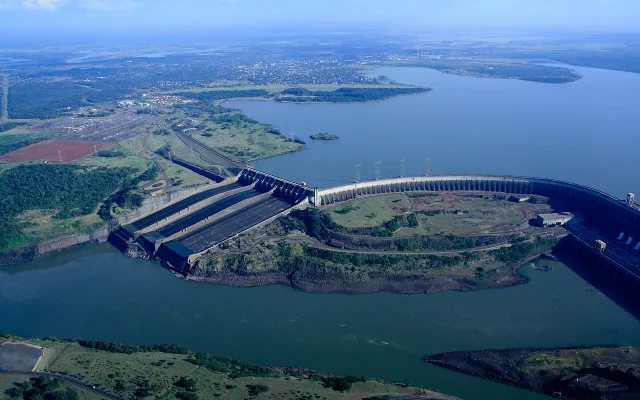
Ciudad del Este
Border city at the triple frontier with Brazil and Argentina — the Itaipu Dam and duty-free trade.
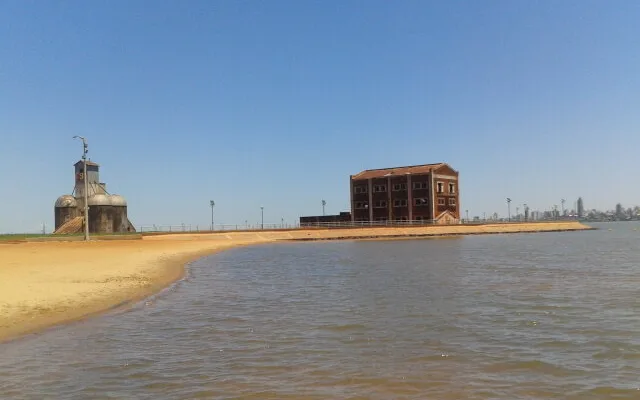
Encarnacion
A Paraguayan resort town on the Paraná River — San José beaches, carnival, and Jesuit mission ruins.
What to see #
The Jesuit missions: for history, go to Trinidad. These seventeenth-century ruins impress through sheer scale and through the baroque stone carving that survives on the walls. La Santísima Trinidad and nearby Jesús de Tavarangue are usually seen together in half a day.
Itaipú dam: what to see if machinery interests you at all. The free tours take you along the crest of one of the largest hydroelectric projects on earth, and the evening light show is worth timing your visit for.
The Gran Chaco: worth a trip into genuinely wild country. In this so-called green hell, pumas and giant anteaters live among endless thorn savannah, and the sense of emptiness is the point.
Museo del Barro: the one museum to make time for in Asunción. It holds the best collection of indigenous masks and ñandutí lacework in the country, and it explains more about Paraguay than any guided city walk.
Panteón de los Héroes: find this memorial in the middle of the capital. It copies the Invalides in Paris and carries a weight for Paraguayans that is hard to overstate given the country's history.
Lake Ypacaraí: if you are wondering where to go out of the capital, San Bernardino on its shore is the answer. The sunsets are the best in the region and boats go out from the jetty all afternoon.
Prices #
Currency: the local money is the guaraní, and with a dollar worth roughly 7,000 of them, prepare for wallets full of notes with a great many zeros on them. Prices are usually written with the thousands abbreviated, which takes a day to get used to.
Cards: Visa and Mastercard are accepted in supermarkets, hotels and larger restaurants in the cities, while Amex is rarely useful. Carry cash for buses, markets and anything outside Asunción, because the terminal will not be there.
ATMs: machines dispense up to three million guaraníes at a time and the withdrawal fee is high, so take larger amounts less often. Decline the machine's own conversion, and a Wise or Revolut card will keep the rate honest.
Changing money: use the official Casas de Cambio rather than the men calling out rates on the street, who routinely shortchange visitors who have not yet learned the notes. US dollars change everywhere and get the best rate; euros are accepted in the capital but less so elsewhere.
Tipping: around 10% in restaurants is normal. Taxis and market stalls do not expect anything extra, because the price you agreed is the price.
| Item | Price (USD) |
|---|---|
| Lunch in a canteen | 4.00 |
| Dinner with wine | 24.00 |
| Street chipa | 0.60 |
| Cappuccino | 2.50 |
| 0.5L beer | 1.40 |
| 1.5L water | 0.80 |
| Hostel dorm bed | 10.00 |
| Guesthouse room | 35.00 |
| City bus fare | 0.50 |
| Taxi across the centre | 4.00 |
| Long-distance bus | 12.00 |
| Litre of petrol | 1.30 |
| Cinema ticket | 7.00 |
| Packet of cigarettes | 1.80 |
Getting around #
Getting in: Silvio Pettirossi airport in Asunción is served through the regional hubs rather than directly from far away. The usual connections are São Paulo, Buenos Aires, Santiago, Lima and Panama City, with a seasonal link to Madrid; from Europe or North America that means one or two stops. Many travellers arrive overland instead, on a bus from Foz do Iguaçu in Brazil or from Argentina.
Long-distance buses: the way to move around the country. Choose the cama classes with wide reclining seats and the longer routes become genuinely comfortable rather than an ordeal.
City buses: noisy, frequent and about fifty cents. You pay the driver in cash, and be ready to step off while the bus is still rolling, because full stops are considered optional.
Taxis: use the Bolt or MUV apps for personal journeys. It is both safer and cheaper than picking up a car outside a bus terminal, where the fare is invented on the spot.
Car hire: a vehicle earns its keep for exploring the Gran Chaco. Beyond the main highways the roads turn to dirt and wash out in heavy rain, so a high-clearance vehicle and a flexible schedule both matter.
Terminals and airport: the main terminal in Asunción is loud and chaotic, so keep your bags in front of you when boarding. A taxi from the airport into town runs about $20, while the local bus does the same trip for a dollar if you are not in a hurry.
Where to stay #
Where to stay in Asunción: book in Villa Morra. It is the safest district, well supplied with cafés and shops, and everything is within walking distance. Recoleta nearby works on the same terms.
Guesthouses: family-run places charge around $35 a night, breakfast usually included, often with a small pool in the courtyard. The owners tend to know exactly which bus you need and when it leaves.
Hostels: there are not many budget beds, but the ones that exist have real character. Ten dollars buys a bunk and, more usefully, help arranging the awkward journeys to the missions or the Chaco.
Apartments: for a longer stay, renting a flat works out better. Around $600 a month gets a studio in a modern building with security, which is why Asunción has become popular with remote workers.
Estancias: spend a couple of nights on a Paraguayan ranch. Roughly $90 covers food, riding and an honest look at rural life, and it is the most memorable thing you can book here.
Encarnación: look for a room along the riverfront promenade. That is the strip with the views over the Paraná and the shortest walk to the city beaches.
What to eat #
Asado: grilled beef is the centre of everything, and Paraguayan beef is excellent. Portions in a parrillada are enormous, so order for fewer people than you have and add more later rather than wasting half of it.
Chipa: cheesy rolls made from cassava flour, sold on every corner and out of baskets on long-distance buses. This is the national snack and it is best eaten warm, within about ten minutes of purchase.
Sopa paraguaya: not a soup at all, but a dense cornbread with cheese baked into it. It comes as a side with meat and is far more filling than it looks.
Mbejú: a starchy cheese pancake cooked in a dry pan, and the traditional way to start the day. It goes with strong coffee and will hold you until a very late lunch.
Vori vori: a rich broth with cornmeal dumplings, proper home cooking rather than restaurant food. Look for it in a plain canteen at lunchtime, which is when it appears.
Drinks: caña is sugarcane rum, cheap and strong, often mixed with lemon and honey into a cocktail called carrulim. In the heat, though, everyone drinks tereré instead.
Safety #
The general picture: Paraguay is one of the calmer countries in the region, with low levels of violent crime, but that is not a reason to switch off entirely. Ordinary urban caution covers most of it.
Phone theft: the most common problem by far. Do not stand on a busy street scrolling, because thieves on motorbikes work exactly those moments.
Districts: in the capital avoid Chacarita completely. The old centre empties out quickly after dark, so take a taxi rather than walking back through it at night.
The border zone: be more careful in Ciudad del Este. The area is known for smuggling, and the dark side streets are not where you want to be carrying a camera.
Traffic: driving is chaotic and rules are treated as suggestions. Cross with full attention even on a green light, and never assume a car will stop for you.
Health: dengue fever is a real risk from mosquito bites. Use repellent from December to March, drink bottled water, and check your own government's travel advisory before you travel to remote parts of the Chaco.
Etiquette and culture #
Two languages: Paraguay is genuinely bilingual, and almost everyone speaks both Spanish and Guaraní. Guaraní is the language of jokes, affection and emotion, so a couple of words in it changes how people respond to you.
Tereré: not merely a drink but a national obsession. Paraguayans carry enormous flasks of iced water and share the same mate cup around a circle of friends all afternoon.
Ñandutí: the country's pride is this lace, spun in patterns like a spider's web. The best examples are sold in the town of Itauguá, and it makes a light, genuinely local souvenir.
People: the national temperament is hospitable and unhurried. If you are invited to sit and drink tereré with a family, understand that you have been trusted rather than merely tolerated.
Carnival: in February, Encarnación becomes the centre of the country's carnival. It is more modest than the Brazilian version and considerably more sincere for it.
Religion: Catholic traditions run deep, particularly during Semana Santa, when life stops and shops and offices close for days. Plan any travel around that week carefully.
Connectivity #
Operators: Tigo, Personal and Claro all operate. Tigo suits visitors best, since its coverage holds up furthest into the provinces.
Buying a SIM: you can pick one up in a phone shop or at a petrol station, but bring your passport, because registering the number is compulsory.
Data: urban 4G is good and cheap. Around $10 buys enough data for a couple of weeks of maps, messaging and the occasional video.
eSIM: the easiest option is arranging a virtual SIM before you fly, which puts you online the moment you land without hunting for a shop. It costs a little more than the local equivalent.
WhatsApp: effectively the country's operating system. Locals use it for everything from booking a taxi to making a hairdresser's appointment, and businesses answer it faster than email.
Language and coverage: English is not widely spoken outside hotels in Asunción, so an offline translator with Spanish downloaded is genuinely useful. In the Gran Chaco the signal drops away entirely, so save your maps to the phone before setting out.
Phrasebook #
| English | Spanish / Guaraní | Pronunciation |
|---|---|---|
| Hello | Hola | OH-lah |
| Thank you | Gracias | GRAH-syas |
| How much is it? | ¿Cuánto cuesta? | KWAN-toh KWES-tah |
| Where is...? | ¿Dónde está...? | DON-deh es-TAH |
| Help! | ¡Ayuda! | ah-YOO-dah |
| I don't understand | No entiendo | noh en-TYEN-doh |
| The bill, please | La cuenta, por favor | lah KWEN-tah por fah-VOR |
| Water | Agua | AH-gwah |
| Beer | Cerveza | ser-VEH-sah |
| Very tasty | Muy rico | mwee REE-koh |
| Mate, buddy (slang) | Kape | kah-PEH |
| Brilliant! (slang) | ¡Legal! | leh-GAHL |
| Iced mate | Tereré | teh-reh-REH |
| How are you? (Guaraní) | Mba'éichapa | mbah-EH-ee-chah-pah |
| Good (Guaraní) | Iporã | ee-poh-RAH |
| Thank you (Guaraní) | Aguyje | ah-goo-YEH |
| Yes | Sí | see |
| No | No | noh |
| Tomorrow | Mañana | mah-NYAH-nah |
| Right now | Ahora | ah-OH-rah |
| Sorry | Perdón | per-DOHN |
| Let's go | Vamos | VAH-mos |
Good to know #
Consular help: no country keeps a large diplomatic presence here, and several nations cover Paraguay from Buenos Aires. Find out before you travel where your nearest embassy or consulate is and save its address and number offline.
Help lines: dial 911 for the police, 141 for an ambulance and 132 for the fire service. Most operators speak only Spanish, so have the address written down.
When to go: May to September is the comfortable window. In summer the temperature regularly passes 40°C, and sightseeing in that heat stops being enjoyable very quickly.
Power: sockets are type C at 220 volts, the round two-pin European plug. Travellers from Britain, North America or Australia will need an adapter; continental Europeans will not.
Navigation: download your maps before leaving the capital. In the remoter parts of the Chaco the data connection vanishes and road signs are close to non-existent.
Health care: private clinics in Asunción are good but expensive. Take out travel insurance before departure and keep a scan of the policy on your phone.