

Peru
The land of the Inca, where Machu Picchu floats above the clouds and Lima is reckoned the gastronomic capital of South America. From the Pacific coast across the Andes to the Amazon, Peru packs three worlds into one country. Visa-free entry for most nationalities, affordable prices and extraordinary variety of landscape make a trip here unforgettable. You can fly over the Nazca lines, sleep on Lake Titicaca and eat ceviche at dawn.
Where to go
#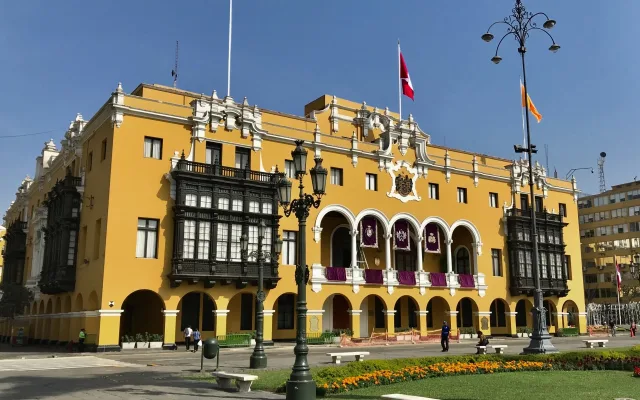
Lima
The gastronomic capital of Latin America, home to the continent's finest restaurants and pre-Columbian huacas embedded within the city's own neighbourhoods.
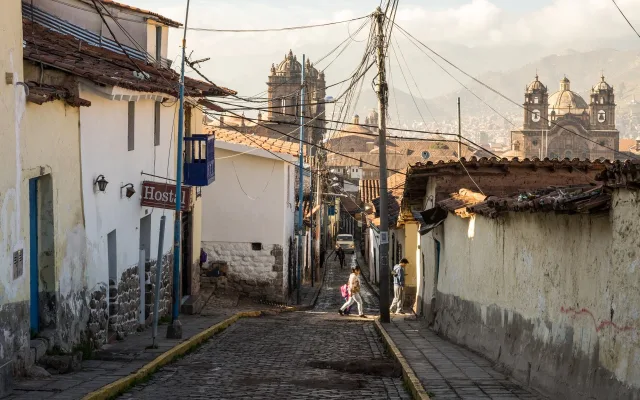
Cusco
The Incas' navel of the world at 3,400 m — gateway to Machu Picchu, with Inca-built streets, the Sacsayhuamán fortress, and living Andean culture.
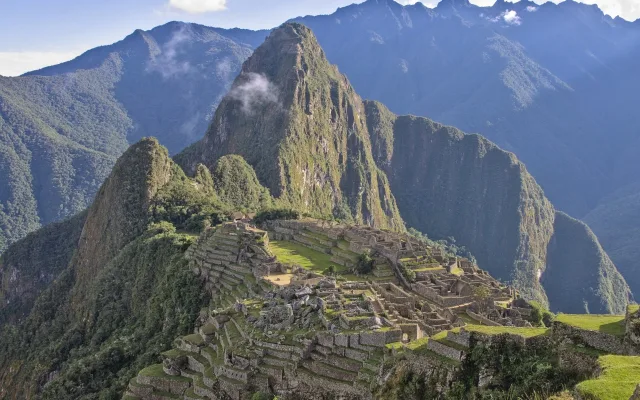
Machu Picchu
The lost Inca city in the clouds — one of the most iconic sites in the Andes, reachable via the legendary Inca Trail or by train.
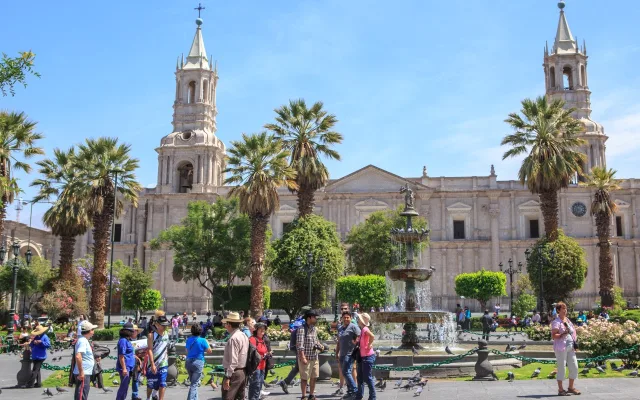
Arequipa
White city of volcanic sillar at the foot of El Misti — gateway to Colca Canyon with condors, and home to the Juanita mummy at the local museum.
What to see
#Machu Picchu. Tickets come only from the state portal tuboleto.cultura.pe, and entry is by circuito, fixed routes you cannot switch between. Choose your circuito carefully, because not all of them include the classic postcard view. In high season, June to August, they sell out a month or six weeks ahead, and the Huayna Picchu and Machu Picchu Montaña climbs two to three months ahead. Arrive at opening; by midday the buses deliver the main wave and the terraces are full.
Ollantaytambo is the only place where the Inca street plan still functions: same blocks, same water channels. Everyone storms the fortress above the town, while the Pinkuylluna granaries on the opposite slope are empty and the view from there is better.
Moray and Maras. The concentric terraces at Moray were an Inca agricultural laboratory with a 15-degree microclimate difference between the top and bottom rings. The Maras salt pans next door have been worked since before the Spanish arrived. Half a day for the pair.
Colca Canyon. Condors are caught at Cruz del Cóndor early, while the updrafts are running. You either do it as a day trip from Arequipa, meaning a three in the morning start and half a day on a bus, or you stay overnight in Cabanaconde, which is incomparably better.
Vinicunca, the rainbow mountain, at 5,200 m, is getting popular faster than it deserves. The climb is hard even when acclimatised, and the colours only show in dry weather before noon. Palcoyo is the alternative without the crowds: lower, calmer, same idea.
The Nazca lines are only legible from the air, on a 30-35 minute flight in a small aircraft that makes a lot of people queasy.
Overrated: Pisac market on a tour-bus day, the shamanic ceremonies advertised on every Cusco corner, and a rushed tick-box visit to Titicaca.
Prices
#Currency: the Peruvian sol (S/), trading somewhere around 3.4-3.8 to the dollar and moving noticeably, so build slack into your sums.
Cards: Visa and Mastercard are accepted without fuss in city restaurants, hotels, supermarkets and larger shops; Amex much less so. A Wise or Revolut card gives you the honest rate at ATMs, and you should always decline the machine's own conversion offer.
Changing money: street cambistas in Lima and Cusco give better rates than the banks, operate legally with an ID badge, and should still be watched while they count. Casas de cambio are worse but calmer. At the airport, change only enough for the first taxi, and bring clean US dollar notes, since torn or written-on bills get refused outright.
Cash is mandatory at markets, in shared minibuses, in small cafés, in mountain villages and at the entrance to most archaeological sites.
Daily budget: backpacker $25-40 with a dorm bed, menú del día and buses; mid-range $60-120 with a private room, restaurants and business-class night buses; comfort from $200 with good hotels, domestic flights instead of buses and private guides. The Boleto Turístico del Cusco covers most Sacred Valley sites and Cusco museums, and pays for itself from the third site onward.
| Item | Price (USD) |
|---|---|
| Menú del día lunch | 3.00 |
| Dinner in a tourist restaurant | 15.00 |
| Ceviche in a cevichería | 8.00 |
| Pisco sour | 5.00 |
| 1.5L bottled water | 0.70 |
| Hostel dorm bed | 10.00 |
| Private room in a hospedaje | 25.00 |
| Night bus Lima-Cusco, cama seat | 45.00 |
| Domestic flight Lima-Cusco | 60.00 |
| Train Ollantaytambo-Aguas Calientes | 70.00 |
| Machu Picchu entry | 45.00 |
| Boleto Turístico, full version | 35.00 |
| Colca Canyon day tour | 30.00 |
| Rainbow Mountain day tour | 30.00 |
| Taxi across Lima by app | 6.00 |
| Metropolitano fare | 1.00 |
| Litre of petrol | 1.30 |
Getting around
#Getting in: Lima is the entry point for nearly everyone. From Europe there are nonstop flights from Madrid, Amsterdam, Paris and London, and from North America from Miami, Houston, Atlanta, New York and Los Angeles. Fares swing hard with the season, cheapest in February and March and worst in July, August and around Christmas, so look two or three months out. If your routing touches a US hub, check whether your passport needs an ESTA or a visa even to transit.
Long-distance buses are a genre of their own here. Cruz del Sur, Oltursa and Tepsa run double-deckers with cama seats that recline almost flat, and semicama a step below. An overnight Lima-Arequipa or Lima-Cusco saves you a hotel night. Buy from the operator's own site or counter, and note that the cheapest companies have the worst safety record on mountain switchbacks.
Domestic flights with LATAM, Sky Airline and JetSmart take an hour to Cusco and ninety minutes to Arequipa. Booked ahead, a flight often undercuts a business-class night bus and saves a full day.
The train runs on one route only, but an indispensable one: Ollantaytambo to Aguas Calientes below Machu Picchu, ninety minutes along the Urubamba with PeruRail or Inca Rail. High-season seats go early. The budget alternative is a minibus to Hidroeléctrica and two to three hours walking the sleepers.
In the cities, Lima's Metropolitano busway is the quickest way across town at rush hour. Ordinary buses and minibuses run without meaningful timetables but cost almost nothing. Order taxis through Uber, InDriver or Cabify rather than flagging one down.
Book in advance: Machu Picchu tickets and the train, and Inca Trail permits, which go months ahead and are unavailable through February when the trail closes for maintenance. Everything else can be sorted locally a day or two out.
Where to stay
#Hostels are the most developed category, especially in Cusco, Lima and Arequipa. There are quiet family-run ones and there are the party chains such as Loki, Pariwana and Wild Rover, where sleep is optional but finding trekking companions is not a problem.
Guesthouses and hospedajes are family-run places, often with no online presence at all. They undercut a hostel for a private room, but you book them on the doorstep.
Hotels. Cusco has plenty of colonial buildings in the centre, which look wonderful, but old stone walls at 3,400 m without heating add up to genuinely cold nights. Ask specifically about a heater and hot water.
Jungle lodges around Iquitos and Puerto Maldonado are sold as packages with meals and guided walks included, because there is essentially nowhere else to stay out there.
Choosing a district. In Lima, Miraflores is safe with a seafront and everything you need, and Barranco is more atmospheric and slightly further out; do not stay in the historic centre however convenient it looks on a map. In Cusco, aim a couple of blocks from the Plaza de Armas rather than on it, since the square is loud at night. In Aguas Calientes, book early: the choice is small and prices beat anything on the mainland.
Book ahead for June to August across the whole southern route, and for the days around Inti Raymi on 24 June in Cusco, which needs a month's notice at least.
What to eat
#Ceviche: raw white fish cured in lime juice with onion, chilli and coriander, served with sweet potato and choclo corn. It is a lunch dish only, because by evening the fish is no longer today's and locals know it. A good cevichería will also bring you leche de tigre, the marinade, drunk on its own.
Lomo saltado: beef stir-fried with tomato, onion and soy sauce, served with chips and rice at the same time. It is Peruvian-Chinese chifa cooking made visible; the soy sauce arrived with Chinese labourers in the nineteenth century.
Ají de gallina: chicken in a creamy nut sauce with yellow ají amarillo pepper. Despite the colour, it is not hot.
Anticuchos: beef heart skewers with a sharp sauce, the classic street food. Buy where there is a queue of locals and you will be fine.
Cuy: guinea pig, roasted whole. A traditional Andean dish served in Cusco, impressive to look at and short on actual meat.
Papa a la huancaína and causa are potato dishes, of which Peru has roughly as many as it has potato varieties, and there are more than three thousand of those. Menú del día, the set lunch of soup, main and a drink in a plain café, is cheap, filling and usually better than the tourist restaurants on the square.
Water: tap water is not drinkable anywhere in the country, so buy bottled or carry a filter. In street food the real risk is not the meat but unwashed salad and ice in drinks. Worth drinking: chicha morada from purple corn, pisco sour with its foam of egg white, and coca tea in the mountains.
Safety
#Overall: moderate. The tourist routes are straightforward, but Peru asks for everyday attention, and the main problem is petty theft rather than violence.
Lima by district. Miraflores, San Isidro and Barranco are fine day and evening. The historic centre is daytime only. Callao, La Victoria and the outskirts are not worth it at all, particularly with a camera out.
Cusco. The centre is patrolled, but the lanes above San Blas empty out at night. Take a taxi back up the hill after dark; it costs almost nothing.
Common setups. Taxis flagged in the street in Lima are occasionally express kidnappings, where the car drives you around ATMs until the card is empty, so use an app where the driver is logged. At bus stations the classic is a spilt drink and a helpful stranger while your backpack leaves. And check the watermark and raised print on 100 and 200 sol notes, because counterfeits circulate.
Altitude sickness (soroche) is a bigger danger than crime. At 3,400 m it hits most arrivals with headaches, nausea and sleeplessness. What works: a first day with no exertion, plenty of water, light food, coca tea and, if needed, Sorojchi tablets. What does not: alcohol and toughing it out. If it gets worse rather than better, descend, which is the only reliable cure.
Insurance must cover altitudes above 4,000 m and evacuation from a trek, because standard policies exclude both. Check your own government's travel advisory for current regional warnings before you book.
Etiquette and culture
#Coca is not a drug and is legal in Peru: the leaves are chewed, brewed and sold in any shop. Taking them out of the country is another matter entirely, tea bags included, and airport customs read it one way only.
Haggling is fine at markets and souvenir stalls, but without pressure, since this is a calm exchange rather than a competitive sport. Restaurants, supermarkets and transport have fixed prices.
Hora peruana. Turning up 15 to 30 minutes late is normal for social arrangements. It does not apply to buses and trains, which leave on time.
Living indigenous culture. Quechua is not a museum piece but a second official language spoken by millions. In Sacred Valley villages traditional clothing is everyday wear, not a costume, which gives you a simple rule: ask before photographing people. You will often be asked for a couple of soles, and that is a fair deal rather than a shakedown.
The women with lambs on Cusco's Plaza de Armas pose for money professionally; agree the price before the shutter, not after.
Tipping is around 10% in restaurants where no service charge appears. Guides on multi-day treks are given considerably more, and it forms a real part of their income.
Religion and dress. Officially Catholic, but Andean beliefs never went anywhere and coexist comfortably with the church, which is why processions and pre-Hispanic rites share the same festival. In churches, cover shoulders and knees.
Connectivity
#Operators: Claro has the best coverage in the mountains and the backcountry, Movistar matches it in cities, and Bitel and Entel are cheaper with gaps off the main roads.
Buying a SIM: at Lima airport or in a branded shop in town. You need your passport, because cards are registered to an owner and nobody will sell you one without a document. Staff will activate the package for you, which is much quicker than working it out yourself.
Cost: a 5-10 GB bundle runs to a few dollars depending on operator and promotion. Top-ups, recargas, are sold in any kiosk or pharmacy.
eSIM works fine if you would rather not find a shop: it connects before you fly, but costs more than a local SIM and leaves you without a local number. That number is occasionally needed for deliveries and taxi apps.
What the internet is actually like. LTE is solid in the cities. In the Sacred Valley and on the highways it is patchy. On the treks, Salkantay, Lares and Choquequirao, there is nothing at all, which is worth planning around and worth warning people at home about.
Wifi and language. Wifi is nearly everywhere, but slow in Aguas Calientes and mountain lodges, so download maps and tickets in advance. No VPN is needed, since nothing is filtered. WhatsApp is the messenger everyone uses for guides, hotels and drivers. English is rare outside tourist businesses, so a translation app with Spanish downloaded earns its keep.
Phrasebook
#Peruvian Spanish is clear and unhurried, easier on the ear than Mexican or Castilian. English barely exists outside the tourist trade, so a dozen phrases save real frustration. Two words of Quechua open doors in mountain villages: añay for thank you and allillanchu for how are you.
| English | Spanish | Pronunciation |
|---|---|---|
| Good morning | Buenos días | BWEH-nos DEE-as |
| Thank you | Gracias | GRAH-syas |
| Please | Por favor | por fah-VOR |
| How much is it? | ¿Cuánto cuesta? | KWAN-toh KWES-tah |
| Expensive / cheap | Caro / barato | KAH-roh / bah-RAH-toh |
| Where is...? | ¿Dónde está...? | DON-deh es-TAH |
| The bill, please | La cuenta, por favor | lah KWEN-tah por fah-VOR |
| Not spicy | Sin picante | seen pee-KAN-teh |
| Still water | Agua sin gas | AH-gwah seen gahs |
| I don't understand | No entiendo | noh en-TYEN-doh |
| Help! | ¡Ayuda! | ah-YOO-dah |
| I feel bad, it's the altitude | Me siento mal, es la altura | meh SYEN-toh mahl es lah al-TOO-rah |
| Set lunch | Menú del día | meh-NOO del DEE-ah |
| Awesome (slang) | Bacán | bah-KAN |
| Cool, great (slang) | Chévere | CHEH-veh-reh |
| Mate, buddy (slang) | Pata | PAH-tah |
| Money (slang) | Plata | PLAH-tah |
| Kid, young lad (slang) | Chibolo | chee-BOH-loh |
| Home, place to crash (slang) | Jato | HAH-toh |
| Let's go | Vamos | VAH-mos |
| I'm just looking | Solo estoy mirando | SOH-loh es-TOY mee-RAN-doh |
| Where's the bus station? | ¿Dónde está el terminal? | DON-deh es-TAH el ter-mee-NAL |
Good to know
#Sockets are type A and C at 220V and 60 Hz. Both European and North American plugs physically fit, so an adapter is usually unnecessary, but equipment sensitive to frequency can run hot.
Water from the tap is undrinkable everywhere in the country. A filter bottle is cheaper and less wasteful than buying plastic every day.
A Peru-specific medical kit: altitude tablets such as Sorojchi or acetazolamide if your doctor agrees, something for an upset stomach, SPF 50 sunscreen and lip balm. At 3,500 m you can burn in half an hour under cloud, because the ultraviolet is fundamentally stronger than at sea level.
Layers. An Andean day swings from hot sun to near freezing at night, and the combination that works is base layer, fleece and a windproof waterproof shell. In the jungle it is the reverse: light clothing with long sleeves against mosquitoes.
Seasons. The mountain dry season runs May to September, sunny with passable trails but higher prices and more people. November to March is green, cheap and quiet, with rain and some washed-out routes. The Inca Trail is closed for the whole of February.
Bring from home: clean US dollar notes, printed Machu Picchu tickets since the connection at the gate is unreliable, a head torch for pre-dawn starts and a reusable bottle. Peru runs on UTC−5, the same as US Eastern time in winter, and the country dialling code is +51.
Frequently asked questions
#Most Western passports do not; you are stamped in at the border, usually for up to 90 days, with the exact number set by the officer. Your passport must have at least six months of validity and you may be asked for a return ticket, so check your own passport's rules before you fly.
Excluding international flights, a backpacker should budget $350-550 for two weeks, and $850-1,700 for a mid-range trip. Flights are separate and swing heavily by season, with February and March far cheaper than July and August.
May to September if you are here for the mountains and trekking: dry, with open views and passable trails, though that is also the high season for prices and queues. November to March is cheaper and quieter but wet in the Andes, and the Inca Trail closes for February.
Lima has nonstop flights from Madrid, Amsterdam, Paris and London in Europe, and from Miami, Houston, Atlanta, New York and Los Angeles in North America. If your itinerary connects through the United States, confirm whether your passport needs an ESTA or a visa for the transit itself.
Yes, and the earlier the better. Tickets are sold only on the state portal tuboleto.cultura.pe, by circuito. Between June and August they sell out a month or six weeks ahead, and the Huayna Picchu climbs two to three months ahead.
The tourist routes are fine, and the main issue is pickpocketing rather than violence. In Lima stay in Miraflores, San Isidro or Barranco and only take taxis ordered through an app. The genuine danger is altitude sickness, not crime.
Visa and Mastercard work normally in cities, and ATMs are widespread. Carry cash for markets, minibuses, village cafés and most site entrances, and bring clean dollar notes to change, because worn bills are refused.
Do not fly up from Lima and start sightseeing the same day; give the first 24 hours to doing nothing. Better still, acclimatise in the Sacred Valley, which is 600 m lower. Drink a lot, eat lightly, try coca tea, and leave alcohol alone for the first few days.
Yes, but with restrictions. Registration is mandatory for a drone of any weight. The drone must be registered with the DGAC, and flying over archaeological sites (including Machu Picchu) is banned without Ministry of Culture approval. Rules for other countries are in the drone ranking by country.
Yes — renting a car requires an international driving permit alongside your national licence. Car rental starts at 21. An IDP is required. Mountain roads are all switchbacks and night driving is a bad idea. Rules for other countries are in the driving and rental table.
You can rent a bike, but you need an international driving permit. Crucially, your licence must include category A. Category B is not enough — this is what catches most riders out. A helmet is compulsory. Bike rental usually starts at 18. Rules for other countries are in the driving and rental table.
Middling: tourist areas are calm, but some districts are best avoided. Intentional homicides: 8.605 per 100,000 a year (UNODC, 2021 data). On the Transparency International corruption index the country ranks 130 of 180 — expect shakedowns from police and officials. The main threat here is not violence but pickpockets: stations, metro and queues at the sights. After dark people do not walk — they take taxis. Do not drink tap water — stick to bottled. Police — 105, ambulance — 106. Ratings for other countries are in the safety table.
Updated
The data on this page goes out of date. Visa rules and permitted stays, border requirements, prices and budgets, transport and local conditions all change fast, and we do not re-check every page every day. We show the date of our last check where we have one, but before you travel, verify with official sources: the country’s consulate, its immigration service, its e-visa portal and your carrier.