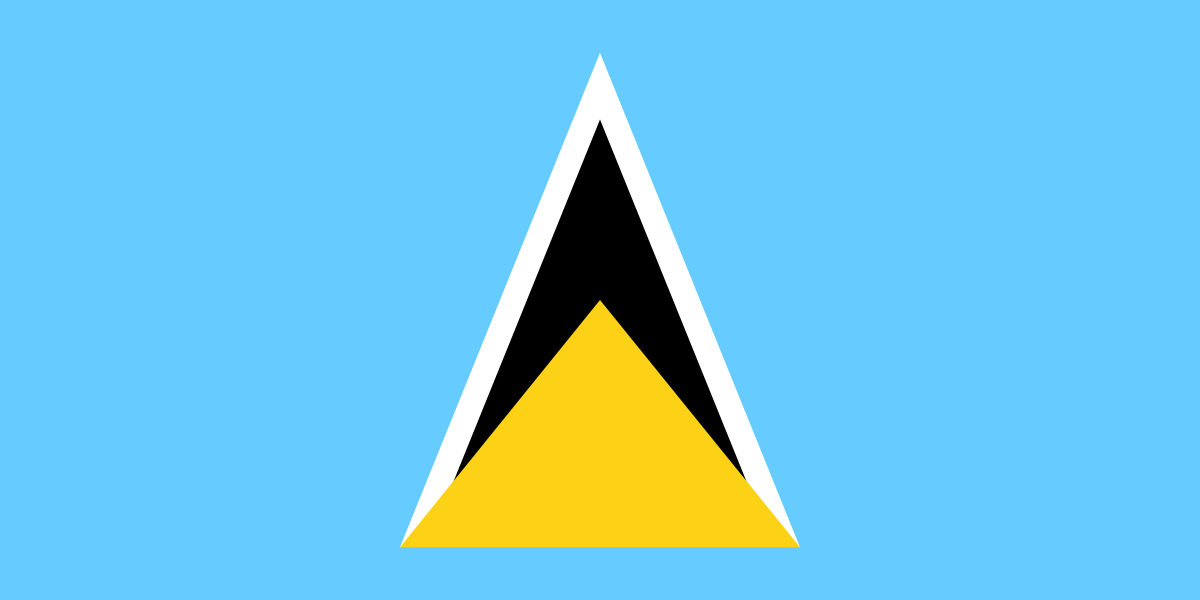
Saint Lucia
LCA small volcanic island with the two famous Pitons rising straight out of emerald water — among the most photogenic places in the Caribbean. Saint Lucia is rainforest, sulphur springs, world-class diving and Creole culture. It suits honeymooners in luxury resorts and hikers taking on the summit of Gros Piton equally well. Two Nobel laureates were born here, out of a population of just 188,000.
Where to go #
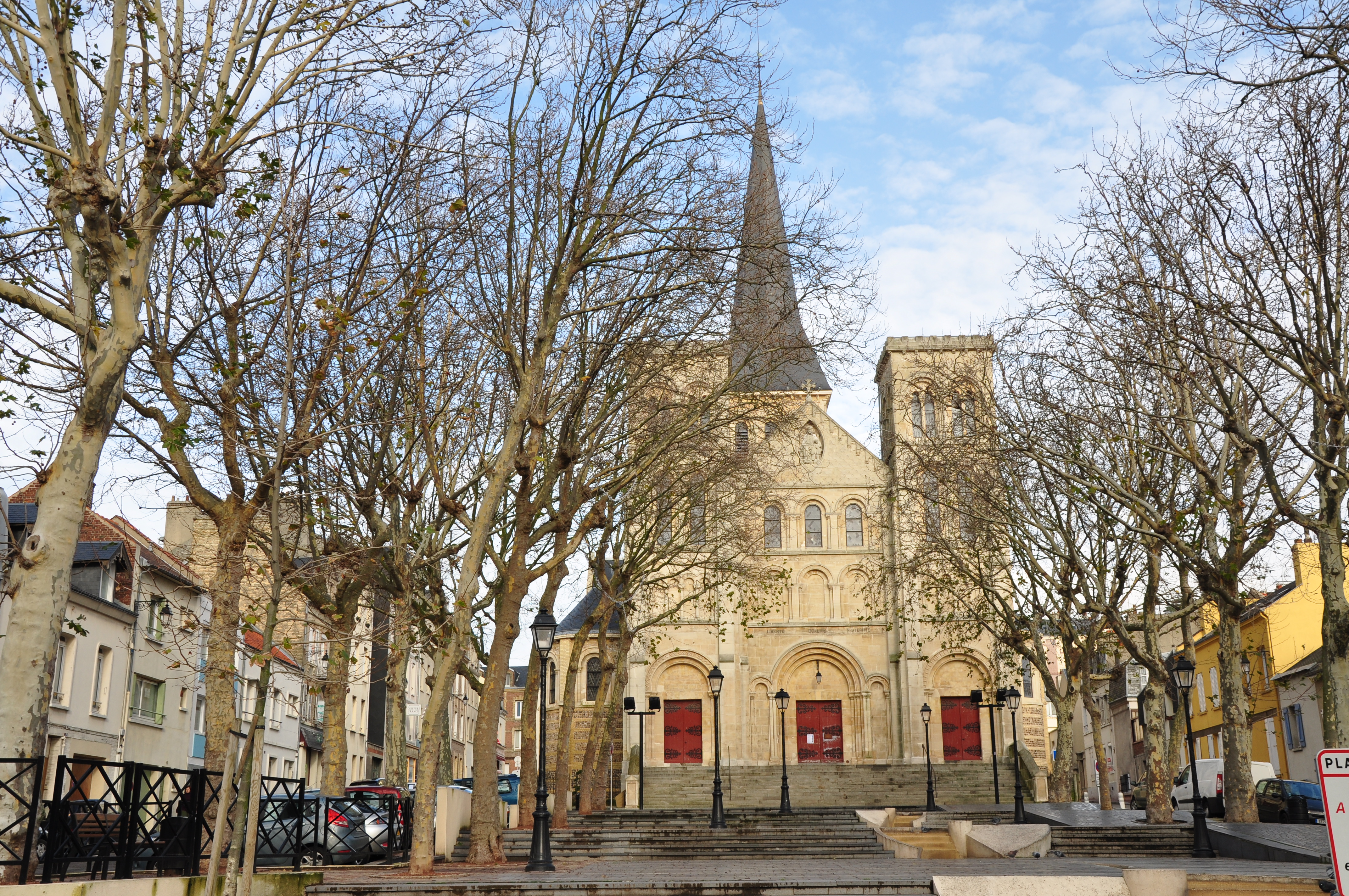
Castries
The capital and main port is worth a trip for local colour and duty-free shopping. Do not skip the central market with its mounds of spices and fresh bananas, or the cathedral with its unusual dark-skinned frescoes.
Soufriere
This little town is the tourist heart of the island and where to go for the best views of the famous peaks. In the surrounding hills you can fit the sulphur springs, a cocoa plantation and the botanical gardens into a single day.
Gros Islet
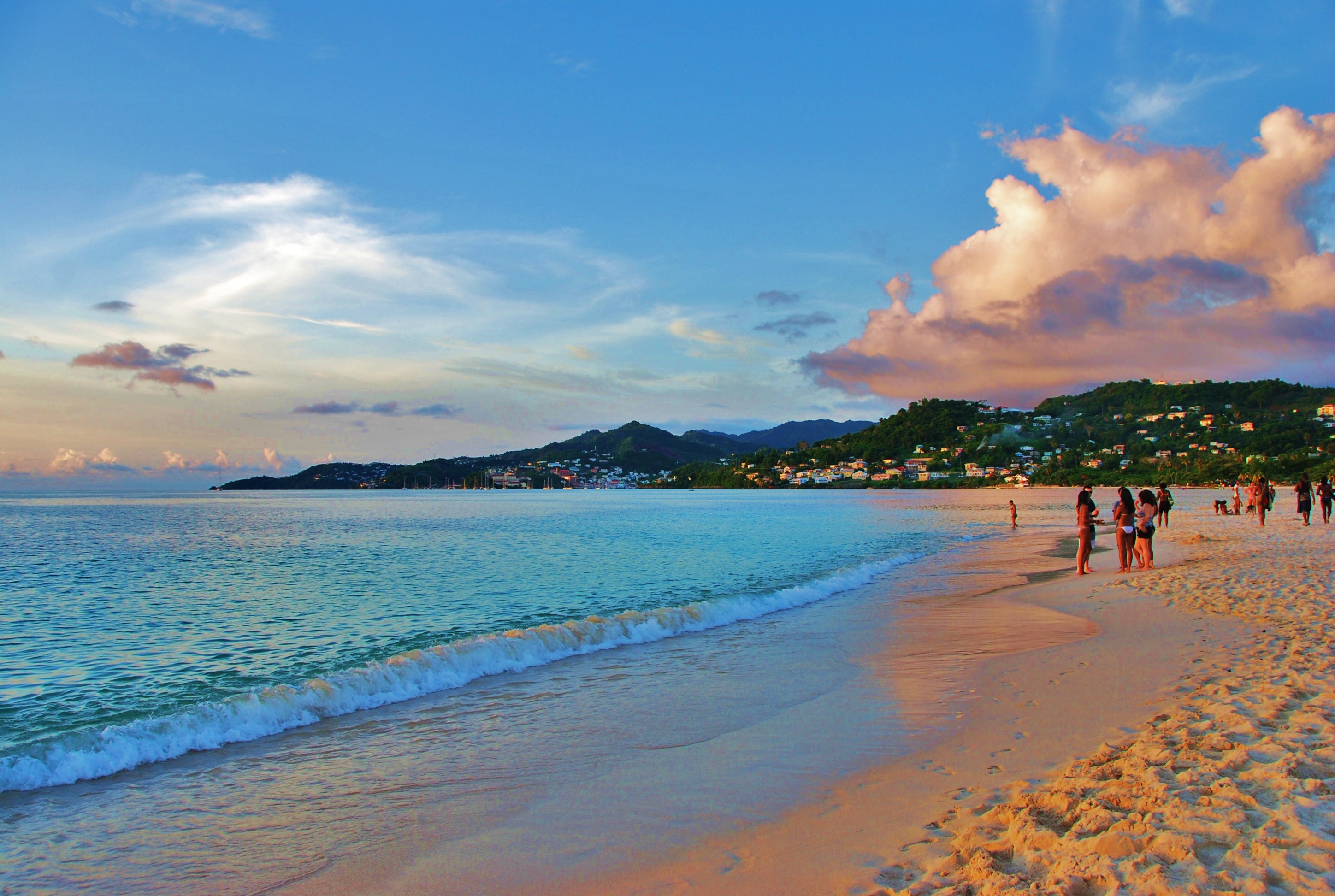
The far north is where the nightlife is, especially during the huge Friday street parties. Travellers pick this end of the island for its closeness to popular Reduit beach and the historic park out on the Pigeon peninsula.
Marigot Bay
Drop into this sheltered inlet for the calm and the postcard views over the moored yachts. It is reckoned one of the prettiest harbours in the whole Caribbean and turns up regularly in Hollywood films.
Vieux Fort
The southern tip suits anyone after solitude and non-touristy trails through wild forest. The old Moule a Chique lighthouse stands here, along with a nature reserve where you can see sea turtles in the wild.
What to see #
The Pitons: The island's calling card is the pair of enormous volcanic cones rising straight out of the ocean. Gros Piton can be climbed, which takes around four hours and legally requires a licensed local guide.
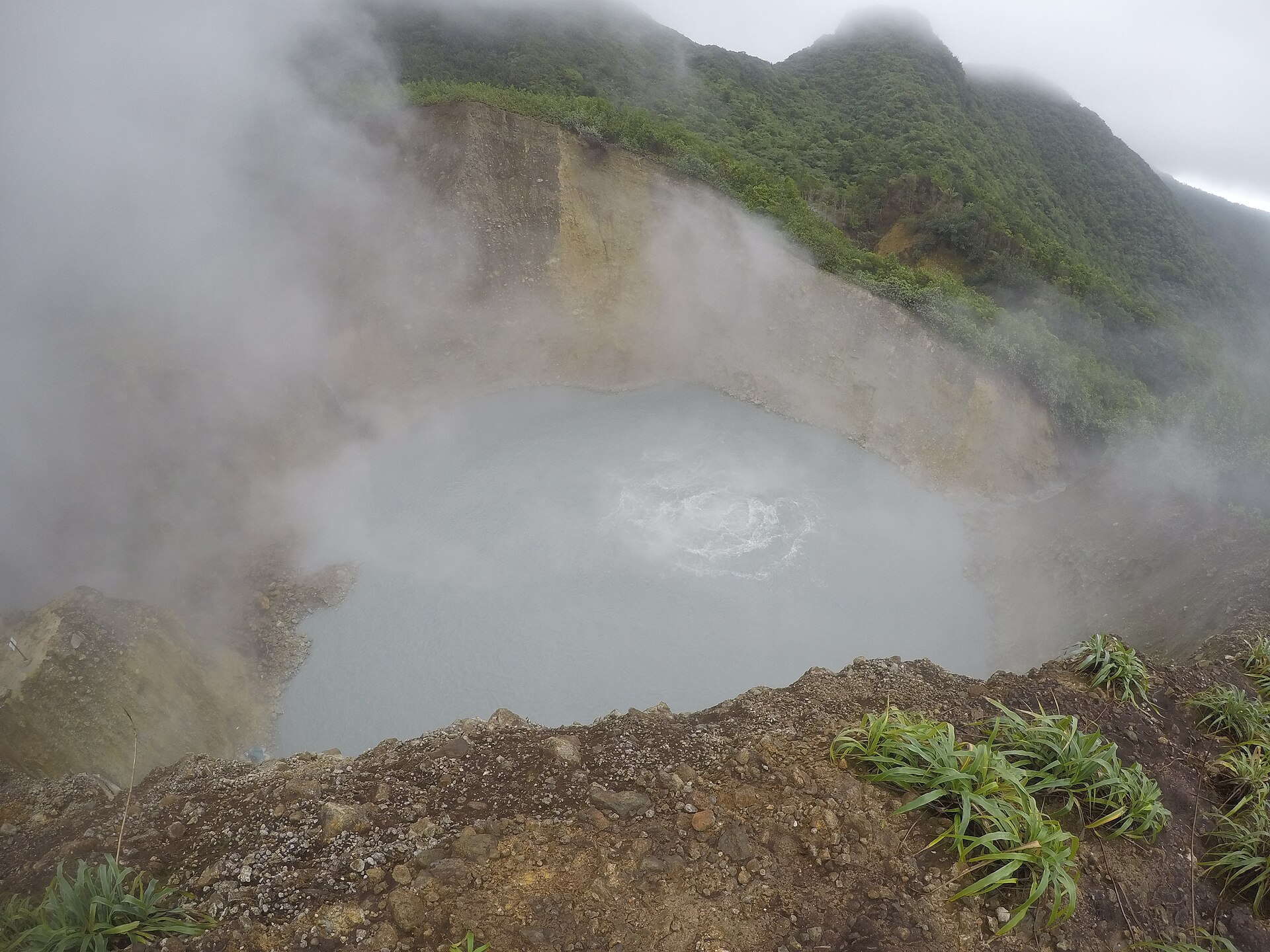
Sulphur Springs: The world's only drive-in volcano lets you walk among bubbling mud pools and steaming fumaroles. The smell is memorable, but the therapeutic mud baths at Soufriere are a genuinely good way to spend an afternoon.
Pigeon Island: In the north, this national park has the ruins of a British fort and panoramic views across to Martinique. The climb to the top is easy, and there is a small quiet beach at the foot for afterwards.
Anse Chastanet: Anyone into the underwater world should head straight here, where the coral reef starts at the water's edge. Clear water and huge numbers of tropical fish make it ideal for both snorkelling and diving.
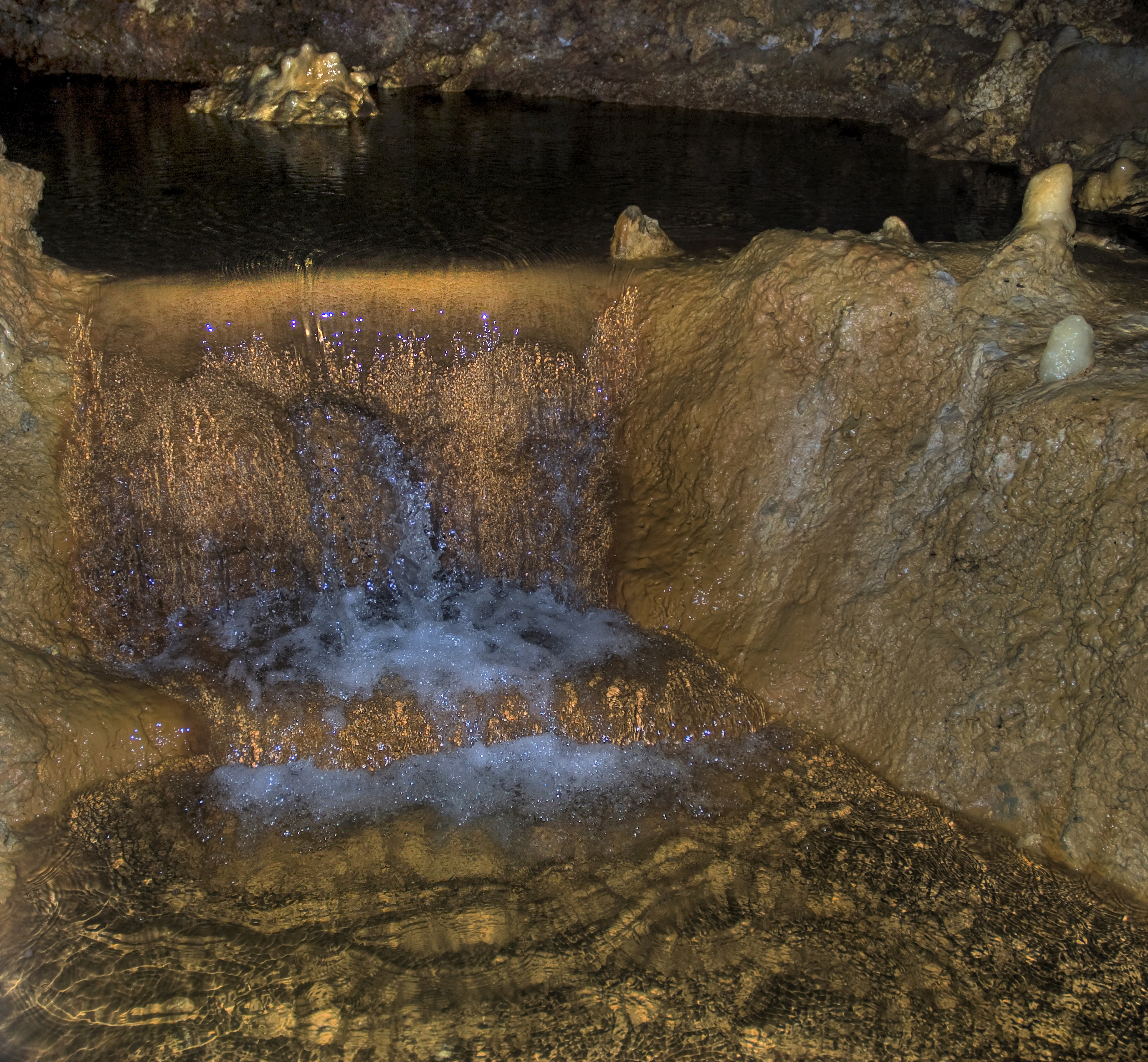
Diamond Falls: The waterfall inside the botanical garden changes colour thanks to the mineral content of the water, producing genuinely odd landscapes. It pairs well with a wander through the surrounding gardens.
Cocoa estates: The plantations run tours showing the whole chocolate process, from picking the pods to the finished bar. You get to taste at every stage, which is more interesting than it sounds.
Prices #
Currency: Everything is priced in East Caribbean dollars, pegged to the US dollar at a fixed rate. That makes it easy to keep a running sense of what you are spending if you think in dollars.
Cash: US dollars are accepted almost everywhere, including small shops and taxis, though change usually comes back in local money. Vendors often apply a poor rate when you pay in USD, so keep a stock of EC$ for small purchases.
Cards: Visa and Mastercard work reliably in the larger supermarkets, chain restaurants and hotels, while Amex is patchy. ATMs are spread evenly around the island and dispense local currency only, with a fee on each transaction, so a Wise or Revolut card is worth having to keep the conversion spread low.
Tipping: Leave ten or fifteen per cent in restaurants if the service charge was not already added. Taxi drivers and guesthouse housekeepers also expect a small something for good service.
| Item | Price (USD) |
|---|---|
| Lunch at a local cafe | 9 |
| Dinner for two at a restaurant | 65 |
| Street roti | 4 |
| Local beer in a bar | 3 |
| Bottle of water, 1.5l | 1.5 |
| Night in a guesthouse | 70 |
| Gros Piton climb | 60 |
| Botanical garden entry | 7 |
| Sulphur springs entry | 8 |
| Car hire per day | 70 |
| Taxi from the airport to the north | 90 |
| Minibus fare | 2 |
| Rum punch on the beach | 5 |
| An hour of snorkelling | 15 |
| Coffee in Castries | 4 |
Getting around #
Minibuses: A network of private vans with green plates starting with the letter M reaches nearly every settlement. They run without a fixed timetable and leave the terminus only once every seat is taken.
How to ride them: To stop one on the road just wave, and to get off, call out your stop to the driver. The music is loud and personal space is limited, but nothing else on the island is this cheap.
Taxis: Cars with blue plates work to fixed zone-to-zone rates, since none of them carry meters. Always agree the fare before you get in so there are no surprises at the other end.
Car hire: Given the mountains and the hairpin roads, a rental car is the best way to explore independently. You must buy a temporary local permit from the rental office, which costs about twenty-one dollars.
Driving on the left: The wheel is on the right and you drive on the left, which takes a day to get used to. Narrow twisting roads need real concentration, particularly in rain when the surface turns slick.
Boats: Launches run between the coastal towns and beaches and are often quicker than going by road. A water taxi from Soufriere out to the remoter bays costs around thirty dollars and comes with excellent views.
Where to stay #
The range: Options run from a simple room in a family home to villas with infinity pools. For an independent traveller, small family-run guesthouses are the sweet spot, and breakfast is usually included.
Guesthouses: Cheaper accommodation clusters around Castries and in the north near Rodney Bay. These places have a homely feel, and the owners will help arrange transfers and explain how to get around.
Where to base yourself: If beaches and nightlife are the point, book in Gros Islet, where everything is within walking distance. For nature and quiet, the south of the island or the area around Soufriere below the peaks suits better.
Details to check: Cheaper apartments may have no air conditioning, so look for mosquito screens and fans. The supply is 220 volts and sockets are the British three-flat-pin type.
Booking ahead: In the December to April high season, rooms in the popular guesthouses go fast. Lock in your price online in advance, since walk-up rates climb sharply when demand is high.
Budget reality: There is almost nothing on the island in the way of classic backpacker dorms, so travellers rent private rooms instead. Staying in a Castries town hotel makes sense if you plan to use the buses to reach different parts of the island.
What to eat #
National dish: Salt fish with green figs is the island's culinary symbol and appears in every local eatery. The green bananas are cooked in a way that makes them taste far closer to potato than to fruit.
Creole soups: Bouyon is a hearty pot of meat, root vegetables, dumplings and coconut milk. Portions are enormous, so one bowl at lunch will keep hunger away until late in the evening.
Snacks: Try roti, a thin flatbread wrapped around curried chicken, fish or vegetables. Buy from stalls with a steady flow of customers so you know the food was cooked that morning.
Seafood: Freshly caught tuna or grilled mahi-mahi costs a fraction of what it would in a European restaurant. In the small coastal villages the fish is cooked plainly, keeping the natural flavour with just a little traditional Caribbean seasoning.
Drinks: The local beer, Piton, is properly refreshing in the heat and sells for a couple of dollars in any shop. For something stronger there is rum punch, which every bar mixes to its own guarded recipe.
Cocoa: The island is known for high-end chocolate produced on the estates around Soufriere. Try cocoa tea, the hot spiced drink islanders often have at breakfast in place of coffee.
Safety #
Overall: The security situation is calm, but the usual precautions still apply. Do not leave bags or electronics unattended on public beaches, even if you are only in the water for a couple of minutes.
In town: After dark, avoid walking the outer streets of the capital alone. Petty theft does happen in crowded places, so leave large amounts of cash and your documents in the hotel safe.
The ocean: On the east coast the Atlantic can turn treacherous, with strong undertow and big swells. For safe swimming choose the sheltered bays on the west side, where the water is calm and there is no rip risk.
Wildlife: Snakes live in the jungle and along the wilder trails, though you are unlikely to meet one. Wear closed shoes on forest walks and watch where you put your feet.
Driving: The mountain roads have no lighting, so night drives in a rental car are best avoided. Sharp bends and non-existent verges make driving in the dark genuinely difficult.
Health: Drink bottled water and use repellent against the insects that come out in the evening. No special vaccinations are needed unless you are arriving from a yellow fever zone.
Advisories: Check your own government's travel advisory before booking, particularly for hurricane-season guidance between June and November.
Etiquette and culture #
Creole spirit: The island's culture fuses African tradition with French and British influence. It shows in everything from soca rhythms to the distinctive local dialect people speak among themselves.
Nobel laureates: This small country has produced two Nobel laureates, in literature and in economics. The square in the centre of the capital is named for the poet Derek Walcott, whose work is soaked in the Caribbean.
Street parties: Friday evening in Gros Islet becomes one enormous open-air party with dancing and live music. It is the best chance to see how locals actually unwind, eat off the street grills and join in.
Etiquette: Cover shoulders and knees when visiting churches or government offices. Swimwear belongs on the beach only, and wearing it in the town centre can earn you a fine.
Language: English is official, but Saint Lucians mostly speak Kweyol among themselves. A couple of phrases in the local tongue win instant goodwill and make conversations flow more easily.
Religion: Most of the population is Christian and Sunday services are grand affairs. The churches in Castries contain unusual frescoes depicting biblical figures with dark skin, which says a lot about the island's sense of itself.
Connectivity #
Mobile: Two operators cover the island, Digicel and Flow, both with solid 4G. You can buy a SIM at the airport straight after landing or in any of the branded shops in town.
Data: Bundles run around ten dollars for a week, which is plenty for maps and messaging. Most guesthouses and cafes offer free Wi-Fi, though the speed can be modest.
Useful apps: For ordering a car, the local Allez app works much like the ride-hailing services you already know. Google Maps is well detailed here and carries current information on bus routes and sights.
English: There is no language barrier at all, since practically everyone speaks fluent English. Menus and signs are in English, and people are friendly and happy to give directions if you ask politely.
The local dialect: Away from the towns you will hear Kweyol, a melodic mix of French vocabulary and African syntax. It never gets in the way, because locals switch to standard English the moment they see a visitor.
eSIM: Roaming charges are absurd, so an eSIM from Airalo or a similar provider, or a local SIM, is the sensible move. All the usual internet services run stably, and video calls home work fine over mobile data.
Phrasebook #
| English | Kweyol | Pronunciation |
|---|---|---|
| Good day | Bon jou | bon ZHOO |
| How are you? | Sa ou fe? | sah oo FEH |
| Thank you | Mesi | meh-SEE |
| Please | Souple | soo-PLEH |
| Yes | Wi | wee |
| No | Non | nohn |
| How much is it? | Konbyen? | kon-BYEN |
| Delicious! | Bon! | bon |
| Beer | Piton | PEE-ton |
| Beach | Laplaj | lah-PLAZH |
| Friend | Zanmi | zahn-MEE |
| Help me! | Ede mwen! | eh-DEH mwen |
| Water | Dlo | dloh |
| Fish | Pwason | pwah-SOHN |
| Mountain | Mon | mohn |
| Awesome (slang) | Wicked! | WIK-ed |
| All good | All right | awl RIGHT |
| Spicy | Pike | pee-KEH |
| Rum | Wonm | wohm |
| See you later | Later | LAY-tuh |
| Where is it? | Koté i ye? | koh-TEH ee YEH |
| Let's go | Ann ale | ahn ah-LEH |
Good to know #
Getting there: Long-haul flights land at Hewanorra in the south, with connections from London, and from Miami, New York, Charlotte and Toronto on the North American side. Regional hops come in from Barbados, Trinidad, Antigua and St Maarten, and winter brings extra seasonal capacity as demand rises. Allow around two hours by road from Hewanorra to the northern hotels.
Health care: If you fall ill, head for Victoria Hospital in Castries or one of the private clinics near you. Keep every receipt and medical report for your insurer, since treatment for visitors is paid.
Electricity: European plugs need an adapter for the British three-pin type G sockets. Hardware shops sell them, or your guesthouse host will usually lend you one.
If something goes wrong: Dial 999 for police and 911 for ambulance or fire. Operators answer quickly and speak English, so be ready to state exactly where you are.
Planning: Current opening hours for museums and parks are on the official tourism portal stlucia.org. The local papers are also worth a glance for announcements of concerts and festivals.
Sun: Tropical UV is brutal, so use sunscreen even under cloud. Burns happen fast, especially on boat trips or climbs when a cool breeze hides how strong the sun actually is.