
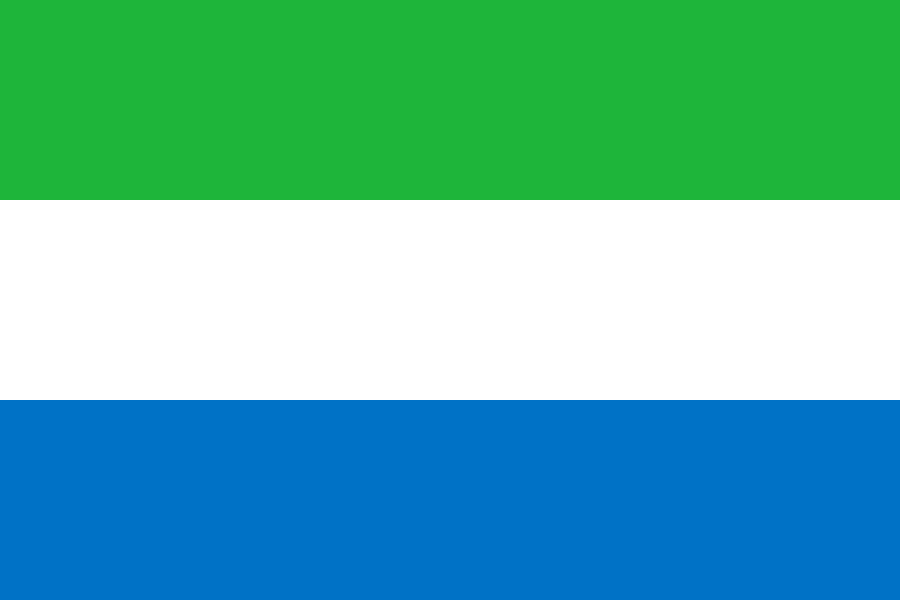
Sierra Leone
A country with some of the best beaches in West Africa, still undiscovered by mass tourism. Freetown, founded by freed slaves in the eighteenth century, has a singular history and a genuine African pulse. Rainforest with chimpanzees, the Banana Islands, surfing at Robertsport and Krio culture — Sierra Leone is slowly opening up again after civil war and the Ebola epidemic. English-speaking, friendly and strikingly beautiful.
Where to go
#Freetown
The capital spreads over hills above the Atlantic, and the giant Cotton Tree in the centre is where everyone starts. Wander the old streets for Krio architecture, then head out to Aberdeen or Lumley, where most of the decent rooms are and where the ocean is minutes away.
Bo
The country's second city, worth a trip for its noisy markets and for getting a feel for Mende culture. It also works as the staging post for an expedition to Tiwai Island if you are heading properly inland.
Kenema
The hub of the eastern provinces and of the diamond trade, used by most travellers as a stopover rather than a destination. From here you can plan trips into Gola Rainforest National Park to look for the rare pygmy hippo.
Lungi
The small town that holds the international airport, separated from the capital by a wide estuary. Most people spend only their first or last night here, in one of the local guesthouses, before crossing the water.
Waterloo
The junction town at the entrance to the peninsula, where every route to the southern beaches passes through. Stop at the market to load up on fruit and supplies before a long drive down the coast.
York
A picturesque fishing village on the western side of the peninsula, with a colonial past and the ruins to prove it. Come for the quiet and for the unhurried rhythm of provincial life away from the capital's noise.
What to see
#River Number Two: if you are wondering what to see first, make it this community-run beach with its blinding white sand. A freshwater river meets the ocean among the mangroves, which makes for swimming without heavy surf.
Tacugama Chimpanzee Sanctuary: in the forested hills above the capital, and a fixed point on any itinerary. The guided walk lets you see the primates in something close to their natural setting while supporting a serious conservation project.
Bunce Island: a hard, necessary stop for the history of the transatlantic slave trade, among the ruins of a British fort. The sight of an abandoned castle being swallowed by jungle stays with people.
Bureh Beach: the best spot if surfing is your reason for coming, with a consistent wave and a relaxed crowd. The local surf club runs lessons for beginners and rents boards in about the friendliest atmosphere imaginable.
Tiwai Island: a remarkable reserve on the Moa River where eleven primate species live alongside the rare pygmy hippo. Sleeping in a tent to the sound of the forest is the highlight of most trips into the provinces.
The Cotton Tree: Freetown's symbol, easy to fit into a day spent walking the centre. The huge kapok tree recalls the first free settlers, who prayed in its shade more than two centuries ago.
Prices
#Currency: the local money is the new leone (SLE), introduced by the 2022 redenomination. Old notes still circulate, so always confirm whether a price is quoted in old or new leones before you hand anything over.
Cash: bring US dollars in newer, clean bills, which change easily in hotels and licensed bureaux. Small denominations of one and five dollars are genuinely useful for markets and taxi fares.
Cards: Visa and Mastercard are accepted very rarely, mostly at the top hotels and a couple of Freetown restaurants, so never plan around them. The few working ATMs charge heavy withdrawal fees and run dry often.
Costs: this is not a cheap country, because almost everything is imported and the logistics are hard. Most of your budget goes on decent accommodation and safe transport, while street food and fruit cost almost nothing.
Tipping: around ten percent in restaurants where a service charge is not already added. Elsewhere, a small amount for guides or for help with luggage is appreciated rather than expected.
| Item | Price (USD) |
|---|---|
| Street rice with sauce | 2 |
| Grilled fish on the beach | 7 |
| Cafe lunch | 5 |
| Bottle of Star beer | 2 |
| Water, 1.5 l | 0.8 |
| Bag of groundnuts | 0.5 |
| Bunch of bananas | 1 |
| Keke ride | 1 |
| Okada motorbike taxi | 0.5 |
| Poda-poda fare | 0.4 |
| Taxi across town | 6 |
| Guesthouse, per night | 35 |
| Tacugama entry | 20 |
| Boat tour | 25 |
| SIM card with data | 4 |
Getting around
#Ferries and boats: the crossing from the airport to the capital is your first test. A speedboat costs about 45 dollars and saves you three hours; the government ferry costs very little but keeps unpredictable hours and gets packed with people and vehicles.
Poda-podas: these minibuses are the circulatory system of the country, linking towns and Freetown neighbourhoods for pennies. Expect to be squeezed in tight with the music loud, because drivers fit in as many passengers as physically possible.
Okada: motorbike taxis are indispensable for cutting through traffic and reaching remote beaches on broken dirt roads. They are the fastest way to move and demand a certain nerve in city traffic.
Keke: three-wheeled tuk-tuks have caught on in Freetown as a safer alternative to bikes. They suit short hops around Aberdeen or Lumley, and you agree the fare before setting off.
Shared intercity cars: for Bo or Kenema, take a shared saloon car that leaves once it fills. Slightly pricier than a minibus, but faster and considerably more comfortable in the back seat.
Car hire: driving yourself is an adventure you don't need, given the road surfaces and the checkpoints, so hire a car with a driver instead. A 4x4 starts around a hundred dollars a day before fuel.
Where to stay
#Where to stay in the capital: on a first visit, pick Aberdeen or Lumley, where the restaurants and the tourist infrastructure are. You can find decent rooms with air conditioning and breakfast, though water and power cuts happen everywhere.
Beach lodges: eco-resorts and community huts sit right on the sand along the peninsula, as at River Number Two. Rooms are basic — a mosquito net, a fan, a bucket instead of a shower — but the view compensates.
Lungi guesthouses: if your flight lands late, sleeping across the road from the terminal is the sensible move. It saves crossing the estuary in the dark and you can take the first boat over in the morning.
In the provinces: in Bo or Kenema the choice narrows to simple hotels built for NGO staff. Check that the mosquito net is intact and ask whether the generator runs through the night.
Booking: the big platforms list only a fraction of Freetown's places, so look for contacts on social media and write directly. WhatsApp is the tool everyone uses to confirm a booking and check the current rate.
Expectations: infrastructure is worn, and paying a decent rate does not guarantee familiar comfort. Towels are rare in cheaper places, and water pressure often depends on gravity and how full the tank is.
What to eat
#Plassas: the everyday stew, made from cassava leaf, potato leaf or spinach with palm oil. It comes out thick and very filling, served over an enormous portion of white rice.
Groundnut soup: a rich dish built on ground peanut paste with fish or chicken. A local favourite, prized for its depth and for heat that gets adjusted with chilli during a long, slow simmer.
Seafood: on the peninsula beaches, always ask how fresh the catch is, though the fish usually goes from boat to kitchen directly. Grilled barracuda, snapper and enormous lobsters cost a fraction of European prices.
Street snacks: in the mornings, corners fill with akara, fritters of bean flour, and fried plantain sells all day. It is the cheapest way to eat when you are on the move and don't want to lose an hour in a cafe.
Drinks: the national Star beer does the job in the heat, and in villages you can try fresh palm wine. Strong green tea with mint and sugar, brewed in small pots over coals, is a fixture of daily life.
Rice and fufu: rice is the foundation, and a meal without it doesn't count as one. The alternative is fufu, a dense cassava dough you dip into sauce and swallow rather than chew.
Safety
#Malaria: it is a genuine and constant risk, so antimalarial tablets and repellent matter more than anything else you pack. Use the mosquito net and cover up after sunset.
Water and hygiene: drink only bottled or properly filtered water and skip ice in drinks. Even in good restaurants, be wary of raw vegetables and fruit that may have been rinsed under a tap.
Crime: the country is among the calmer ones in the region, but petty theft happens in markets. Keep jewellery and expensive electronics out of sight, and take taxis after dark rather than walking.
Roads: chaotic driving and unlit highways make night journeys between towns seriously dangerous. Plan every leg for daylight, when drivers can actually see the potholes and the oncoming traffic.
Checkpoints: police posts on the highways check documents and vaccination certificates. Stay relaxed, be polite with the officers and keep your passport or a good copy within reach.
The ocean: currents and tides are treacherous even on popular beaches such as Lumley. Watch what locals are doing before you go in, or ask the staff at a beach cafe whether it is safe today.
Advisories: conditions vary by region and season, so read your own government's travel advisory while you are planning.
Etiquette and culture
#Krio heritage: a distinct culture grew from the traditions of freed slaves who arrived from the Americas and Britain. You see it in the architecture of old Freetown, in dress, and in the Krio language that ties every ethnic group together.
Religious peace: this is a country of striking tolerance, where Muslims and Christians attend each other's festivals. Mixed-faith families are common and interreligious friction is close to absent.
Music everywhere: life here runs on a beat, from traditional drums to contemporary Afrobeats. In the evenings the beach bars and city bars fill with rhythm and people dance with real energy.
Meeting people: Sierra Leoneans are warm and open with foreigners without being pushy. A smile and a greeting in Krio opens most doors and turns a passer-by into a helper.
The war and diamonds: the civil war and the "blood diamonds" story remain painful for the older generation. Don't raise either in casual conversation; talk about what has changed and about the country's landscapes instead.
Photography: taking pictures of people without asking is bad manners and can provoke a sharp reaction. Military sites, the airport and government buildings are off limits entirely.
Connectivity
#Networks: Africell and Orange compete for the market and both sell data bundles. Africell has the better reputation for stable data in the cities, while Orange edges it for coverage in the provinces.
Buying a SIM: you can pick one up at the airport or at any roadside kiosk, showing your passport to register. The seller will usually activate it and configure the data settings for you on the spot.
eSIM: an international eSIM from Airalo or similar gets you online immediately on arrival, which is handy for the first day, though a local SIM is much better value for a longer stay.
Coverage: 4G works in Freetown and the larger towns, which is enough for video calls and messaging. Head into the forest or to a remote beach and it drops to slow Edge or vanishes.
Hotel Wi-Fi: often advertised as free, in practice slow and confined to the reception area. Bring your own hotspot habit: tether from your phone with a local SIM instead.
Power: frequent cuts make a power bank non-negotiable. Cheaper places run electricity on a generator schedule, so charge everything whenever the current is on.
Phrasebook
#| English | Krio | Pronunciation |
|---|---|---|
| Hello | Kushe | KOO-shay |
| How are you? | Aw di bodi? | ow dee BOH-dee |
| I'm fine | A de fine | ah day FINE |
| Thank you | Tenki | TEN-kee |
| You're welcome | Tenki ya | TEN-kee yah |
| How much is this? | Aw much dis? | ow much DIS |
| Expensive | E dia | ay DEE-ah |
| Delicious | E swit-o | ay SWEET-oh |
| Food | Chop | chop |
| Water | Wata | WAH-tah |
| Beer | Bia | BEE-ah |
| Friend | Padi | PAH-dee |
| Yes / No | Yes / No | yes / noh |
| Where is...? | Usai ... de? | oo-SIGH ... day |
| Help me | Ep mi | ep mee |
| I don't know | A no sabi | ah noh SAH-bee |
| Let's go! | Le wi go | leh wee goh |
| Foreigner | Oporto | oh-POR-toh |
| No problem | No wahala | noh wah-HAH-lah |
| I'm leaving | A de go | ah day goh |
| What's your name? | Aw yu nem? | ow yoo nem |
Good to know
#Getting there: Lungi is served from Europe by Brussels, Paris, Istanbul and Casablanca, which is how most travellers connect from London, North America or Australia. Book the airport water taxi at the same time as the flight, since arrivals cluster late in the evening.
Insurance and health: take a policy with full medical cover, and check where your own country's mission for Sierra Leone actually sits, as several are accredited from elsewhere in the region. Pack a proper kit including malaria tests and trusted antibiotics; provincial healthcare is minimal.
When to go: the dry season from November to April is the time, when the roads are passable and the sky stays clear. During the rains, especially July and August, Freetown floods and many beach places shut for repairs.
Navigation: Google Maps knows the roads reasonably well, but download offline Maps.me data before heading into the forest. Ask locals about the route anyway, since a single tropical downpour can change what a track is like.
Plugs: British three-pin type G sockets, so bring an adapter. Voltage fluctuates, and a surge protector is worth having for anything expensive.
Etiquette: Sierra Leoneans are a proud people, so respect personal space and don't hand out money for nothing. Buying fruit or paying fairly for a service at an agreed price is the right way to say thank you.
Frequently asked questions
#Most nationalities do, and the easiest route is the e-visa through the official portal. It costs roughly 80 to 100 US dollars, allows a stay of up to 30 days for tourism, and takes up to five working days to come back by email.
The quickest way is the private water taxi or speedboat, which reaches the city centre in 30 to 40 minutes. The cheaper government ferry takes about an hour and keeps far less reliable hours.
It is considered a reasonably safe country for independent travellers who take normal precautions. Avoid walking through unfamiliar areas at night and keep an eye on your belongings in crowded markets.
A yellow fever certificate is the one hard requirement, and it is checked before you board the flight. Antimalarial tablets throughout the trip are strongly recommended on top of that.
Budget from 50 to 80 US dollars a day per person for a comfortable but economical trip, excluding flights. Most of it goes on accommodation, good food and getting between towns and the remoter beaches.
River Number Two is the classic, with white sand and calm water, while Bureh Beach is the surf spot. Tokeh is worth a look too, and the Banana Islands offer proper isolation.
Assume not. Cards work only at a handful of top hotels and restaurants in Freetown, so carry US dollars or euros in cash and change them at banks, licensed bureaux or the larger hotels.
English is the official language and most city residents and anyone in tourism speak it. Day to day, though, people use Krio, an English-based creole, and a few phrases of it will make your trip much easier.
Yes, but with restrictions. Registration is mandatory for a drone of any weight. Registration or authorisation is required before the first flight. Rules for other countries are in the drone ranking by country.
Updated
The data on this page goes out of date. Visa rules and permitted stays, border requirements, prices and budgets, transport and local conditions all change fast, and we do not re-check every page every day. We show the date of our last check where we have one, but before you travel, verify with official sources: the country’s consulate, its immigration service, its e-visa portal and your carrier.