Slovenia
SIA small Alpine country that fits the snow-capped Julian Alps, emerald rivers, karst caves and a slice of the Mediterranean into just over 20,000 km². Lake Bled, with its island church, is one of the most recognisable postcards in Europe. Slovenia is consistently among the safest and greenest countries in the world, and Ljubljana is one of the most congenial capitals on the continent.
Where to go #
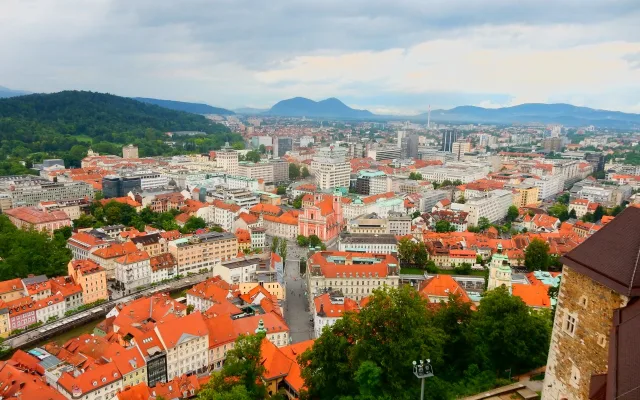
Ljubljana
A charming Slovenian capital with a hilltop castle, a pedestrian riverside centre along the Ljubljanica, and a thriving café culture.
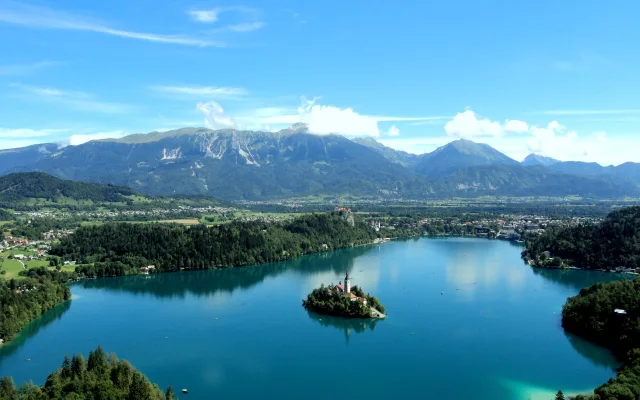
Bled
An emerald lake with a tiny island church and a castle perched on a cliff — Slovenia's iconic image, framed by the Alps with views of Triglav.
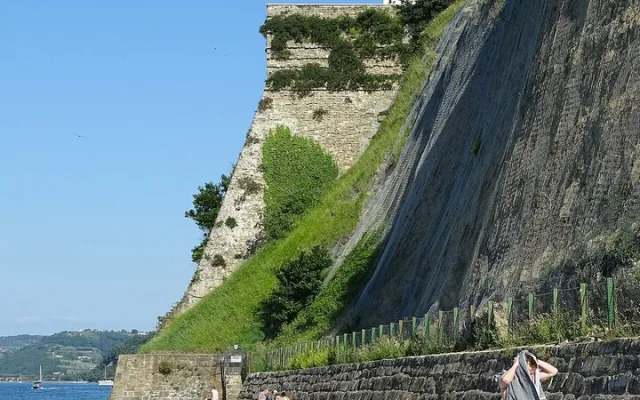
Piran
A Venetian gem on the Adriatic coast — Tartini Square, narrow lanes and sunsets.
What to see #
Lake Bled: The first place to go if you want the postcard shot. Climb up to the Ojstrica viewpoint for the classic angle over the island, then walk the full loop around the shore.
Postojna Cave: A vast underground system served by the only tourist railway of its kind in the world. You can do the caverns and see the legendary olm, the so-called human fish, in a single day.
Predjama Castle: The lair of the robber knight Erasmus, built straight into a sheer cliff a hundred metres up. Secret passages survive inside, leading into deep caves behind the castle walls.
Skocjan Caves: An underground canyon that impresses more with sheer scale than the better-known Postojna. Worth seeing for the roar of the subterranean river and the enormous bridges suspended in the void.
Ljubljana Castle: The medieval fortress on the hill, reachable on a modern funicular. From the towers you get the best panorama of the city roofs and the snowy peaks of the Julian Alps beyond.
Vintgar Gorge: A walking route on wooden boardwalks above the churning Radovna river. Come for the cold mountain air, the emerald rapids and the thirteen-metre waterfall at the end of the trail.
Triglav National Park: A huge stretch of untouched country including the turquoise Soca valley. It's where to go for hiking up to high alpine lakes and views of Triglav, the highest mountain in the land.
Prices #
Currency: Everything is priced in euros. It's worth arriving with some cash in hand, since exchanging other currencies locally is awkward and rates in town are mediocre.
Cards: Visa and Mastercard are accepted almost everywhere, including small shops and ticket offices. American Express is patchier and rarely taken outside big hotels. Contactless is the norm and most Slovenes barely use cash.
ATMs: Machines are plentiful and reliable. Always decline the ATM's own conversion offer and let your bank do the exchange. Wise or Revolut cards keep the fees down if you're withdrawing more than once.
Tipping: You are not obliged to leave anything extra and waiters won't expect it. Slovenes usually just round the bill up, or leave a couple of coins if the service was good.
| Item | Price (USD) |
|---|---|
| Slovenian burek | 3.60 |
| Cappuccino | 2.50 |
| Half-litre of beer | 4.80 |
| Cafe lunch | 17.00 |
| Dinner for two | 65.00 |
| Litre of milk | 1.45 |
| Loaf of bread | 2.20 |
| Weekly e-vignette | 17.50 |
| Cave ticket | 39.00 |
| Train to Maribor | 13.00 |
| City bus ride | 1.45 |
| Castle funicular | 6.60 |
| Hostel bed | 32.00 |
| Guesthouse room | 88.00 |
| Litre of petrol | 1.55 |
Getting around #
Buses: The bus is what most people use to get between towns. At weekends and on public holidays a flat national fare of one euro ninety applies to any journey in the country.
Trains: The rail network is thinner than the bus network, but the carriages are modern and quiet. Trains make sense for Ljubljana to Maribor, or heading towards the Austrian border through the mountains.
Driving: Hiring a car gives you the freedom to chase mountain passes and lakes on your own schedule. The roads are excellent, though the motorways are tolled for every category of car.
Vignette: You need an electronic vignette to use the motorways, bought at petrol stations or online. Cameras read plates automatically and the fines for not having one are severe.
City transport: Ljubljana runs the Urbana system, a rechargeable card for city buses. Drivers don't take cash, so buy the card in advance at a newsagent.
Bikes: The BicikeLJ city bike scheme costs almost nothing. The first hour of every ride is free, which makes it the quickest way to hop between districts without waiting for a bus.
Arriving: Ljubljana airport handles flights from major European hubs including Frankfurt, Munich, Paris, Amsterdam, Istanbul and Belgrade, with more choice in summer. Long-haul travellers usually connect through one of those, or fly into Venice, Vienna or Zagreb and come overland. Check ap-ljubljana.si for intercity bus times and fares.
Where to stay #
Booking: The usual international booking sites all work here and carry the widest range. For family-run places in the countryside, emailing the owner directly often gets you a better price than any platform.
Guesthouses: Slovenia is full of family guesthouses, often signed as gostisce. Expect comfortable rooms above a restaurant, a homely atmosphere and a substantial breakfast from the owners.
Farm stays: Staying on a turisticna kmetija is the best way to see rural life. They serve their own produce, homemade cheese and wine from the cellar beneath the house.
Hostels: A dorm bed costs more here than in the Balkan countries next door. There are some genuinely unusual places, notably Hostel Celica in a converted military prison in Ljubljana.
Popular spots: In Bled or Piran you should be booking months ahead in season. Central Ljubljana carries a premium, so look at the quieter residential districts a short bus ride out.
Tourist tax: Every type of accommodation charges a tourist tax on arrival. It runs to about three euros per person per night and is usually paid in cash at reception.
Rural quirks: Countryside guesthouses may not take cards, so keep some notes on you. Most owners are flexible about a late arrival if you message them beforehand.
What to eat #
Kremsnita: The airy cream cake from Bled that became the country's signature dessert. Crisp pastry, vanilla custard and cream, best eaten with the alpine lake in front of you.
Sausage: Kranjska klobasa has protected geographical status and comes with mustard on the side. It's the standard quick, filling snack while you're walking around town.
Struklji: Traditional rolled dough parcels with fillings that range from curd cheese to walnuts. They turn up both as dessert and as a side with stewed meat in village gostilnas.
Soups: Go carefully with jota, a thick stew heavy on beans and sauerkraut. It was shepherd food and it can sit awkwardly if your stomach isn't used to it.
Seafood: On the coast in Piran and Izola, order the fresh fish and grilled squid. Italian influence shows in the quality of the risotto and the pasta with clams.
Wine: Slovenia makes excellent whites, especially in the Goriska Brda region. Look for local labels such as Malvazija or Teran, which often outdo pricier imports.
Markets: On Fridays the central square in Ljubljana hosts Odprta Kuhna, the Open Kitchen food festival. It's a chance to eat cooking from the country's best chefs at street-food prices.
Safety #
General: Slovenia consistently ranks among the calmest countries in the world for visitors. Walking around Ljubljana or anywhere else late at night, on your own, is not something people worry about.
Mountains: The real hazard is the Julian Alps, where the weather turns within minutes. Never set out on a trail in light shoes or without a charged phone and offline maps.
Theft: Pickpocketing is rare, but stay alert in crowds at the main sights. Keep valuables and documents in the hotel or guesthouse safe.
Water: Tap water is drinkable everywhere in the country with no boiling or filtering. Towns have plenty of drinking fountains, so you needn't keep buying plastic bottles.
Roads: Mountain driving demands attention because of narrow hairpins and long tunnels. Stick to the limits, as police use hidden speed cameras on the motorways.
Help: Dial 112 for any emergency. Operators generally speak good English and can dispatch help anywhere in the country quickly.
Wildlife: Bears live in the forests and mountains, so take care if you wander off marked trails. Follow the waymarks and don't push deep into thick forest on your own.
Before you travel: It's sensible to read your own government's travel advisory and note your embassy's details, even for a country as quiet as this one.
Etiquette and culture #
Character: Slovenes are polite, punctual and fond of order. They value personal space and quiet, so avoid loud conversation on public transport.
Environment: The country takes conservation and waste sorting seriously. Central Ljubljana is closed to cars altogether and separated recycling bins are everywhere.
Sundays: Almost all shops, including grocery supermarkets, are closed by law on Sundays. Buy what you need in advance, because towns genuinely go quiet.
Language: People are friendly to visitors and English is the right language to open with. Slovene shares roots with other Slavic languages, but familiar-looking words often mean something quite different.
Sport: Hiking and cycling are the national pastimes by a distance. At weekends it can feel as though the entire population has taken a rucksack to the mountains or the coast.
Sore points: Slovenes dislike having their country confused with Slovakia, or being lumped in as Balkan. They see themselves as Central European, and the architecture and pace of life back them up.
Traditions: Village life still runs on shared festivals and the grape harvest. Turning up at a rural fair tells you more about this quiet, hardworking country than any museum.
Connectivity #
Mobile: The cheapest local option is a Hot SIM card sold at Hofer supermarkets. You can buy it at the till without lengthy registration and the data allowance will easily cover a trip.
eSIM: If you'd rather not deal with shops at all, a travel eSIM from Airalo or a similar provider works from the moment you land. It's the simplest choice for a short visit.
Internet: High-speed coverage is solid even at remote mountain huts. Hotels, hostels and city cafes reliably have free and fast wi-fi.
English: Young people and anyone in tourism speak English to a high standard. On the coast Italian is widely understood, and in the mountains German.
Roaming: A SIM from any other EU country works here with no surcharge. That's convenient if you're arriving by bus from Austria or Italy.
Apps: Google Maps or an offline mapping app cover navigation well. Install BicikeLJ for the city bikes and check bus times on the operators' own sites.
Post: You can send a postcard from any Posta Slovenije branch, and they run efficiently. Stamps are sold in souvenir shops in the centre as well as at the post office.
Phrasebook #
| English | Slovene | Pronunciation |
|---|---|---|
| Hello | Dober dan | DOH-ber dahn |
| Hi | Živijo | zhee-VEE-yo |
| Thank you | Hvala | HVAH-lah |
| Please | Prosim | PROH-seem |
| Yes / No | Da / Ne | dah / neh |
| Sorry | Oprostite | oh-proh-STEE-teh |
| Good | Dobro | DOH-bro |
| Awesome! (slang) | Hudo! | hoo-DOH |
| How's it going? | Kako gre? | kah-KOH greh |
| How much is it? | Koliko stane? | KOH-lee-ko STAH-neh |
| The bill, please | Račun, prosim | rah-CHOON PROH-seem |
| Where's the toilet? | Kje je WC? | k-yeh yeh veh-TSEH |
| I don't understand | Ne razumem | neh rah-ZOO-mem |
| Help! | Na pomoč! | nah poh-MOCH |
| Beer | Pivo | PEE-voh |
| Wine | Vino | VEE-noh |
| Water | Voda | VOH-dah |
| Coffee | Kava | KAH-vah |
| Delicious | Okusno | oh-KOOS-noh |
| Goodbye | Nasvidenje | nahs-VEE-den-yeh |
| Dude (slang) | Model | moh-DEL |
| Cheers | Na zdravje | nah ZDRAHV-yeh |
Good to know #
Getting here: Ljubljana's airport is served from most big European hubs, with the widest choice in summer. Coming from North America or further afield you'll change in Frankfurt, Munich, Paris, Amsterdam or Istanbul, or fly into Venice, Vienna or Zagreb and finish the trip overland.
Airport transfer: The airport sits twenty-five kilometres from the city and buses run into town. Booking a seat on a GoOpti shuttle online in advance is the cheapest way to do it.
Power: Sockets are the standard European types C and F with two round pins. UK, US and Australian plugs need an adapter, and the voltage is 230V.
Shops: Most chains stay open until eight or nine on weekdays. Remember the Sunday closures, when only small shops at petrol stations are trading.
Healthcare: Standards are high, but treatment for uninsured visitors is expensive. Carry a copy of your insurance policy so a clinic can process you quickly.
Smoking: Smoking indoors is banned everywhere, bars and restaurants included. Fines are steep, so stick to outdoor terraces or the street.
Tipping: There's no rigid ten percent rule here. Rounding the bill up to the nearest euro is entirely acceptable if you enjoyed the service.