
Spain
The country of flamenco, tapas and the siesta — from the Moorish palaces of Andalusia to Gaudí's fantasies in Barcelona. Spain hands out sun, wine and good humour freely, and the AVE high-speed trains link the cities faster than flying.
Where to go
#
Barcelona
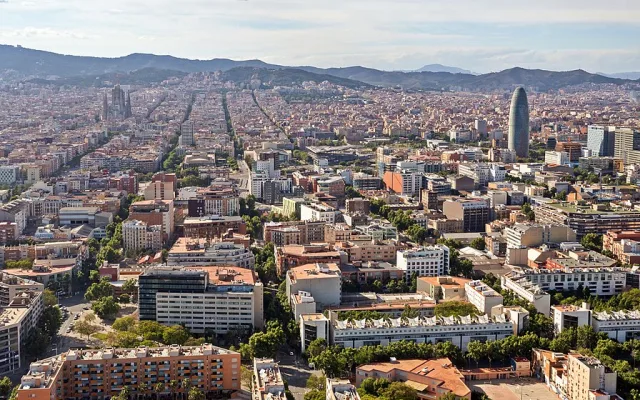
Barcelona is known for the creations of the architect Gaudi, for strolling La Rambla and for the beaches of Barceloneta. The city is also famous for Catalan cooking.
Madrid
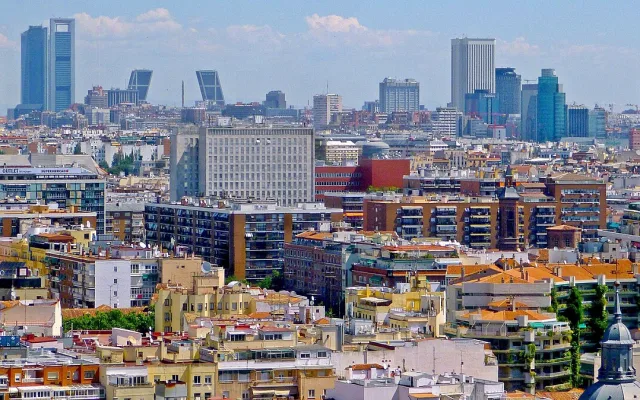
Madrid is the capital of Spain, known for museums such as the Prado, for parks such as the Retiro, and for its many tapas bars.
Seville
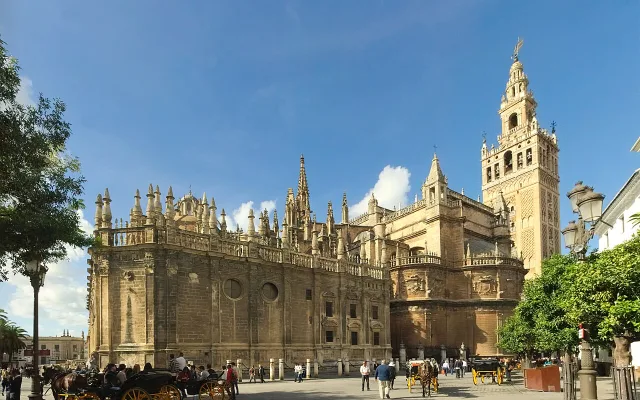
Seville is a city in Andalusia known as the home of flamenco. Its sights include the Alcazar and the Giralda.
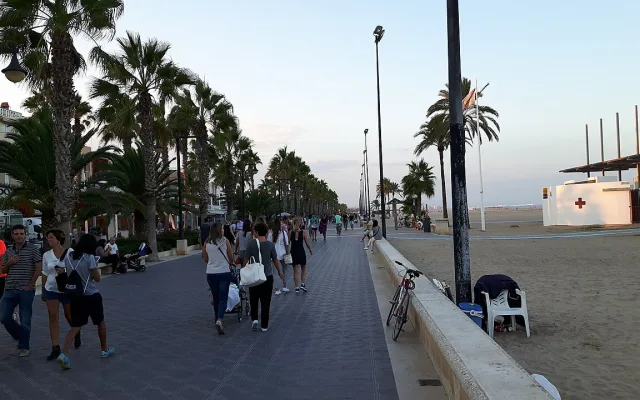
Valencia
Valencia is the Spanish city known as the birthplace of paella and home to the futuristic City of Arts and Sciences. The Malvarrosa beaches are here too.
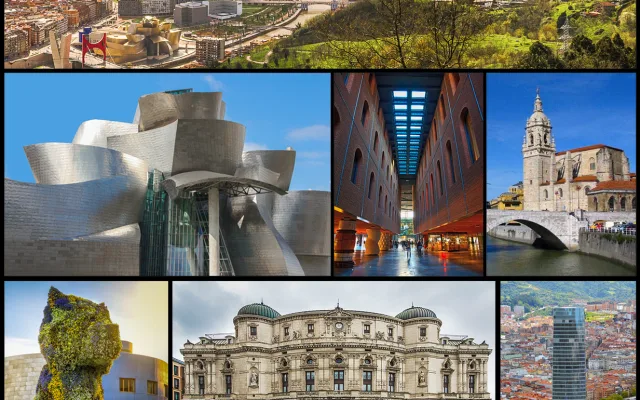
Bilbao
A Basque metropolis transformed by Frank Gehry's Guggenheim Museum, home to Spain's finest pintxo bars and one of Europe's most remarkable urban reinventions.
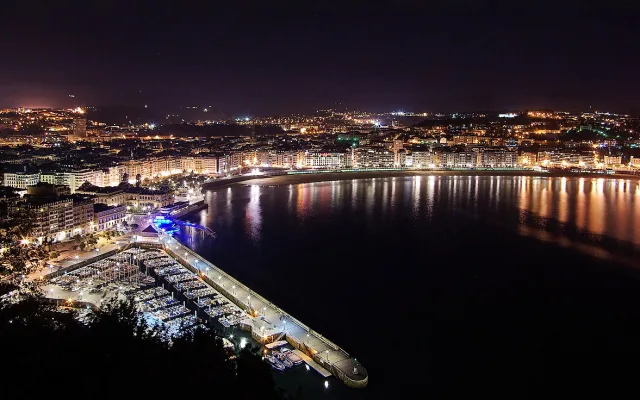
San Sebastian
San Sebastián is known as one of the world's great food capitals, with more Michelin stars per capita than almost anywhere on earth. Come for the pintxos bars of the Old Town and the sweeping white sands of La Concha beach.
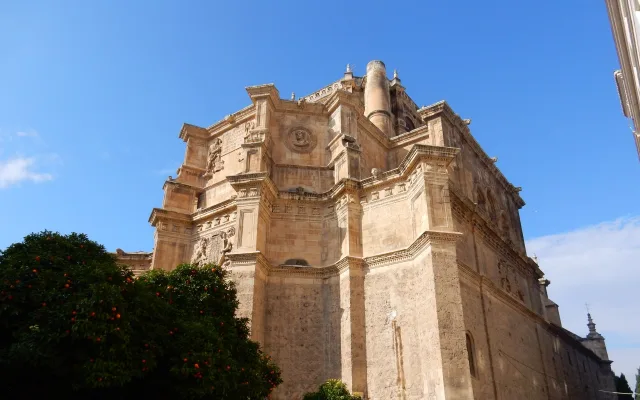
Granada
Granada is a city in Andalusia, known for the Alhambra palace complex, the historic Albaicín quarter, and the Sierra Nevada mountain range.
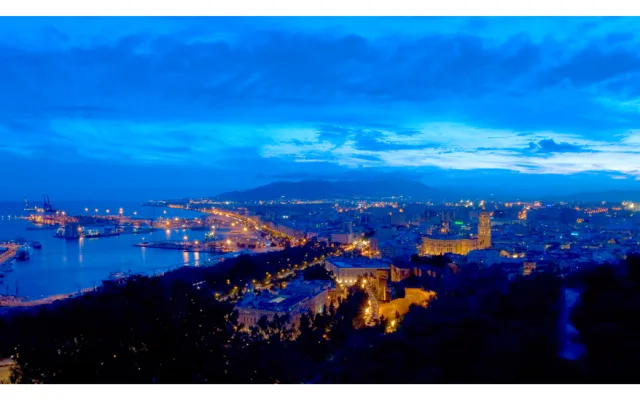
Malaga
Málaga is a city on the Costa del Sol coast, known as the birthplace of Picasso. Visitors can explore the modern Picasso Museum and the Alcazaba citadel, as well as enjoy a lively nightlife scene.
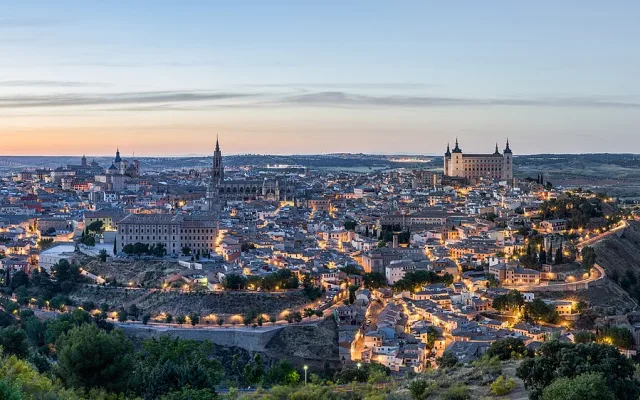
Toledo
Toledo is a city on a rock above the River Tagus, where medieval cathedrals, synagogues and mosques survive within a single historic core — testament to the coexistence of three cultures.
What to see
#What to see first: The Sagrada Familia in Barcelona is a construction project that has lasted over a century and requires booking weeks in advance. It is genuinely impressive inside, though the massive crowds in the surrounding park can feel a bit overrated and tiring.
Where to go for history: The Alhambra in Granada is the absolute peak of Moorish design and a must-visit. You must buy tickets at least two months early or you will likely be stuck looking at the outside walls, as daily entry is strictly limited to prevent damage.
Can you do it in a day: The Prado Museum in Madrid is too big for a single visit, but you can see the highlights for free during the last two hours every evening. It is a great way to save money if you do not mind waiting in a short line before the doors open.
Worth a trip for the views: Walking up to the Mirador de San Nicolás in Granada gives you the famous postcard view of the palace against the mountains. Go at sunset to see the red walls glow as the lights come on, but be prepared for a steep climb through the Albaicín.
What is overrated: Walking down Las Ramblas in Barcelona is often disappointing due to the dense crowds and overpriced stalls. Spend your time in the backstreets of El Born or Gràcia instead to find authentic local shops and a much more relaxed Mediterranean atmosphere.
Where to see the future: The City of Arts and Sciences in Valencia looks like a sci-fi movie set on the water. It is best visited at night when the white structures are illuminated and reflect in the pools, providing a stark contrast to the city's historic center nearby.
Worth a trip to the south: The Royal Alcázar in Seville features lush gardens with peacocks and intricate tilework. It offers a cooler retreat from the Andalusian heat and feels like a movie set come to life, with much more manageable crowds than the sights in Barcelona.
Prices
#Payment methods: Use a card from a digital bank to avoid fees, as they work almost everywhere in cities. Small family-run bars or rural markets still prefer physical currency for low-value purchases, so keep a few bills on you for your morning coffee or a quick snack.
Tipping culture: There is no obligation to tip here as service is already included in the menu prices. Locals might leave a few small coins or round up a lunch bill to the nearest euro if the service was good, but calculating a percentage of the total check is not expected.
Tourist taxes: Be aware that Barcelona and the wider Catalonia region charge a nightly fee that can reach 12 USD. This is rarely included in the initial booking price shown on websites and must be paid directly to the hotel or guesthouse when you check in or out.
Daily spending: A budget of 75 USD a day covers a bed in a guesthouse, a three-course lunch, and public transport. If you want private rooms in central hotels and sit-down dinners with wine, plan to spend at least 150 USD per person to avoid feeling restricted.
| Item | Price (USD) |
|---|---|
| Menu del dia | 18.00 |
| Coffee and pastry | 4.50 |
| Glass of wine | 5.00 |
| Single Metro ride | 3.00 |
| 10-trip Metro pass | 13.00 |
| High-speed train | 25.00 |
| Budget double room | 75.00 |
| Dorm bed | 30.00 |
| Beer in a bar | 3.50 |
| 100g Jamón Ibérico | 12.00 |
| Museum entry | 16.00 |
| Airport taxi (fixed) | 38.00 |
| Local SIM card | 15.00 |
| Bottle of wine (shop) | 8.00 |
| Loaf of bread | 1.50 |
Getting around
#High-speed rail: The train network is incredible, with AVE, Iryo, and Ouigo competing for passengers. You can get from Madrid to Barcelona in 2.5 hours, which is much faster and easier than flying. The competition has driven prices down significantly for those who plan ahead.
Booking trains: Buy your tickets 1 to 3 months in advance on the Renfe or Iryo websites to find fares as low as 10 USD. Last-minute tickets can easily jump to 100 USD on the same routes, so spontaneity is expensive when it comes to long-distance travel across the country.
Station security: Major stations like Atocha have X-ray scanners for luggage before you reach the platforms. It only takes a couple of minutes, but arrive 20 minutes early to ensure you do not miss your departure. There are no passport checks, just a quick scan of your bags.
City transport: Madrid and Barcelona have vast metro systems where 10-trip cards are the smartest purchase. These can often be shared between two people, making them a very efficient way to get around without having to buy a new ticket for every single short journey.
Regional buses: The Alsa bus network reaches smaller towns and white villages that trains simply do not serve. It is a very affordable way to travel, though journeys across the country take much longer. The buses are modern, have free Wi-Fi, and are generally very reliable.
Car rentals: Hiring a car is only worth it if you are exploring the rural south or the northern coast. Within major cities, driving is a nightmare due to limited access zones and 40 USD daily parking fees. Use the excellent trains and buses for city-to-city connections.
Where to stay
#Hostal options: Look for the word "Hostal" on signs; these are family-run guesthouses with private rooms, not shared dorms. They are often located in historic buildings and offer great value for independent travelers who want a private space without the high price of a chain.
Booking strategy: Reserve your rooms 3 to 5 months ahead if you are visiting in July or August. Prices for city hotels can double if you wait until the last minute during the peak summer season, and the best-located budget options are always the first to be snapped up.
Apartment stays: Renting a flat with a kitchen is a great way to save on food costs by shopping at local markets. Be aware that Barcelona has strict rules on these, so the selection in the center is shrinking and prices for legal, licensed apartments have risen accordingly.
Heritage stays: Paradores are hotels inside converted castles, palaces, and monasteries. They are more expensive than standard hotels but offer a unique historic experience that is worth one night's splurge. Many are located in stunning hilltop positions with incredible views.
Room specifics: In older city quarters, elevators are a rare luxury and windows might look into a tiny internal courtyard with no natural light. Always check for air conditioning if you are heading to the south during the summer, as the nights stay very warm in the city.
Location choice: Stay in Eixample in Barcelona or Chamberí in Madrid to avoid the noise of the main tourist strips. You will be close to the action but able to sleep without the sound of late-night revelry. Avoid staying deep in the Raval if you want a quieter experience.
What to eat
#Lunch deals: The Menú del día is the king of Spanish dining, offered weekdays between 1:30 and 4:00 PM. For about 16 USD, you get two courses, a dessert, bread, and a glass of wine or water. It is the most authentic and affordable way to eat like a local in any city.
Free snacks: In Granada, many bars still give you a free plate of food with every drink you order. It is entirely possible to have a full dinner for the price of two or three beers this way, making it a paradise for those traveling on a very tight daily budget.
Tapas timing: Do not expect to eat dinner at 6:00 or 7:00 PM, as most local kitchens do not open until 8:30 PM. Spaniards usually go for tapas and drinks around 8:00 PM before a full meal at 10:00 PM. Adjusting your internal clock is key to enjoying the local food scene.
Market eating: Every city has a permanent market hall where you can buy high-quality cheese, olives, and ham. It is much cheaper to assemble a picnic here than to eat every meal in a restaurant, and the quality of the fresh produce is usually superior to supermarkets.
Paella rules: Real paella is a lunch dish and should be cooked to order for at least two people. If a place offers it for one person at dinner, it is likely a frozen product aimed at tourists. Head to Valencia for the real thing, cooked over a traditional wood fire.
Supermarket finds: National brands like Mercadona offer excellent pre-sliced ham and local wines for just a few dollars. It is the best place to stock up on snacks and drinks to keep in your hotel room, especially for the hours when most restaurants are closed for siesta.
Safety
#Pickpocket risk: Barcelona has a reputation for professional bag snatchers and phone thieves who target distracted visitors. Never leave your mobile on a café table and always keep your bag in your lap or looped around your leg while you are eating at outdoor terraces.
Beach safety: Theft on city beaches is extremely common while tourists are swimming in the sea. Only take a towel and enough cash for a drink to the sand, and leave everything else in your hotel safe. Thieves watch for people leaving their bags unattended to go for a dip.
Street scams: Ignore anyone trying to hand you a "free" flower or birdseed in major plazas like Puerta del Sol. They will demand money aggressively once you take it, so just keep walking and do not make eye contact. The same applies to people offering "friendship" bracelets.
Rental cars: Never leave any bags visible in a parked car, even if they are empty. Thieves will smash windows just to check a bag for valuables, especially in areas frequented by tourists. Keep your luggage in the trunk or, better yet, leave it at your hotel before parking.
Night walks: Areas like El Raval in Barcelona or Lavapiés in Madrid are generally fine but can feel sketchy late at night. Stick to well-lit main streets and avoid wandering deep into dark, narrow alleys alone if you are unfamiliar with the neighborhood and its layout.
Heat health: The summer sun in Andalusia is a real danger, with temperatures often hitting 105 degrees. Carry water at all times and stay indoors during the peak intensity of the afternoon. Use the siesta hours for a nap or a long lunch in an air-conditioned restaurant.
Etiquette and culture
#Siesta break: Many shops and banks close between 2:00 and 5:00 PM so staff can go home for a heavy lunch. Use this time to rest or visit major museums, which typically remain open all day long. Do not plan any important errands or shopping during these quiet afternoon hours.
Life speed: Things happen slowly here, and the concept of "mañana" means something will happen eventually, not necessarily tomorrow. Do not expect fast service in restaurants; dining is a social experience meant to be savored over several hours rather than rushed.
Noise levels: Spaniards are naturally expressive and loud, which can be mistaken for aggression by visitors. It is normal for people to shout across a bar or use heavy gestures while talking to friends. The cities are noisy well into the night, so bring earplugs if you are a light sleeper.
Greetings: Even if you do not know someone well, a greeting often involves a light touch on both cheeks. Men usually stick to a firm handshake, but the overall atmosphere is very tactile and friendly. It is common to be greeted with a cheerful "Hola" when entering a small shop.
Football culture: This is a national obsession that bridges all social gaps and dominates daily conversation. Mentioning a recent Real Madrid or Barça match is a guaranteed way to start a long talk with any local bartender or taxi driver, even if your Spanish is limited.
Late nights: The streets are full of families and children well past midnight during the summer months. The day effectively resets after the afternoon heat, leading to a vibrant and safe evening life where the plazas are the main center of social activity for all ages.
Connectivity
#Messaging: WhatsApp is the only app you need for talking to guesthouse owners or booking local services. It is used for almost every business transaction and is the fastest way to get a reply for apartment check-ins or confirming a late-night restaurant reservation.
English levels: You will find good English in the big city hotels and main tourist attractions. In smaller neighborhood bars or rural villages, it is much less common, so have a translation app ready. Most young people speak some English, but the older generation rarely does.
Local effort: Learning a few basic Spanish words goes a long way in building rapport with locals. Even a simple "Hola" or "Gracias" can lead to better service and a warmer welcome in family-run spots. Locals appreciate the effort and are often more patient as a result.
Mobile data: Local SIM cards from providers like Movistar offer massive data packages for around 15 USD. You will need your physical passport to register the card at any official shop in the city. The process takes ten minutes and gives you reliable high-speed internet.
Navigation: Google Maps is very reliable for checking bus and metro schedules in real-time. Apps like Cabify or FreeNow are the standard for calling taxis without having to hunt for a stand. They offer fixed pricing, which prevents you from being overcharged in unfamiliar cities.
Public Wi-Fi: Many cities offer free networks in parks and near metro stations, though they are often quite slow. For planning your day and using translation tools, it is much better to rely on a cheap local data plan rather than hunting for a signal in public spaces.
Phrasebook
#| English | Spanish | Pronunciation |
|---|---|---|
| Hello | Hola | OH-lah |
| Please | Por favor | por fah-BOHR |
| Thank you | Gracias | GRAH-thyahs |
| How’s it going? | ¿Qué tal? | keh TAHL? |
| That’s cool | Guay | GWAY |
| Okay / Fine | Vale | BAH-leh |
| The bill, please | La cuenta, por favor | lah KWEHN-tah por fah-BOHR |
| How much is it? | ¿Cuánto cuesta? | KWAHN-toh KWEHS-tah? |
| Where is the bathroom? | ¿Dónde está el baño? | DOHN-deh ehs-TAH ehl BAH-nyoh? |
| I don’t understand | No entiendo | noh ehn-TYEHN-doh |
| Beer | Cerveza | ther-BEH-thah |
| Wine | Vino | BEE-noh |
| Water | Agua | AH-gwah |
| Small snack | Tapas | TAH-pahs |
| Help! | ¡Ayuda! | ah-YOO-dah! |
| Delicious! | ¡Qué rico! | keh REE-koh! |
| Goodbye | Adiós | ah-DYOHS |
| Excuse me | Perdone | pehr-DOH-neh |
| One ticket | Una entrada | OO-nah ehn-TRAH-dah |
| Beach | Playa | PLAH-yah |
Good to know
#Ticket booking: Always use official sites like Renfe for trains or Alhambra-Patronato for monuments. Third-party resellers often add massive commissions and might sell invalid entry times for busy sites, leading to disappointment and wasted money at the gates.
Electric plugs: You need a standard European Type C or F adapter for your electronics. The voltage is 230V, so check that your chargers are compatible before plugging in any high-powered devices. Most modern phone and laptop chargers handle the voltage range automatically.
Water rules: Tap water is safe to drink in all major cities, though it can taste quite chlorinated in coastal areas like Barcelona. Buying large 5-liter jugs from the supermarket is the cheapest way to stay hydrated if you dislike the local tap flavor during the summer heat.
Sunday closing: Almost all shops and many supermarkets are closed on Sundays across the entire country. Plan your grocery shopping for Saturday, or you will be stuck paying high prices at tiny tourist kiosks that stay open to serve those who were unprepared.
Public toilets: Free bathrooms are hard to find on the street, so your best bet is to buy a quick coffee in a café to use theirs. Many museums and large shopping centers also offer clean facilities for a small fee or for free to their customers and visitors.
Laundry services: Self-service laundromats are becoming more common in city centers. They are much cheaper than hotel laundry services and usually take about an hour for a full wash and dry cycle. Most have automated detergent dispensers so you do not need to bring your own.
Frequently asked questions
#Budget travelers should plan for 70 to 80 USD, while a mid-level experience with comfortable hotels and restaurant dinners costs about 160 USD. Prices vary by region, with Andalusia and the interior being significantly cheaper than Barcelona or the Basque Country.
The country is generally very safe for independent travelers, but professional pickpockets are a serious issue in major tourist hubs. Violent crime is extremely rare, but you must keep a constant eye on your belongings in crowded areas and on public transport.
Yes, you must buy your tickets online at least two to three months before your trip. These sell out incredibly fast, and trying to buy them at the gate on the day is almost always impossible, even during the shoulder season months.
The water is perfectly safe across the entire country, though the taste varies between the interior and the coast. In cities like Madrid the water is excellent, while in Barcelona many visitors prefer to use bottled water for drinking.
Locals rarely eat before 9:00 or 10:00 PM, and many traditional restaurants do not even open their doors until 8:30 PM. Eating early usually means you will be in an empty room with other tourists rather than experiencing the local atmosphere.
English is widely spoken in the main tourist centers and hotels, but it disappears quickly in local neighborhoods and rural areas. Knowing a few basic phrases will help you immensely when dining at authentic family bars or shopping at markets.
They are very affordable if you book one to three months early, with some fares starting as low as 10 USD on competitive routes. Prices increase dramatically for last-minute bookings, often reaching ten times the initial promotional rate.
Barcelona is currently the most expensive city for travelers due to high demand and significant tourist taxes on accommodation. Madrid offers slightly better value for central hotels and has more generous free hours for its major art museums.
Yes, but with restrictions. Registration is mandatory for drones from 250 g — lighter models can fly without it. You also need to pass a test and hold a pilot certificate. Common EASA rules apply: operator registration is required for drones from 250 g, and for any drone with a camera — which covers virtually every consumer model. You also need the free A1/A3 online test, and the operator ID must be stuck on the drone. One registration is valid across the whole EU. Rules for other countries are in the drone ranking by country.
It depends on where your licence was issued. Car rental starts at 21. EU licences work as they are. With Russian or other non-European licences rental companies usually ask for an IDP — without one they may refuse to rent and police may fine you. A 125 cc scooter is available on a category B licence after three years of driving experience. Rules for other countries are in the driving and rental table.
You can rent a bike; whether you need an international driving permit depends on where your licence was issued. A scooter up to 125 cc can be ridden on category B; anything bigger needs category A. A helmet is compulsory. Bike rental usually starts at 18. A 125 cc scooter needs category B with three years of experience; anything bigger needs category A. Helmets are mandatory across the EU. Rules for other countries are in the driving and rental table.
Calm by world standards: serious incidents involving tourists are rare. Intentional homicides: 0.728 per 100,000 a year (UNODC, 2024 data). The main threat here is not violence but pickpockets: stations, metro and queues at the sights. The general emergency number is 112. Ratings for other countries are in the safety table.
Updated
The data on this page goes out of date. Visa rules and permitted stays, border requirements, prices and budgets, transport and local conditions all change fast, and we do not re-check every page every day. We show the date of our last check where we have one, but before you travel, verify with official sources: the country’s consulate, its immigration service, its e-visa portal and your carrier.