
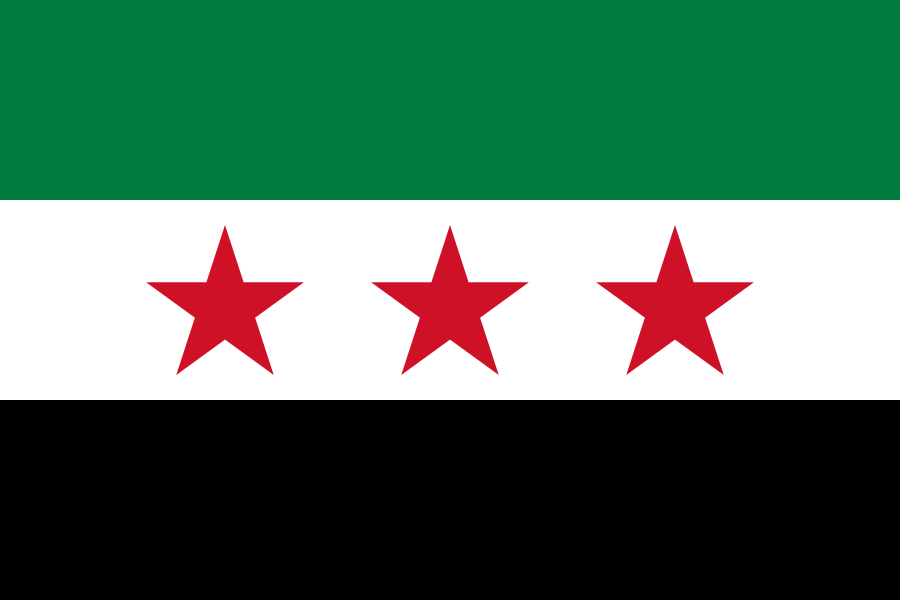
Syria
One of the oldest inhabited lands on earth — Damascus, Aleppo, Palmyra, Krak des Chevaliers — monuments that shaped the course of world history. After the fall of the Assad regime in December 2024, Syria entered a transitional period under the new government of Ahmed al-Sharaa. The country is gradually opening to tourism, with independent tours running since 2025, but the situation remains unstable. A trip needs serious preparation, an operator alongside you and a tolerance for surprises.
Where to go
#Damascus
Come here for the Old City above all else. A day is enough to walk the souks and the Umayyad Mosque, and the whole place is genuinely alive. This is where any trip to Syria starts and where most of it happens.
Aleppo
The city is rising out of the rubble, and people come for the Citadel. The old markets are coming back to life, though whole districts still lie in ruins around them.
Palmyra
This desert city is worth the journey for the colonnades. Some of the temples were destroyed, but the scale of what remains is still astonishing.
Homs
Most travellers use the city as the jumping-off point for Krak des Chevaliers. Life has returned to the streets around the Khalid mosque, and it makes a practical overnight stop.
Latakia
The main coastal town, and where to go for fish. It has the best infrastructure in the country and easy access to the ruins of Ugarit.
Bosra
This town built entirely of black basalt is worth the trip for its amphitheatre. The theatre sits inside a fortress, which is what saved it from destruction.
What to see
#Umayyad Mosque: The first thing to see, the great shrine of Damascus with its golden mosaics. It holds what tradition says is the head of John the Baptist and has drawn worshippers of different faiths for centuries.
Krak des Chevaliers: Worth the drive into the hills above Homs for the most formidable Crusader castle anywhere. The massive walls and Gothic halls survive so completely that it looks like a film set.
Aleppo Citadel: A vast fortress on its hill, and where to go for a panorama over the rebuilding city. Inside are throne rooms and ancient temples that have survived dozens of hard sieges.
Maalula: A mountain village where you can hear prayers said in Aramaic, the language of Jesus. The narrow canyon and the old monasteries cut into the rock make for a genuinely early-Christian atmosphere.
Straight Street: The Roman decumanus running through Damascus, good for an afternoon hunting antiques. It crosses the whole Old City and is named in texts going back to biblical times.
Mar Musa Monastery: Come here for an austere night on a mattress in a sixth-century cell. Hundreds of steps up the mountain are repaid with silence and frescoes fifteen hundred years old.
Prices
#Currency: The Syrian pound was redenominated in 2026, so new notes with fewer zeros are in circulation. Older notes still turn up and cause confusion for unprepared visitors.
Cash: There is essentially no banking infrastructure for foreigners, so bring new US dollar notes only. Any tear, mark or stamp on a note makes it very hard to exchange at a fair rate.
Cards: Visa, Mastercard and everything else are useless here — sanctions mean no ATM and no shop will take a foreign card. Even the better hotels want cash.
Exchange: The official bank rate is usually poor, so change money at licensed exchange shops in Damascus. Hotel owners frequently offer guests a rate close to the market one.
Budgeting: You will carry every dollar you plan to spend, so think through the whole trip before you arrive and keep the cash split between two places.
| Item | Price (USD) |
|---|---|
| Falafel wrap | 1.0 |
| Chicken shawarma | 2.5 |
| Lunch at a local cafe | 5.0 |
| Restaurant dinner | 15.0 |
| Cardamom coffee | 0.8 |
| Fresh juice | 1.2 |
| Kilo of baklava | 10.0 |
| Pack of local tobacco | 2.0 |
| Taxi across the centre | 3.0 |
| Bus to another city | 6.0 |
| Car with driver, per day | 120.0 |
| Guesthouse night | 25.0 |
| Boutique hotel night | 70.0 |
| Museum ticket | 4.0 |
| SIM card with 15GB | 45.0 |
Getting around
#Minibuses: The popular way to move between cities, leaving when they fill up. They're cheap but demand stamina and knowing which bus yard serves which route.
Private driver: For safety and predictability, hire a car with a driver who understands the current road situation. That runs 100 to 200 dollars a day including fuel.
Self-drive: Renting a car is possible in Damascus through services such as ShomoX. You'll need an international licence, to be over 23, and the patience for frequent document checks at checkpoints.
City taxis: The yellow cars in Damascus run without meters, so agree the fare before you get in. A trip across the centre of the capital rarely comes to more than a few dollars.
Shared minibuses: Urban routes are marked in Arabic only, which makes them hard to work out. Locals will always point you to the right stop if you ask politely.
Domestic flights: Internal services link Damascus with Aleppo and Latakia, though schedules change without notice. It's worth it if your budget stretches and you're short of time.
Getting into the country: Most travellers arrive overland from Beirut by shared or private taxi, roughly three hours including the border. Damascus airport has limited service, largely via Gulf and regional carriers.
Where to stay
#Boutique hotels: In old Damascus, pick a converted Ottoman house with a stone courtyard and a fountain. It's the most atmospheric option and puts the city's history around you.
Guesthouses: In quieter places you'll find simple guesthouses with basic facilities. Don't expect polished service, but the warmth of the hosts and the home-cooked breakfasts more than compensate.
Power: Expect rolling blackouts of two to six hours a day, even in the capital. Most hotels run their own generator, but air conditioning rarely works while it's on.
Booking: The big international platforms list almost nothing in Syria because of sanctions. It's more reliable to contact hotels directly on WhatsApp or go through a trusted local guide.
Monasteries: Christian houses at Maalula and Mar Musa offer a unique night's stay. Conditions are spartan and often without hot water, but the mountain silence is unlike anything else.
Payment: Even with a confirmed booking, you'll pay in cash dollars on arrival. Check that the wi-fi actually works, since mobile data can be very unstable.
What to eat
#Quick food: The staples are freshly made falafel and shawarma, spiced here in a way you won't find elsewhere. It's the safest and cheapest thing to eat in any busy neighbourhood.
Mezze: A table covered in dozens of small dishes turns an ordinary lunch into a ritual. Never drink tap water; stick to sealed bottles or water that's been boiled.
Kibbeh: The national dish of bulgur and meat has dozens of regional variations. Aleppo makes it with pomegranate juice, while Damascus prefers the fried version with nuts.
Sweets: Syria is a paradise for anyone with a sweet tooth, from pistachio baklava to stretchy booza ice cream. The confectioners in the Old City stay open late, pulling people in with rose water and honey.
Drinks: Try the strong cardamom coffee and tea buried under fresh mint. For something cold, jallab made from dates is popular, as is the fresh juice sold on every corner.
Alcohol: Availability dropped sharply after the change of government in 2024. Many specialist shops closed, and drinking in public now causes serious problems.
Safety
#Checkpoints: You cannot move between cities without passing through them. Keep your passport to hand and never photograph anyone in uniform or any military vehicle.
Risk areas: Avoid the border regions, where the situation remains unpredictable. The outskirts of Homs and Aleppo can also be dangerous because of unexploded ordnance left in abandoned ruins.
Politics: Discussing the government or recent events with strangers is strictly off limits. Syrians are hospitable but sensitive on these subjects, so keep conversation neutral.
Photography: Cities are full of things you may not photograph, from government buildings to bridges. If in doubt, put the camera away or ask the nearest guard first.
Healthcare: The health system is badly depleted, so bring an extensive medical kit. For anything serious, your only real option is one of a handful of private clinics in Damascus.
Crowds: Any large gathering or demonstration carries the risk of sudden confrontation. At the first sign of trouble, head straight back to your accommodation.
Advisories: Most governments advise against all travel to Syria, which also voids standard insurance. Read your own government's current advice and arrange specialist cover before you commit.
Etiquette and culture
#Dress: Standards have tightened since 2026, so shorts and vests are out even in the heat. Women should wear loose clothing covering the arms; a headscarf isn't required but is warmly received.
Hospitality: Syrians are famous for wanting to feed you and pour you tea. Refusing the first offer can offend, but after the second cup you can politely thank your host and stop.
Faith: The country is a mosaic of denominations, with mosques standing beside very old churches. Respect prayer times and the rules for entering religious buildings, removing shoes and keeping silent.
Etiquette: Take your shoes off entering a home, and pass money or food with your right hand. Public affection between men and women is considered inappropriate.
Friday: The holy day, when most shops stay shut until midday and the mosques fill. Plan travel and errands for other days so you aren't left waiting.
Tact: Society is still transforming after long years of war. Be considerate with people you meet, because almost every family has been through personal loss.
Connectivity
#Networks: Syriatel and MTN both operate 4G in the larger cities. Tourist packages cost around 45 dollars and include a fixed data allowance.
eSIM: Many international eSIM services don't work in Syria. LinkeSIM is the reliable one and can be activated in advance so you have data on arrival at the border.
WhatsApp: It's the main channel for everyone, from taxi drivers to hotel owners. Voice calls over the internet work better than the mobile network, which drops frequently.
Access: Some social networks are unavailable without a VPN. Install two or three reliable apps before you cross the border rather than after.
Speed: Hotel connections rarely support video but are fine for messaging. In rural areas, expect the signal to disappear for indefinite periods.
Offline maps: Download Maps.me before you go. The data isn't always current, but the main landmarks and roads will keep you oriented in the dense old quarters.
Phrasebook
#| English | Levantine Arabic | Pronunciation |
|---|---|---|
| Hello | مرحبا | MAR-ha-ba |
| How are you? | كيفك؟ | KEE-fak |
| Good | منيح | mneeh |
| Thank you | شكراً | SHOOK-ran |
| Please / go ahead | تفضل | tfad-DAL |
| Yes / No | أي / لأ | ay / la |
| How much? | أديش؟ | ad-DAYSH |
| Expensive | غالي | GHAA-lee |
| Straight ahead | دغري | DUGH-ree |
| Right | يمين | ya-MEEN |
| Left | شمال | shmel |
| Water | مي | my |
| Bread | خبز | khubz |
| Delicious | طيب | TAY-yib |
| Enough | بكفي | BKAF-fee |
| Help me | ساعدوني | saa-ii-DOO-nee |
| What's new? | شو في ما في؟ | shoo fee ma fee |
| Mate (slang) | يا زلمة | ya ZAL-a-meh |
| Really? (slang) | والله؟ | WAL-la |
| OK | ماشي | MAA-shee |
| Goodbye | مع السلامة | ma-sa-LAA-ma |
| I don't understand | ما فهمت | ma FHIM-it |
Good to know
#Adapters: Syria uses type C and L sockets, so European plugs fit without trouble. Voltage spikes when generators cut in, so use a surge protector for anything valuable.
Season: April, May and October are the best months. Summer in Damascus and Palmyra is punishing, well over forty degrees, and winter in unheated stone houses is genuinely cold.
Medical kit: Beyond the basics, bring treatments for infections and antiseptics. Good medicine is hard to find in the provinces and familiar brand names may not exist at all.
Document copies: Make several paper copies of your passport and visa. They're often taken at checkpoints, and having copies means never handing over the original.
Souvenirs: Beyond baklava, take home Aleppo laurel soap, engraved metalwork and silk scarves. Bear in mind that anything resembling an antique will raise questions at Damascus airport.
Ethics: Syria is not a place for dark tourism. Don't use ruined districts as a backdrop for photographs. Treat what the country has been through with the respect its history deserves.
Frequently asked questions
#Yes, essentially every nationality does. You can apply through the eVisa system or at a Syrian embassy, but the real condition is prior clearance from the security services, which takes time.
No. Sanctions mean no foreign card works in an ATM or a shop anywhere in the country. Cash US dollars, exchanged for pounds at a licensed bureau, is the only workable method.
The risks are high because of the unstable political situation and unexploded ordnance in some areas. Move between cities only with a local driver or guide who understands the current checkpoint situation.
No. Entry is refused outright if your passport carries any Israeli stamp or a Jordanian border stamp from a crossing with Israel. You'll be turned down at the visa stage or at the border.
The simplest option is a local tourist SIM with a prepaid bundle for around 45 dollars. LinkeSIM also gives reliable 4G in the major cities without needing to register a local card.
The usual method is a private or shared taxi from the Charles Helou area in Beirut. The journey takes about three hours including the border, but only with a visa or security clearance already approved.
Dress conservatively: clothing should cover shoulders, arms and knees for both men and women. Short shorts and vest tops can cause problems at the border and will draw sharp disapproval.
For a comfortable trip with a hired car and decent hotels, budget 150 to 200 dollars a day per person. Travelling by bus and staying in simple guesthouses brings that down to 50 to 80 dollars, excluding the visa.
Effectively no — flying is banned or out of reach for tourists. Foreign visitors are banned from flying and there is no formal import procedure. Rules for other countries are in the drone ranking by country.
Updated
The data on this page goes out of date. Visa rules and permitted stays, border requirements, prices and budgets, transport and local conditions all change fast, and we do not re-check every page every day. We show the date of our last check where we have one, but before you travel, verify with official sources: the country’s consulate, its immigration service, its e-visa portal and your carrier.