Turkey
TRA country straddling Europe and Asia, where classical ruins stand beside Ottoman mosques and a turquoise coastline gives way to the lunar landscape of Cappadocia. Affordable prices, straightforward entry for most nationalities and flights from almost everywhere make Turkey one of the easiest destinations to travel in.
Where to go #
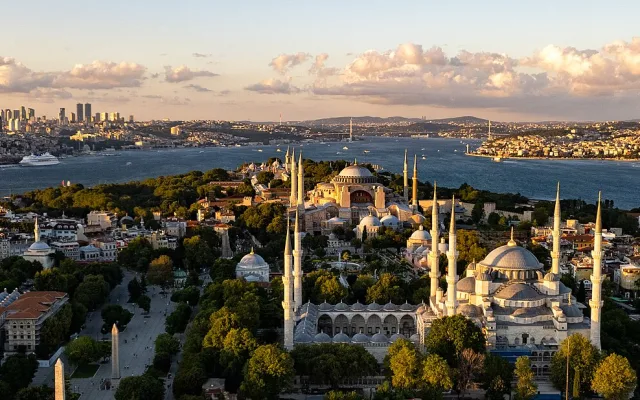
Istanbul
A city on two continents — Hagia Sophia, the bazaar, the Bosphorus and the finest hamam.
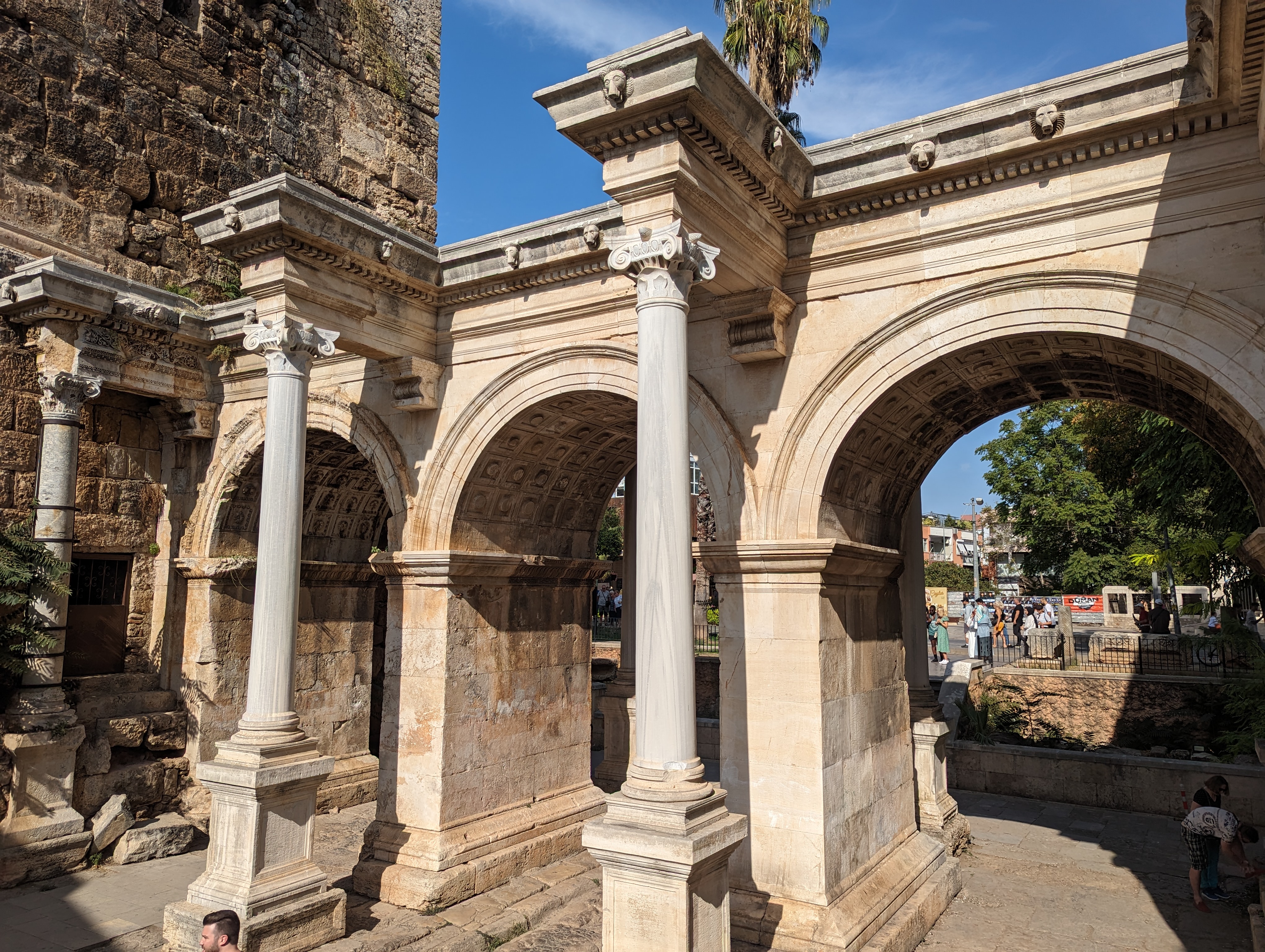
Antalya
Gateway to the Turkish Riviera — beaches, the old quarter of Kaleiçi and the ski slopes of the Taurus mountains.
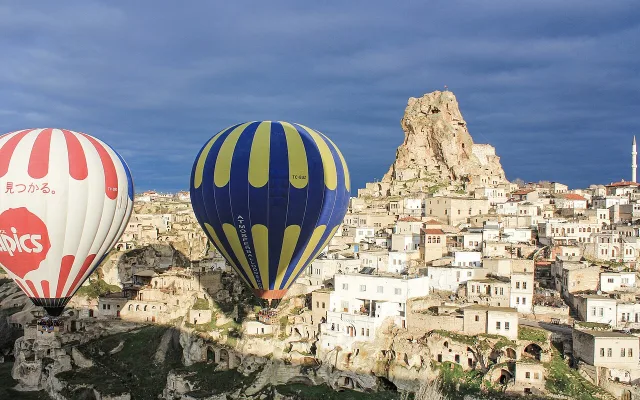
Cappadocia
A lunar landscape with cave hotels, hot-air balloons and canyons.
What to see #
Hagia Sophia: the ancient cathedral in Istanbul now functions as a mosque, and visitor access is limited to the gaps between prayers. Go early in the morning if you want to avoid the queue that builds by mid-morning.
Cappadocia: the rock-cut churches of Göreme and underground cities like Derinkuyu are essential, while the balloon flight is arguably overrated for what it costs. The walking is every bit as impressive and free.
Ephesus: the best-preserved classical city in the country, where the Library of Celsus still looks monumental. This is not a pile of stones but actual streets of a city that once had a quarter of a million people living in it.
Pamukkale: the terraces are beautiful at dawn and a pilgrimage site for hundreds of coaches by midday. Arrive for the eight o'clock opening and you get the empty version.
Troy: the legendary site near Çanakkale disappoints anyone expecting film scenery. It is a serious archaeological park, rewarding for people who can read the layers of history stacked on top of each other.
Göbekli Tepe: the oldest known temple complex, near Şanlıurfa, quietly rewrites the story of when civilisation began. Worth a trip for anyone who cares about history, despite how far out of the way it is.
Prices #
Lira: the Turkish currency is volatile and prices are revised almost monthly, so a figure you read online may already be stale. Keep a reserve of cash for markets, street food and small shops.
Cards: Visa and Mastercard are accepted almost everywhere in cities, contactless included, and even many dolmuş routes now take them. Amex is patchier, so keep a second card, and always choose to be charged in lira rather than your home currency when the terminal offers.
ATMs: Ziraat, Garanti and İş Bank machines are the reliable ones, and Wise or Revolut cards keep the conversion rate close to the real one. Decline the machine's own conversion offer every time, since that is where the money quietly disappears.
Exchange: rates at Istanbul and Antalya airports are poor. The döviz offices around Sirkeci and the Grand Bazaar are far better, and both US dollars and euros change well; euros tend to be marginally easier away from the tourist strip.
Banknotes: Turkish exchange offices are fussy about the condition of foreign notes. Old-series dollars, or anything with a mark, a stamp or a tear, can be refused even at a proper bureau.
| Item | Price (USD) |
|---|---|
| Lunch in a lokanta | 6-9 |
| Dinner in a restaurant | 18-28 |
| Bowl of soup at a corner shop | 2-4 |
| Turkish coffee | 1.5-2.5 |
| Pension room per night | 30-50 |
| Istanbul hostel bed | 12-20 |
| Intercity bus | 16-24 |
| YHT train ticket | 9-13 |
| Metro fare | 0.5-0.9 |
| Museum Pass Turkey | 75-90 |
| Entry to Ephesus | 16-22 |
| Entry to Pamukkale | 15-20 |
| Balloon flight | 160-260 |
| Car hire per day | 35-60 |
| Litre of 95 petrol | 1.1-1.3 |
Getting around #
Getting in: Istanbul is one of the world's biggest aviation hubs, with Turkish Airlines flying in from most European capitals and from New York, Chicago, Los Angeles and Toronto. Pegasus and other budget carriers use Sabiha Gökçen on the Asian side, and in summer low-cost airlines from across Europe fly straight into Antalya, Izmir and Dalaman.
Buses: the intercity coach network is the most developed logistics system in the country. Operators such as Pamukkale or Metro run vehicles with seat-back screens, tea service and 2+1 seating that beats economy class on a plane.
Trains: the YHT high-speed lines link Istanbul, Ankara and Konya. They are faster than the bus, but seats on popular departures need buying online two or three days ahead.
Dolmuş: these shared minibuses connect outlying neighbourhoods and nearby villages. You pay the driver in cash and there are often no fixed stops, so you say when you want to get out.
Car hire: the international chains want a foreign credit card in the driver's name. Local firms are more flexible and will often take a cash deposit in lira, which suits travellers without a credit card.
City cards: in Istanbul the Istanbulkart is effectively compulsory, sold from the yellow machines at every station. It covers the metro, trams and ferries and gives you cheaper transfers.
Domestic flights: Pegasus and AJet frequently undercut the buses if you book early. It is the quickest way to get from the capital to Cappadocia or out east, where the drive would eat a whole day.
Where to stay #
Pensions: family-run mini-hotels, or pansiyon, are the best choice for actually meeting people. They give you a homely room, modest prices and a breakfast spread across a dozen small plates of cheese and honey.
Boutique hotels: in Istanbul and Cappadocia this format has been perfected. In Göreme you can sleep in a genuine cave converted into a comfortable room with everything working properly.
City hotels: in Ankara or Izmir, pick somewhere in the business districts. That buys you reliable internet and no tourist markup on breakfast or laundry.
Apartments: short-term rentals have got more expensive because of new taxes. They only make sense for stays of two weeks or more, when a kitchen and a washing machine start earning their keep.
Booking: the big platforms work unevenly inside the country, so reserve before you travel or contact hotels directly through their social media. Small pensions in particular answer messages faster than they update listings.
Seasons: out of season, city room rates roughly halve. That is the moment to stay in a historic building in Beyoğlu for what a hostel bed costs in August.
What to eat #
Lokantas: self-service canteens where locals eat. The food is fresh and home-style, the choice of vegetable dishes is enormous, and the prices are the lowest fixed prices in any town.
Kebabs: there are dozens of varieties, from the fiery Adana to the buttery Iskender. Look for places cooking over wood rather than the electric grills that dominate the tourist streets.
Pide and lahmacun: the Turkish take on flatbread, topped with minced meat or cheese. It is the perfect fast lunch, made in front of you in a stone oven in a matter of minutes.
Street food: a balık ekmek fish sandwich on the Eminönü waterfront, or a crisp simit by a metro entrance, is part of the culture rather than a novelty. It is safe when there is a queue of locals in front of you.
Turkish breakfast: an enormous ritual of cheeses, olives, eggs and pastry. Order one set between two, because the volume of food routinely defeats a single person.
Water: do not drink from the tap, even in good hotels, where it is fine for washing but not for drinking. Bottled water from any supermarket chain costs almost nothing.
Safety #
Taxis: the main threat to your wallet. Drivers sometimes forget to start the meter, so use the BiTaksi app and see the fare before you get in.
Scams: in the tourist quarters, the classic is a friendly stranger inviting you to a bar. The evening ends with a bill of several hundred dollars for a couple of ordinary drinks and staff who make leaving difficult.
Theft: crime levels are low, but keep an eye on your things in crowded markets. In the Anatolian cities you can walk around late in the evening without a second thought.
Earthquakes: the south of the country sits in an active seismic zone. When you check in, note where the exits are and take a look at the general state of the building.
Traffic: drivers routinely ignore pedestrian crossings. Cross with full attention even when the light is green in your favour, because the green light is not an argument anyone here recognises.
Overstaying: the most serious risk a visitor faces is breaching the terms of their entry stamp. It carries a substantial fine and a ban from re-entering the country for up to five years, so know exactly how long your passport is allowed.
Advisories: conditions near the Syrian border differ from the rest of the country, so check your own government's travel advisory before planning anything in the far southeast.
Etiquette and culture #
Mosques: take your shoes off at the entrance and leave them on the racks. Women should cover their head and shoulders, and men should not walk in wearing short shorts.
Tea: tea in tulip glasses is the foundation of every interaction. Turning down a glass offered in a shop reads as rude, because it is an offer of hospitality rather than a sales tactic.
Haggling: in the bazaars this is a social ritual rather than a way to save money. Open at about half the asking price, but do it calmly, with a smile and no aggression at all.
Atatürk: the founder of the republic is a sacred figure for most citizens. Criticism or disrespectful jokes about Mustafa Kemal can genuinely land you in legal trouble.
Gestures: the OK sign made with thumb and forefinger is offensive here. Also avoid pointing the soles of your feet at anyone, which is read as contempt.
Ramadan: during the fasting month many places outside the big cities stay shut until sunset. Life in Istanbul or Izmir carries on normally, but be tactful about eating in public.
Language: English is widely spoken in Istanbul, the resorts and anywhere with a tourist trade, and menus and signage are usually bilingual. Head into Anatolia and that thins out fast, so an offline translator earns its place.
Connectivity #
SIM cards: tourist bundles from Turkcell or Vodafone are expensive and require your passport. Airport prices are always inflated, so buy in an official shop in town instead.
IMEI registration: foreign handsets get blocked on Turkish networks after 120 days of use with a local SIM. On a normal holiday this never becomes an issue and there is no tax to pay.
eSIM: the simplest option, and the one that works from your first hour in the country. Airalo and similar services let you activate a data bundle before you have even left the plane.
Public wifi: free hotspots are plentiful, but many want a Turkish mobile number to authenticate, which makes them useless to a visitor. Hotel and pension wifi is generally stable and free.
Messaging: all the usual apps work without restriction, and calling home over the internet is much cheaper than roaming. Check your own operator's roaming rates before you rely on them.
Navigation: Google Maps and offline maps work well. For public transport in Istanbul, local apps with live timetables are far more accurate than anything international.
Phrasebook #
| English | Turkish | Pronunciation |
|---|---|---|
| How much is it? | Ne kadar? | neh kah-DAR |
| That's very expensive | Çok pahalı | chok pah-hah-LUH |
| Give me a discount | İndirim yapın | in-dee-REEM yah-PUHN |
| Bus station | Otogar | oh-toh-GAR |
| Where's the dolmuş to...? | ... dolmuşu nerede? | dol-moo-SHOO neh-reh-DEH |
| Anywhere here is fine | Müsait bir yerde | mew-sah-EET beer yer-DEH |
| The bill, please | Hesap, lütfen | heh-SAHP LEWT-fen |
| Water | Su | soo |
| Spicy | Acılı | ah-juh-LUH |
| No sugar | Şekersiz | sheh-ker-SEEZ |
| Enjoy your meal | Afiyet olsun | ah-fee-YET ol-SOON |
| Where is the toilet? | Tuvalet nerede? | too-vah-LET neh-reh-DEH |
| Help! | İmdat | im-DAHT |
| How do I get to...? | ... nasıl gidilir? | NAH-suhl gee-dee-LEER |
| One-way ticket | Tek yön bilet | tek yurn bee-LET |
| Excuse me | Affedersiniz | ahf-feh-DER-see-neez |
| Thank you | Teşekkür ederim | teh-sheh-KEWR eh-deh-REEM |
| OK, fine (slang) | Tamam | tah-MAHM |
| Bread | Ekmek | ek-MEK |
| Receipt | Fiş | feesh |
| Mate, bro (slang) | Kanka | KAHN-kah |
Good to know #
Consular help: most countries keep a consulate in Istanbul, several of them on or just off İstiklal Caddesi, with the embassies themselves in the Çankaya district of Ankara. Note the address and phone number of yours before you set off, in case of a lost passport or a theft.
Museum Pass: the combined Museum Pass Turkey pays for itself after three sites. It also gets you into Ephesus and Topkapı without standing in the general ticket queue, which in summer is the real saving.
Apps: install BiTaksi for taxis and Moovit for city navigation. A translator with the Turkish pack downloaded is genuinely useful in lokantas and at rural Anatolian bus stations.
Istanbulkart: top it up at the terminals or through the app. It gives you discounted transfers, which matters on any route that involves crossing the Bosphorus twice.
Timetables: the TCDD railway site is the place to check train schedules. Around public holidays and long weekends, seats vanish a week before the date of travel.
Plugs: Turkey uses 230V with round-pin European sockets, so British, North American and Australian travellers need an adapter. Buy it at home rather than paying airport prices.