
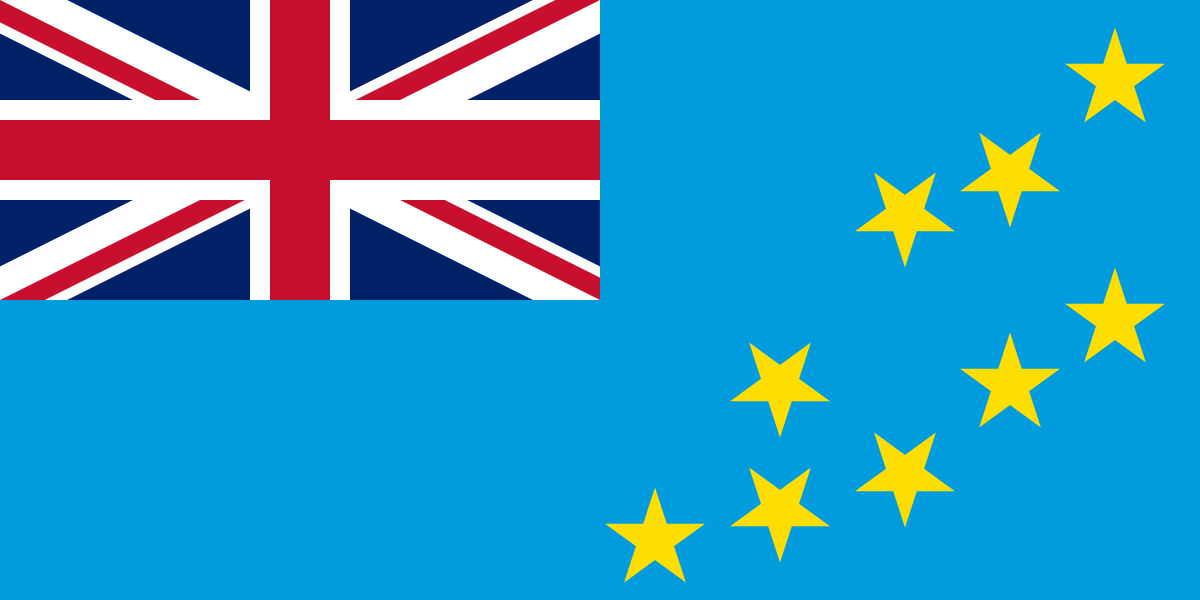
Safety in Tuvalu
A rating built from four independent indices, plus scams, laws and what to do when something happens
Rating calculated from the indices below
Indices checked on 10.08.2026
Position in global indices
Save these before you fly
The general picture
The general picture: Tuvalu is deservedly considered one of the safest countries on earth for solo travellers. Crime is close to non-existent and people are strikingly friendly and honest. Walking at night is fine, and leaving belongings in your room is fine.
Sun and sea: The equatorial sun is the real danger and it burns through cloud. Use high-factor sunscreen and keep your head covered. Currents outside the reef can be extremely strong, so swim inside the lagoon and nowhere else.
Animals and insects: There are no venomous snakes or dangerous predators, but plenty of mosquitoes, most active at dusk. Use repellent to avoid both the bites and the tropical fevers they carry. Stray dogs can be loud but are rarely aggressive.
Health care: Medical services are limited, and the single hospital in the capital handles only straightforward problems. Anything serious means an emergency flight to Fiji, which costs a great deal, so travel insurance with a high evacuation limit is the one thing you should not economise on. Bring your own basic medicines, because pharmacy stock is minimal.
Weather: Between November and April, storms and squalls are common. Rising seas mean even modest swells wash over parts of the land and stop movement completely. Check the forecast before any boat trip and expect flight delays in poor visibility.
Advice: Register your trip with your own government's travel advisory service if it offers one, and leave your itinerary with someone at home. Communications are patchy enough that nobody will notice a silence otherwise.
How tourists get scammed
Tuvalu is among the world's smallest and least visited countries: nine atolls and around eleven thousand people. There is no deception here because there is no tourism industry.
Funafuti. The main atoll. Between flights the airport runway serves as public space: people play football, ride motorcycles and stroll there in the evening. It is the best-known fact about the country, and it is true.
Flights. Fiji Airways links Funafuti with Suva several times a week. A cancellation means several days of waiting. Allow a very large margin.
Cash. The currency is the Australian dollar. Cards work essentially nowhere and there are no ATMs. Bring cash for the whole trip.
Accommodation. A few guesthouses and one hotel. Book ahead — places are limited.
Food. Choice is limited and almost everything is imported.
What gets you fined or jailed
Land and communities. Land belongs to families. Visiting the outer atolls requires permission and is arranged through locals.
Sunday. Strictly observed: church, rest and no commercial activity. Planning anything is pointless.
Dress. Society is very conservative. Women cover shoulders and knees, and swimwear is unacceptable in public places. Men should not appear shirtless.
Photography. People only with permission. The runway and airport call for care.
Drones. Permission is required.
Drugs. The law is strict.
Alcohol. Sold on a limited basis; public consumption is not welcomed.
Marine life. Collecting coral and shells is restricted and turtles are protected.
Health: vaccines, medicines, care
Healthcare is the main risk. The hospital on Funafuti is very basic and the outer atolls have health posts. Anything serious means evacuation to Fiji or New Zealand, dependent on infrequent flights. In practice a serious problem may wait days for a solution. Insurance with air evacuation is essential.
Water. Rainwater from cisterns; there is no fresh groundwater on the atoll. Water is scarce in droughts, which is a recurring problem. Drink bottled.
Vaccinations. Hepatitis A and B, typhoid and tetanus.
Dengue. Outbreaks occur.
Ciguatera. Reef fish poisoning occurs. Follow local choices.
Sun. Equatorial, with reflection off the lagoon and little shade.
The sea. The lagoon is calm, but currents on the ocean side are strong.
Climate. Tuvalu is among the world's most vulnerable countries to sea level rise. Storm surges flood parts of the atoll, and the country's highest point is around four metres.
Emergency number is 911 or 20336.
Police: how to handle them
Tuvalu is among the safest countries in the world. Crime is essentially absent.
Police. Extremely few in number. English is official alongside Tuvaluan.
Reporting theft. Reports are taken; cases are isolated.
Society. Eleven thousand people across nine atolls: everyone is acquainted and social control is total. That excludes crime as a phenomenon.
Custom. The council of elders takes decisions, and on the outer atolls its word matters more than any other.
What actually matters. Tuvalu has neither crime nor tourism infrastructure. The only risks are the absence of healthcare, dependence on infrequent flights, and fresh water scarcity. This is a destination for those interested in the inaccessibility itself.
Emergency number is 911.
What else to check
The rating is built from open international indices and foreign-ministry advisories; links to the primary sources are in the cards above. Conditions change faster than annual reports come out — check current travel advice before you go.