
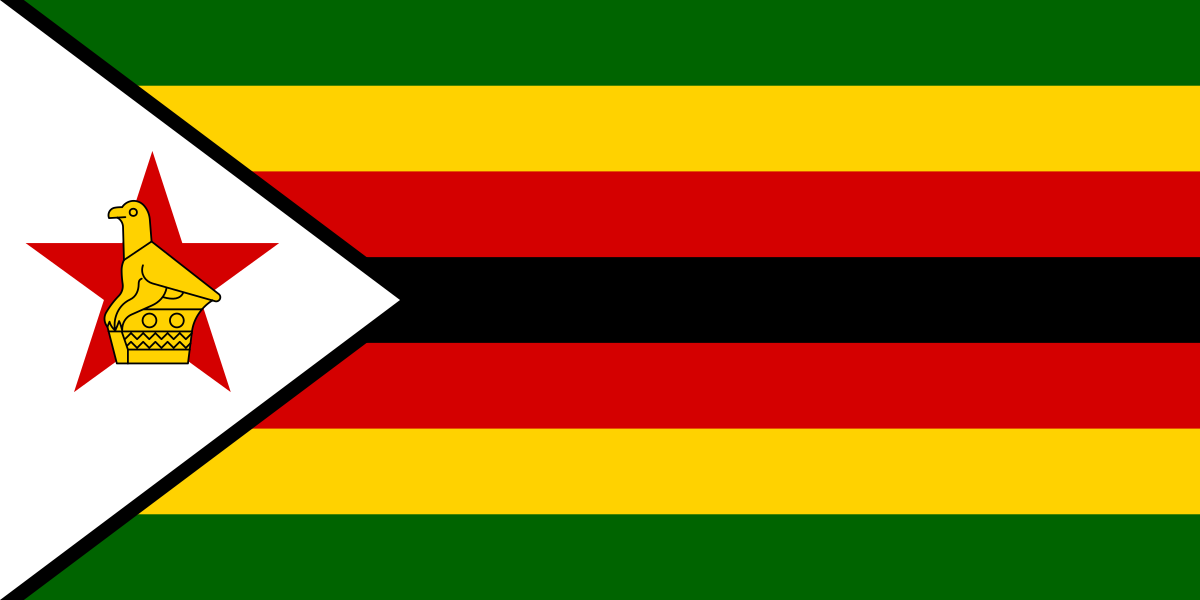
Safety in Zimbabwe
A rating built from four independent indices, plus scams, laws and what to do when something happens
Rating calculated from the indices below
Indices checked on 10.08.2026
Position in global indices
Save these before you fly
The general picture
Petty theft: Watch your pockets in crowded parts of Harare and Bulawayo. Do not wear a backpack on your back in a bus station crowd, and never leave anything visible in a parked hire car, even for a minute.
Wildlife: In the national parks you are the guest, not the owner. Never step out of the vehicle outside designated areas, as elephants or lions can be standing a couple of metres away in thick scrub.
Malaria: The risk is real around the falls and through the Zambezi basin. Use a repellent with a high DEET content and always tuck the net in around the bed before sleeping, particularly in the rainy season.
Roads: The biggest danger here is not criminals but the tarmac. Poor lighting and animals appearing out of nowhere make night driving genuinely lethal, so schedule every transfer for daylight hours.
Water and hygiene: Swimming in rivers and lakes can mean bilharzia. Stick to hotel pools. Brush your teeth and drink from sealed bottles bought at established supermarkets.
Police: Officers deal with tourists correctly and calmly. If you are stopped at a roadblock, stay polite and relaxed. Never photograph anyone in uniform, military installations or government buildings, which is against the law. Check your own government's travel advisory before you book.
How tourists get scammed
Zimbabwe has a difficult economic history and, at the same time, low street crime against tourists. The main difficulties involve money and infrastructure.
Money is the subject. Zimbabwe has been through hyperinflation and several currency reforms. In practice the economy is substantially dollarised: tourism prices are in US dollars, and cash dollars in small denominations are the most reliable. International cards work on a limited basis, ATMs are few, and change may come in local currency at a poor rate. Bring dollars in 1s, 5s and 10s.
Victoria Falls. Souvenir sellers and "guides" are persistent and haggling is compulsory. You will be offered old trillion-dollar notes as souvenirs — lawful and amusing, but overpriced.
Taxis. Agree in advance; there are no meters.
Fuel. Shortages arise periodically with queues at filling stations. Refuel at half a tank.
Car hire. Roads are in poor condition with serious potholes.
What gets you fined or jailed
Photography. Military installations, police, government buildings, the presidential residence and airports are categorically off limits. Harare has routes where you may not even stop. This is one of the main causes of foreigners' detention.
Politics. Public criticism of the government, social media included, creates risk. Legislation allows prosecution for "undermining authority".
Drones. Permission is required; they are confiscated at customs.
Wildlife. Hwange and Mana Pools are outstanding parks. Rules are strict and walking safaris go only with an armed ranger. Exporting ivory is prohibited.
Same-sex relations are criminalised, and official rhetoric on the subject is harsh.
Drugs. The law is strict.
Driving on the left. Nobody drives between towns at night.
Currency regulation. Rules have changed repeatedly. Exporting cash is limited and declaration on entry is compulsory for large sums.
Health: vaccines, medicines, care
Malaria. Risk in the lowlands — the Zambezi valley, Mana Pools, Hwange and Victoria Falls — during the November-to-June rains. Harare at 1,500 metres and the highlands are less affected. Prophylaxis is matched to the route.
Cholera. Zimbabwe has suffered major cholera outbreaks linked to the state of the water supply. Drink only bottled water and wash your hands thoroughly.
Vaccinations. Hepatitis A, typhoid and rabies. A yellow fever certificate is required from arrivals out of endemic countries.
Water. Bottled only. Supply in Harare is unstable and interruptions are ordinary.
Schistosomiasis. In the Zambezi and Lake Kariba. Do not swim.
Crocodiles and hippos. A real danger in the Zambezi.
Healthcare is the weak point. The public system has suffered from the economic crisis, with shortages of medicines and staff. Harare has private clinics, but anything serious means evacuation to Johannesburg. Insurance with air evacuation is essential, and that is no formality.
Medicines. Bring your own with a surplus: pharmacy shortages occur.
Police: how to handle them
Zimbabwe ranks low on the Corruption Perceptions Index, and roadside extortion has historically been widespread.
Traffic police. Checkpoints are numerous, checking documents, insurance, a first aid kit, a fire extinguisher and reflective triangles — compulsory equipment in Zimbabwe, and its absence gives grounds for a fine. Carry the set.
Reporting theft. Reports are taken and certificates issued. English is official.
Victoria Falls. A tourist zone, calm and with correct policing.
Harare at night. Travel by car and keep valuables out of sight.
The political situation. Demonstrations are suppressed firmly and the internet has been shut off during such periods. A foreigner should stay clear and not film.
What actually matters. In Zimbabwe the threat to a tourist is not crime but economic reality: money, fuel, medicines and healthcare. The nature and the parks, meanwhile, are magnificent and well organised.
Emergency numbers: 995 ambulance, 999 police.
What else to check
The rating is built from open international indices and foreign-ministry advisories; links to the primary sources are in the cards above. Conditions change faster than annual reports come out — check current travel advice before you go.