 No One
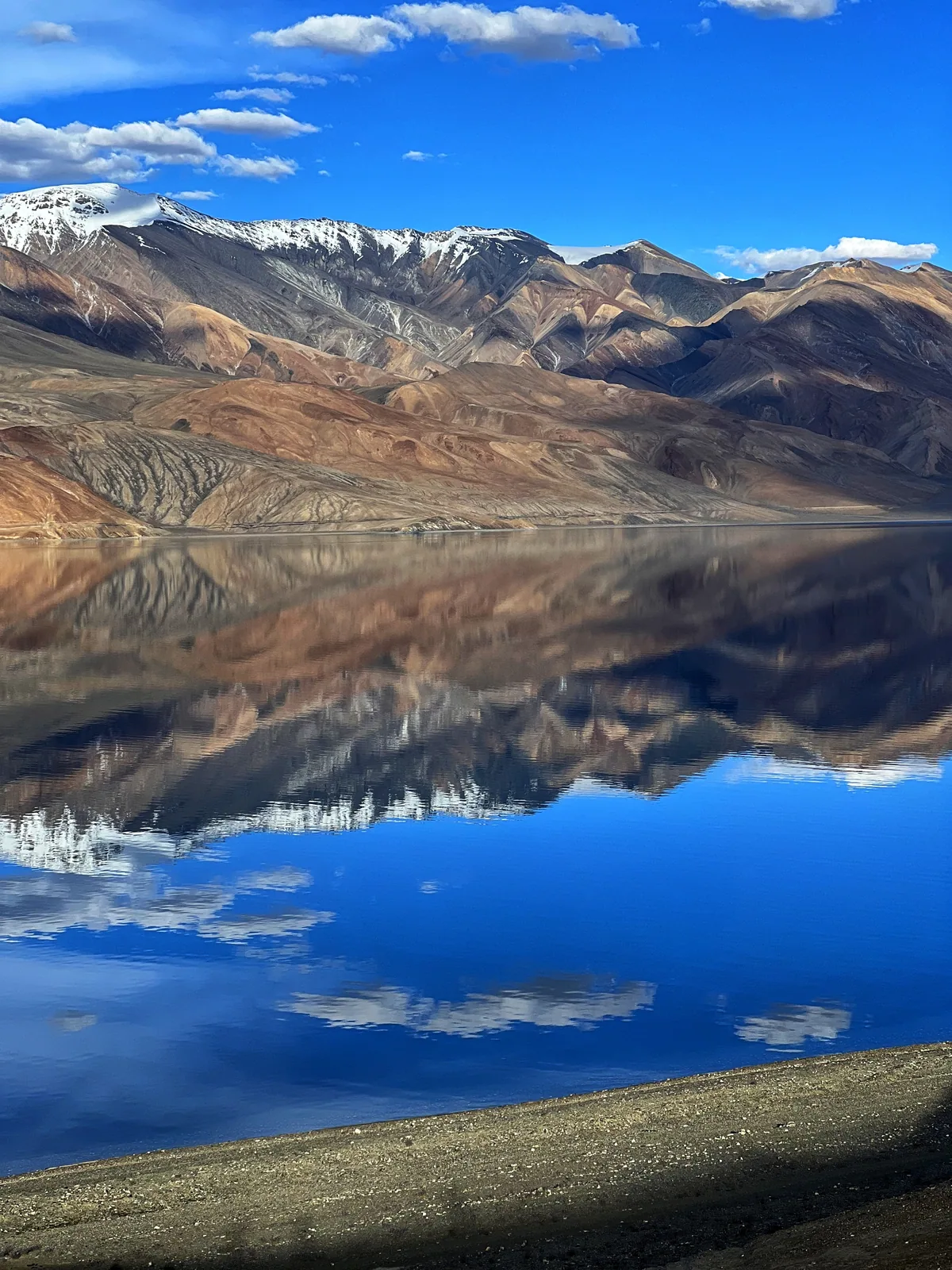
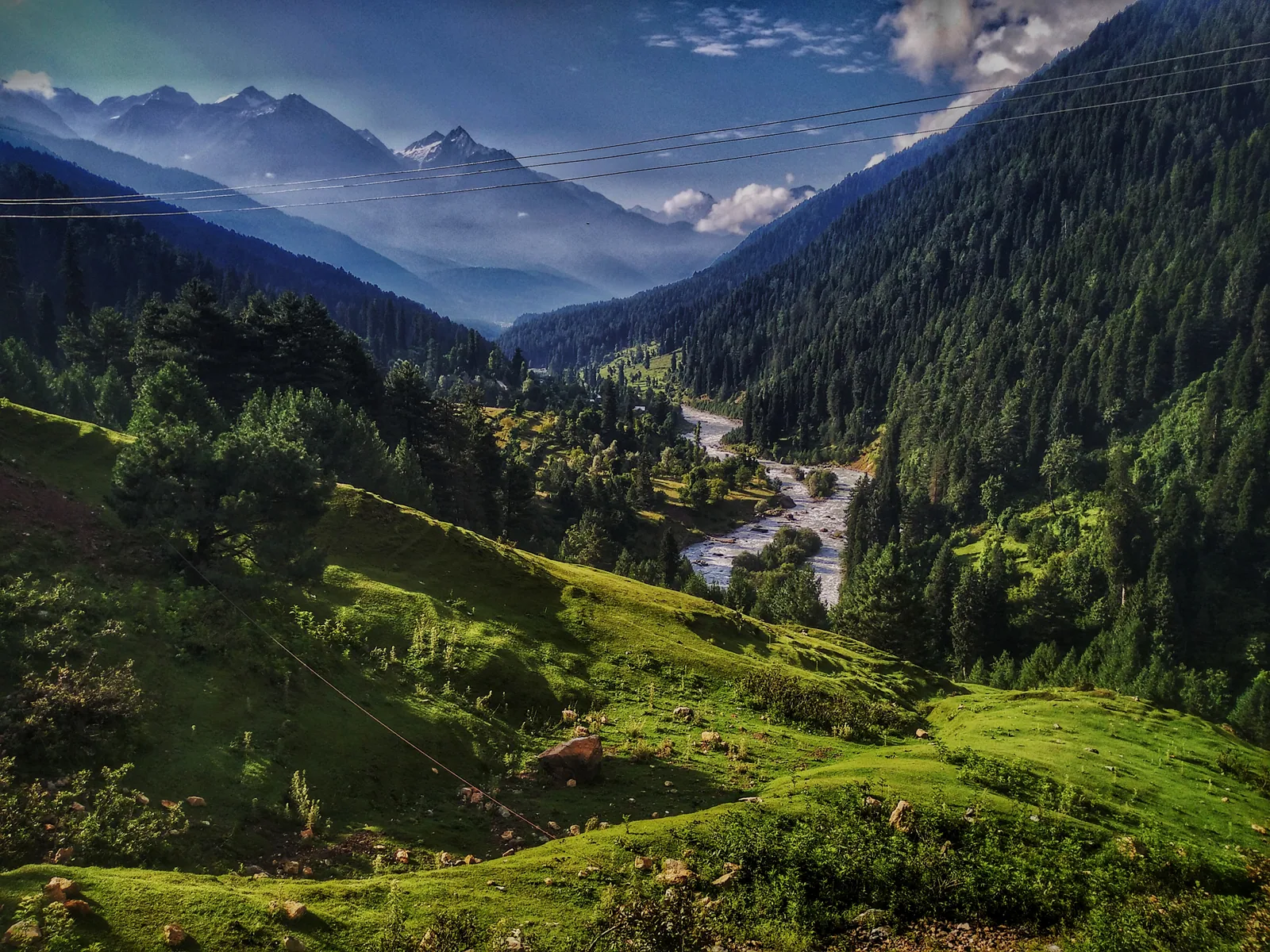
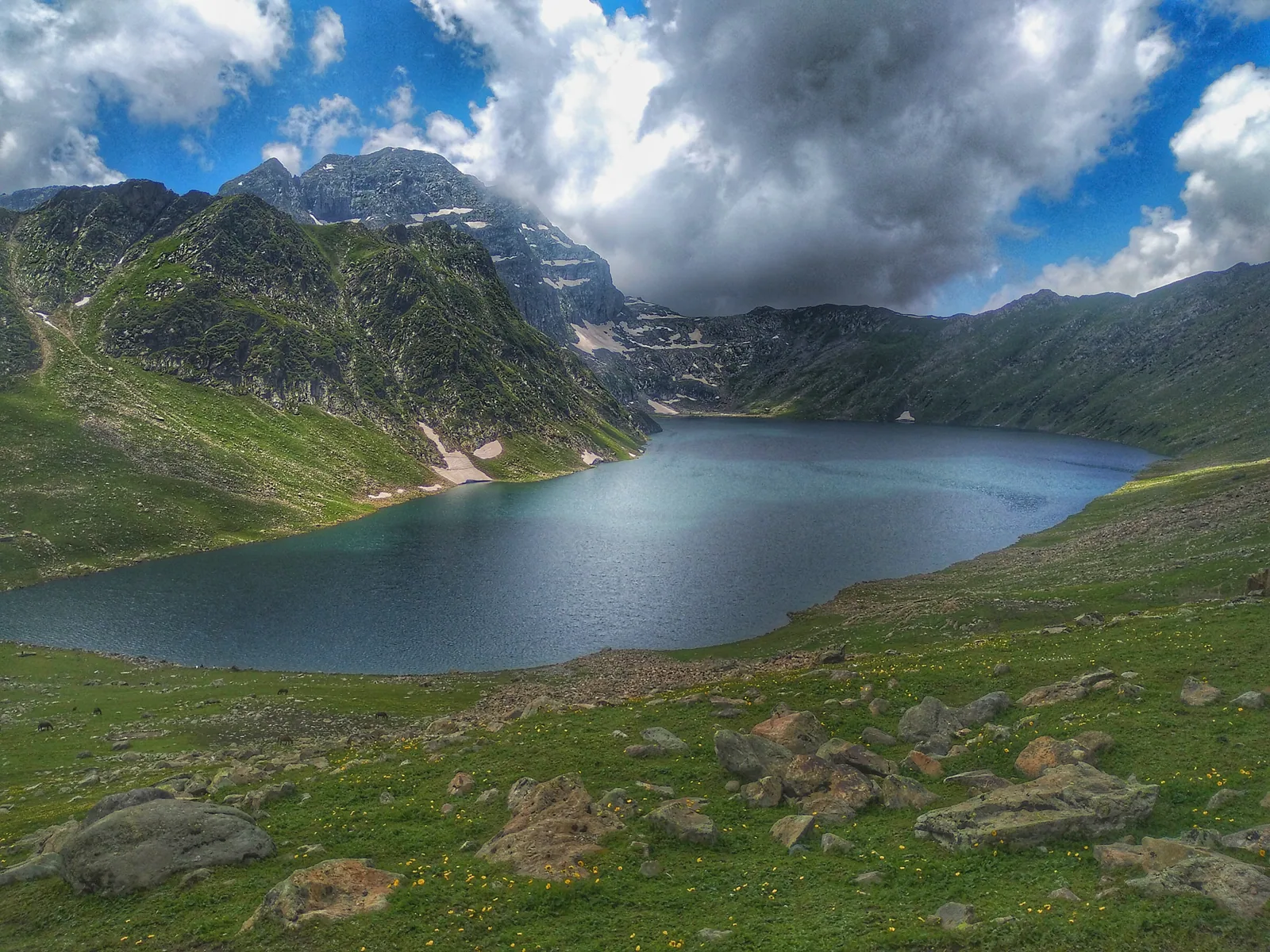
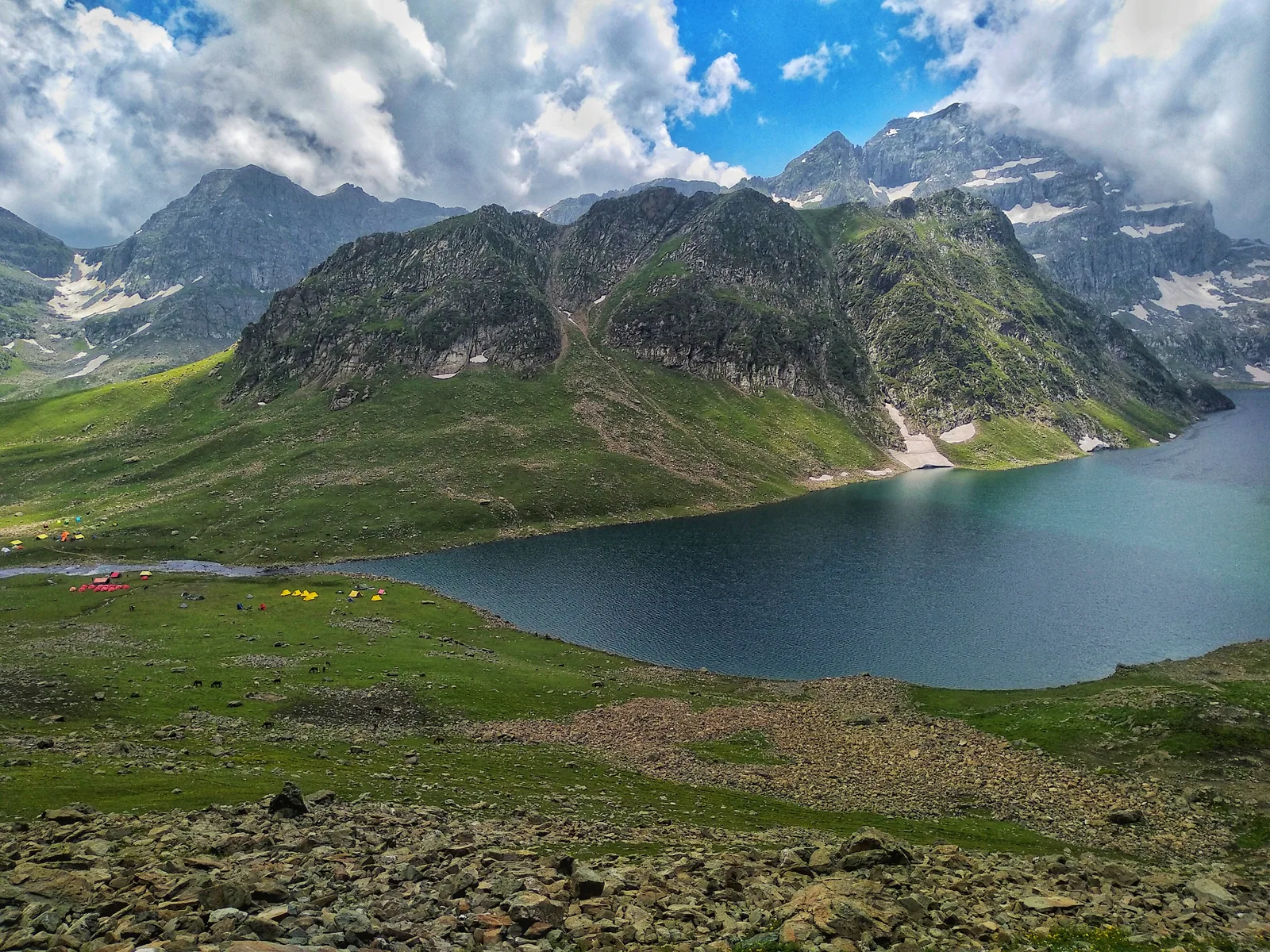
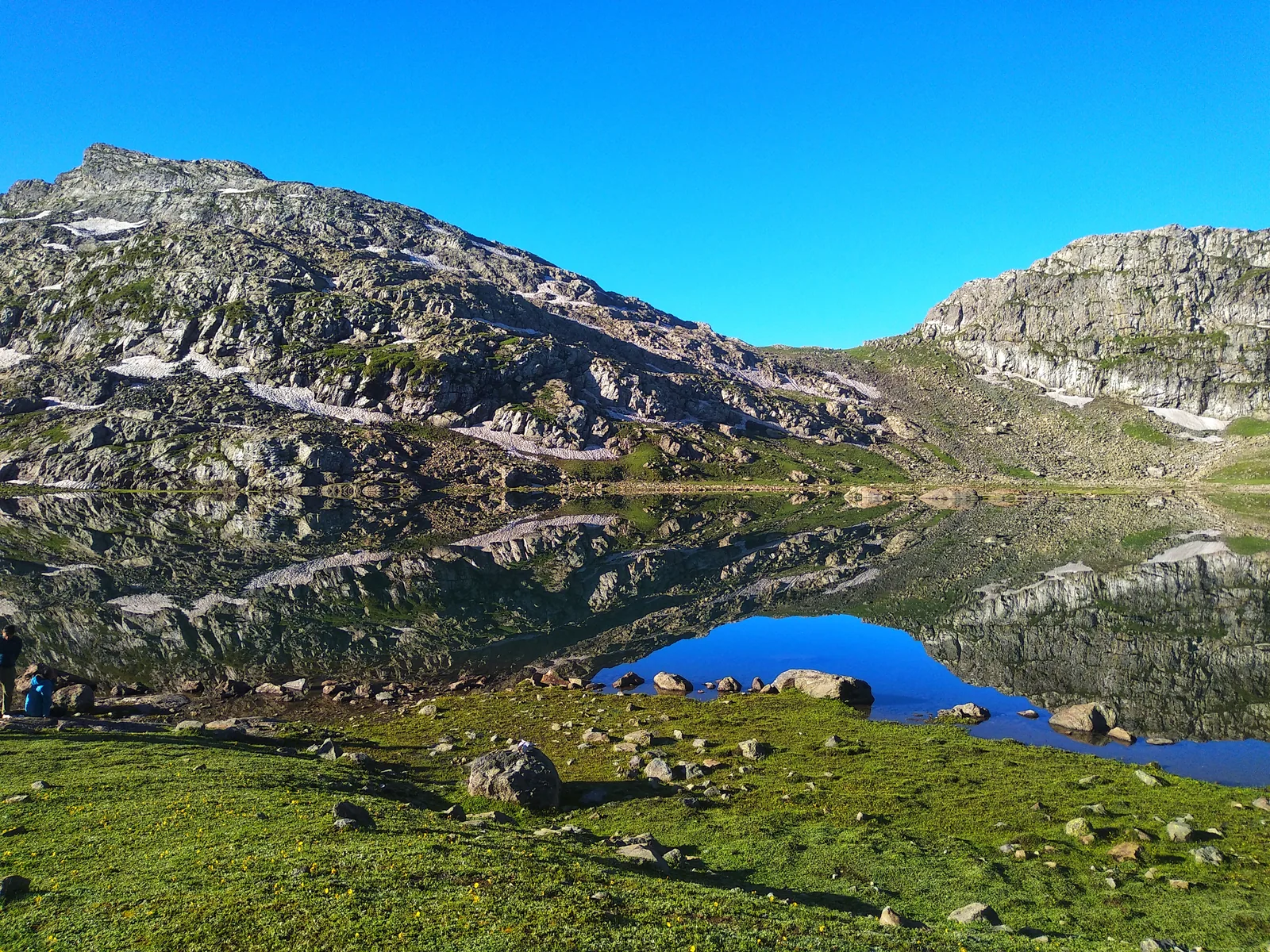
Tarsar is a high-altitude lake in the Kashmir Himalaya and one of the two lakes on the Tarsar–Marsar route. It lies among open meadows and steep mountain slopes; the water and its reflections change with cloud, wind, and light. The shore forms part of a broad alpine landscape rather than a developed recreation area. Seasonal herding and grazing are part of the surrounding countryside, while facilities at altitude remain limited.
The usual approach begins near Aru and takes several days, crossing forested stretches, valleys, and high passes. This is a trek, not a short walk from a road. July and August generally bring greener meadows, but they also fall within the rainy season; colder periods can bring snow and abrupt weather changes. Many itineraries combine Tarsar with nearby Marsar, though the crossing depends on current trail conditions and the group’s route plan.
Before setting out, check whether the route is open, what local rules apply, whether a guide is required, and where overnight stops are possible. Build in time to acclimatise, climb gradually, and keep a spare day for bad weather. Bring warm layers, sun and rain protection, water, and navigation equipment; pack out all rubbish and keep a respectful distance from livestock. Times quoted in older trip reports should not replace a current assessment on the ground.
- Address
- Долина Ару, округ Анантнаг, Кашмир, Индия
On the map

Reviews (0)
No reviews yet. Be the first!
Updated