 Города и дороги
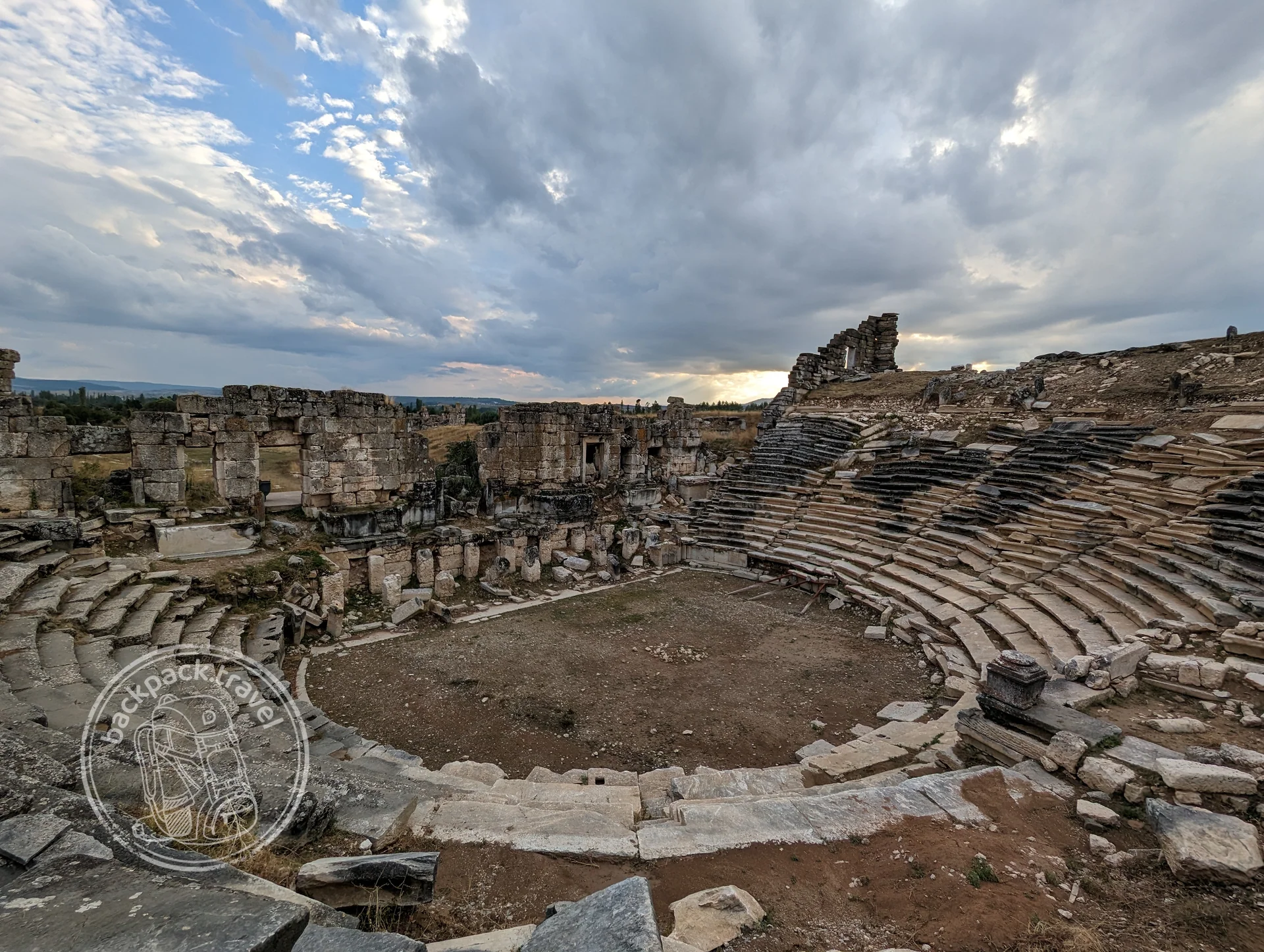
The theatre and the stadium of Aizanoi stand right against each other and form a single complex with almost no parallel in the ancient world: the stage building serves at the same time as the end wall of the stadium, so that spectacles of two different kinds took place in adjoining structures. Construction began in the 2nd century AD and went on for more than a hundred years; the money was given by wealthy local families whose names are carved on the blocks. The theatre held about twenty thousand spectators and the stadium up to thirteen thousand, while the running track was more than two hundred metres long. The lower rows of seats have survived, along with some of the vaulted passages and fragments of the richly decorated stage with masks and figures. Much of it collapsed in earthquakes, and the site lay as a heap of rubble for decades; excavation and the raising of the fallen blocks are still going on. From the upper rows you can see the field where the oval of the stadium can be made out, and further across the plain the colonnade of the Temple of Zeus reads clearly. The place is open and windswept, with almost no greenery, but the whole geometry of the structure is easy to follow. The complex lies north of the temple, on the other bank of the Penkalas River, and is visible from the road as you drive into the village.
- Address
- Çavdarhisar - Emet yolu, Çavdarhisar
Lists and awards
On the map
Reviews (0)
No reviews yet. Be the first!
Updated