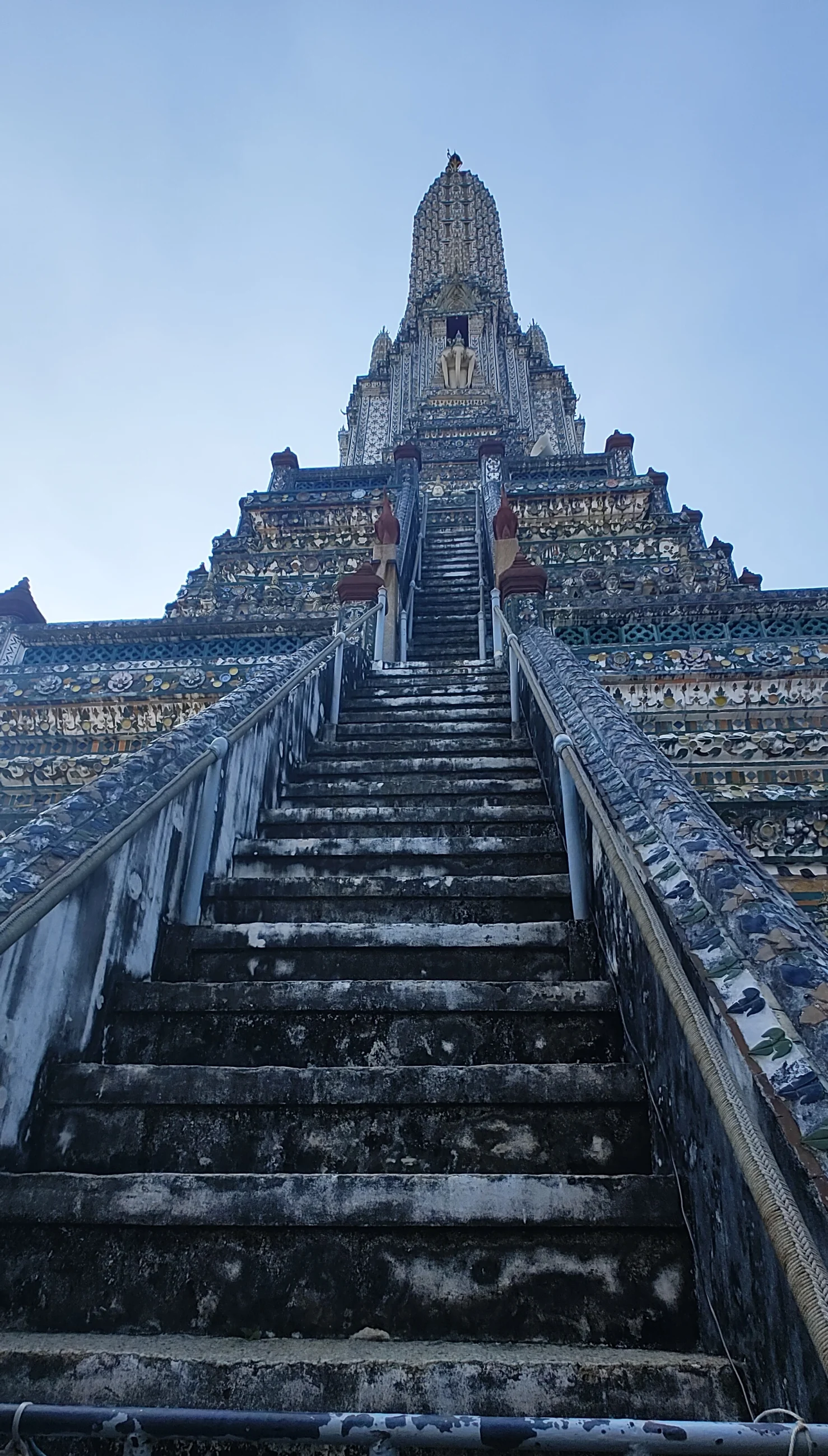
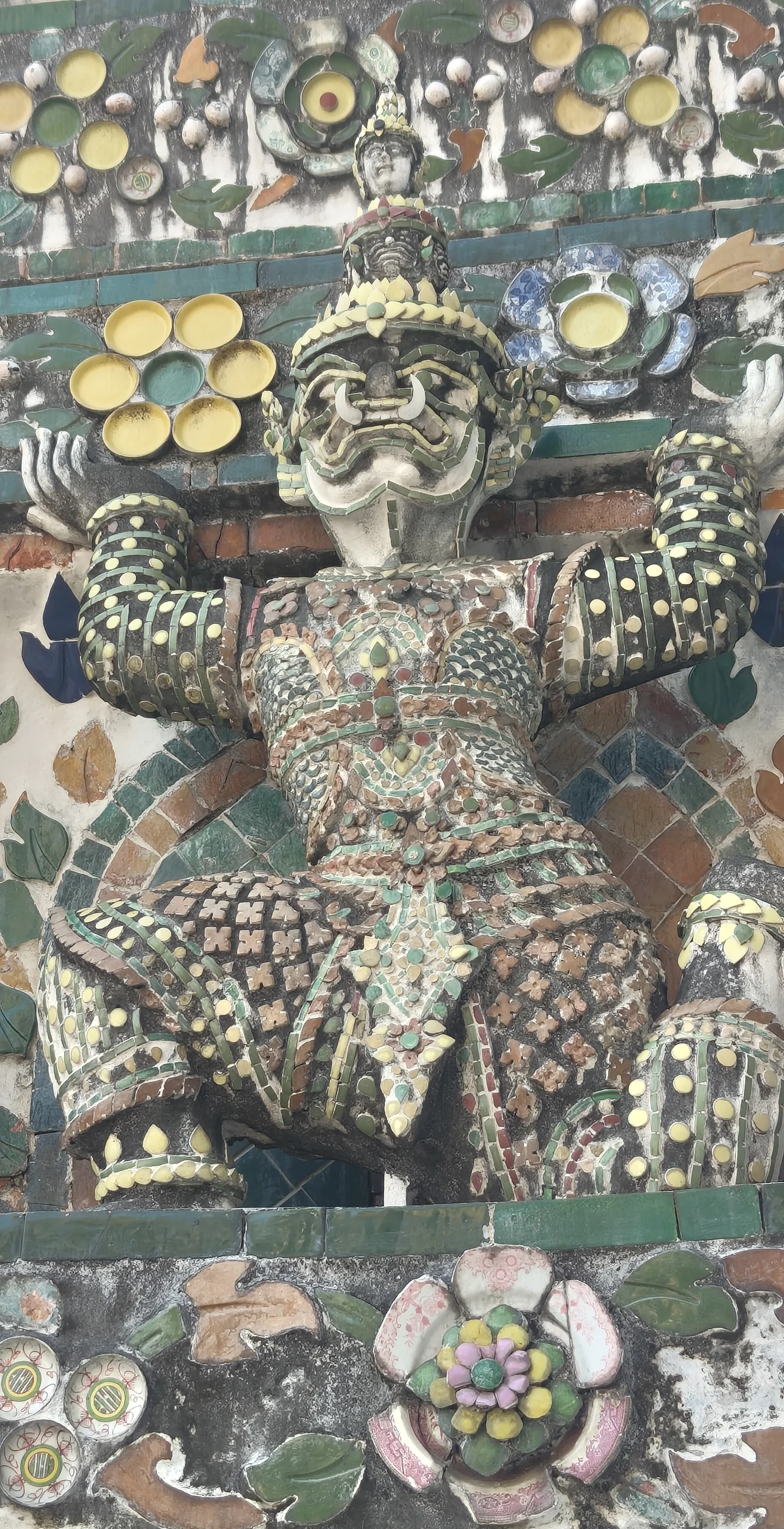
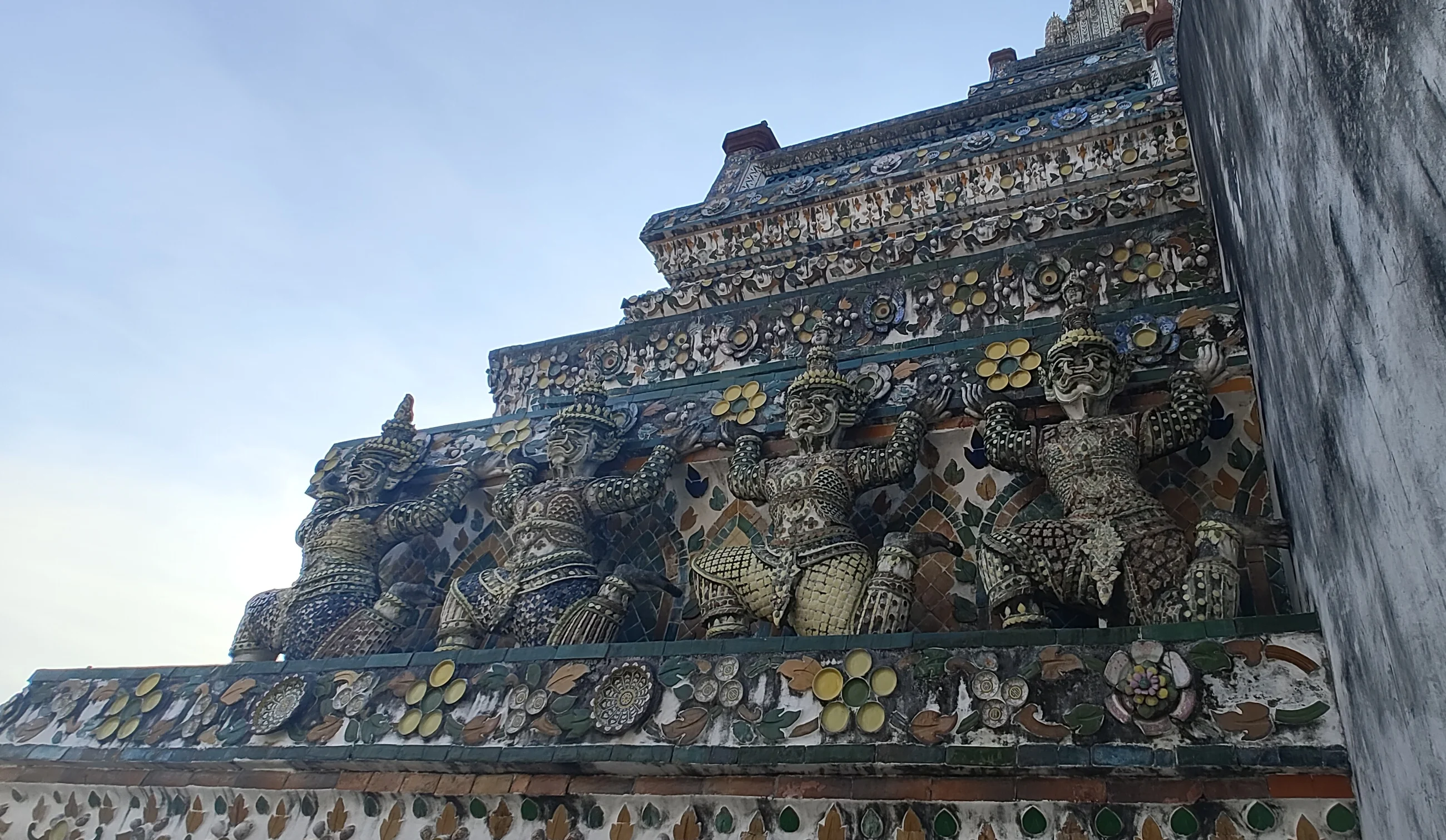
Wat Arun Ratchawararam, usually called Wat Arun, is an active Buddhist temple on the west bank of the Chao Phraya River in Bangkok’s Thonburi area. Its central prang, decorated with pieces of Chinese porcelain, glazed ceramics and shells, has become one of Bangkok’s most recognisable silhouettes. Four smaller prangs surround the main tower, which rises about 82 metres. Floral patterns and supporting figures can be examined across its tiers.
The present complex took shape in the first half of the nineteenth century. Work on the central prang began during the reign of Rama II and continued under Rama III, who completed it in 1851. Large quantities of colourful ceramic pieces were used in the decoration, including fragments of tableware that arrived from China. The mosaic patterns and colours change from one level to another, so walking around the base and looking up from different sides reveals more of the structure than a single viewpoint. The grounds also contain other shrines, pavilions and statues associated with Buddhist worship.
Wat Arun fits naturally into a walk through Bangkok’s historic centre: Wat Pho and the Grand Palace stand across the Chao Phraya. River ferries connect the two banks, and many visitors combine the temple with a crossing from the Tha Tien area. The central prang is striking from the river, while the courtyard allows a closer look at its ceramic decoration. This remains an active place of worship, so follow local clothing and conduct rules in the shrines. The stairways on the tower are steep and narrow.
- Address
- Wat Arun, Bangkok Yai District, Bangkok 10600, Thailand
- Website
- Website
On the map

Reviews (0)
No reviews yet. Be the first!
Updated