

Vietnam
A country where a bowl of street pho at 26,000 VND (about $1) fills you completely, and 260,000 VND ($10) gets you a hotel with a pool. Vietnam runs 1,600 km from the rice terraces of Sapa to the Mekong delta, with a startling range of landscape along the way. Ha Long Bay, ancient Hoi An, chaotic Hanoi — every region has its own character and its own cooking. One of the cheapest and most rewarding countries in South-East Asia.
どこへ行く
#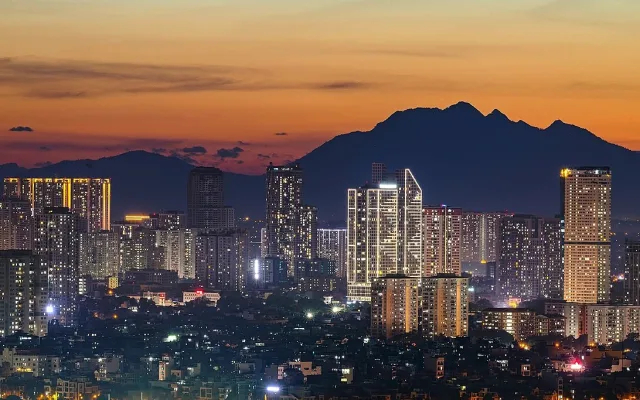
Hanoi
Hanoi is the capital of Vietnam, known for its Old Quarter and Hoan Kiem lake. It is the place to try local dishes such as pho and bia hoi.
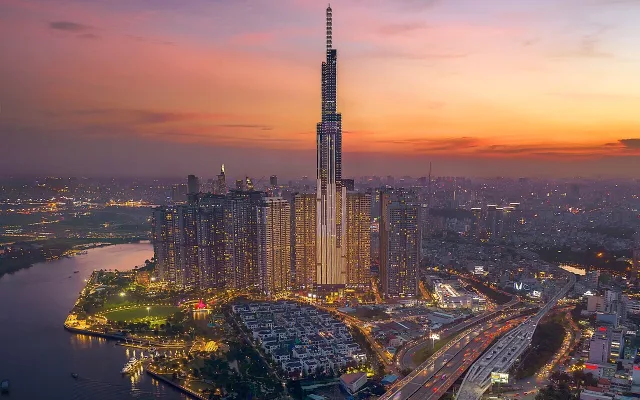
Ho Chi Minh City
Ho Chi Minh City, formerly Saigon, is known for landmarks such as the War Remnants Museum, Notre-Dame Cathedral and Pham Ngu Lao street.
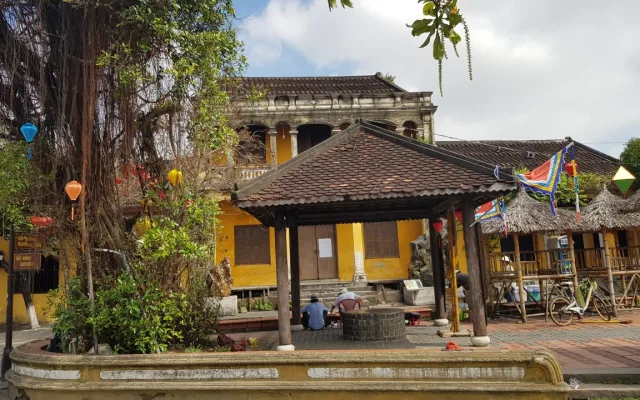
Hoi An
Hoi An is a UNESCO World Heritage town. It is full of traditional lantern makers and tailors, and the An Bang beach is close by.
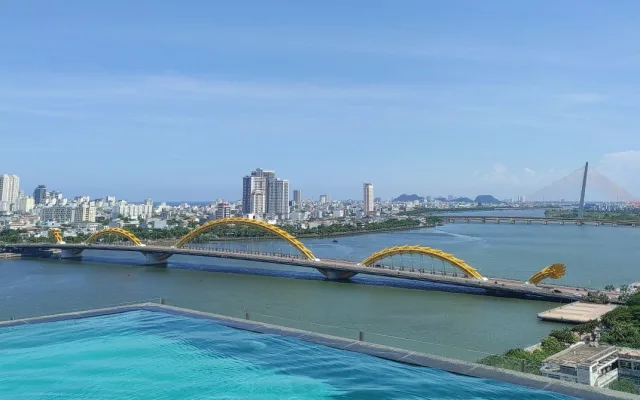
Da Nang
A resort city in central Vietnam: the long sweep of My Khe beach, the Marble Mountains, the Dragon Bridge, and Hoi An half an hour down the coast.
Sapa
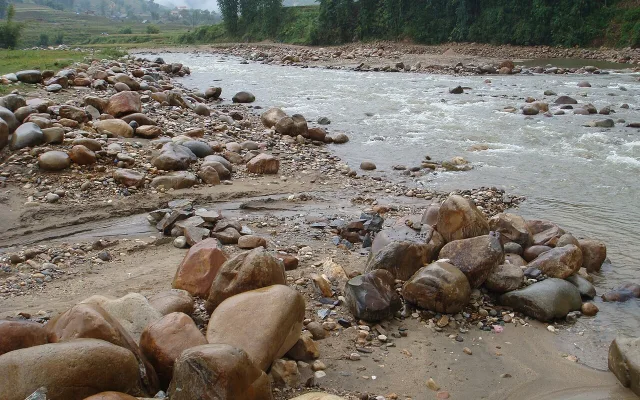
A hill town in northern Vietnam: the rice terraces of the Muong Hoa valley, Hmong and Dao villages, and a cable car to Fansipan, the highest point in Indochina.
Da Lat
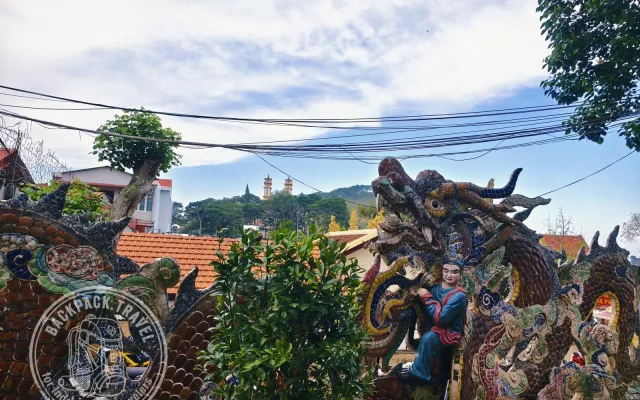
A mountain resort a kilometre and a half up, where the French went to escape the heat of the delta. A cool climate, pine trees, a lake in the centre and architectural attractions such as the Crazy House.
Ha Long
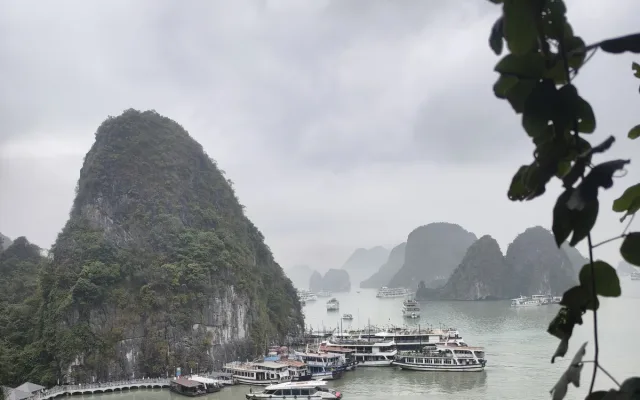
A town and a bay with almost two thousand limestone islands, a UNESCO site and Vietnam's great seaside postcard. It is seen from the water, on junk cruises with a night on board and stops at the caves.
Hue
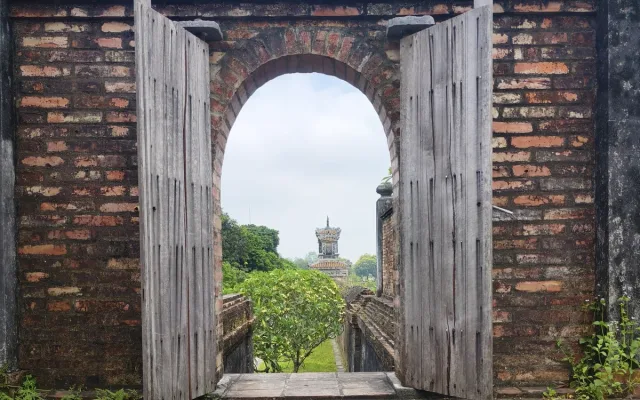
The capital of the Nguyen empire on the Perfume River: a walled Imperial City with palaces and gates, imperial tombs in the surrounding countryside, and food that Vietnam considers its most refined.
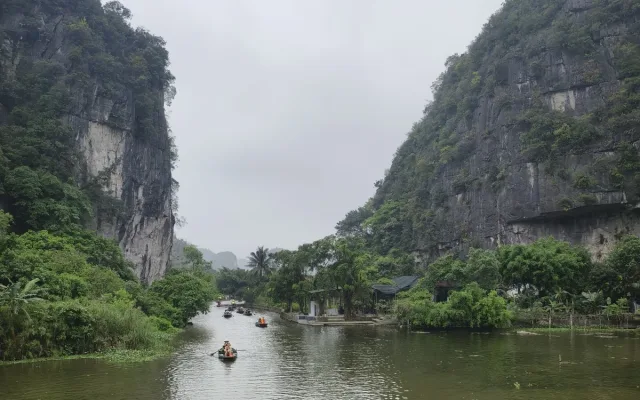
Ninh Binh
Ha Long on land: the same karst cliffs, but set among rice fields and rivers. The Tam Coc and Trang An boat routes, the ancient capital of Hoa Lu and viewpoints on top of the limestone hills.
見どころ
#What to see: Ha Long Bay is still the headline act, but for quiet water and cleaner swimming head next door to Lan Ha Bay. Day tours from Hanoi are exhausting, so pick a cruise with a night on board.
Ninh Binh: Worth a trip for the rowing-boat route through Trang An. Limestone towers rising straight out of the rice paddies are arguably more striking than the sea views. You can do it in a day if you take an early bus out of the capital.
Hue: The Imperial Citadel and the royal tombs are a portal into the Nguyen dynasty. The city feels sleepy after frantic Hanoi, but this is where the country's history is kept.
Cu Chi: The legendary guerrilla tunnel network sits a couple of hours from Saigon. The tunnels have been widened for visitors, but anyone claustrophobic will still find it uncomfortable inside.
Golden Bridge: Those giant stone hands at Ba Na Hills are the most photographed spot in central Vietnam. Turn up right at opening or you will share every frame with a few hundred other people.
Hai Van Pass: The best way to see this coastline is the train from Da Nang to Hue. The track runs right along the cliff edge above turquoise water for most of the journey.
Fansipan: The modern cable car gets you to the roof of Indochina in twenty minutes. The view over the cloud layer and the ranges beyond is worth every dong.
物価
#Currency: The dong trades at roughly 26,000 to the US dollar. All those zeros catch people out constantly, so check the denomination carefully every time you hand a note over.
Exchange: The best rates come from gold and jewellery shops in the tourist quarters. Airport counters are noticeably worse, so change only enough there to cover a taxi into town.
Cards: Visa and Mastercard are widely accepted in cities and Amex much less so. ATMs are everywhere, though most charge a per-withdrawal fee, so take out larger amounts less often. A Wise or Revolut card keeps the conversion cost down.
Cash: In big cities you can tap a terminal even in a coffee shop. But markets, street kitchens and motorbike rental all run on cash dong only, so never let your wallet run empty.
Tipping: Not traditionally expected, though rounding up is appreciated in cafes and by drivers. Spas, tour guides and hotel porters do now count on a small tip.
| Item | Price (USD) |
|---|---|
| Bowl of pho on the street | 1.5 |
| Banh mi sandwich | 1.0 |
| Vietnamese coffee | 1.2 |
| Lunch at a local cafe | 4.0 |
| Restaurant dinner | 12.0 |
| Local beer 0.33 | 0.8 |
| Hostel dorm bed | 7.0 |
| Guesthouse room | 18.0 |
| SIM card, one month | 10.0 |
| Da Nang to Hue train | 6.0 |
| Ha Long Bay entry | 13.0 |
| Sleeper bus | 15.0 |
| Grab bike, 5 km | 1.5 |
| Motorbike rental per day | 7.0 |
移動手段
#Getting there: Hanoi and Ho Chi Minh City both take long-haul flights, usually via Doha, Dubai, Istanbul, Singapore or Bangkok from Europe, and via Seoul, Tokyo or Taipei from North America. Regional low-cost carriers make hopping in from Bangkok or Kuala Lumpur very cheap indeed.
Domestic flights: Flying is the fastest way between regions. Budget carriers such as VietJet often sell seats for less than a sleeper train berth costs.
Trains: The Reunification Express links Hanoi and Ho Chi Minh City. Choose the SE3 or SE4 services, which have the newest carriages and air-conditioned four-berth soft sleepers.
Sleeper buses: Intercity sleepers are the budget option, with flat bunks instead of seats and a blanket and bottle of water handed out as you board.
Ride hailing: Install Grab before you arrive. It removes any argument about the meter and lets you order either a car or a cheap motorbike taxi.
Motorbike rental: A scooter buys real freedom but demands confidence in dense traffic. In the popular towns expect 150,000 to 200,000 dong for a full day.
Metro and ferries: Ho Chi Minh City opened its first metro line at the end of 2024, which beats the traffic out to the eastern districts. Fast passenger ferries also run from the city to Vung Tau in about ninety minutes.
宿泊
#Choosing an area: In Saigon, District 1 puts you next to the sights and District 3 gives you quiet. Cheap beds cluster in the alleys off Bui Vien, the main backpacker street.
Guesthouses: Family-run hotels give the best value in the country. Twenty dollars buys a clean air-conditioned room with fast internet and genuinely warm service.
Homestays: In Sapa and Ninh Binh pick something out in the countryside. A balcony over the rice terraces or the karst towers repays the extra few kilometres from the centre.
Phu Quoc: Long Beach suits anyone who wants infrastructure and sunsets. For calm water and far fewer people, go for Ong Lang beach instead.
Booking: Agoda tends to have the best inventory in Asia. It is often smarter to book only the first two nights and negotiate a longer-stay discount in person.
Standards: Air conditioning and a fridge are normal even in cheap hotels. Always read the wifi reviews if you plan to work while travelling.
Watch out for: Rooms in Hanoi's old quarter are sometimes windowless, which is a quirk of how those buildings were made. Study the photos and the room description before you confirm.
食事
#Pho: The national breakfast is at its best in Hanoi. Look for the places where Vietnamese people are eating, perched on tiny plastic stools right on the pavement.
Banh mi: A crackling baguette with pate and pork, left over from the French era. The best in the country come out of Hoi An, loaded with secret sauces and heaps of herbs.
Bun cha: Grilled pork with rice noodles and a sweet-sour dipping broth has become properly famous. It is filling, immediately likeable and perfect for a substantial lunch.
Coffee: Vietnamese coffee is very strong and comes with condensed milk as standard. In Hanoi you must try egg coffee, which tastes remarkably like a soft tiramisu.
Street food: Eat where turnover is high and ingredients are visibly fresh. Skip ice in drinks at questionable places so you do not lose days of your trip to a stomach bug.
Seafood: Coastal towns like Nha Trang have restaurants with live tanks. You pick the fish or prawns yourself and they come off the grill within minutes.
Fruit: Markets are piled with ripe mango, passionfruit and dragon fruit. Do not be shy about buying pre-cut fruit in sealed boxes, which is very handy on travel days.
治安
#Traffic: The single biggest hazard is the road. Cross slowly and predictably, because riders are used to flowing around pedestrians who do not make sudden movements.
Theft: Bag snatching from passing motorbikes does happen in Ho Chi Minh City. Wear a backpack on both straps and never hold your phone out near the kerb while navigating.
Taxis: Avoid unmarked cars touting at airports. Order through Grab, or use the green Mai Linh taxis, which run strictly on the meter.
Sun: Tropical sun is deceptive even under cloud. Use factor 50 and wear a hat, since heatstroke ruins more holidays here than anything else.
Overcharging: Market prices and tour prices quoted to foreigners can be several times the real rate. Ask the price up front and haggle with a smile rather than an argument.
Water: Never drink from the tap. Bottled water costs almost nothing, and ice in decent cafes is made commercially from filtered water.
Health: Carry a basic kit and proper travel insurance. Medical care in the big cities is genuinely good, but treatment costs for uninsured foreigners can be brutal. Check your own government's travel advisory before you go.
マナーと文化
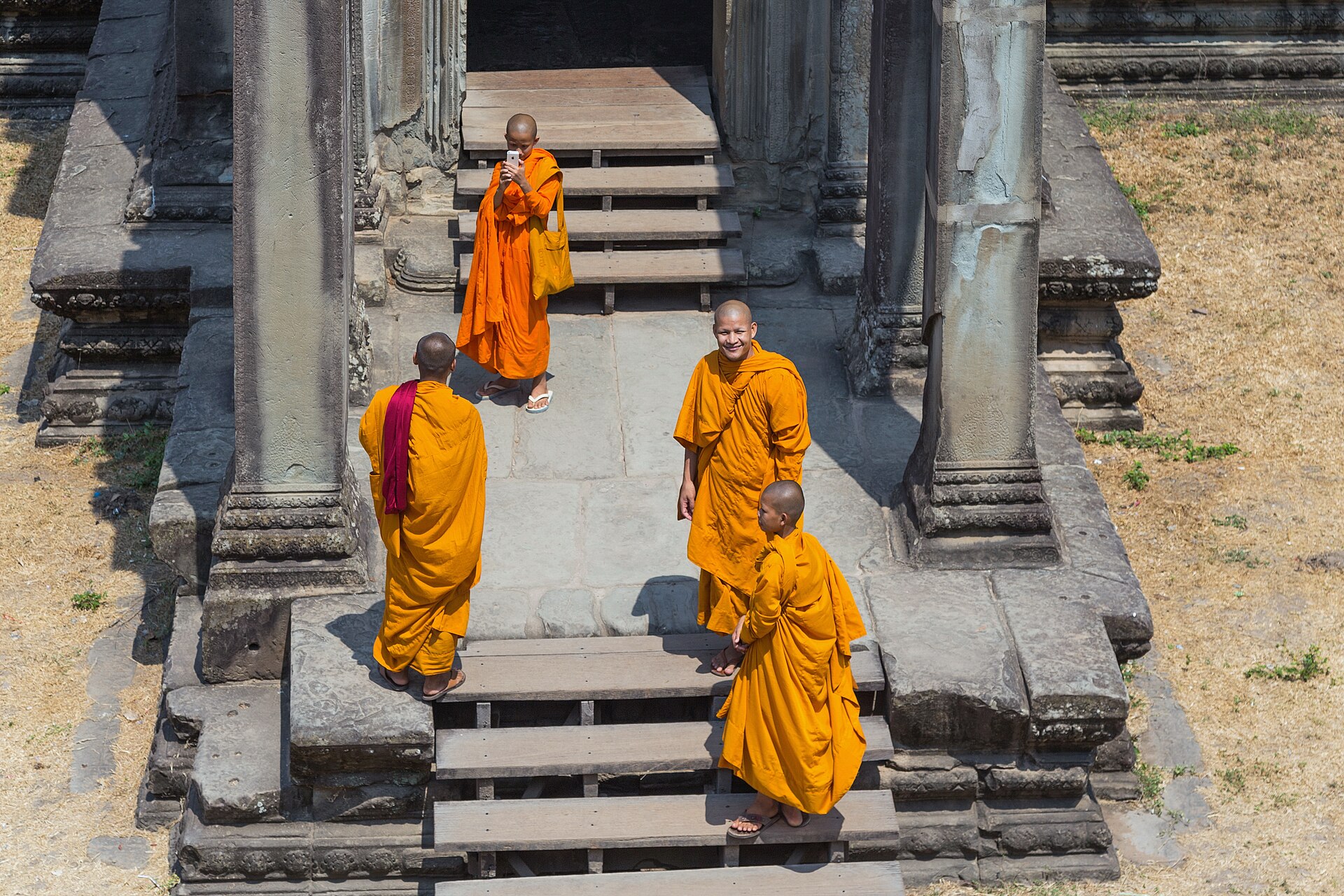
#Shoes: Take them off before entering a private home or a Buddhist temple. They are usually left right on the threshold, and it is the most basic courtesy you can offer.
Dress: For pagodas and imperial palaces, cover shoulders and knees. Vietnamese people are conservative about religion, so dress accordingly at any sacred site.
Face: The idea of saving face runs deep across Asia. Avoid open confrontation and do not raise your voice, even if you have a genuine dispute with a driver.
Chopsticks: Never stand chopsticks upright in a bowl of rice, which mimics funeral incense and reads as a bad omen. Rest them on the edge of the plate or on the holder.
Heads: Do not touch anyone on the head, including small children. In Buddhist thinking the head is the sacred part of the body and touching it is plain rude.
Haggling: Bargaining in a market is a social game, not a fight. Smile, name your price, and be willing to walk away, which is usually what earns the discount.
Gifts: If you are invited to someone's home, bring fruit or nicely wrapped sweets. Give and receive gifts with both hands as a mark of respect.
通信・インターネット
#Language: English works in hotels and tourist cafes, but in the provinces you will be miming. Download an offline translator so you are not dependent on a signal.
SIM cards: You can buy a local SIM at the airport in ten minutes. Viettel has the best coverage, including the mountains and the far corners of Phu Quoc.
eSIM: If your phone supports eSIM, load a data package before you fly. That way you can order a ride the moment you land instead of queuing at an operator counter.
Internet: Free wifi is in practically every street-side eatery, the password usually written on the wall, and the speed is fine for working remotely.
Messaging: Install Zalo, and keep Telegram or WhatsApp too. Vietnamese guides and property owners run their businesses through Zalo and reply there far faster than by email.
Gestures: Beckoning with a single finger is rude. To call a waiter, hold your palm downwards and make a light scooping motion towards yourself.
Pronunciation: Vietnamese is tonal, so your attempts will rarely be understood on the first go. Always carry the hotel address written out in Vietnamese, and note that English menus and signs thin out fast outside tourist areas.
会話集
#| English | Vietnamese | Pronunciation |
|---|---|---|
| Hello | Xin chào | sin CHOW |
| Thank you | Cảm ơn | gam UHN |
| How much is it? | Bao nhiêu tiền? | bow NYEW tyen |
| That's expensive! | Đắt quá! | daht KWAH |
| Any discount? | Giảm giá? | zam ZAH |
| Yes | Vâng | vung |
| No | Không | khome |
| The bill, please | Tính tiền | ting tyen |
| Very tasty | Ngon quá | ngon KWAH |
| Spicy | Cay | kai |
| Not spicy | Không cay | khome kai |
| Water | Nước | nuuk |
| Beer | Bia | bee-a |
| Ice | Đá | dah |
| Toilet | Nhà vệ sinh | nya ve sing |
| Left | Bên trái | ben chai |
| Right | Bên phải | ben fai |
| Help me! | Cứu tôi! | koo toy |
| Cheers! (one two three, go) | Một, hai, ba, dô! | mote hai ba yo |
| Handsome guy | Đẹp trai | dep chai |
| Pretty girl | Đẹp gái | dep gai |
| No problem | Không sao | khome sow |
役立つ情報
#Apps: Grab for getting around and Google Maps for navigation are the essentials. 12Go Asia lets you book buses and trains without hunting down a ticket office.
Sockets: Most places take standard two-pin European plugs and run on 220V. If you are coming from the UK or North America, bring an adapter, but nothing more elaborate.
Medical kit: Alongside plasters, pack something for an upset stomach and a strong repellent. Sandflies on rural beaches are relentless and their bites last for days.
Translation: The camera mode in Google Translate handles menus surprisingly well. That saves you in non-tourist cafes where there are no pictures and no English at all.
Documents: Keep digital copies of your passport and insurance in the cloud. Motorbike rental shops often ask to hold your actual passport, so offer a cash deposit instead.
Offline maps: Download the map areas in advance. Signal drops in the mountains and at sea, and offline navigation also lets you check that a driver is going the right way.
Local messaging: Zalo is worth installing purely to reach guesthouse owners quickly. They tend to answer there much faster than through a booking platform's chat.
よくある質問
#Many Western passports get 45 days visa-free, and everyone else can apply for a 90-day e-visa online for around 25 dollars. Check your own passport's rules, and complete the online Pre-Arrival Information form within 72 hours of departure.
Visa and Mastercard work in city hotels, restaurants and larger shops, though Amex is patchy. Markets, street food stalls and bike rentals are cash-only, so keep a decent float of dong on you.
March and April are the sweet spot, when almost every region is dry at the same time. Otherwise the seasons diverge sharply: the north is best in winter and spring, the centre from February to late August.
A budget traveller can manage on around 350 dollars for accommodation and simple food, excluding flights. For a comfortable trip with domestic flights and decent hotels, allow from 1000 dollars per person.
City bus 152 is the cheapest option, while the faster 109 express runs to Ben Thanh market for a small fare. A Grab motorbike also works well if you are not hauling large luggage.
A day trip is punishing, since the round journey alone eats about six hours. Take a one-night cruise instead so you catch sunset and sunrise among the karsts and still have time to kayak.
Yes, it is one of the easiest in Southeast Asia, with a well-worn backpacker route and cheap transport linking every stop. Hostels in Hanoi, Hoi An and Saigon make it simple to find people to travel on with.
Yes — renting a car requires an international driving permit alongside your national licence. Car rental starts at 21. The 1968-convention IDP is accepted alongside your national licence; 1949-style permits are not. Rules for other countries are in the driving and rental table.
You can rent a bike, but you need an international driving permit. A scooter up to 50 cc can be ridden on category B; anything bigger needs category A. A helmet is compulsory. Bike rental usually starts at 18. A bike up to 50 cc needs no category A — that is what the whole tourist rental market runs on. Accident rates are high and travel insurance often excludes motorcycles: check your policy before you go. Rules for other countries are in the driving and rental table.
Calm by world standards: serious incidents involving tourists are rare. Intentional homicides: 1.535 per 100,000 a year (UNODC, 2011 data). Road deaths run at 30.6 per 100,000 a year — traffic is more dangerous here than crime. The main threat here is not violence but pickpockets: stations, metro and queues at the sights. Do not drink tap water — stick to bottled. Police — 113, ambulance — 115. Ratings for other countries are in the safety table.
Yes, but with restrictions. Registration is mandatory for drones from 250 g — lighter models can fly without it. You also need to pass a test and hold a pilot certificate. Since 5 November 2025 (Decree 288/2025) a drone under 250 g can fly without a permit outside restricted zones (airports, military sites). Anything heavier must be registered, the pilot needs a certificate, and every flight needs Ministry of Defence approval: about 11 working days and a Vietnamese sponsor, so flying an Air or Mavic legally is close to impossible for a tourist. Propeller guards or a Plus battery can push a Mini over 250 g. Flying without a permit means a fine of 20–30 million dong, and the drone may be confiscated. Rules for other countries are in the drone ranking by country.
更新日
The data on this page goes out of date. Visa rules and permitted stays, border requirements, prices and budgets, transport and local conditions all change fast, and we do not re-check every page every day. We show the date of our last check where we have one, but before you travel, verify with official sources: the country’s consulate, its immigration service, its e-visa portal and your carrier.