

China
A civilisation-sized country with 5,000 years of history: the Great Wall, the Forbidden City, the Terracotta Army, the towers of Shanghai and the rice terraces of Yunnan. The best high-speed rail network in the world, extraordinary food and prices that surprise even seasoned travellers.
どこへ行く
#
Beijing
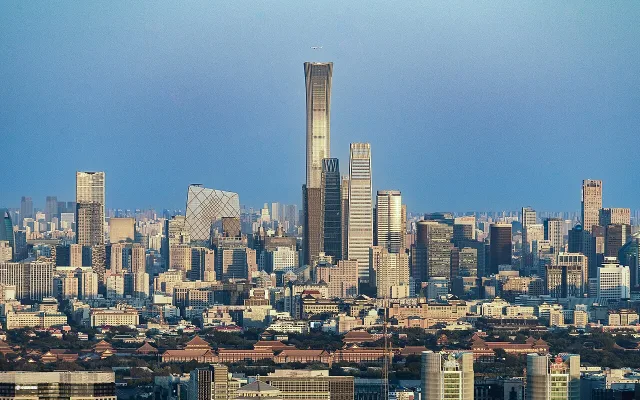
The capital of China — the Great Wall, the Forbidden City, Beihai Park and Peking duck.
Shanghai
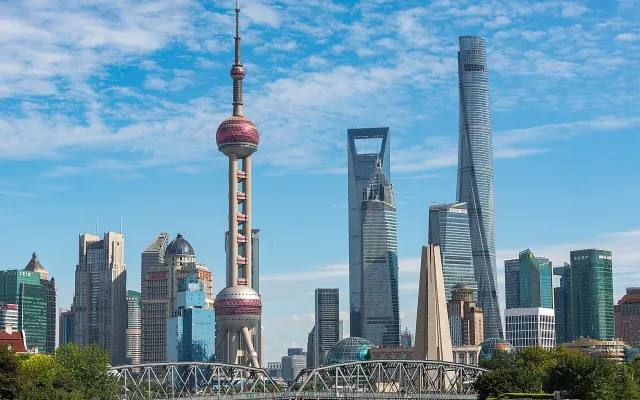
A metropolis of two eras — the Bund waterfront, the Jin Mao tower and the old city of Nanshi.
Xian
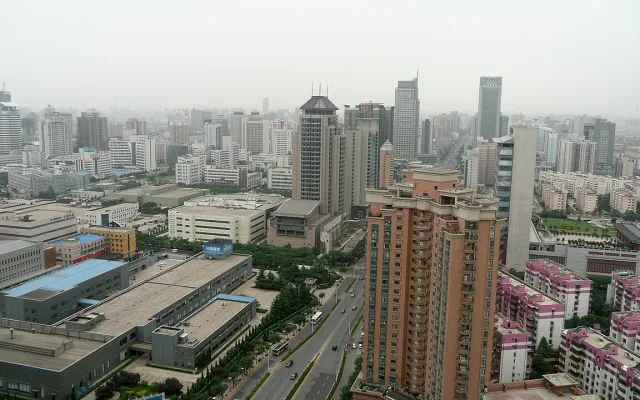
Ancient Chang'an — the Terracotta Army, the Ming city wall and the Muslim quarter of the Hui.
Chengdu
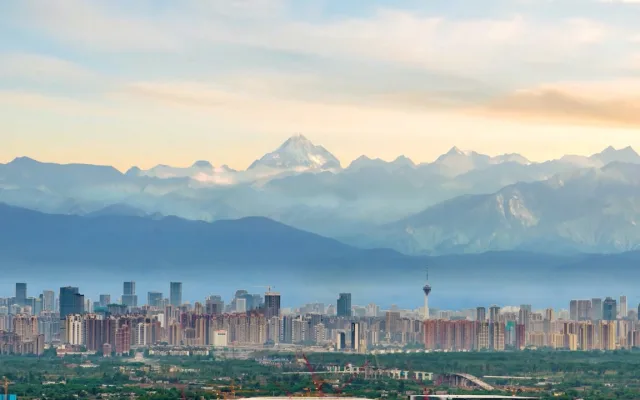
The capital of Sichuan cooking — the giant panda base, fiery hot pot and Jiuzhaigou within reach.
Guilin
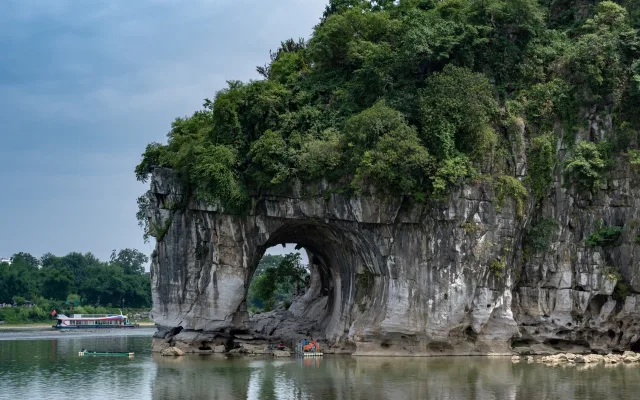
Karst peaks along the Li River — the landscape from the banknote, the town of Yangshuo and the Longji rice terraces.
Hangzhou
Capital of Zhejiang, praised by Marco Polo — the UNESCO-listed West Lake, temples, pagodas and the Longjing tea hills.

Chongqing
A megacity at the confluence of the Yangtze and the Jialing, built on hills: the entrances of one building open onto different levels, the metro runs through a residential tower, and at night the whole of that relief glows with neon.
Suzhou
The ancient canal city of the Yangtze delta — UNESCO classical gardens, silk, embroidery and the water towns around it.
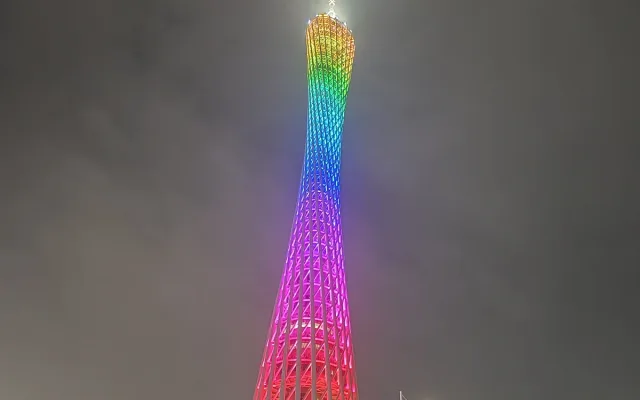
Guangzhou
The largest city in southern China and the old Canton, the port through which the country traded with the world for centuries. Skyscrapers along the banks of the Pearl River, Canton Tower and food that people come for in its own right.
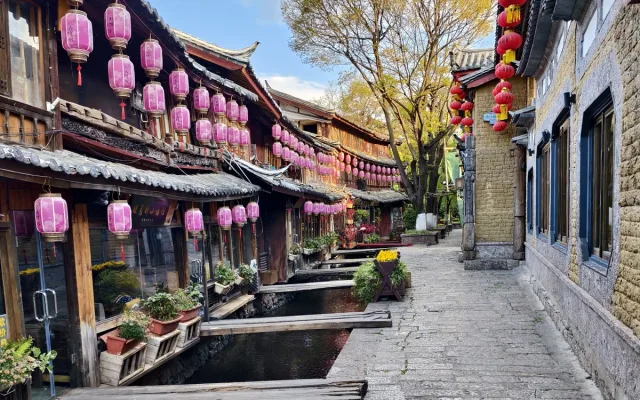
Lijiang
A Naxi old town at the foot of Yulong Snow Mountain: tiled roofs, canals along the paved streets and wooden houses built without a single nail. A UNESCO site and the main tourist magnet of Yunnan.
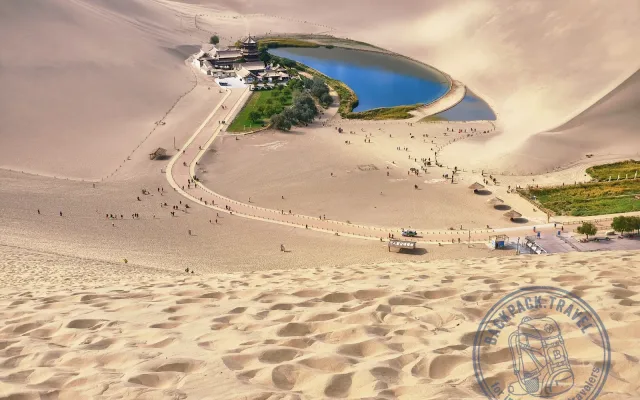
Dunhuang
An oasis where the Gobi and the Taklamakan meet and a key point on the Silk Road. The Mingsha Sand Dunes with Crescent Lake below them, the Mogao Caves with their Buddhist frescoes and the Shazhou night market.

Dali
A Bai town between Erhai Lake and the Cangshan mountains. A walled old town, the three pagodas of the 10th-century Chongsheng Temple and the calm rhythm people come here for.

Urumqi
The capital of Xinjiang and the large city furthest from the ocean anywhere in the world. The International Grand Bazaar with its minaret, Hongshan Hill above the centre and the Xinjiang Museum with its Tarim mummies.

Qingdao
A port city with a German past: Tsingtao beer, beaches, a cathedral, the Zhanqiao Pier and Mount Laoshan.

Tianjin
The gateway to Beijing: the Tianjin Eye wheel, the Italian Quarter, Ancient Culture Street and crisp-skinned baozi.
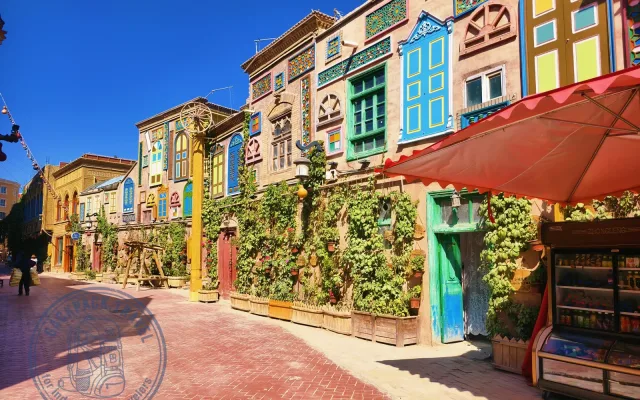
Kashgar
The westernmost city in China and the main Uyghur city of Xinjiang: a mud-brick old town, Id Kah Mosque and rows of bazaar stalls at the crossroads of the routes into Central Asia, Pakistan and Kyrgyzstan.

Jiayuguan
The western pass of the Great Wall: a fortress in the middle of the desert where the wall breaks off, and the Overhanging Wall running up the slope of the Heishan range.

Turpan
An oasis in a basin 150 metres below sea level and one of the hottest places in China. The mud-brick Emin Minaret, the ruins of Jiaohe and Gaochang, vineyards and the underground karez channels.
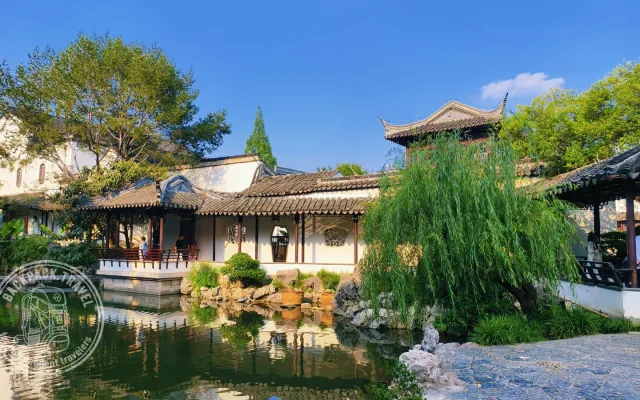
Nanjing
The ancient capital of six dynasties on the Yangtze: Ming-era city walls, the Sun Yat-sen Mausoleum on Zijinshan and gardens hidden away among the blocks of the modern city.

Hami
An oasis city on the eastern edge of Xinjiang, known for its melons and for the mausoleums of the Hami kings, rulers whose tombs combine Islamic and Chinese architecture.

Yangshuo
A small town among karst hills on the Li River, the very landscape printed on the twenty yuan note. Bamboo raft trips, cycle routes along the rice fields and fishermen with cormorants.
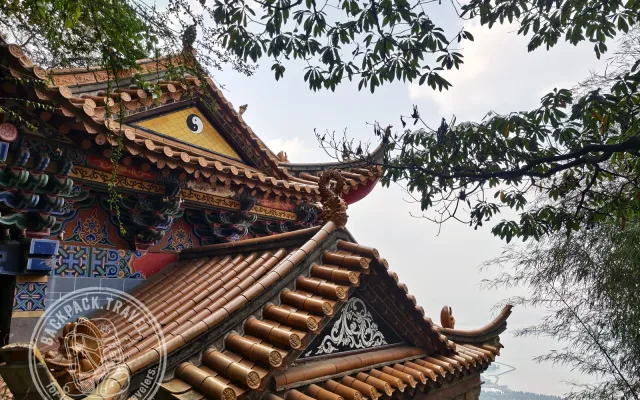
Kunming
The capital of Yunnan, known across China as the city of eternal spring: at almost two thousand metres the summers stay mild and the winters bring no snow. Trips to the Stone Forest and to the Xishan hills above Dianchi Lake begin here.

Shenzhen
A fishing village that turned in forty years into a city of seventeen million: China's first special economic zone, whole districts of glass skyscrapers and the parks wedged in between them.
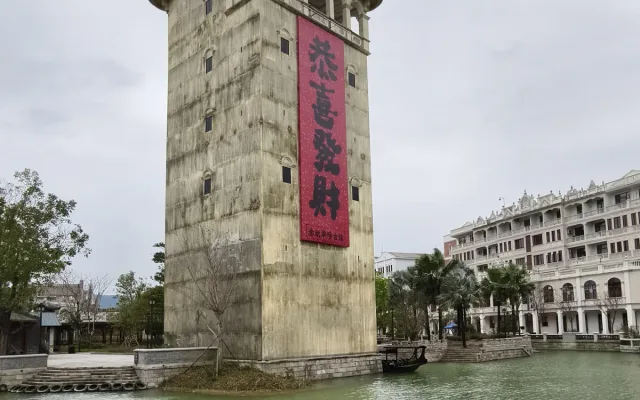
Kaiping
A county in Guangdong built up with diaolou, the fortress towers raised in the early 20th century by emigrants who had returned from overseas. This blend of a Chinese core with European columns and domes is on the UNESCO list.
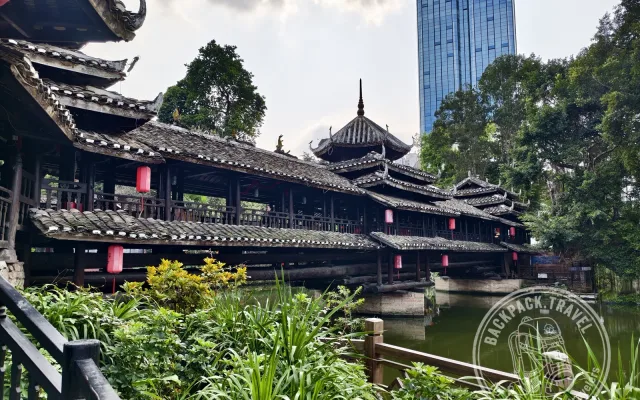
Nanning
The capital of the Guangxi Zhuang Autonomous Region and the main staging post on the road from China into Vietnam. A green subtropical city with a museum of Zhuang culture and an ethnographic park that gathers the buildings of the southern peoples.

Zhangye
A city in Gansu beside the Danxia Rainbow Mountains, layered hills of red, yellow and white sandstone. In the city itself stands the largest reclining Buddha in China, in Dafo Temple.
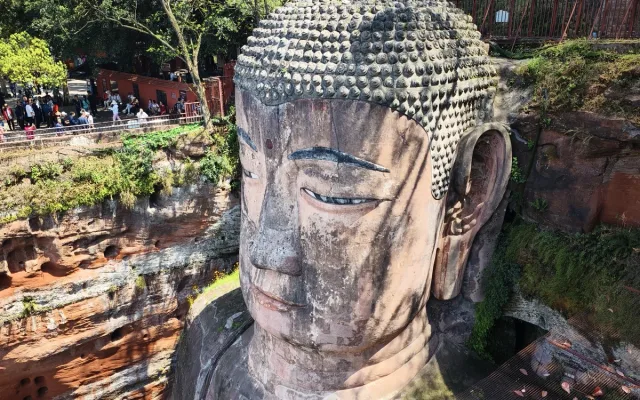
Leshan
A city in Sichuan at the confluence of three rivers, where the Leshan Giant Buddha is carved into the cliff, the largest stone Buddha in the world at seventy-one metres. A UNESCO site, worked on for almost the whole of the 8th century.
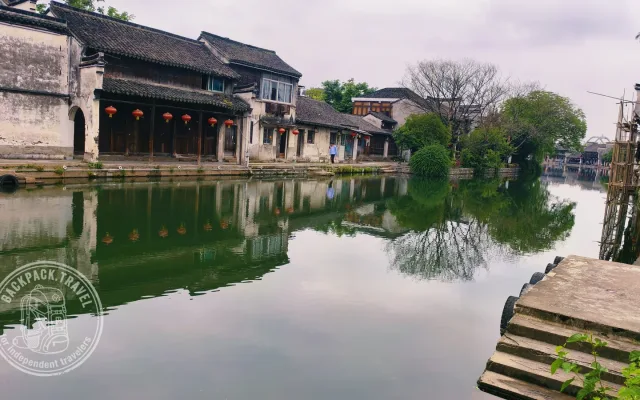
Nanxun
A water town near Huzhou that grew rich on silk: canals with stone bridges, merchant mansions with European wings and the Jiaye Library, one of the oldest private libraries in China.
見どころ
#The Great Wall. The Mutianyu section remains the best choice if you want a comfortable cable-car ascent and restored watchtowers. Badaling is popular and far too crowded, so skip it.
The Forbidden City. Book online a week ahead for the emperors' main residence in Beijing, because tickets are not sold at the gate. The site is huge and wants comfortable shoes and most of a daylight day.
The Terracotta Army. The clay army at Xian impresses through sheer scale, but expect queues and a long ride from the centre. An obligatory stop for anyone who cares about ancient history.
The Bund. Shanghai's most recognisable spot, looking across at the Oriental Pearl tower. Come at sunset, when the illumination on the modern skyline switches on.
Zhangjiajie mountains. The floating rocks from the film, worth the trip for the views and for the tallest outdoor lift in the world. This natural wonder takes a minimum of two days to see properly.
The panda base. In Chengdu you can watch these rare animals in something close to a natural setting. Arrive exactly at opening or you will find only sleeping pandas that look like fur rugs.
The Li river. The cruise from Guilin to Yangshuo shows you the landscape printed on the banknotes. One of the most photogenic places in the country, though tour groups are thick on the ground.
物価
#Mobile payment runs everything. China has moved wholesale to QR codes, so Alipay and WeChat Pay are your primary tools. Link a foreign Visa or Mastercard to the app before you cross the border, because setting it up from inside the country is far more painful.
Keep some cash. Paper yuan still works and vendors must accept it, though it is used far less than it used to be. Carry a modest reserve of notes for markets and small shops in the countryside.
Cards and ATMs. Foreign cards work in the ATMs of the big banks, notably Bank of China, but they are widely refused in shops, where the QR code is the expected method.
Changing money. Dollars are easiest to change at a bank, though the process is slow and involves a stack of forms. Airport rates are often terrible, so change only what you need there.
Tipping. Nobody tips in China and leaving money on the table can confuse staff. Some expensive restaurants add a fixed service charge to the bill automatically.
| Item | Price (USD) |
|---|---|
| Street baozi | 2.50 |
| Bowl of noodles | 4.00 |
| Dinner for one | 12.00 |
| Peking duck | 30.00 |
| Chain-cafe coffee | 4.50 |
| Water 0.5 l | 0.40 |
| Local beer | 0.80 |
| Metro ride | 0.70 |
| Taxi (5 km) | 3.50 |
| Train Beijing to Shanghai | 82.00 |
| Hostel bed | 10.00 |
| Guesthouse room | 35.00 |
| Museum ticket | 9.00 |
| SIM card for a month | 15.00 |
移動手段
#Getting there. Beijing and Shanghai both take nonstop flights from London, Paris, Frankfurt and Amsterdam, and from the US west coast, while Hong Kong, Seoul and Singapore work as regional connections into the second-tier cities. Fares are lowest outside the Lunar New Year and the early-October holiday week, when the entire country is on the move.
High-speed rail. The rail network is the most comfortable way to travel between the big cities. Book G and D class services ahead through an aggregator such as Trip.com.
At the station. You need only your original passport to reach the platform. Arrive 40 minutes early because bags are always scanned and documents checked.
City metro. Every major centre has one, and it is cheap and easy to follow. All signage is repeated in Latin script and you can pay by QR code in Alipay.
Taxis and apps. Use Didi, which has a workable English interface. It is safer and often cheaper than flagging a car on a busy street.
City buses. Fares are trivial but route boards are usually Chinese only. Use the Amap app to see the right numbers and stops in real time.
Shared bikes. The yellow and blue bikes are everywhere and unlock through Alipay. An excellent way to cover the last kilometre to a sight without sitting in traffic.
Domestic flights. Over the really long distances a plane beats any train. Check budget carriers such as Spring Airlines, which sometimes undercut the fast rail.
宿泊
#Where to book. Trip.com has the deepest inventory and honest reviews. Always check that the hotel is licensed to accept foreign guests, since not all of them are.
Courtyard stays in Beijing. Sleep in a traditional siheyuan courtyard house in the middle of the city. It gives you the feel of the old districts and relative quiet inside the hutongs.
Budget chains. Hanting and Home Inn deliver standard, clean rooms for very little money. Staff rarely speak English, so have the address written in Chinese characters.
Check-in registration. Your passport will be taken and scanned for police registration on arrival. This is routine and normally takes a couple of minutes.
Deposits. Many hotels ask for a cash deposit or freeze an amount on the card. Keep the receipt so getting it back at checkout is painless.
In the room. Even cheap hotels provide a kettle, disposable toothbrushes and slippers. Domestic comfort is taken seriously and the standard is consistently high.
Location. Book within walking distance of a metro station. In something the size of Shanghai that single decision saves you hours and a lot of taxi money.
食事
#Regional cooking. Food changes completely from province to province. The north runs on wheat, dough and dumplings; the south on rice and very delicate seafood.
Heat levels. Be careful in Sichuan and Hunan, where dishes can be genuinely scorching. The phrase bu la asks the kitchen to leave out the chilli.
Street markets. The best introduction to local flavour. Try steamed baozi and yangrouchuan lamb skewers, and follow the longest queue of locals.
Hotpot. Huoguo is a ritual rather than a meal, with everyone cooking ingredients in a shared bubbling pot. Go to a Haidilao branch for the best service and a guaranteed result.
Jiaozi dumplings. The most approachable and available food in the country, found on literally every street. Filled with meat, vegetables or prawns, fried or steamed.
Tea. Try real tea in a specialist shop rather than anywhere you were invited. Be wary of strangers on the street suggesting a teahouse; it is a very old and very reliable scam.
Ordering by QR. Most cafes have gone electronic, with the menu opening inside WeChat. Use the built-in translator to work out what the dishes actually are.
治安
#The general picture. China is one of the safest countries anywhere for walking alone, including late at night. Cameras are everywhere and street crime is minimal.
The tea scam. Ignore friendly strangers who want to practise their English or invite you to a tea ceremony. That visit ends with an enormous bill you are expected to pay.
Traffic. Pedestrians are rarely given way, even on a green light. Look both ways and watch for silent electric scooters riding on the pavement.
Drinking water. Never drink from the tap, which is not potable. Buy bottled or use the hot-water dispensers standing in every station and hotel corridor.
Rules of conduct. Avoid political discussion and never photograph military installations. Flying a drone inside any city requires specific permission.
Bag checks. Bags are scanned at the entrance to every metro station and railway terminus. Do not carry folding knives or pepper spray, which will be confiscated.
Medical care. If you fall ill, go to one of the large hospitals with international wings. Carry your insurance details, because healthcare for visitors is expensive.
マナーと文化
#The concept of face. People avoid open conflict and rarely admit an error in public. Stay polite and do not raise your voice, which would make someone lose face.
Noise. Public places can be very loud, with animated conversation and videos played without headphones. This is entirely normal and not considered rude.
Chopsticks. Never stand them upright in a bowl of rice, which mimics a funeral rite. Do not point them at people while talking either.
Personal space. In the metro and in queues the distance you are used to simply does not exist. Expect to be jostled; nobody means anything by it.
Numbers. Eight is lucky and four is avoided, because it sounds like the word for death. Lifts often skip the fourth floor and phone numbers full of eights cost more.
Gifts and cards. Hand over business cards and gifts with both hands as a mark of respect. Never give clocks or white flowers, which are firmly associated with funerals.
Smoking. Despite the bans, people smoke in underpasses and even in restaurant toilets. If smoke bothers you, choose places with serious ventilation.
通信・インターネット
#The Great Firewall. Google, YouTube, Instagram, WhatsApp and Telegram are blocked, and most VPNs cannot get through. What works in practice is Outline, Let's VPN and clients built on the VLESS (Reality) protocol, such as v2rayNG, Hiddify or Streisand. Install and configure them before you fly: you cannot download them from inside China.
eSIM. The option with no VPN at all is a travel eSIM from Airalo or a similar provider. Its traffic goes through a gateway abroad, the firewall does not filter it, and blocked services open straight away.
WeChat. It is the operating system of daily life here. Install it in advance and ask a contact to verify your account, which is a necessary step and hard to do later.
Navigation. Google Maps performs badly and shows inaccurate data. Download Amap instead, which knows every lane and the correct metro entrance.
The language gap. English is spoken only in the largest hotels. Use Pleco to translate characters through the camera and a voice translator for conversation.
Local SIM. For a longer stay, buy a China Mobile card at the airport with your passport. You get stable data and a local number, which unlocks a lot of everyday services.
Cafe Wi-Fi. Free networks usually demand a Chinese phone number to authenticate. Without a local SIM or a working eSIM, connecting is often impossible.
会話集
#| English | Chinese | Pronunciation |
|---|---|---|
| Hello | 你好 | nee HOW |
| Thank you | 谢谢 | SYEH-syeh |
| Handsome guy | 帅哥 | shwye-guh (slang) |
| Pretty woman | 美女 | may-nyoo (slang) |
| How much is it? | 多少钱? | dwaw-shao chyen? |
| Too expensive! | 太贵了! | tye gway luh! |
| Can you go cheaper? | 便宜一点 | pyen-yee ee-dyen |
| The bill, please | 买单 | my-dahn |
| Delicious! | 好吃! | how-chir! |
| No chilli, please | 不要辣 | boo yao lah |
| Where is the toilet? | 厕所在哪里? | tsuh-swaw dzye nah-lee? |
| Help! | 救命! | jyoh-ming! |
| I don't understand | 我不懂 | waw boo dong |
| Water | 水 | shway |
| Beer | 啤酒 | pee-jyoh |
| Rice | 米饭 | mee-fahn |
| Receipt | 发票 | fah-pyao |
| That's awesome | 厉害 | lee-hye (slang) |
| Mate, bro | 哥们 | guh-men (slang) |
| Goodbye | 再见 | dzye-jyen |
役立つ情報
#Trip.com. The one app that handles hotels and domestic train tickets together. The English interface works properly and it accepts foreign cards, which most Chinese platforms do not.
Amap. Indispensable for getting around. It shows how full each metro carriage is and when the bus actually arrives, even if you read no Chinese at all.
Pleco. The most powerful dictionary available and it works fully offline. The character recognition through the camera rescues you in front of signs and paper menus.
Alipay. Verify your account with your passport before the trip. Once it is done you can pay by QR code in essentially any shop in the country, however small.
Railway timetables. The official 12306.cn site is useful for checking exact schedules. Buying there is awkward for a foreigner, but as a reference it beats everything else.
Opening hours. Most state museums close on Mondays. Plan the Forbidden City and similar sites for midweek to dodge the worst crowds.
Power sockets. Several plug types are in use, with the flat two-pin the most common. Most modern hotels have universal sockets, so one adapter covers you.
よくある質問
#A growing list of nationalities can now enter visa-free for short stays, while others still need a tourist visa from a consulate, so check your own passport's rules before booking. Everyone must fill in the electronic entry card and keep the QR code it generates on the phone.
Mobile payment through Alipay or WeChat Pay with a foreign card linked is the main method, and setting that up before arrival is essential. Keep a small reserve of cash yuan for markets and rural shops.
Outline, Let's VPN and clients built on the VLESS (Reality) protocol (v2rayNG, Hiddify, Streisand) work. Get the app and the access key before you cross the border, because they are unreachable from inside. If you would rather not deal with a VPN, buy a travel eSIM: its traffic goes through a gateway abroad, so blocked services open without one.
Trip.com is the most workable route for a foreign visitor, with an English interface and real support. Tickets are tied to your passport number, which you show when boarding.
Buy a travel eSIM before departure; its traffic goes through a gateway abroad, so blocked services work without any configuration. Alternatively pick up a China Mobile SIM at the airport with your passport.
No, tap water is not potable even after prolonged boiling. Buy bottled water or use the hot-water dispensers found in most hotels and railway stations.
It performs very unreliably, with outdated positions and deliberate coordinate offsets. Use Amap or Baidu Maps for navigation instead.
Download Pleco and lean on voice input in a translation app for conversations. Metro and railway signage in the big cities is repeated in English, so getting around is easier than ordering food.
Yes, but with restrictions. Registration is mandatory for drones from 250 g — lighter models can fly without it. Real-name registration is mandatory for drones from 250 g via the CAAC website — a Chinese phone number is needed. Beijing and its surroundings are almost entirely closed, as are border areas and Tibet. Rules for other countries are in the drone ranking by country.
Neither a national nor an international licence is enough — you need a local permit. Car rental starts at 18. International permits are not recognised at all: you need a Chinese licence, and a temporary one can be issued for the length of your trip. Renting is impossible without it. Rules for other countries are in the driving and rental table.
A foreign licence will not do for a bike — you need a local permit. Crucially, your licence must include category A. Category B is not enough — this is what catches most riders out. A helmet is compulsory. Bike rental usually starts at 18. Rules for other countries are in the driving and rental table.
Calm by world standards: serious incidents involving tourists are rare. Intentional homicides: 0.502 per 100,000 a year (UNODC, 2020 data). Road deaths run at 17.4 per 100,000 a year — traffic is more dangerous here than crime. Do not drink tap water — stick to bottled. Police — 110, ambulance — 120. Ratings for other countries are in the safety table.
更新日
The data on this page goes out of date. Visa rules and permitted stays, border requirements, prices and budgets, transport and local conditions all change fast, and we do not re-check every page every day. We show the date of our last check where we have one, but before you travel, verify with official sources: the country’s consulate, its immigration service, its e-visa portal and your carrier.