
On Bazaars and Their Homeland
When it comes to bazaars, many people think of Turkey, which is indeed famous for its bazaars. However, it's worth noting that the homeland of bazaars is Persia (now Iran). The word "bazaar" has Persian origins (بازار, "bāzār"), and originally meant a market or trading square.
The term spread into other languages thanks to Persia's intensive trade ties with India, the Middle East, and Europe. Today the word is used all over the world to describe markets, often with a distinctive Eastern flavor.
Here the bazaar is not a dot on the map but the city's load-bearing structure: streets run through it, mosques and bathhouses stand inside it, and for centuries all of life has revolved around it. And contrary to the stereotype about Eastern markets, Persian bazaars smell surprisingly pleasant. Get comfortable: we'll walk through six bazaars in a countdown — from the most famous to the most underrated.
6. The Grand Bazaar in Tehran
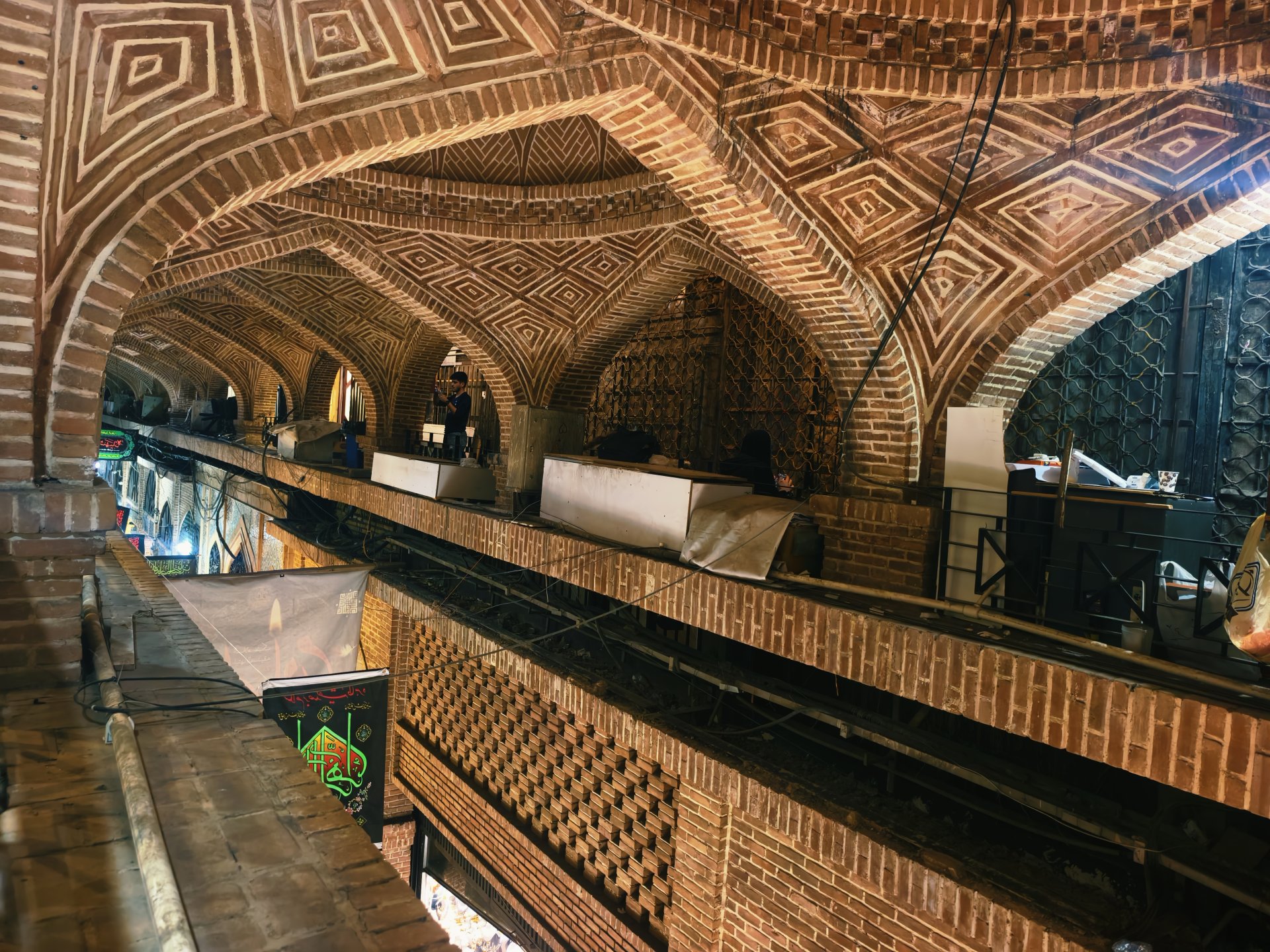
The city of Tehran itself resembles one giant bazaar. Walking through the center, you can find entire rows of shops selling a single category of goods. Strolling through these places can be tiring due to the large crowds and the constant flow of motorbikes. The density of trading spaces here is astonishing.
It's hard to tell where these trading streets begin and end — everything blends into the city. Nobody can name the bazaar's exact length: by various estimates, its trading rows stretch for dozens of kilometers.
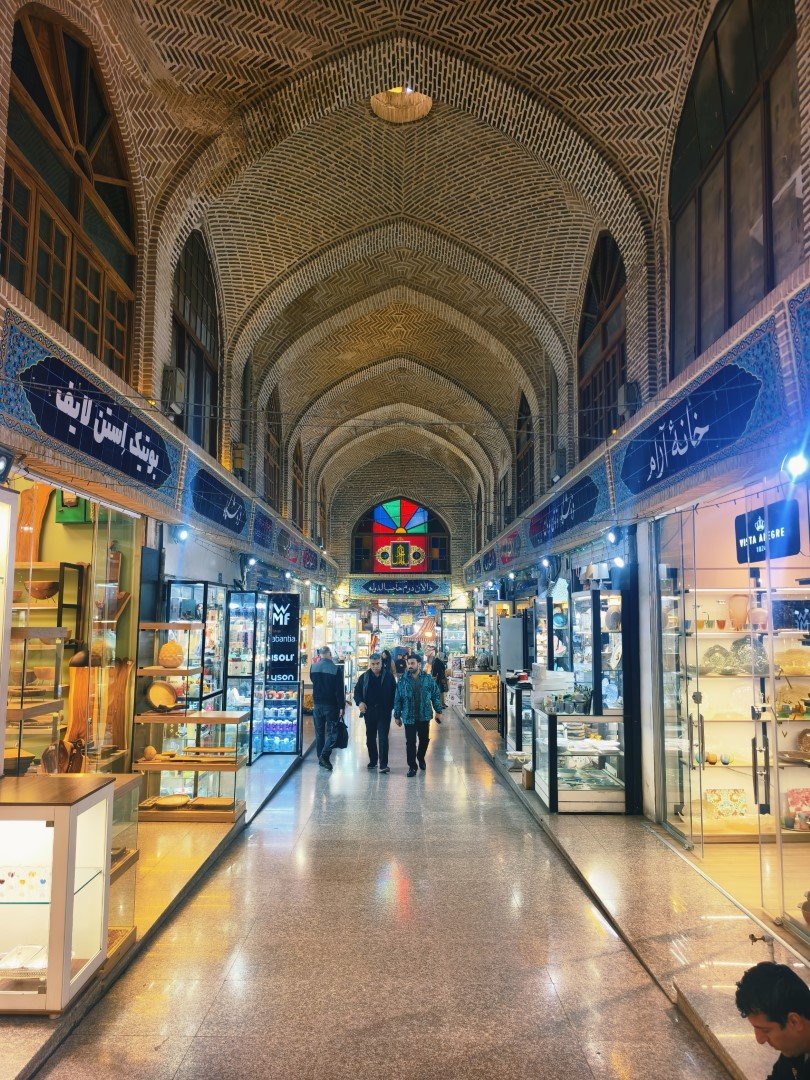
Somewhere in the center, next to the Golestan Palace, lies a covered area known as the "Grand Bazaar." It greets you with vaulted ceilings and patterned arches. Standard tourist souvenirs are rare here, but you can soak up the atmosphere of a bustling life. Concerts, festivals, and theatrical performances are held at the bazaar.
In the past, the Tehran Bazaar was a meeting place for discussions among merchants and spiritual leaders, such as Ayatollah Khomeini, who used the bazaar to voice popular discontent that led to the Islamic Revolution.
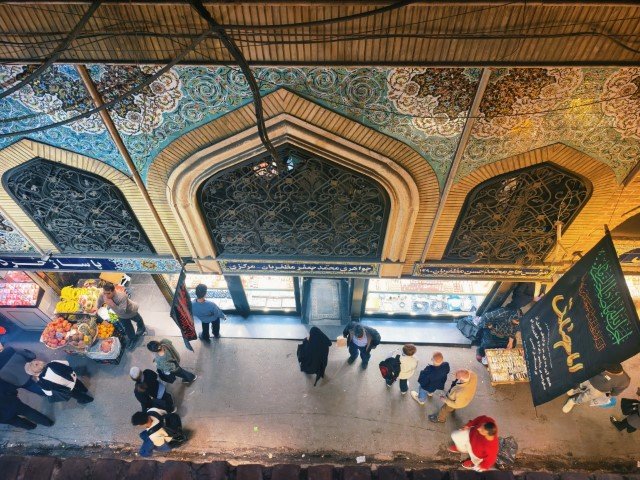
The bazaar is also tied to one of the darkest pages in Russian-Iranian relations. In January 1829 — a year after the end of the Russo-Persian War of 1826–1828 — a crowd enraged by the terms of the Turkmenchay peace treaty gathered here. It marched on the Russian embassy, where a massacre took place. Among those killed was Alexander Griboyedov, a diplomat, orientalist, and author of the Russian classic "Woe from Wit."
5. The Vakil Bazaar in Shiraz
What is Shiraz famous for? Some will recall the wine of the same name — a beautiful legend, but no more: geneticists established long ago that the Syrah grape comes from the Rhône Valley, and only the similar sound ties it to Shiraz; besides, no one will pour you wine in Iran anyway — the country is dry. Others will recall "Persian Motifs" by the Russian poet Sergei Yesenin, and here the irony runs deeper: Yesenin never set foot in Persia and dreamed up the entire cycle inspired by Hafez, the 14th-century Shirazi poet who sang of the roses and gardens of his native city. So both the wine and the Russian poems about Persia are merely echoes of Shiraz.
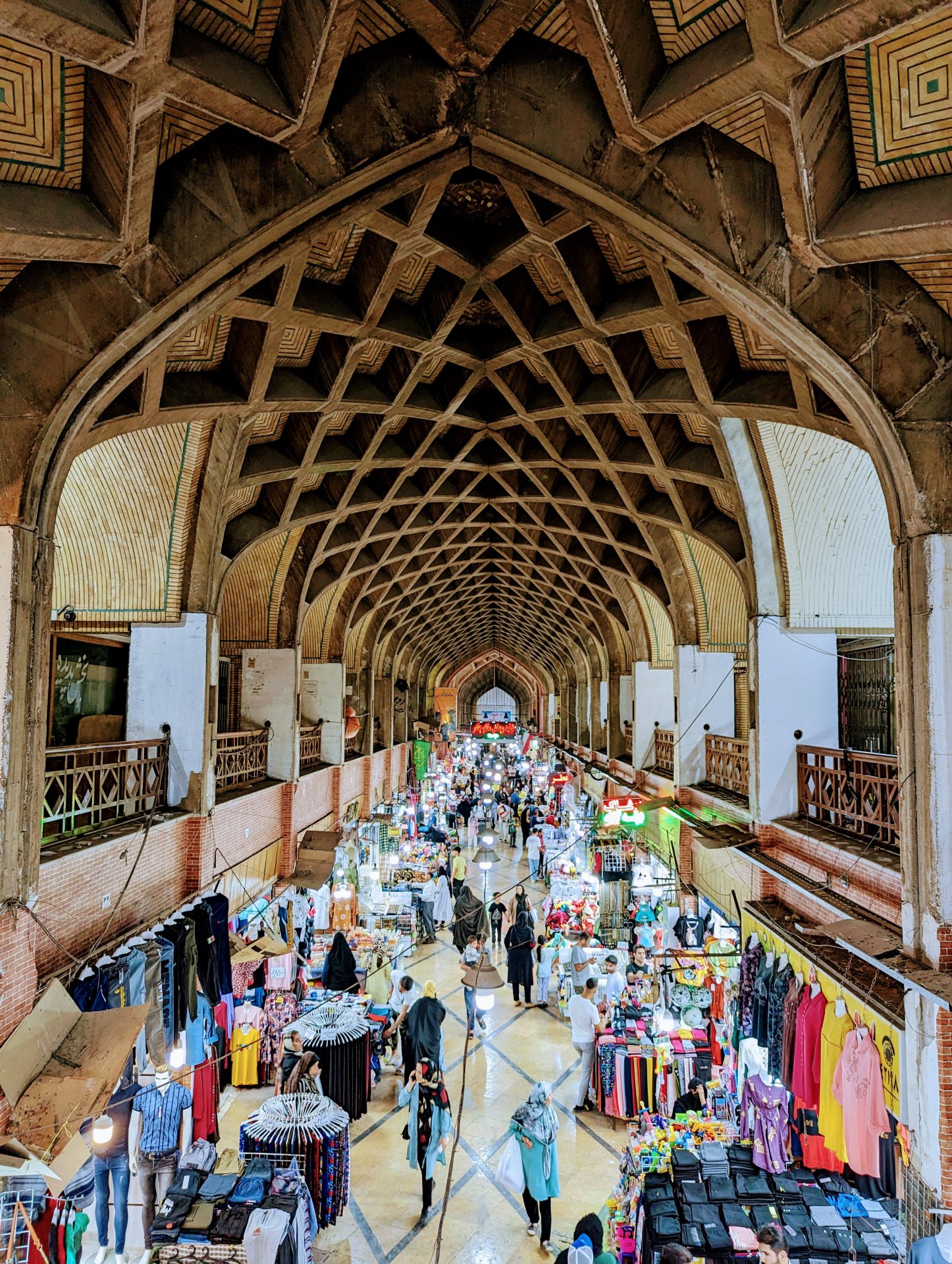
The Vakil Bazaar itself is younger than the city's fame: it was built in the 18th century, when Karim Khan Zand made Shiraz his capital and set out to build it on a scale worthy of Isfahan — the citadel, mosque, bathhouse, and bazaar rose as a single ensemble. The name refers to the ruler's title: Karim Khan refused the title of shah and called himself "Vakil ar-Ra'aya" — "representative of the people."
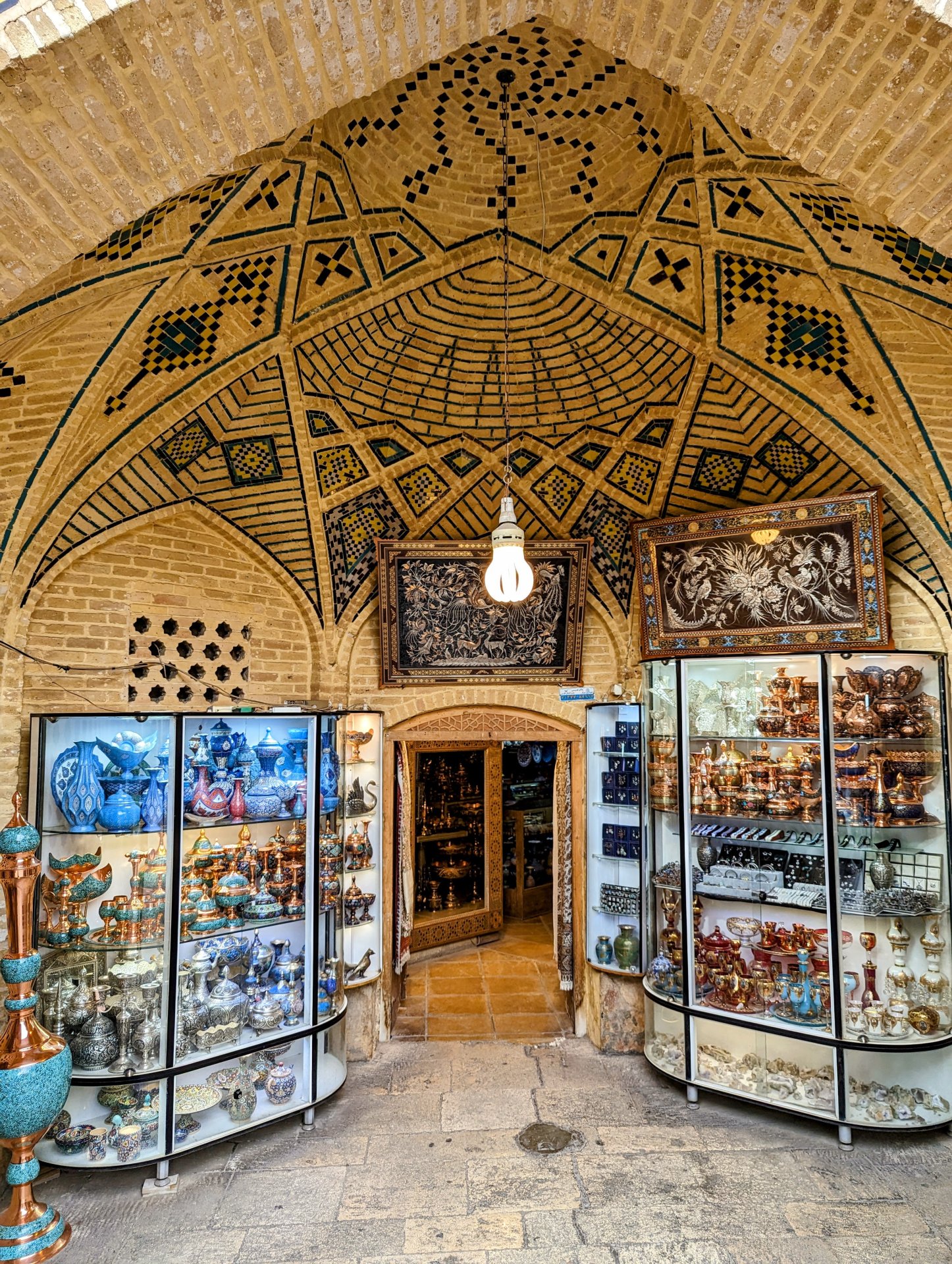
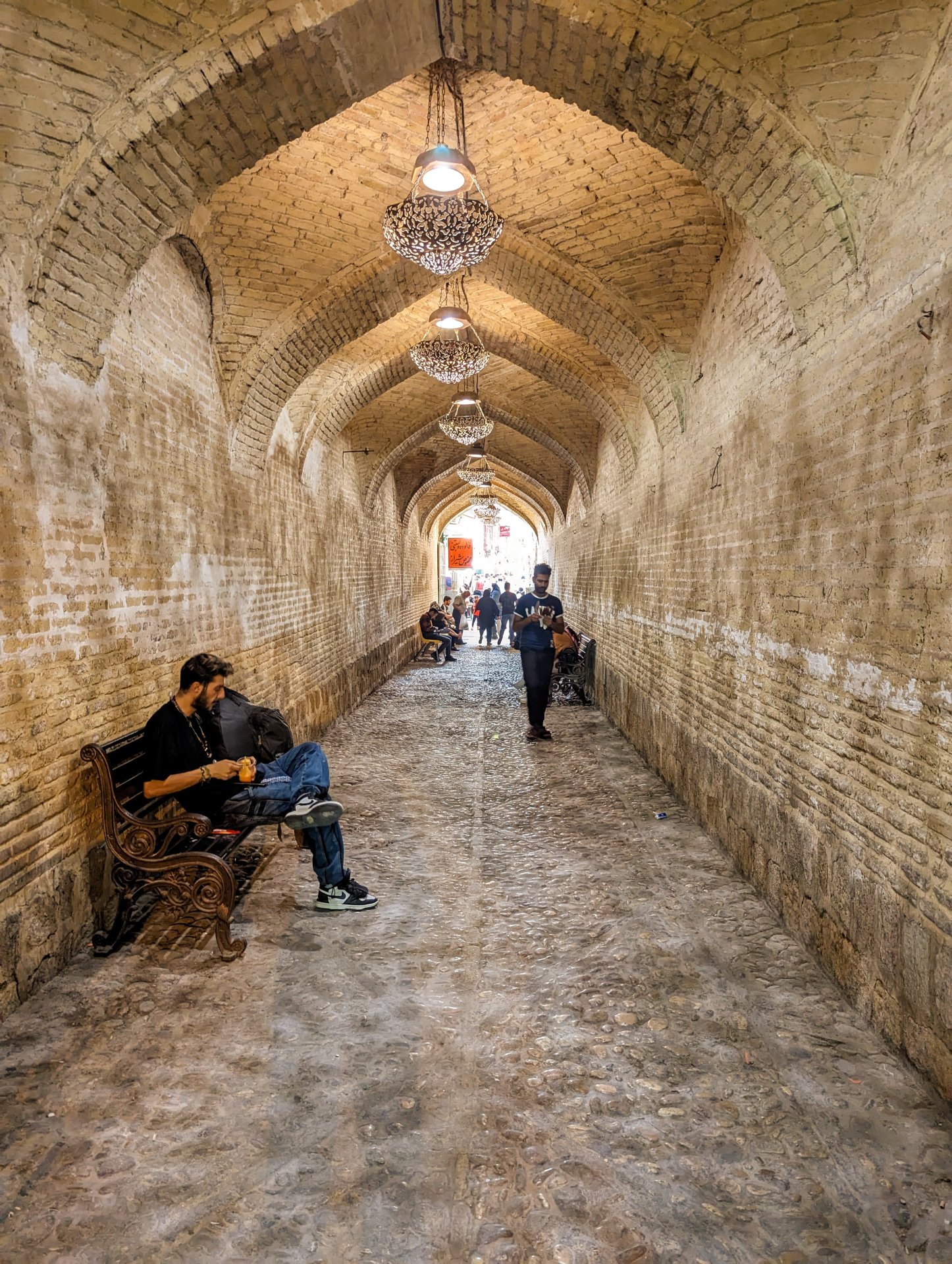
Vakil's main street is a wide corridor under high brick vaults that stay cool even in the summer heat. Winding side rows branch off from it, and that is where the bazaar truly reveals itself: inner caravanserais with quiet courtyards, antique shops, and cozy cafés serving traditional Shirazi cuisine. "Loobia Polo" — rice with beans — deserves special attention, and for dessert take "masghati," a translucent sweet made of rose water, starch, and saffron.
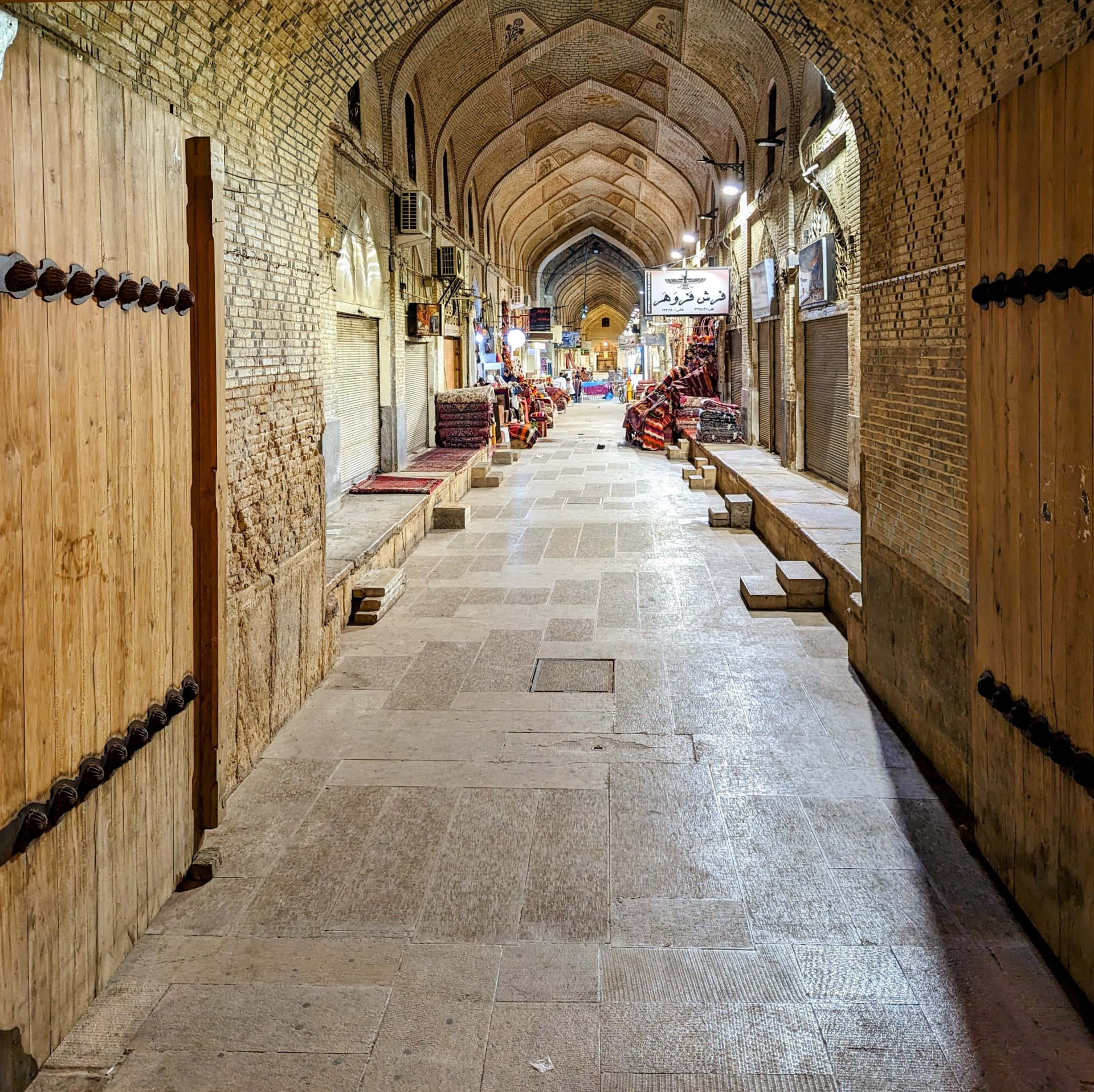
Right here, steps from the trading rows, is a museum of the traditional bathhouse — the Vakil Hammam, built by the same Karim Khan. The only thing to keep in mind in the bazaar bustle is pickpockets: they love big markets no less than travelers do.
4. The Bazaar in Isfahan
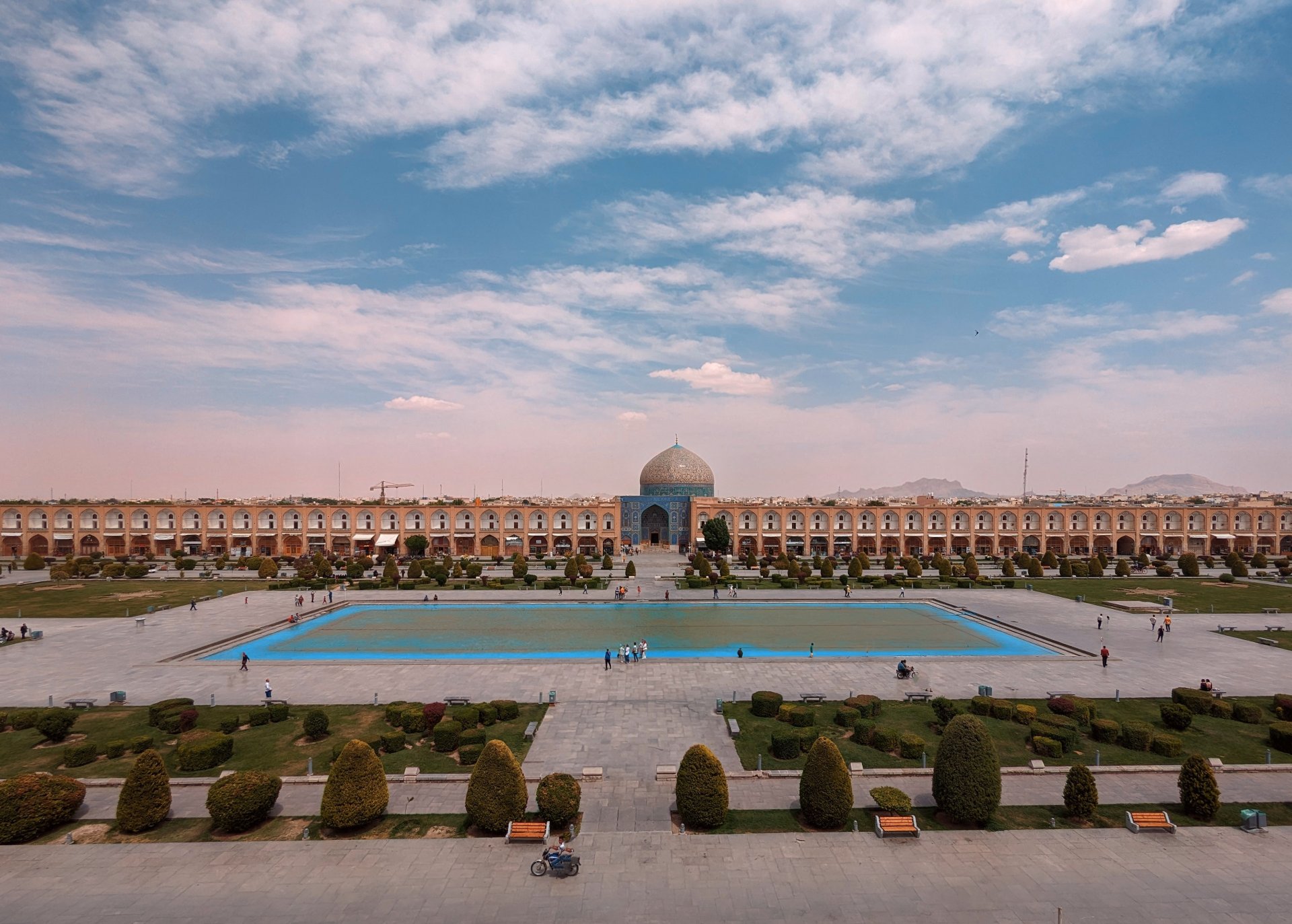
Persians say of Isfahan: "Isfahan is half the world." To understand where such confidence comes from, let's start from afar. If you've been to Bukhara, Samarkand, or Turkestan, you've seen the blue mosques in glazed tile — so-called Timurid architecture. Much of it is the work of Isfahani masters: after conquering Persian lands, Timur gathered the best of them and carried them off to build palaces across his empire.
Over time, Timur's empire fell, leaving behind numerous architectural monuments. Later, a new state arose on the Iranian part of his conquests — Safavid Persia, with Isfahan as its capital. Shah Abbas I, inspired by Timurid architecture, decided to turn his capital into a center of art and culture. Thus appeared Naqsh-e Jahan Square ("Image of the World") — one of the largest squares on Earth and a UNESCO World Heritage Site. The saying about half the world was born precisely then: under Abbas the city truly felt itself the center of the universe.
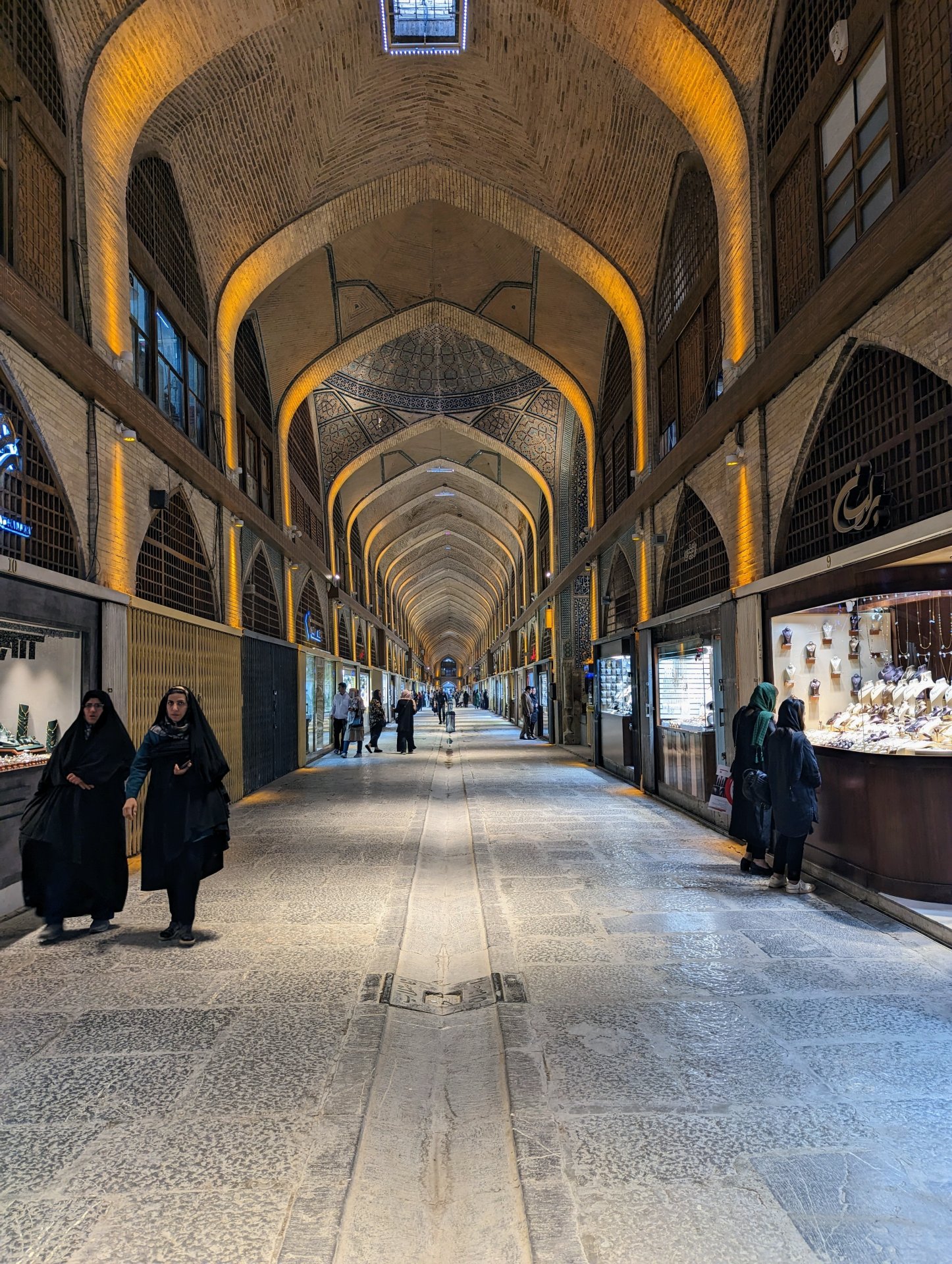
The Isfahan bazaar hardly looks like a bazaar at all — it is part of a palace ensemble. From the west, the Ali Qapu palace, ceremonial gate of the royal residence, looks onto the square; the square itself is ringed with two-tiered trading arcades; and from the north, through the Qeysarie Gate, the covered bazaar street begins — running two kilometers deep into the city, all the way to the old Friday Mosque.
Unlike Tehran, a calm and unhurried atmosphere reigns here: the bazaar sells carpets, souvenirs, paintings, boxes, antiques, and much more. Many items are made right before visitors' eyes. The signature color of these rows is turquoise: this is minakari, painted enamel. The blue plates are painted right behind the counter — a master draws the pattern with a fine brush, and you can watch for as long as you like.
3. The Grand Bazaar of Tabriz
If the Tabriz bazaar had a guest book, it would read like a history of great journeys. Marco Polo listed Tabriz among the flourishing centers of trade where merchants from India and China came for silk and fabrics. Ibn Battuta marveled at its network of caravanserais, which made the city one of the busiest crossroads of the Silk Road. The Russian merchant Afanasy Nikitin left his mark here too, on his way back from India.
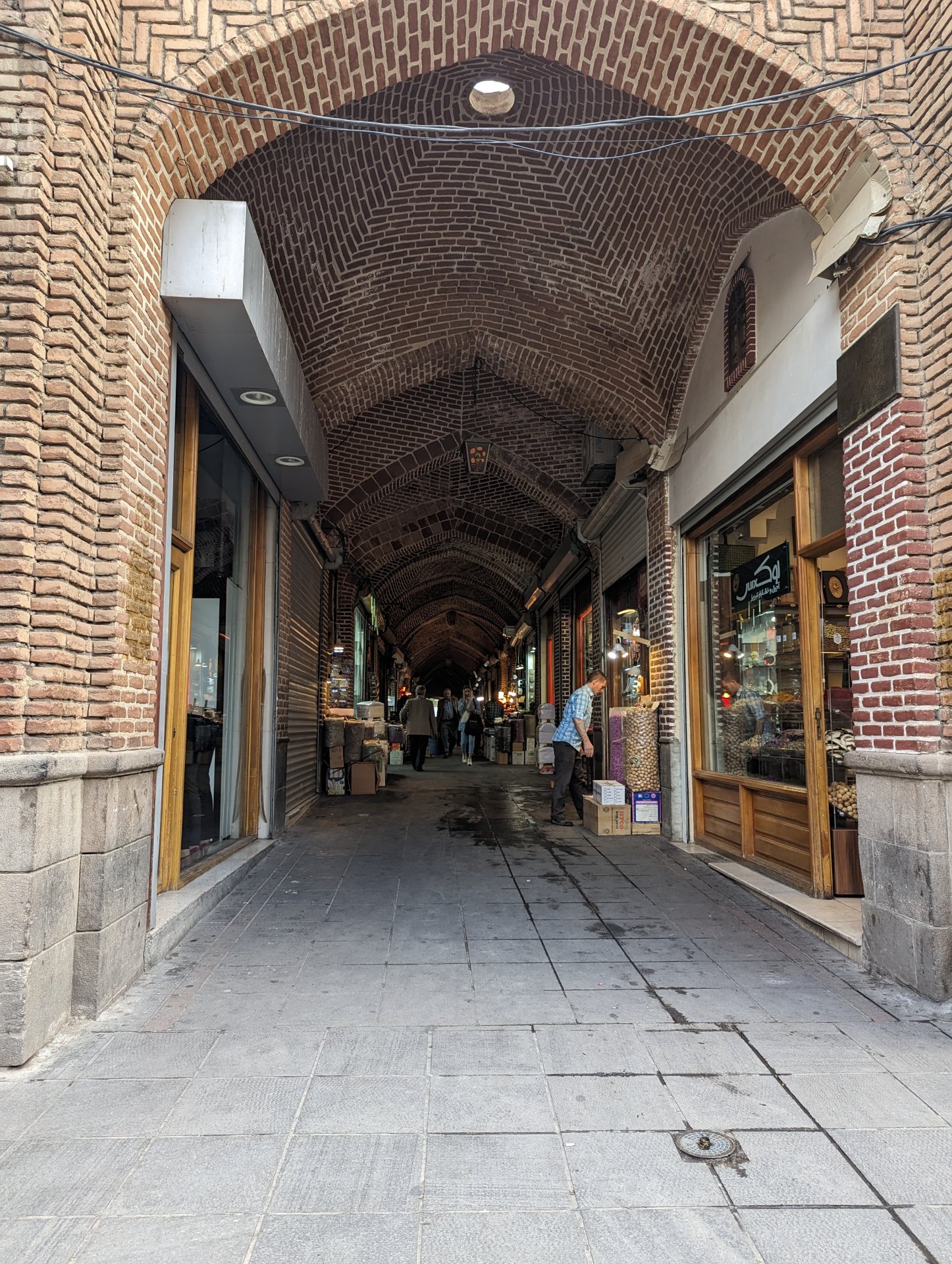
The reason is simple: the city stands at the crossing of three major trade routes, and the bazaar grew out of that crossroads on its own — so long ago that no one can name an exact date. Rapturous descriptions by travelers go back as far as the 13th century.
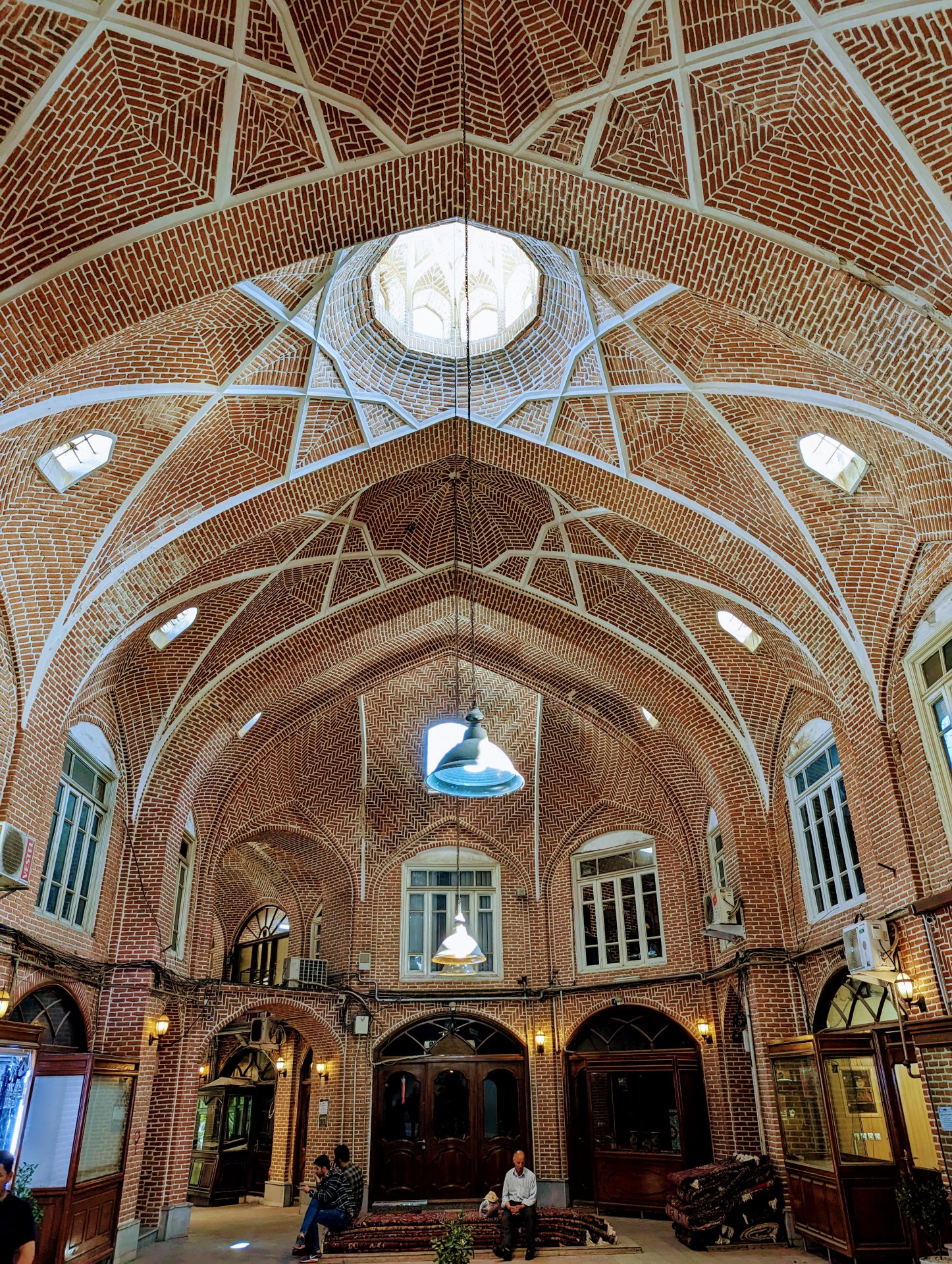
The bazaar's heyday came in the 16th century, when Tabriz was the first capital of the Safavids — the court later moved to Qazvin, and from there to Isfahan. Its present brick appearance is the result of a complete rebuild after the devastating earthquake of 1780.
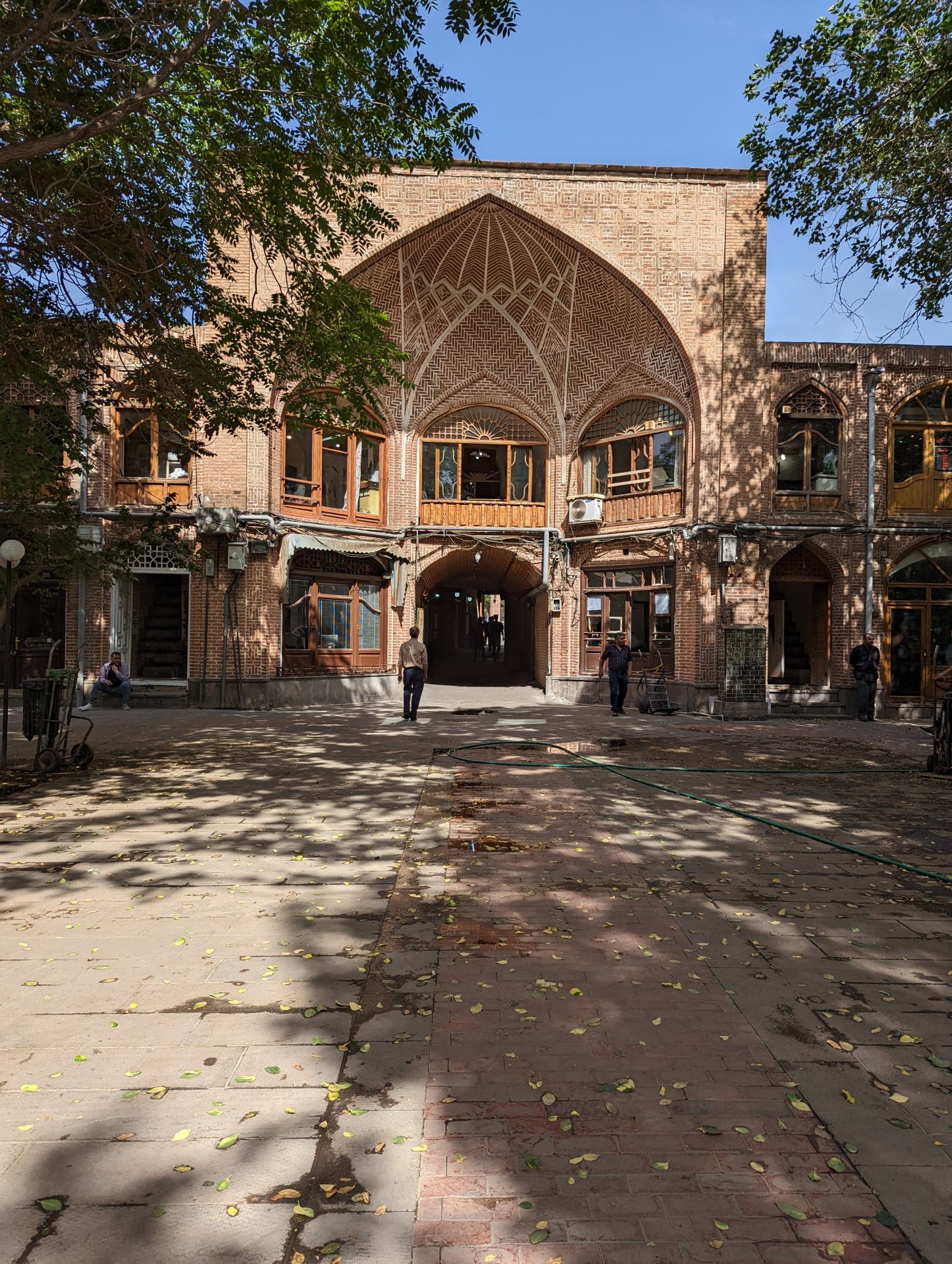
Today the Tabriz bazaar is a UNESCO World Heritage Site and, by common reckoning, the largest covered bazaar in the world. Its main currency is carpets: the finest Persian carpets are woven right here, and everything else revolves around them — mountains of sweets and dried fruit, jewelers' shops, teahouses. And on major dates, trade steps aside: for Tabriz, the bazaar is still the place where the city comes together — for festivals and for mourning ceremonies.
2. The Kashan Bazaar
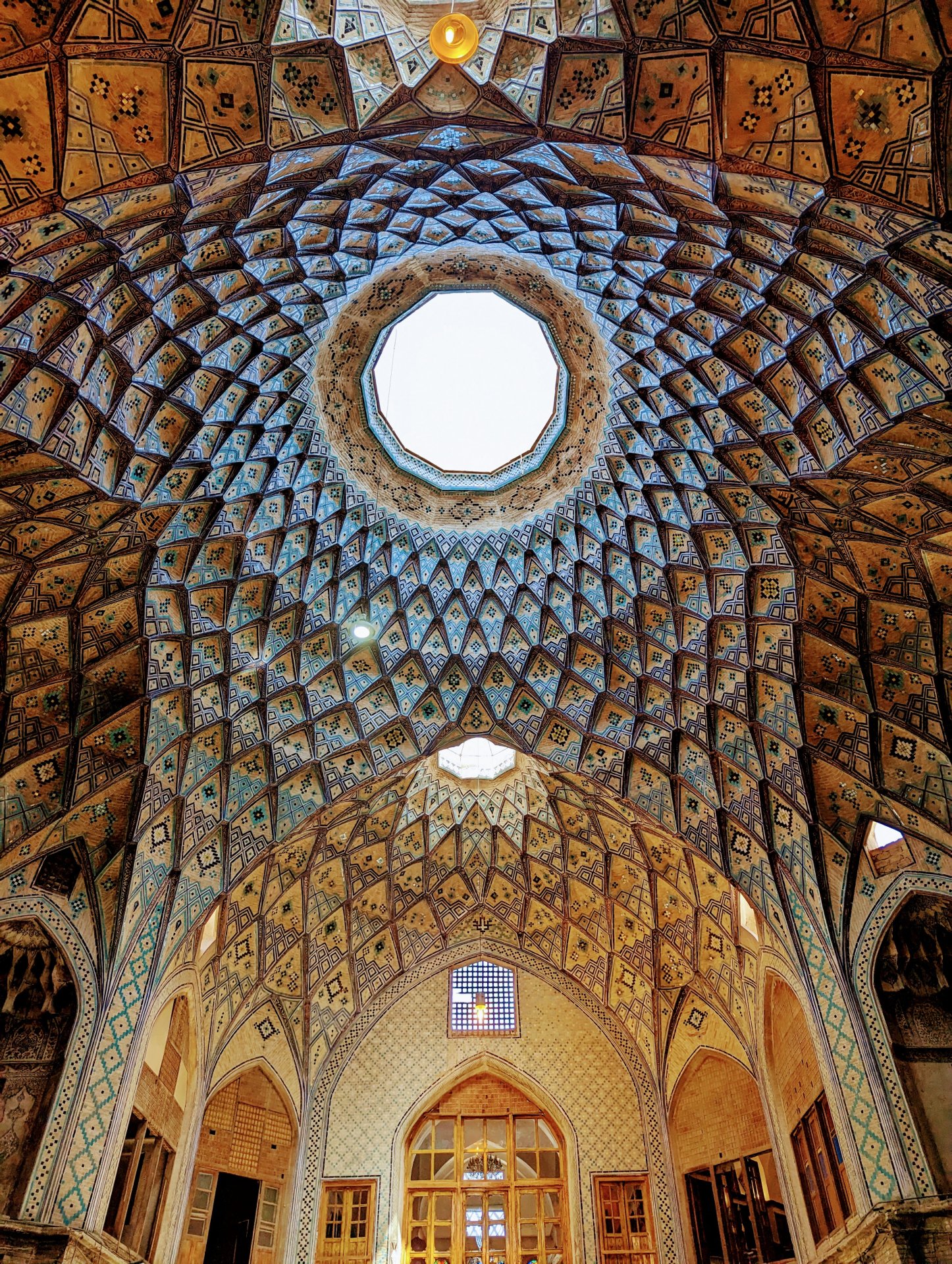
Kashan is a merchant oasis town on the edge of the Dasht-e Kavir desert. Caravans have stopped here for millennia; merchants grew rich and built mansions that looked like palaces — and the bazaar was, and remains, the heart of that life. Today its old caravanserais house teahouses, workshops, and small hotels, so the trading rows flow imperceptibly into the city, and the city into the bazaar.
Particularly striking is the dome of Amin al-Dowleh, built in the 19th century and rightfully considered a masterpiece of Persian architecture. Come at noon, when the sun falls through the oculus in shafts of light with dust dancing inside them — the best shot of your trip is all but guaranteed.
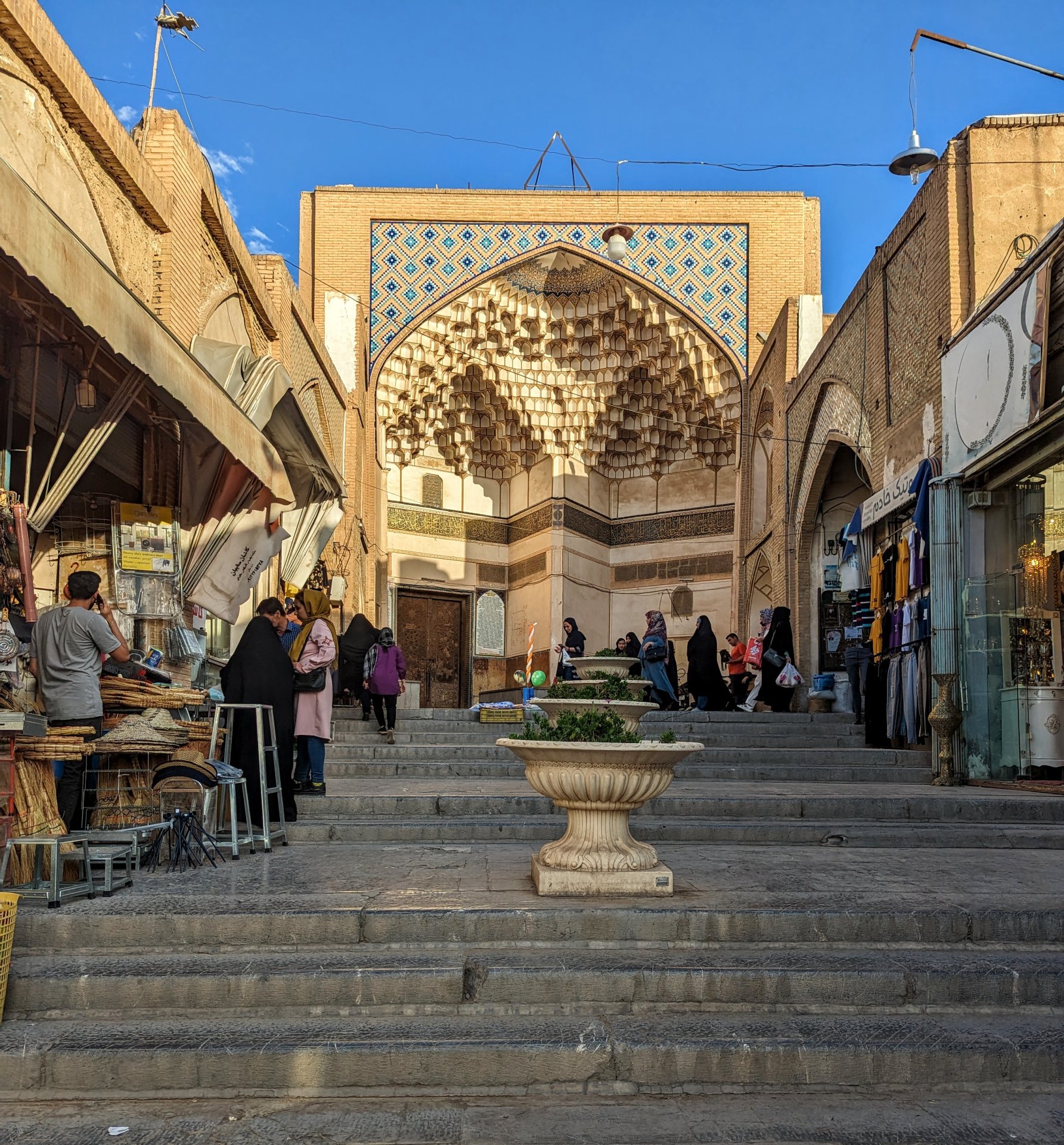
At the bazaar you can find pottery, textiles, rose water, and handmade goods. Don't miss the chance to visit the local teahouses and try traditional tea with halva.
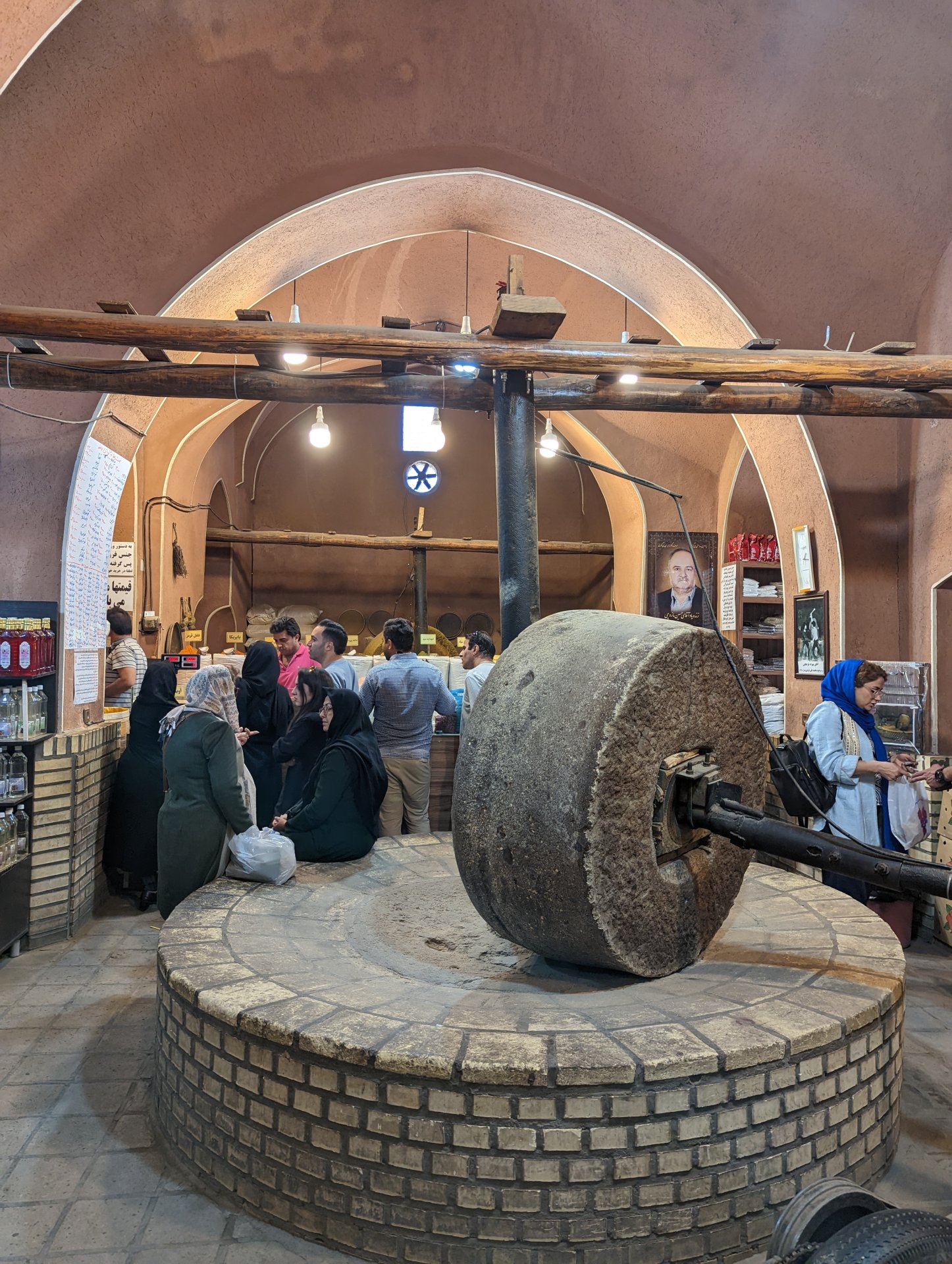
Be sure to try rose-water-based drinks and take note of the local artisans' work. Kashan's pottery, for instance, is unique. Don't make the mistake of putting off a purchase — if you like something, buy it right away, since the selection in other cities may disappoint you.
1. The Qazvin Bazaar
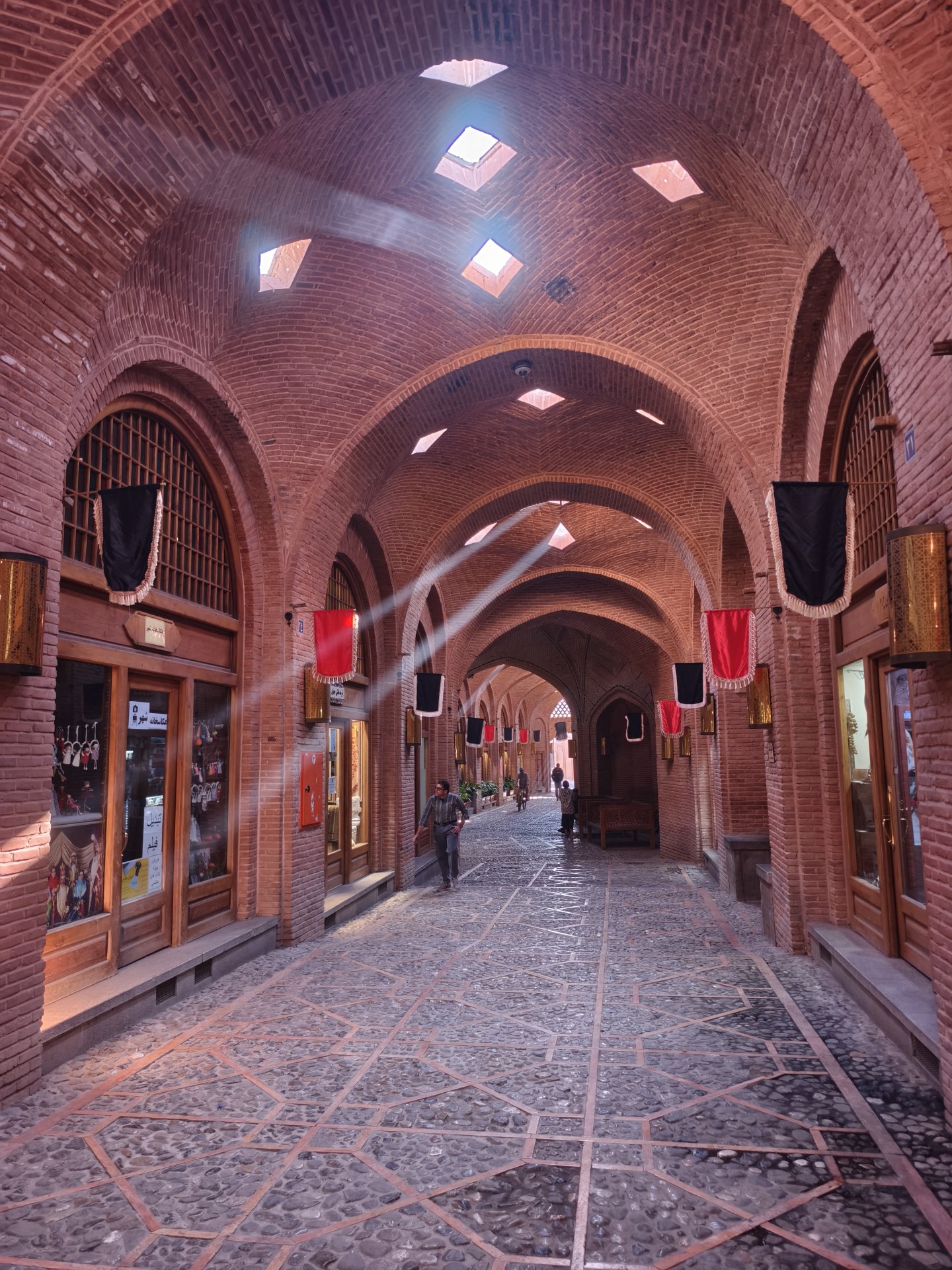
Qazvin is a city that rarely makes it onto tourist itineraries, and quite undeservedly so. In the 16th century it was the capital of Safavid Persia — before Shah Abbas moved the court to Isfahan. From its era as the capital, the city inherited a grand bazaar that only kept growing over time.
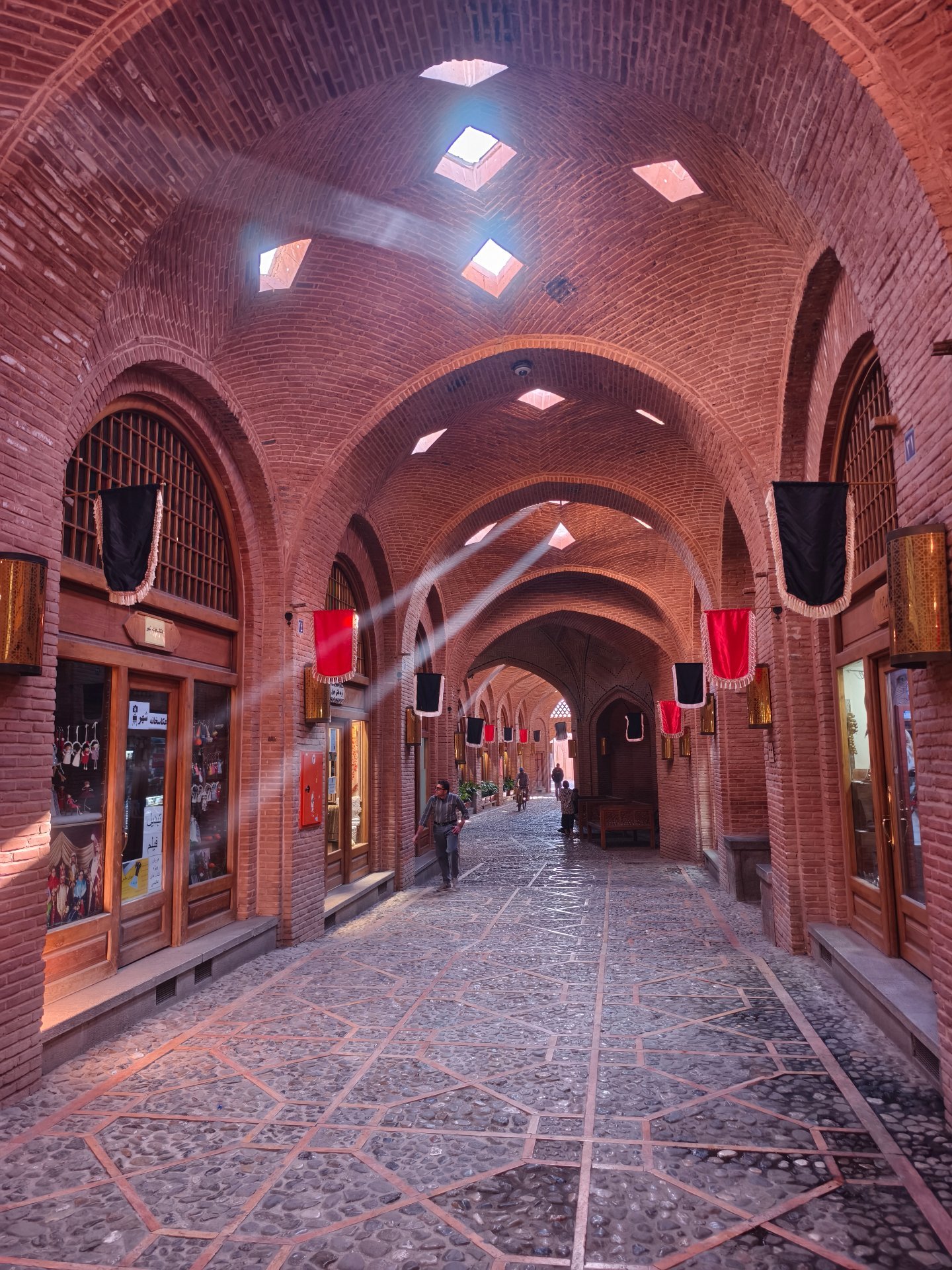
Picture dozens of hectares of covered streets. The layout is almost chessboard-like — corridors connect mosques, timches (trading pavilions), and spacious courtyards. Light breaks through wells in the brick vaults, and on the walls the kashi-kari glazed tiles with traditional ornamentation gleam.
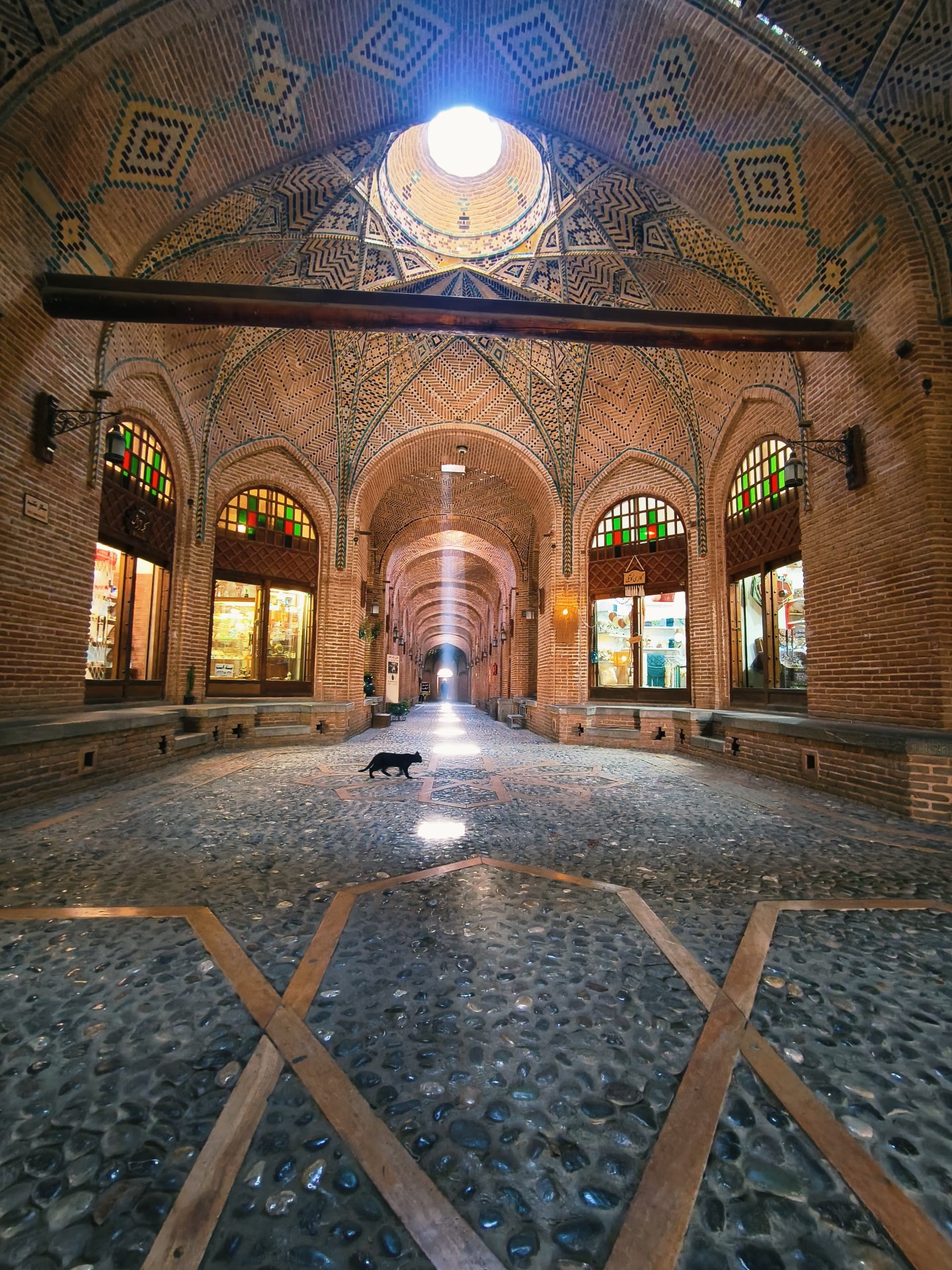
The main find inside this labyrinth is the Sa'd al-Saltaneh complex. Historically it wasn't built as an ordinary market but as the largest covered urban caravanserai in Iran. It was erected in the late 19th century, during the Qajar era, as a powerful trade and logistics hub for merchants doing business along the route from Tehran to Russia and Europe. Today it has been carefully restored, transformed into a cultural center with galleries and craft shops. Sitting there with tea, admiring the elegant Qajar-era arches, is a special pleasure. For the spirit of the Safavids, head to Qeysarieh — the oldest part of the bazaar. It impresses with its tall brick vaults and the feeling that little has changed here in the last four hundred years.
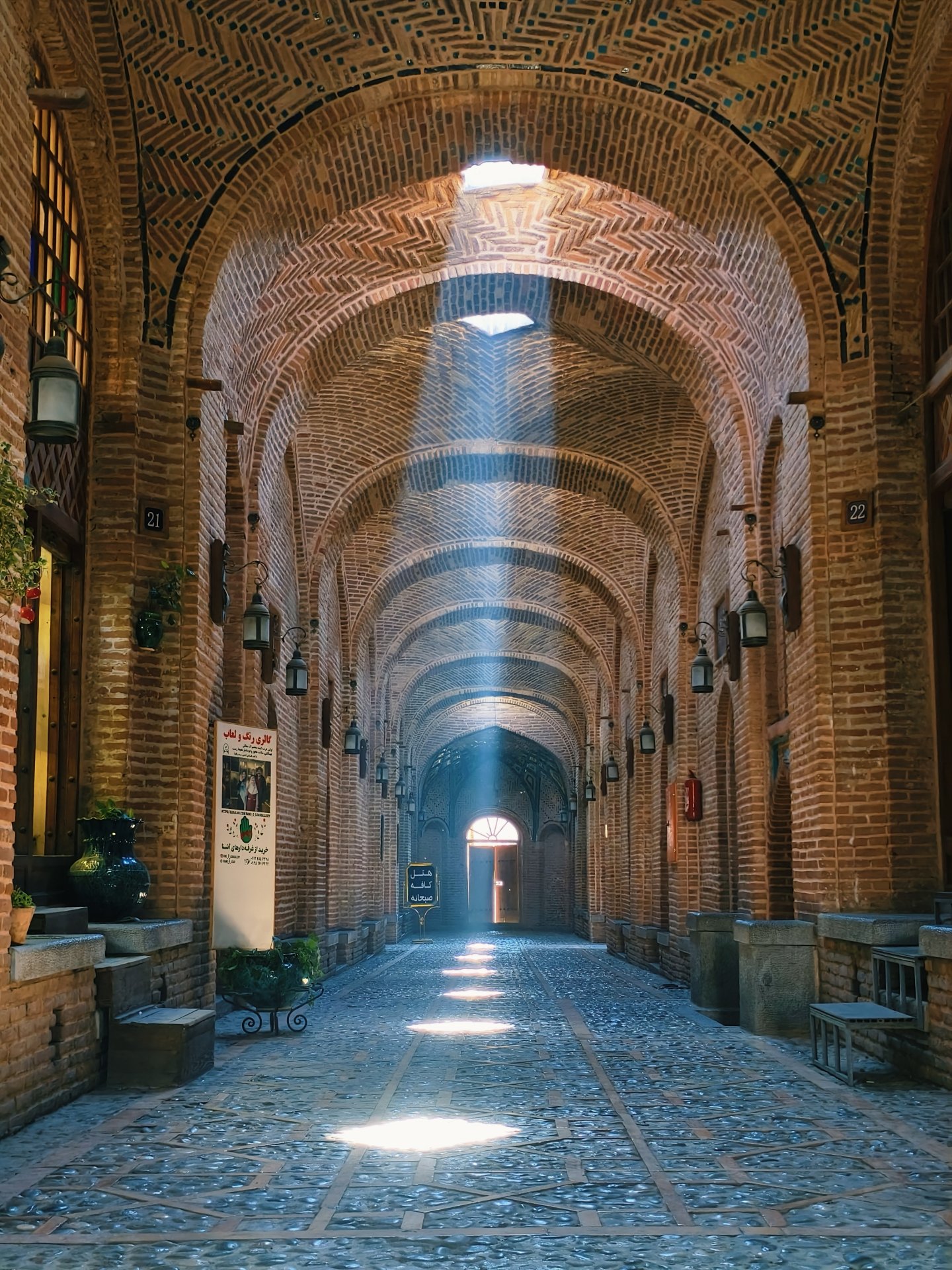
Qazvin's biggest advantage is that there's almost no mass tourism here. This isn't Isfahan or Shiraz. Here you are not a walking wallet but a guest — and you feel the difference at once.
Six cities — six answers to the question of what a Persian bazaar is. In Tehran it made a revolution; in Shiraz it inspired poets; in Isfahan it was an extension of the palace; in Tabriz, a hub of the Silk Road; in Kashan, a workshop; in Qazvin, a coaching inn halfway to Europe. Here the bazaar is not a market attached to the city but the heart the city grew around: under these vaults, for centuries, people struck deals, composed verses, welcomed caravans, and saw off entire eras.
Of course, Iran doesn't end with these six: Kerman, Qom, and Yazd each have bazaars of their own, and every one deserves its own story. But for a first acquaintance, these six are more than enough. And now you know the main rule: haggling at an Iranian bazaar is optional — tea is not.
Comments
Log in to leave a comment
Nothing here yet. Be the first!