

Contents
A lost heritage: all the Cham towers of Vietnam
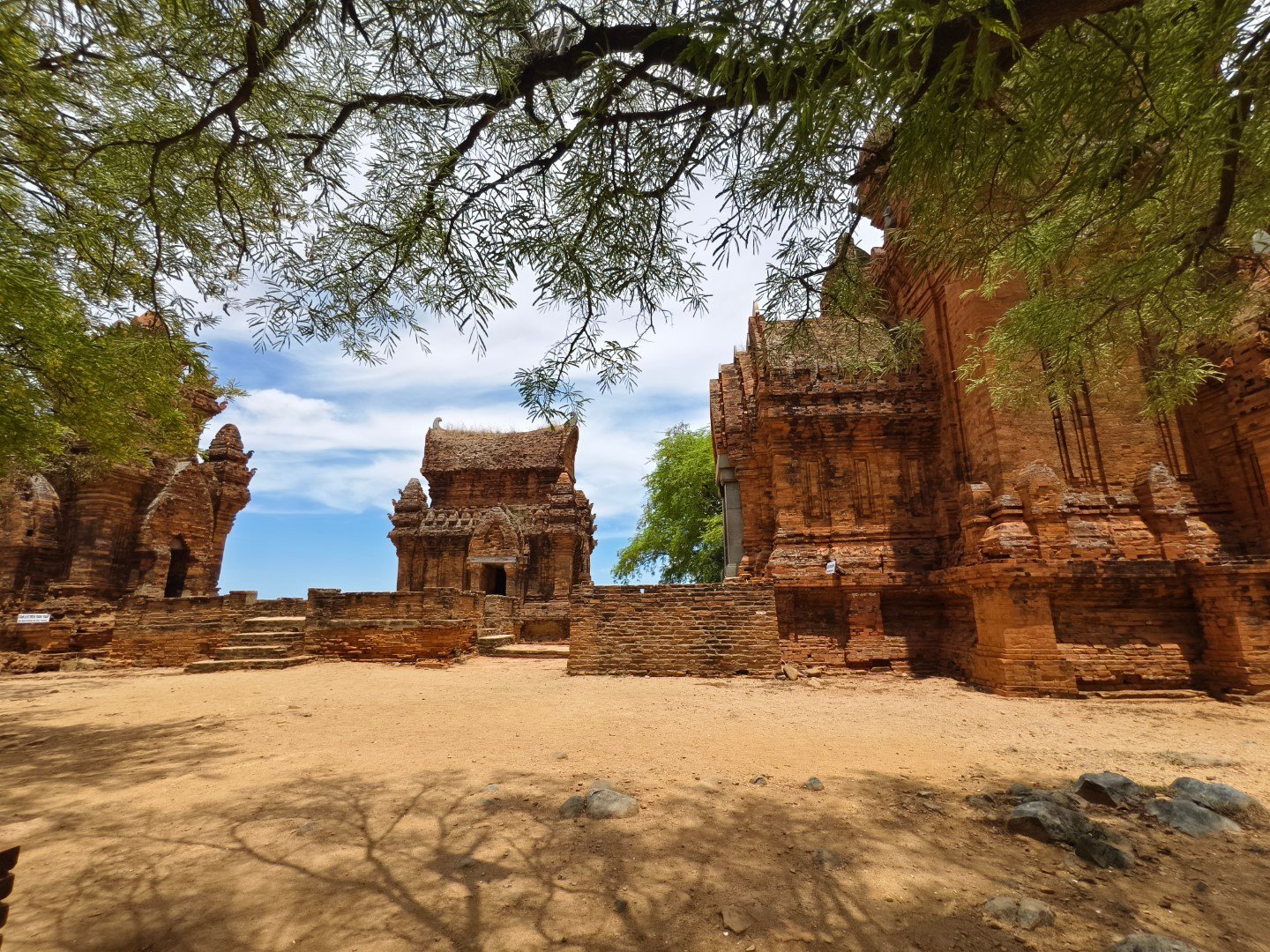
Along the coast of Central Vietnam, from Quang Nam Province in the north to Binh Thuan in the south, dozens of red-brick towers are scattered — silent witnesses to a vanished civilization. These are the tháp Chăm (Cham towers): the temple towers of the Kingdom of Champa, which existed here for more than a millennium and a half, from the 2nd to the 17th century CE.
Tourists seeing these sanctuaries for the first time often call them a "little Angkor" — and that's a mistake. The Cham towers are older: the earliest temples at My Son were being built as far back as the 4th–7th centuries, centuries before the Khmer built Angkor Wat (12th century). Champa and the Khmer Empire weren't teacher and student but rival neighbors: both civilizations grew from a shared Indian, Hindu root, warred with and influenced each other — in 1177 a Cham fleet sailed up the river and sacked Angkor. So this isn't a provincial copy of a great neighbor, but an independent and older tradition with a golden age of its own.
And unlike Angkor with its crowds and ticket booths, you'll find most of the Cham towers on your own — often alone and for free, amid rice paddies or atop a hill above the sea. That's exactly what makes them ideal for independent travel: no tour buses, no lines — just you, red brick, and a millennium and a half of history.
Today about 50 Cham towers and temple complexes survive in Vietnam. Some are UNESCO gems, others stand forgotten in rice paddies, still others hide on mountaintops. I tried to visit most of them. Alas, I managed to see more than half, but far from all. This guide is an attempt to bring them all together in one place.
The Kingdom of Champa: 1,500 years between India and the sea
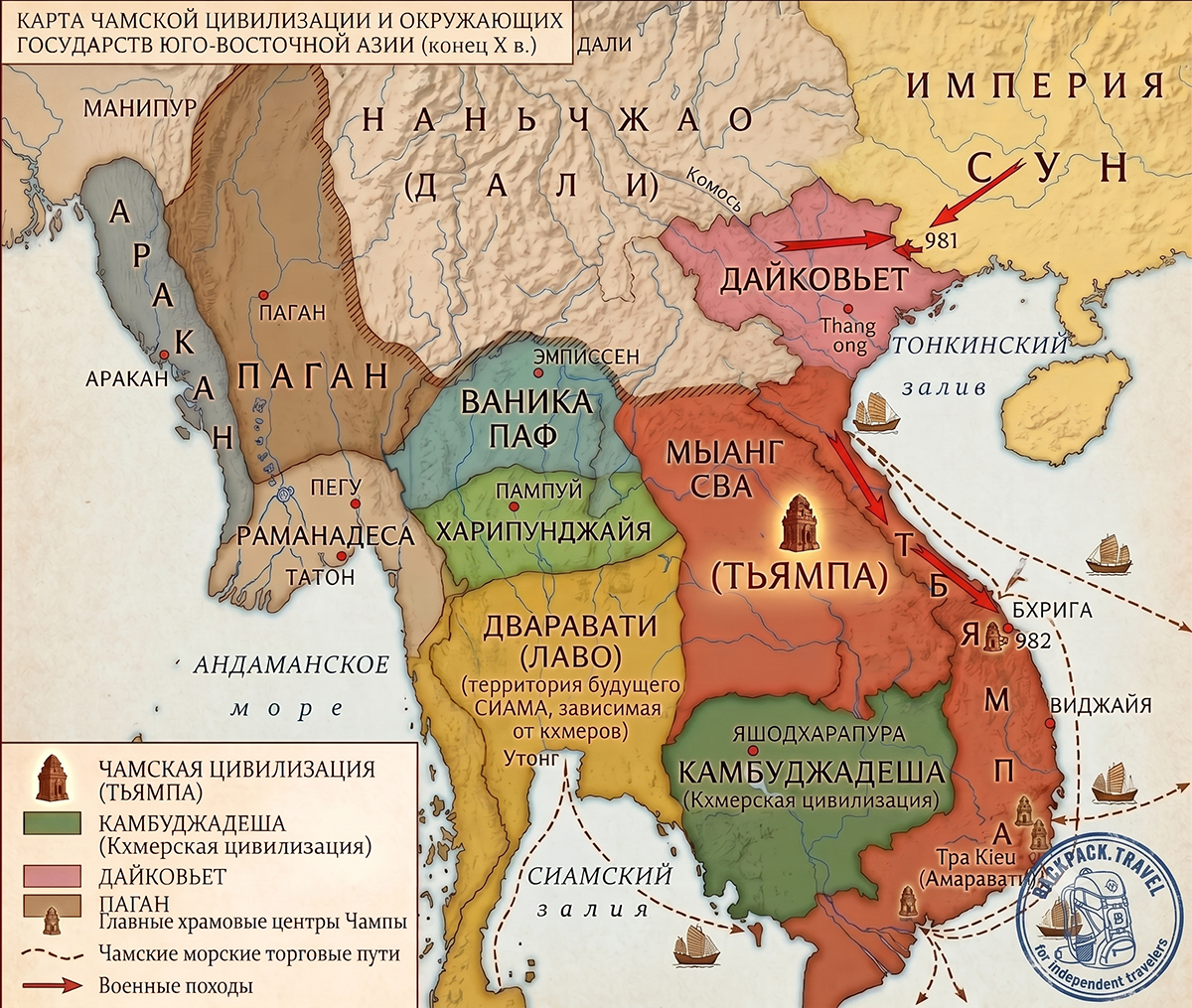
The Cham are an Austronesian people, believed to have migrated to the coast of Vietnam from Borneo in the early centuries CE. In 192 CE, during the breakup of China's Han Empire, the state of Lin Yi arose in what is now Central Vietnam, becoming the forerunner of Champa.
By the 5th century, under King Bhadravarman, the Cham lands united into a single kingdom. Champa was never a monolithic state — rather a confederation of four smaller realms, named after Indian regions: Amaravati (Quang Nam), Vijaya (Binh Dinh), Kauthara (Nha Trang), and Panduranga (Phan Rang).
Champa's culture was deeply steeped in Indian influence. Shaivism became the dominant religion, though Buddhism and local cults were woven organically into spiritual life. The Cham were seafarers and traders — at its height, the kingdom controlled the spice and silk trade between China, India, Indonesia, and Persia.
Champa's capital shifted southward as the Vietnamese state of Dai Viet pressed down from the north. The center was first My Son and Dong Duong (Quang Nam), then Vijaya (Binh Dinh), and finally Panduranga (Ninh Thuan). In 1471 the Vietnamese captured Vijaya, and Champa ceased to exist as a significant power. The last remnants of the kingdom were fully absorbed in 1832.
But the towers remained.
How the Cham built their towers
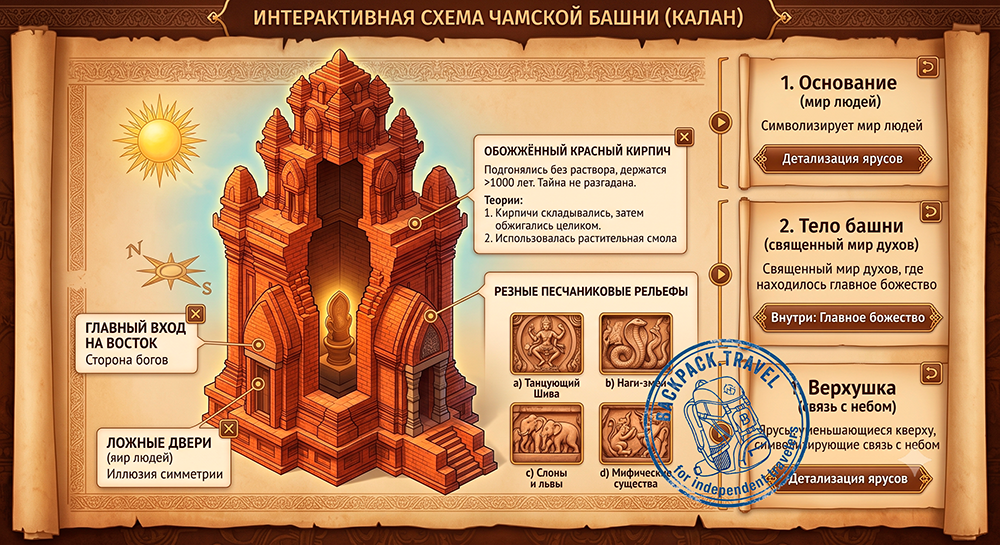
Cham architecture is unique. The towers were built from fired red brick without mortar — the bricks were fitted so precisely that they've held together for over a thousand years. According to one theory, the bricks were first stacked and then fired as a single unified structure. Another theory holds that plant resin was used as a binding material. The mystery remains unsolved to this day. Each tower (kalan) consists of three parts:
The base — symbolizing the world of humans
The tower body — the sacred world of the spirits, where the main deity resided
The top — tiers narrowing upward, symbolizing the connection to heaven
Entrances usually face east — the direction of the gods. False doors on the other three sides created an illusion of symmetry. The decoration included carved sandstone reliefs depicting a dancing Shiva, naga serpents, elephants, lions, and mythical creatures.
Quang Nam Province: the cradle of Champa
This is where it all began: the earliest Cham temples stand in these very valleys, many centuries before the flourishing of Vijaya and Panduranga to the south. The roads around Da Nang and Hoi An are one of the best-maintained stretches of the whole route: paved right up to the gates of My Son, and the four smaller towers within an hour's drive are easy to reach on a rented bike in a single day.
My Son (Mỹ Sơn) — UNESCO
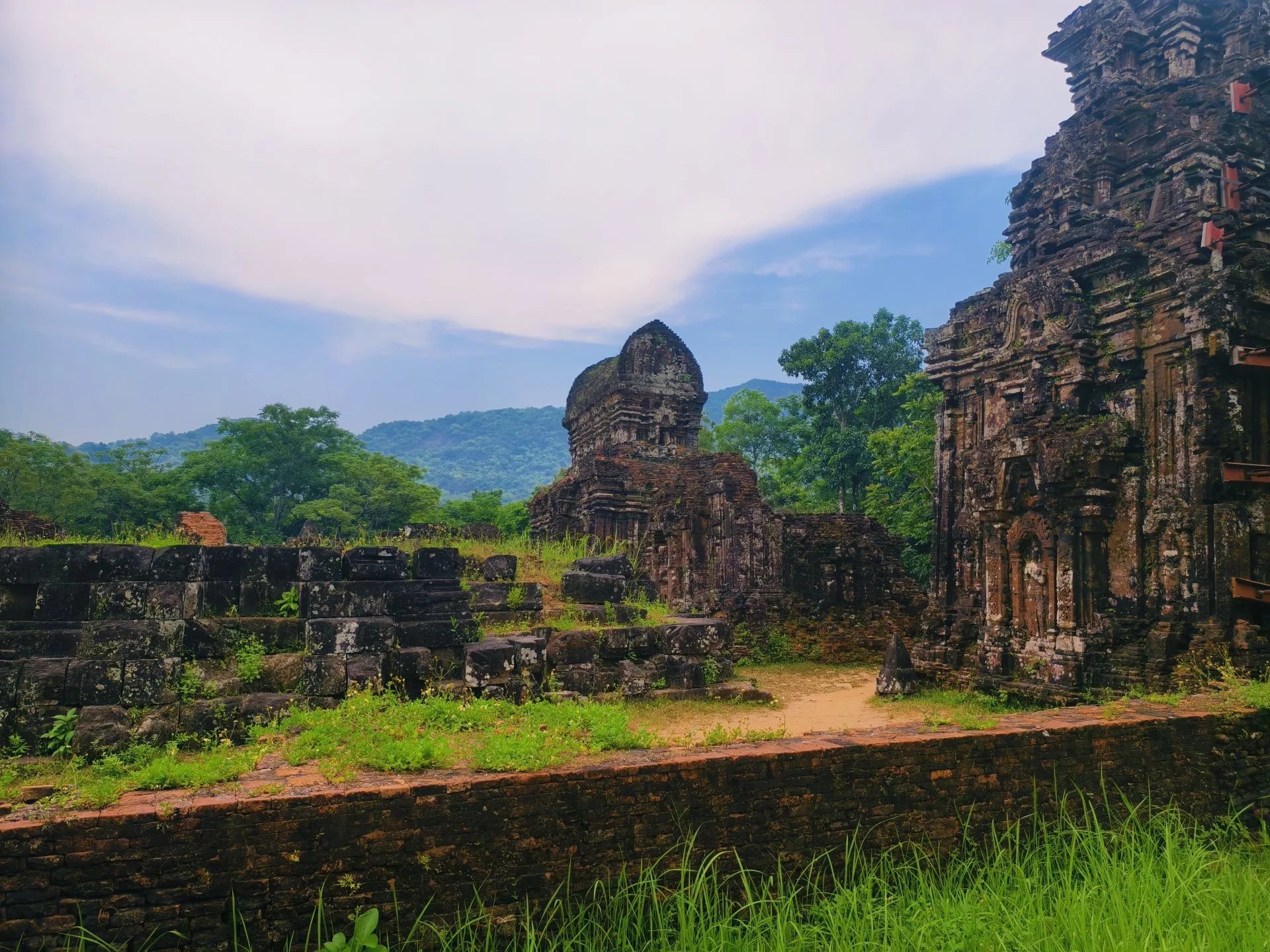
If you've seen "The Curse of the Serpent Valley" — a joint Polish-Vietnamese film from the late 1980s that many in the former USSR remember as one of their own — you'll surely recall the jungle, the monks, and the temples. Those temples were filmed not far from Da Nang, in a place called My Son. Located 69 km southwest of Da Nang, in a valley ringed by mountains, this was Champa's religious center for nearly a thousand years — from the 4th to the 12th century.
The complex originally numbered more than 70 temples and towers, grouped into clusters (labeled with Latin letters A–N). All the main styles of Cham architecture are represented here: from the archaic style of the 7th–8th centuries to the Binh Dinh style of the 11th–13th centuries.
During the Vietnam War, My Son was severely damaged by B-52 bombing raids in 1969 and 1972. Many temples were lost forever. In 1999 the complex was added to the UNESCO World Heritage List. Today part of the site has been restored, but most of it remains picturesque ruins overgrown with tropical vegetation.
How to get there: rent a bike from Da Nang or Hoi An. The ride takes 2 hours. I'd recommend going in the morning, since besides the complex itself, a Cham dance performance takes place on site at around 2:00 pm.
Also, if you'd like to explore the wider region, here are a few more options:
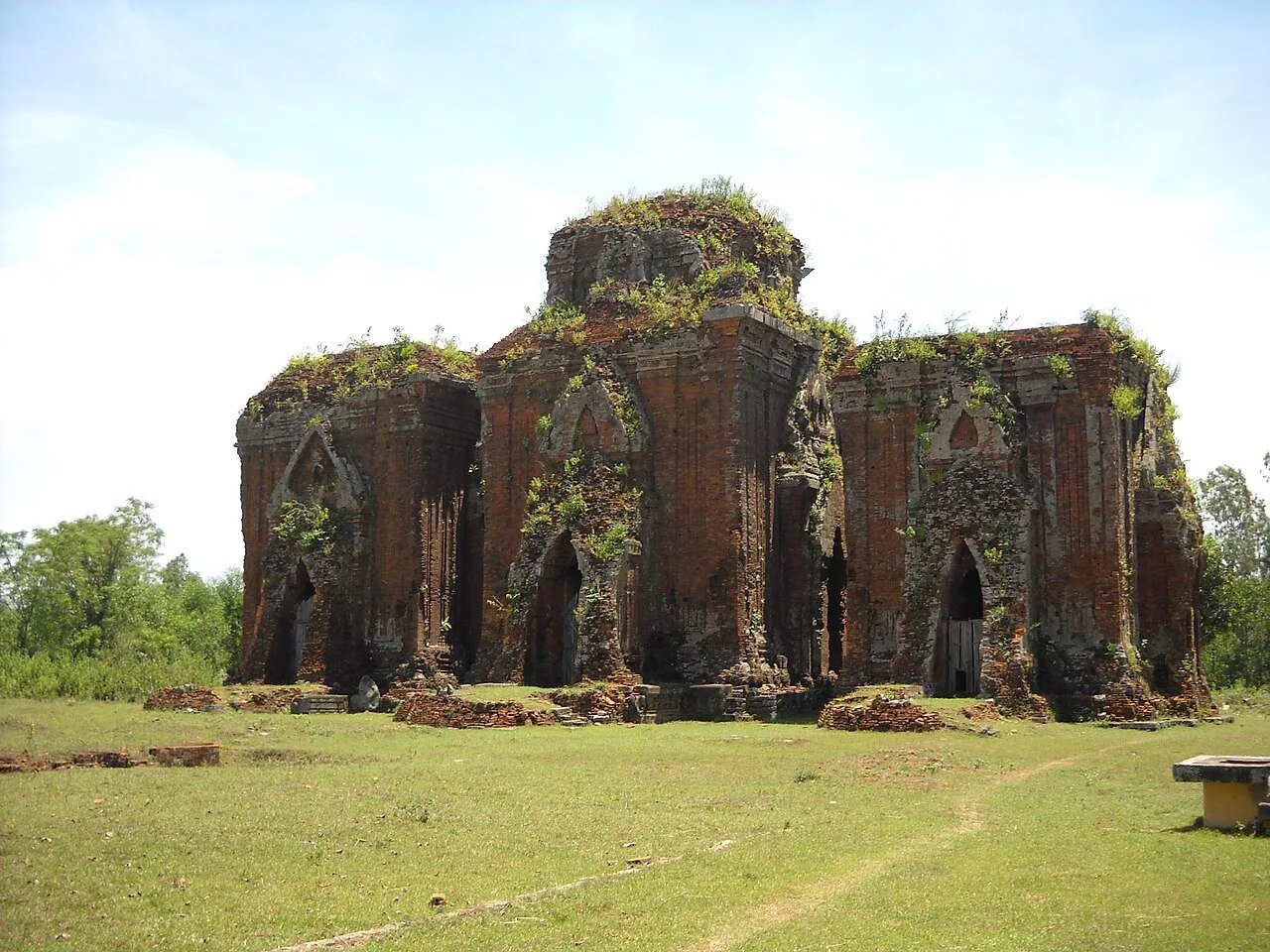
Chien Dan (Chiến Đàn)
Three towers from the late 10th–early 11th century in Tam Anh commune, Phu Ninh district. They stand side by side, aligned north-south. The southern tower has been restored, while restoration is underway on the northern and central ones.
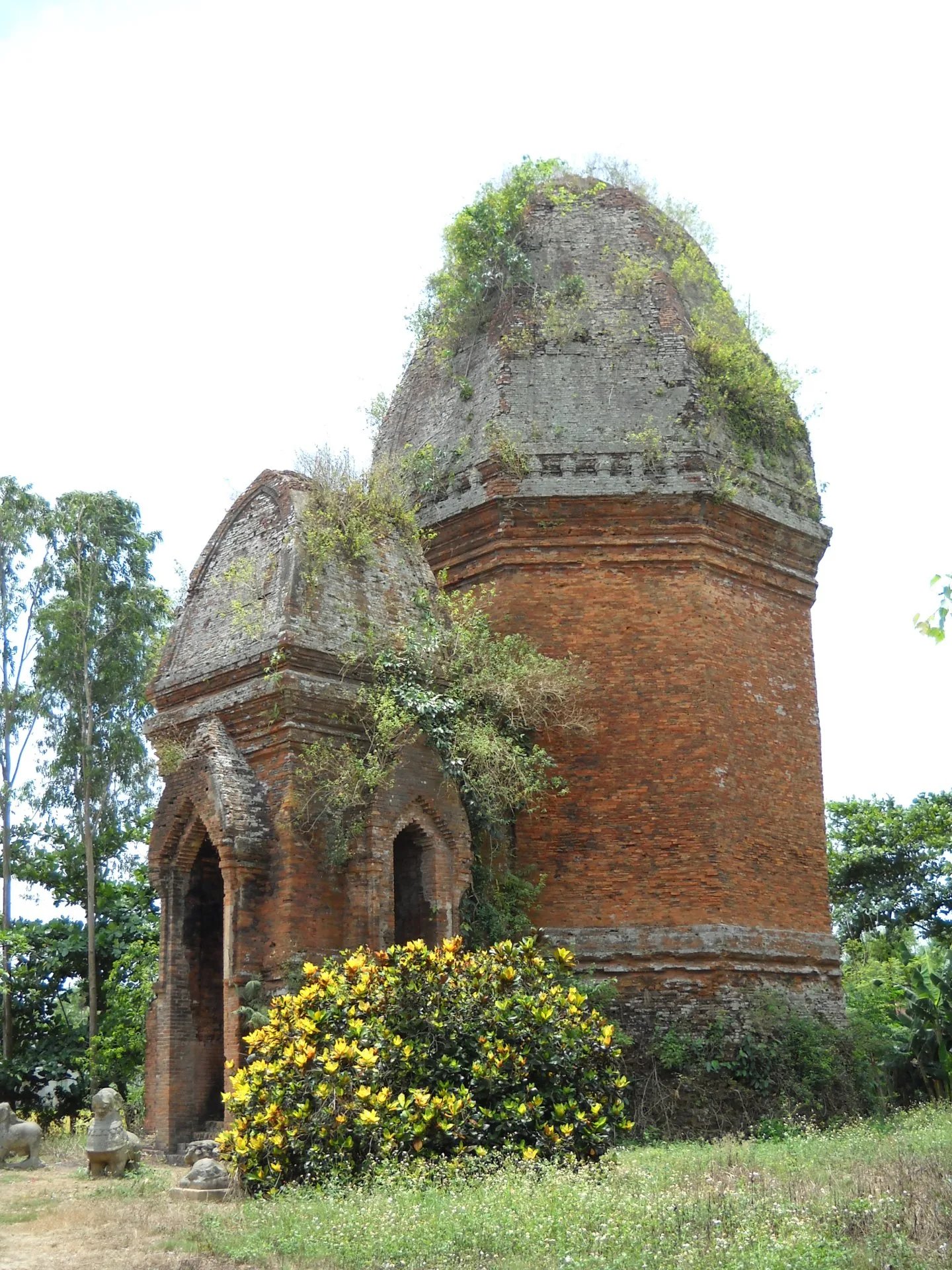
Bang An (Bàng An)
A tower in Dien Ban district — one of the stopovers between My Son and Hoi An. A restoration project worth over 8 billion dong is underway.
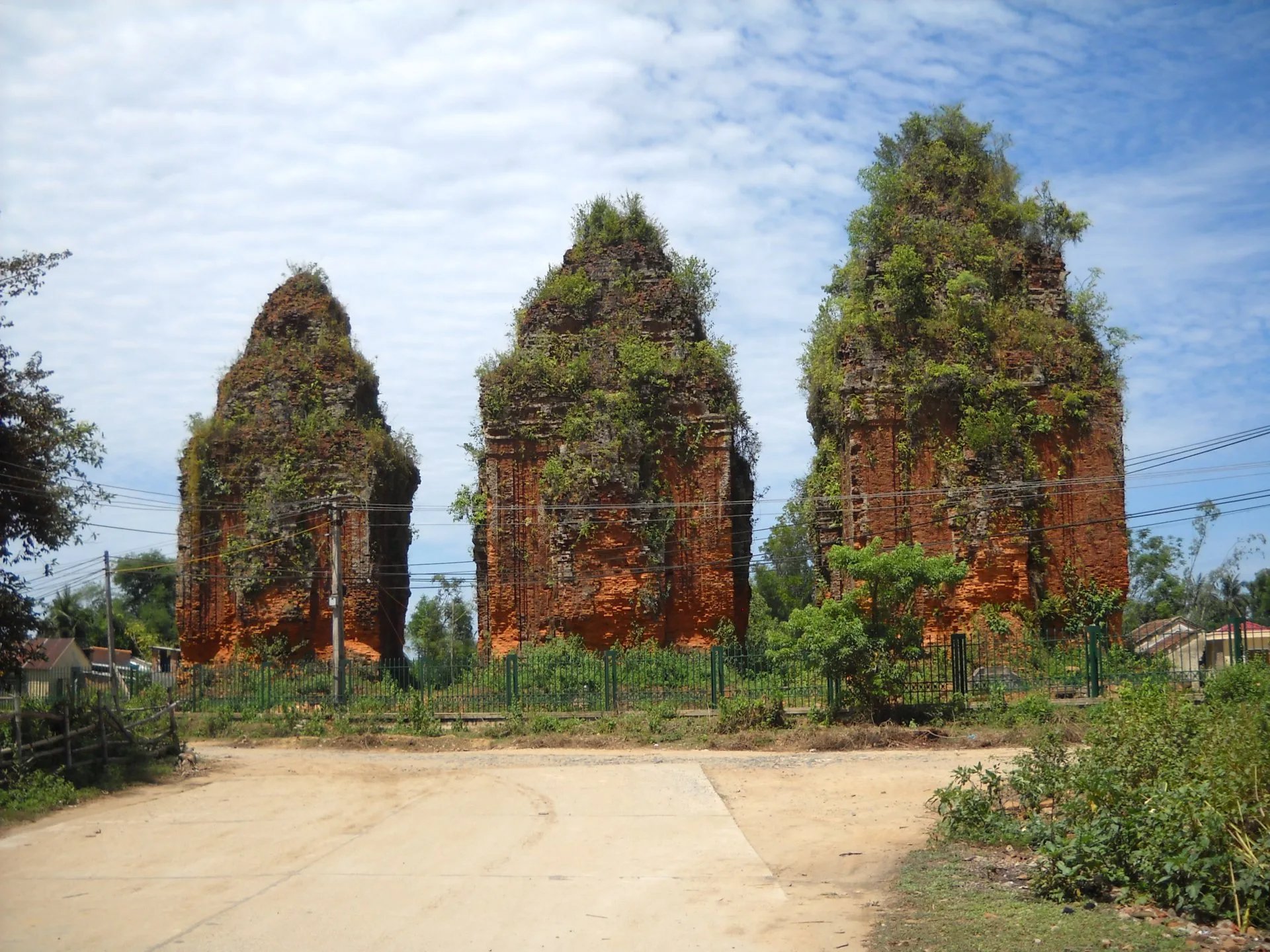
Khuong My (Khương Mỹ)
Three towers from the late 9th–early 10th century in Tam Xuan commune, Nui Thanh district, aligned north-south; a national monument since 1989. You can clearly see how one architectural style flows into another here — this is a transitional form between Hoa Lai and My Son.
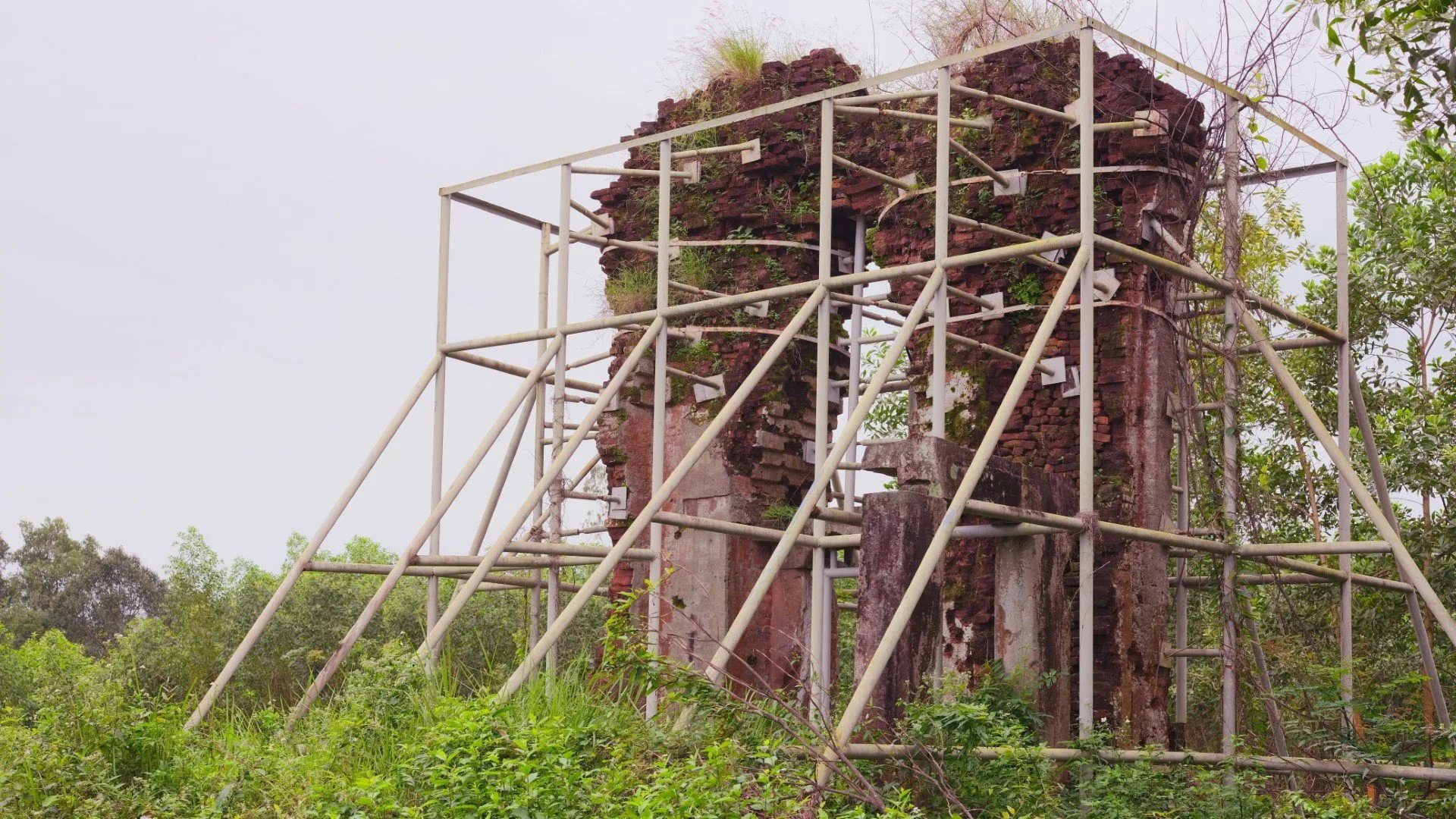
Dong Duong (Đồng Dương)
A Buddhist monastery and temple complex 20 km from My Son, built in the 9th century under King Indravarman II. It was one of the largest Buddhist centers in Southeast Asia at the time. Only fragments of the complex survive, but Dong Duong's artifacts are among the most important pieces in the Museum of Cham Sculpture in Da Nang.
Da Nang: a museum without walls
Museum of Cham Sculpture (Bảo tàng Điêu khắc Chăm)
In Da Nang itself you can visit the Museum of Cham Art — about 300 sculptures gathered from all over Central Vietnam. The exhibits are organized by style and region: the My Son, Dong Duong, Thap Mam, and other halls. A must-stop before heading to the towers — it gives context to the ruins you'll see afterward.
Binh Dinh Province: the capital of Vijaya
Vijaya was the capital of Champa longer than any other city — from the 11th to the 15th century — and you can feel it in the density of towers around modern-day Quy Nhon: nine complexes with fourteen towers stand within half an hour's drive of one another, mostly on the plain near An Nhon village. Quy Nhon itself is one of Vietnam's three major resort towns alongside Da Nang and Nha Trang, but mass tourism hasn't reached it yet. The roads around it are flat and nearly empty, so touring all the sites on a rented bike is realistic in a day or two — though you'll have to accept the limited, mediocre hotel options near the village. If time is short, prioritize Duong Long, Banh It, Thap Doi, Canh Tien, and Binh Lam — the most impressive and accessible of the nine. The rest (Vijaya Citadel, Phu Loc, Thu Thien, Hon Chuong) are for those in no hurry.
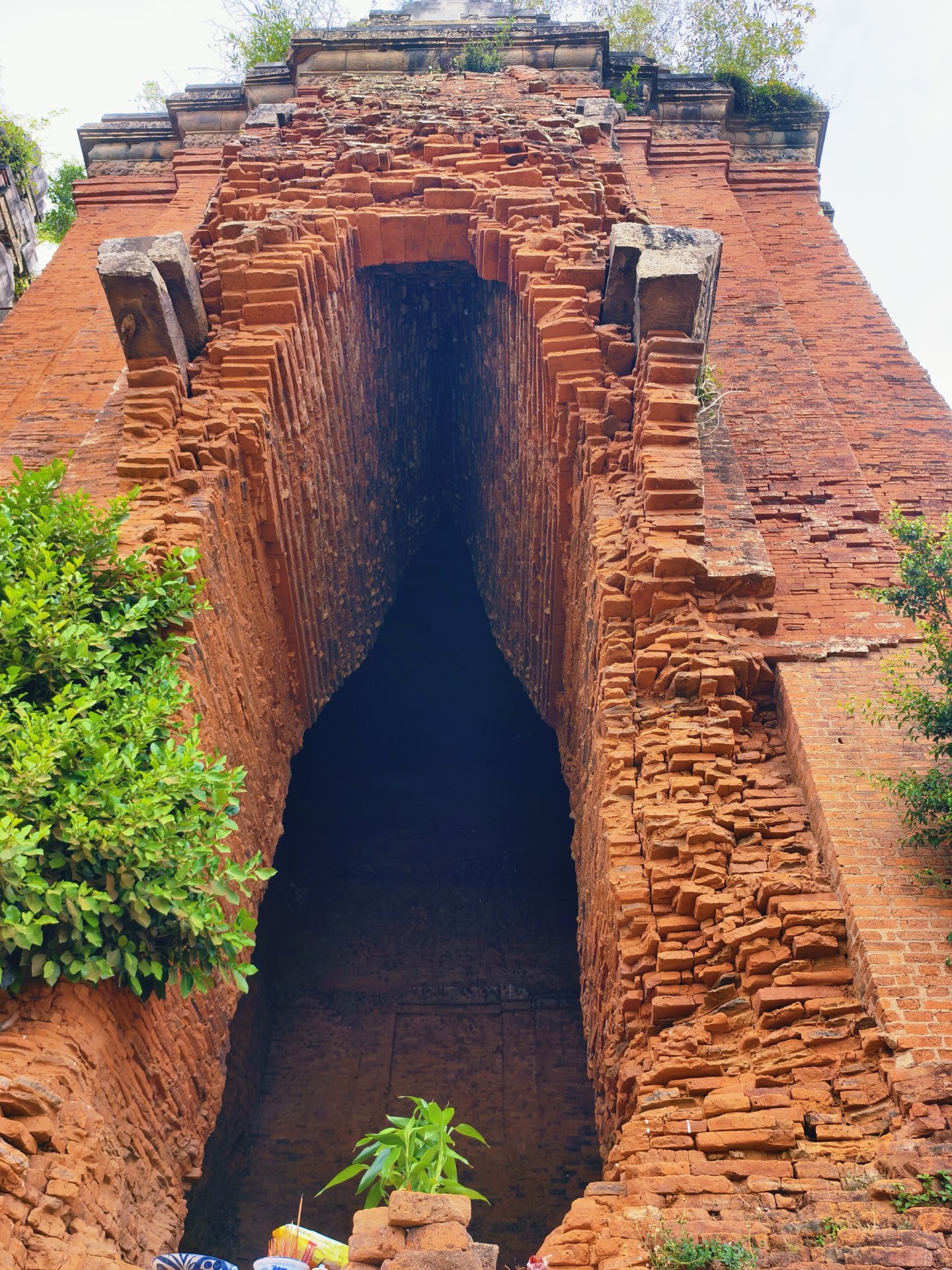
Duong Long (Dương Long)
Three 12th-century towers in Tay Son district; the central one is the tallest surviving brick Cham structure in Vietnam, with rich stone carving on its lower tiers.
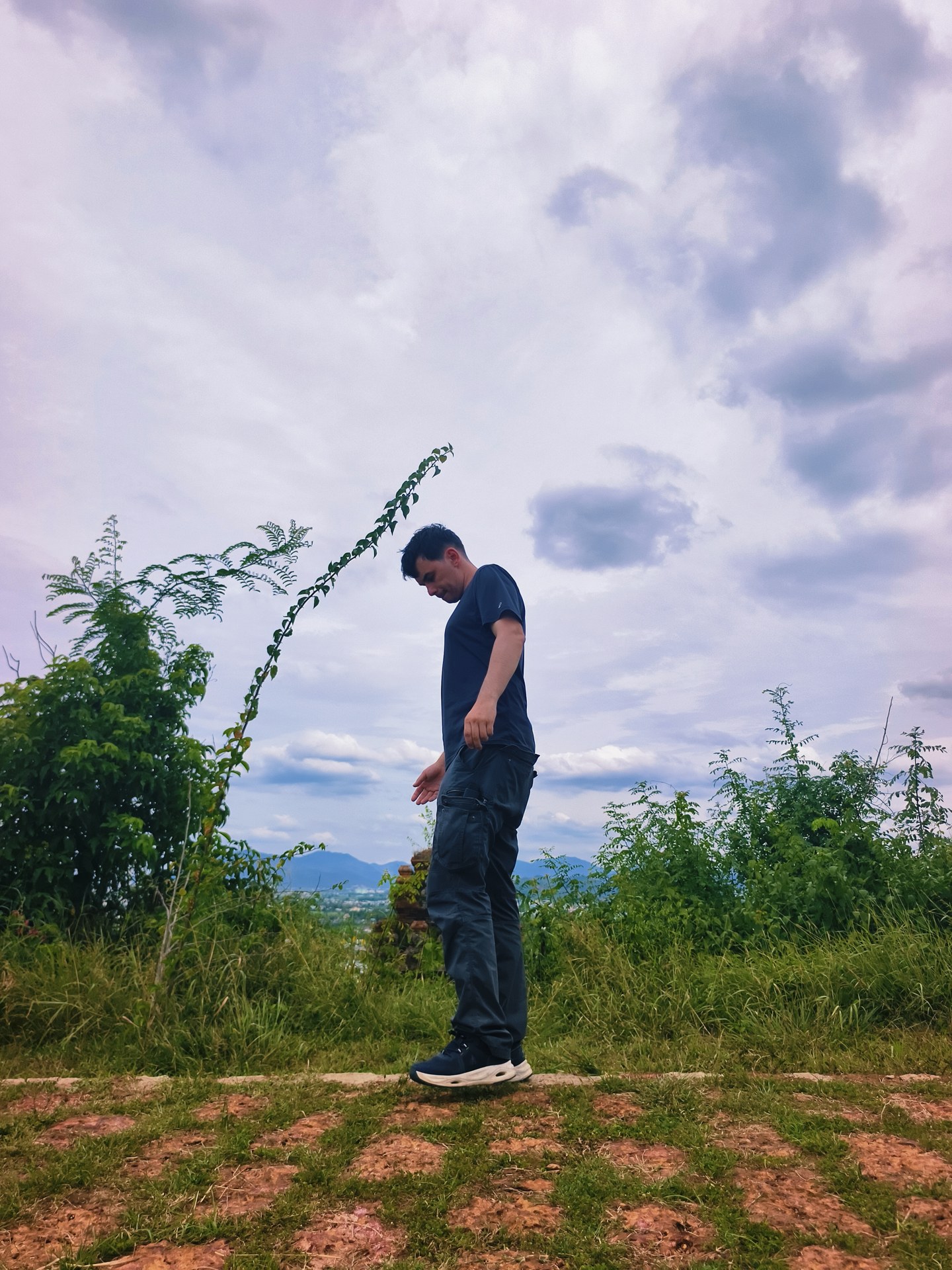
Banh It (Bánh Ít)
A hilltop complex of four late 11th–12th-century structures near Quy Nhon — a rare case where a whole Cham ensemble's layout survives intact.
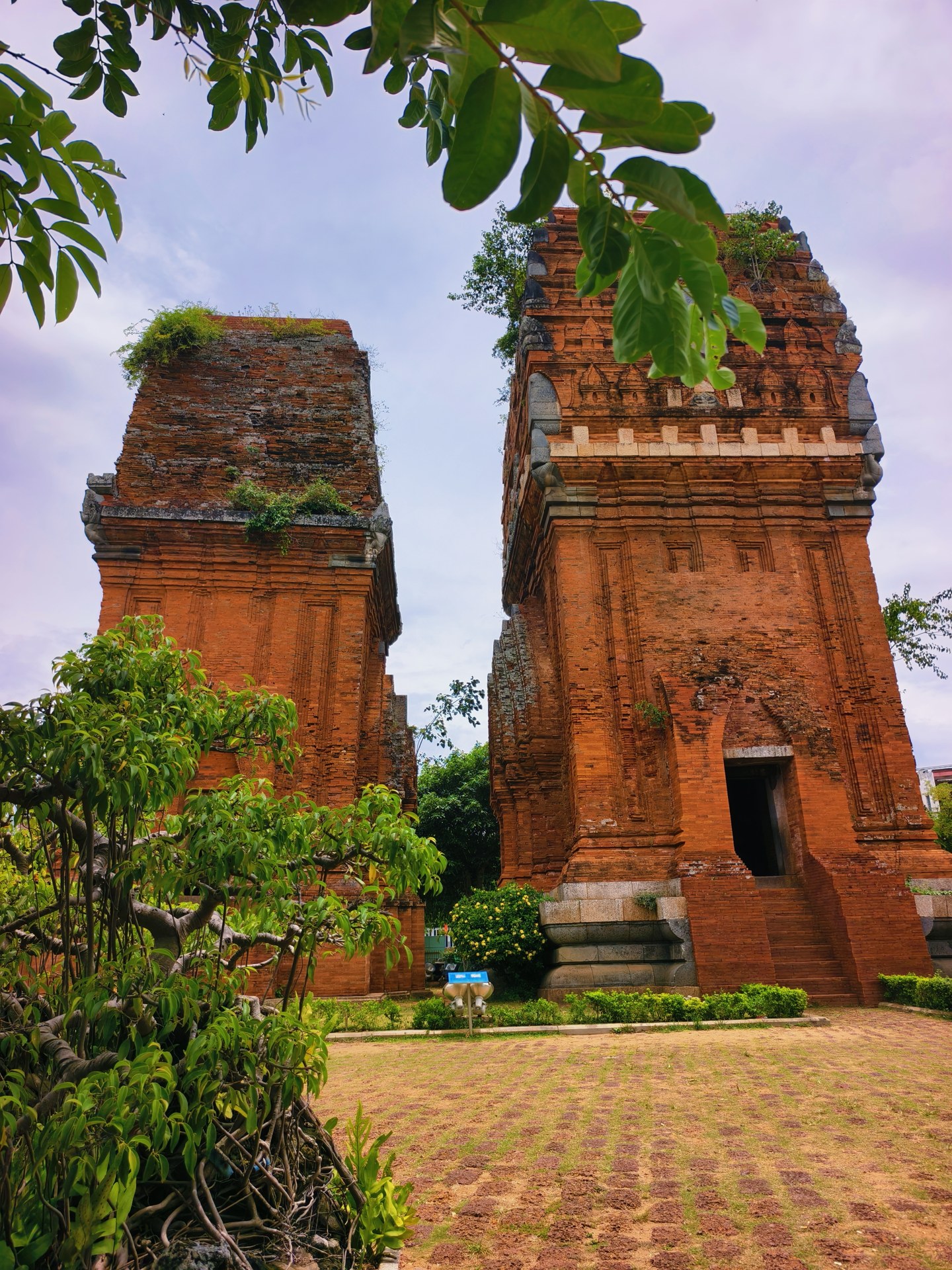
Thap Doi (Tháp Đôi)
Two 11th–13th-century towers right in Quy Nhon, with curved cornices and stone garudas showing clear Khmer influence.
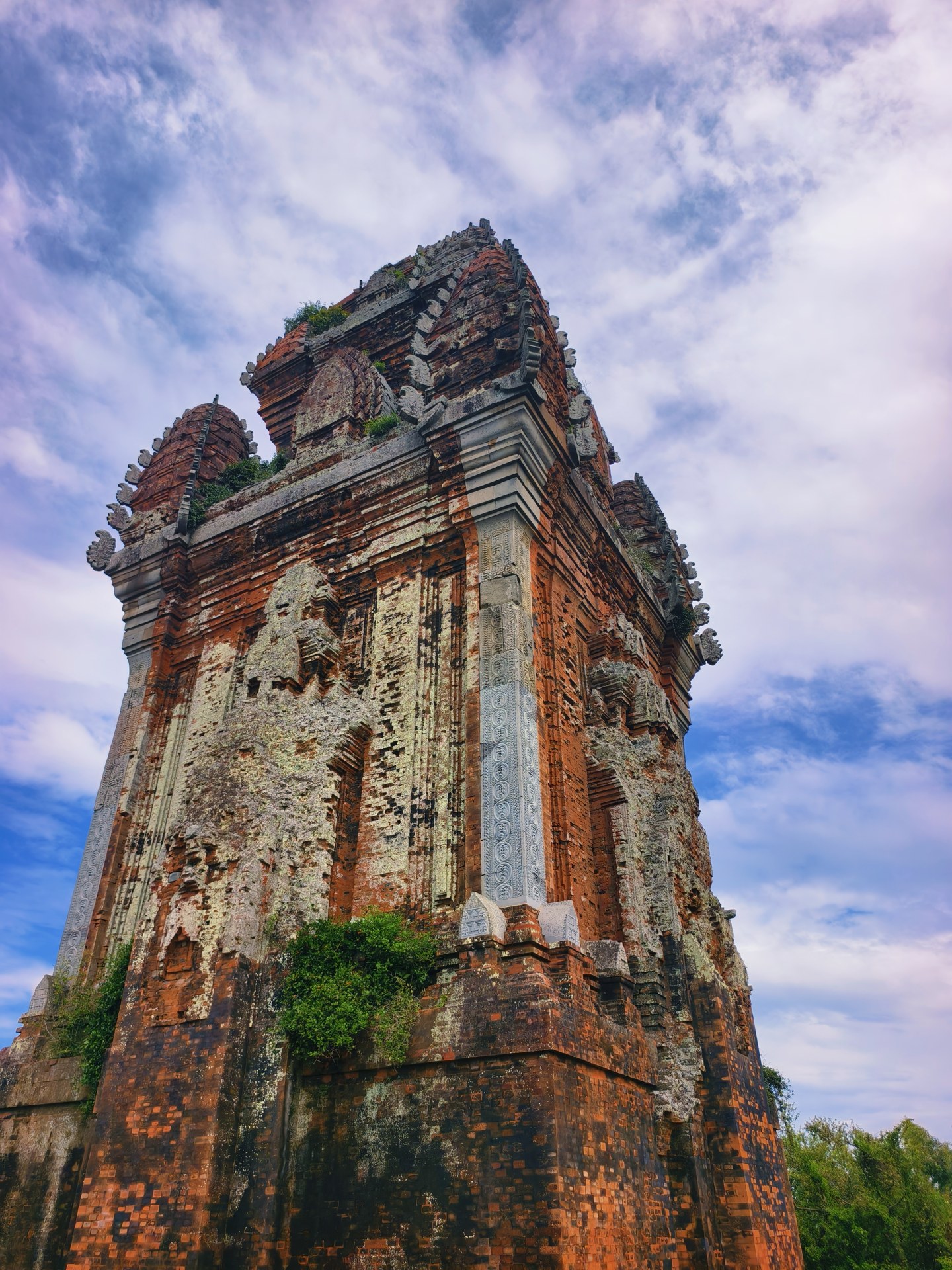
Canh Tien (Cánh Tiên)
A 12th-century tower on the site of the former Vijaya citadel, known as the 'Tower of the Fairy' for its graceful silhouette.
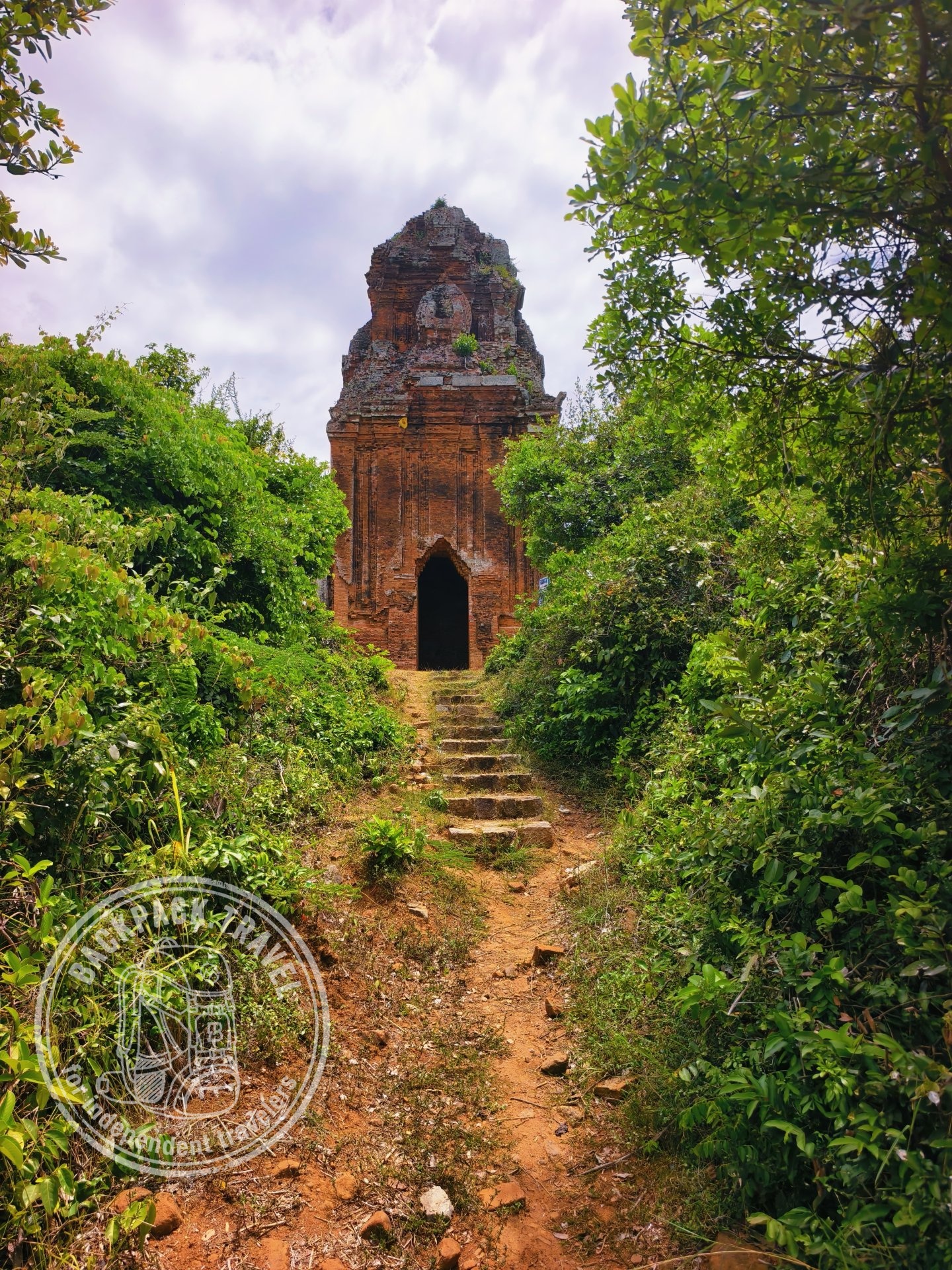
Phu Loc (Phú Lốc)
A solitary 10th–11th-century tower on a hill in An Nhon district, in an early, squatter Cham style.
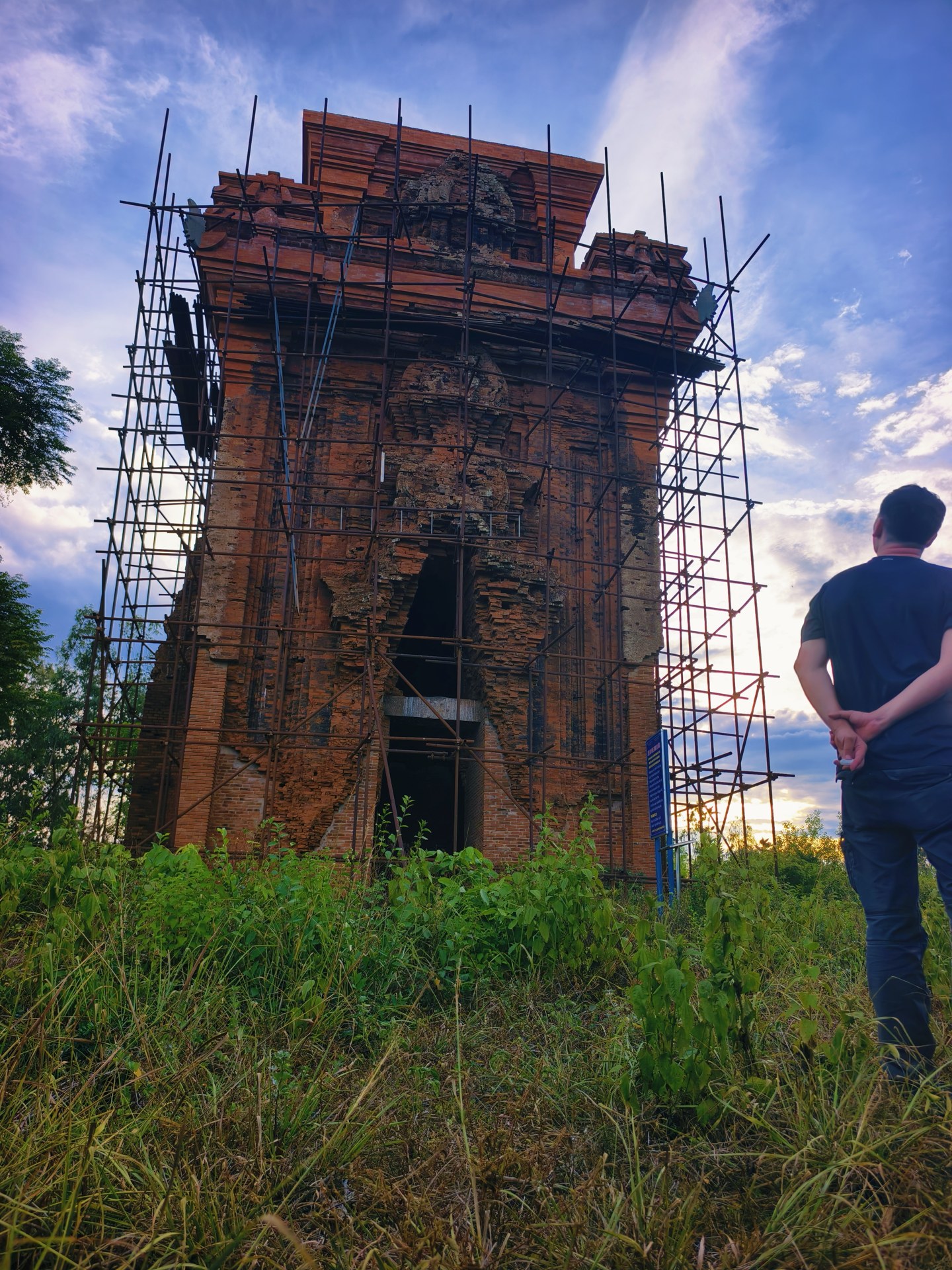
Thu Thien (Thủ Thiện)
A plain, almost undecorated 12th-century tower by the Kon River, usually visited on the way to Duong Long.
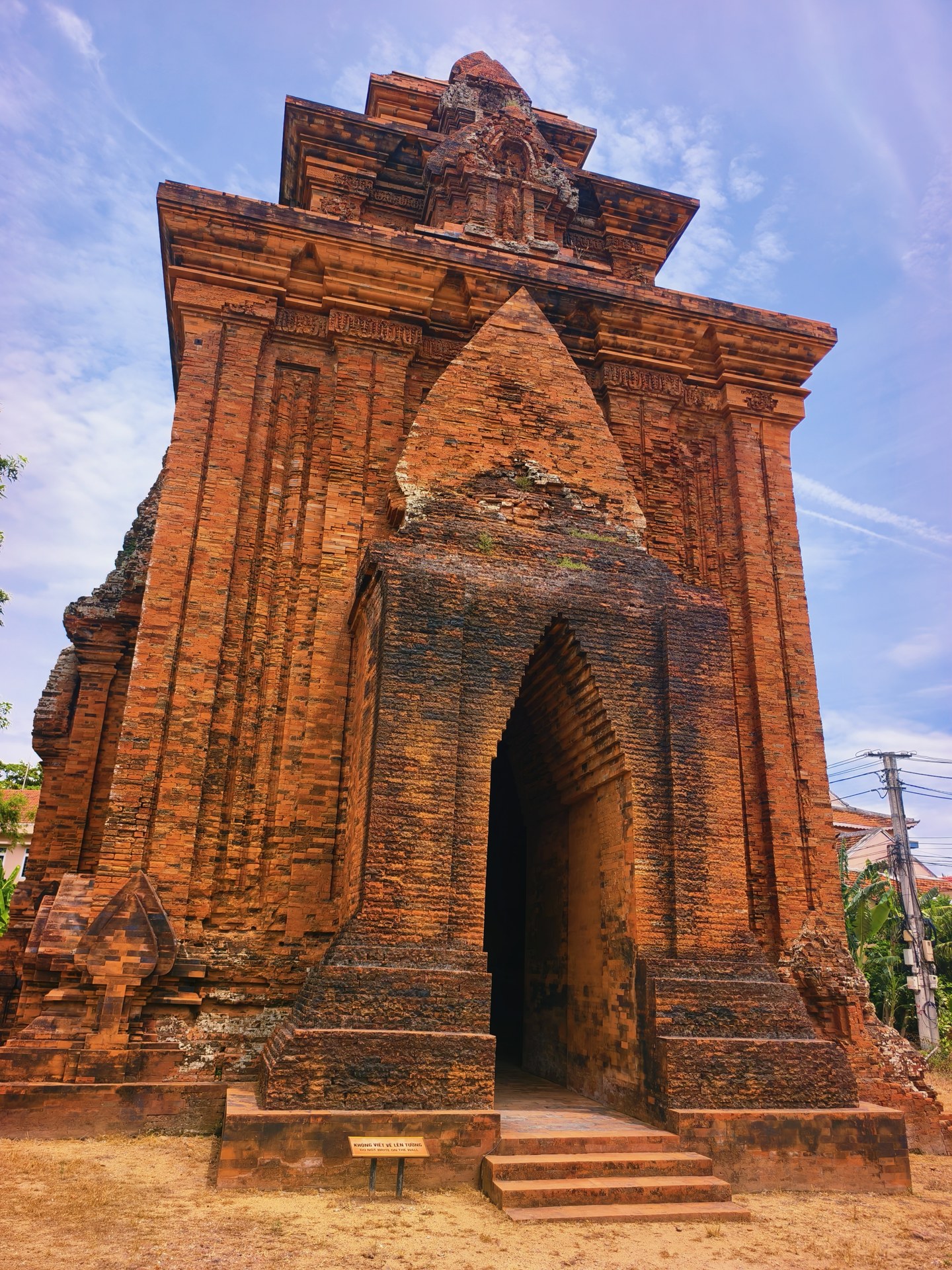
Binh Lam (Bình Lâm)
A 10th–11th-century tower rising among village houses rather than on a hill, linked to an early port at the mouth of the Kon River.
Hon Chuong (Hòn Chuông)
A 12-metre 12th-century tower atop a giant granite boulder, discovered only in 1993 and reachable only on foot.
Duong Long (Dương Long) — the tallest
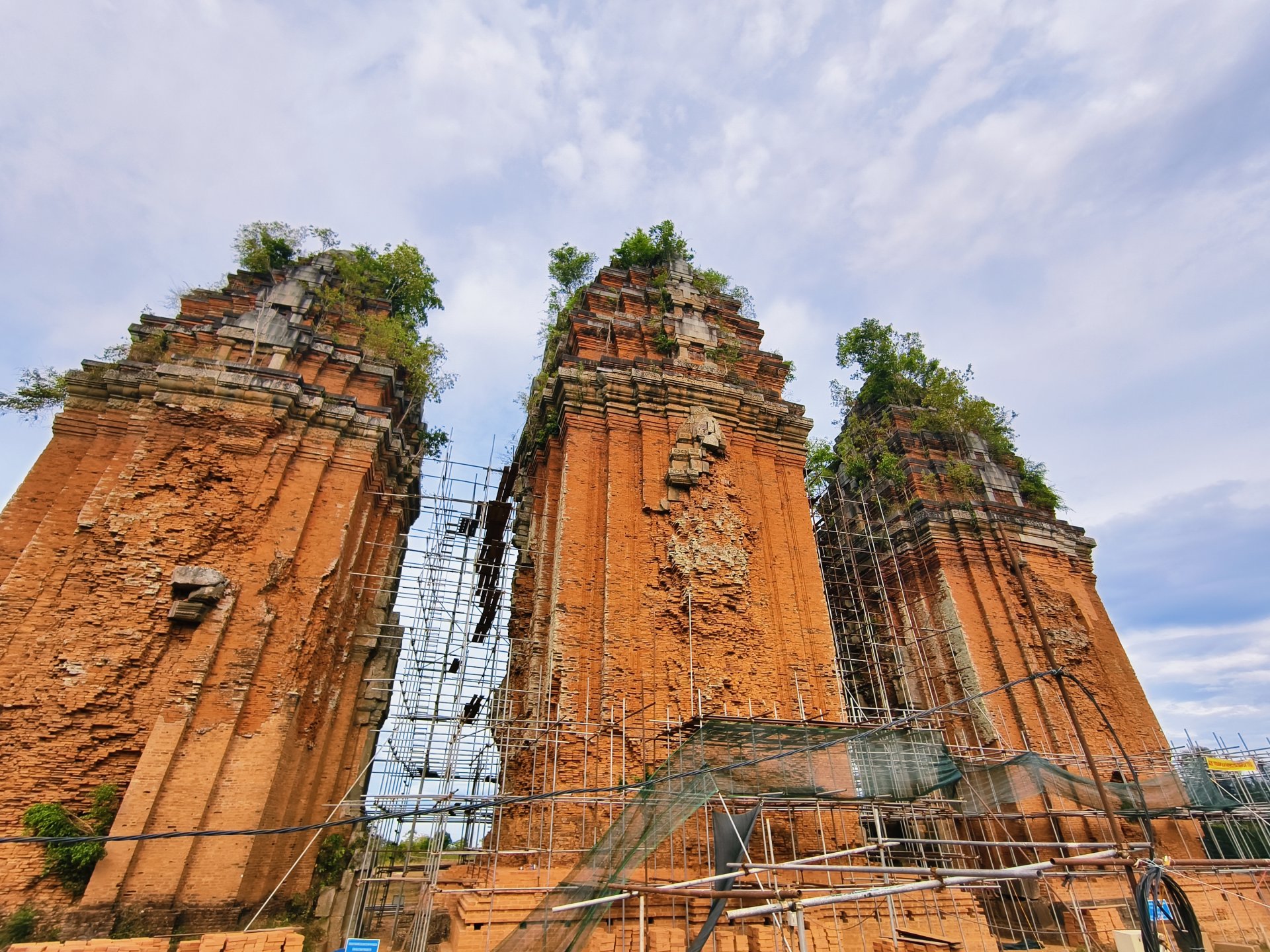
Three towers standing in a row in Tay Son district. The central tower reaches 39 meters — the tallest surviving Cham structure in Vietnam and all of Southeast Asia. Built in the late 12th–early 13th century. Decorated with rare sandstone reliefs depicting dragons and deities. Khmer architectural influence is evident in the massiveness of the forms. One downside: they're the farthest from the road of all the Binh Dinh towers, and as of 2026 they're also under reconstruction — you risk finding scaffolding instead of ancient walls.
Banh It (Bánh Ít) — the most elegant
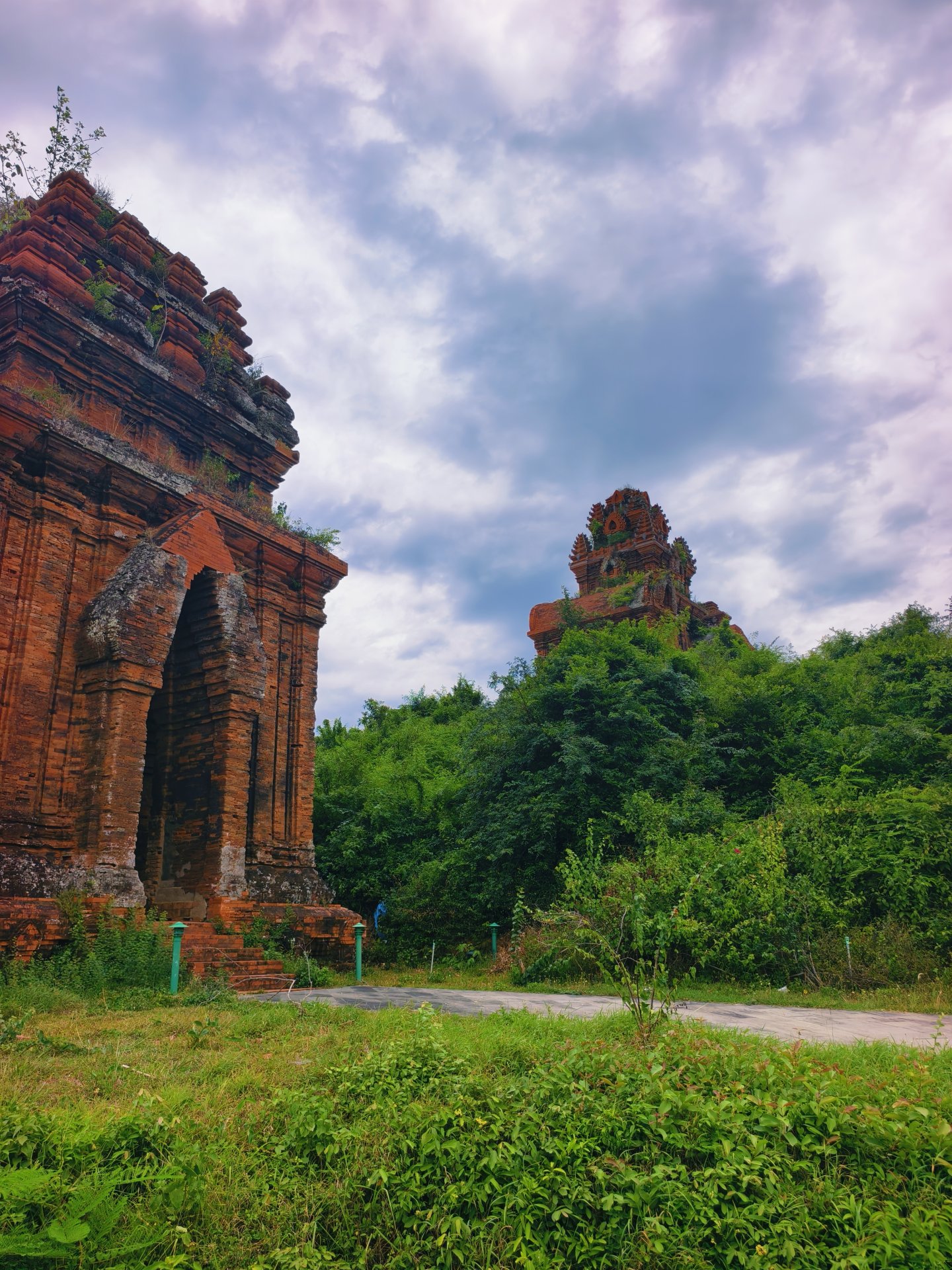
This complex of 4 towers, with panoramic views over rice paddies and rivers, is visible for miles — thanks to its position atop a hill. Built in the late 11th–early 12th century. The complex includes the main tower (kalan), a gate tower (gopura), a fire tower (kosagriha), and a stele tower. Considered the most graceful of Binh Dinh's Cham towers. At its foot lies a Buddhist monastery. One of the most photogenic spots in the region.
Thap Doi (Tháp Đôi) — the twins
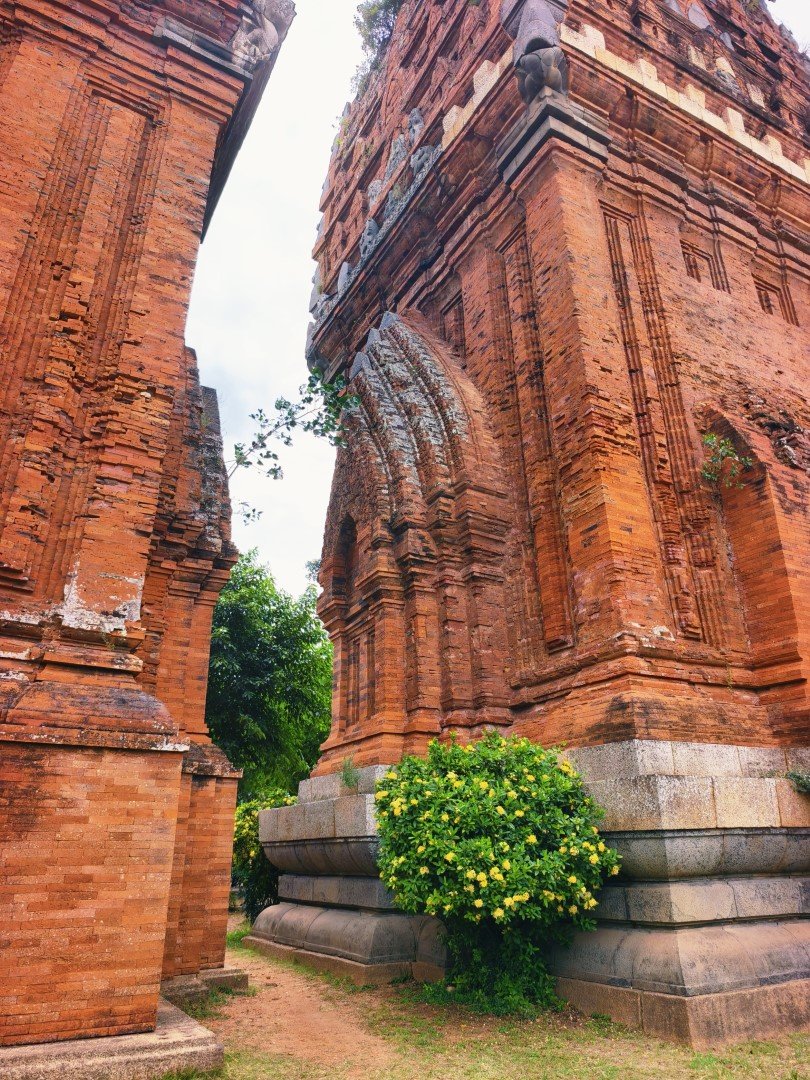
Two towers right in the city of Quy Nhon, in a park by a busy road. Late 12th–early 13th century. About 20 meters tall, the style shows a blending of Cham and Khmer traditions. Legend has it a third tower was planned but never built. Sailors used the towers as a spiritual landmark, praying for calm seas before setting out. Very well preserved — worth a stop if only for a tower right in the middle of the city.
Canh Tien (Cánh Tiên) — the Princess Tower
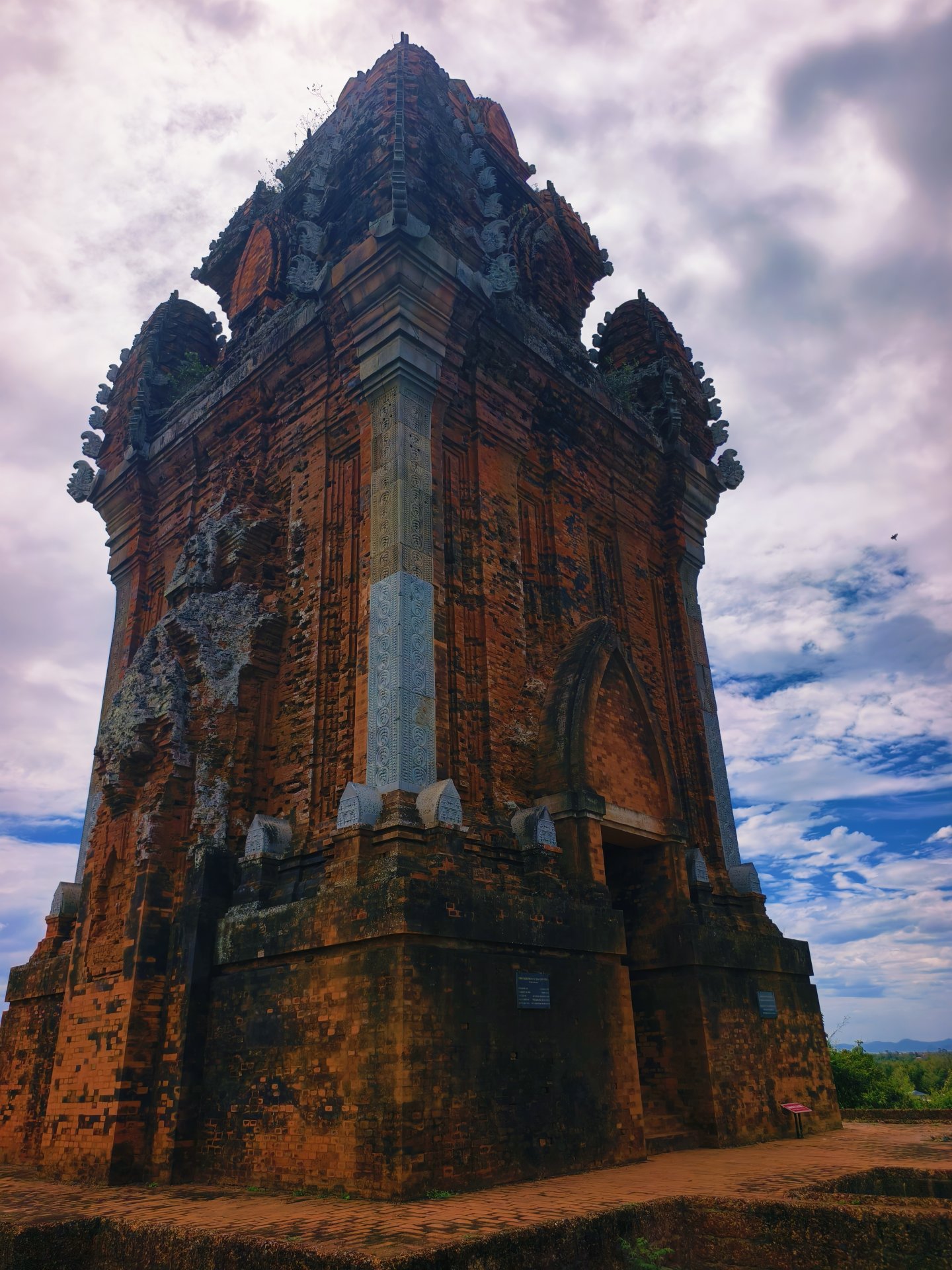
A single 12th-century tower in An Nhon district, on the site of the former Do Thanh citadel — the capital of Vijaya. Known as the "Princess Tower" for its graceful silhouette. According to legend, a divine woman guarded the royal court from here. Heavily restored, but the decorative elements retain original tropical-vegetation motifs.
Vijaya Citadel (Thành Hoàng Đế)
Vijaya was Champa's capital from the late 10th to the 15th century — longer than any other seat of Cham kings — until it was captured by the Vietnamese Dai Viet army in 1471. Little remains of what was once a great capital: fragments of the fortress walls and traces of excavations amid the rice paddies. In 1776, Tay Son general Nguyen Nhac built the Hoang De Citadel ("Imperial Citadel") on the same foundations — the headquarters of the rebel army, and later the capital of his own kingdom. Its status as a monument (since 1982) doesn't change much: it's still a quiet field scattered with wall fragments, through which a train passes every day as if nothing had ever happened here.
Phu Loc (Phú Lốc)
A single tower from the 10th–11th century on a hill in An Nhon district. Early Cham style — simpler and squatter than later towers. Goats wander below, while above there's a view over the Vijaya valley. Khmer architectural influence shows in the massiveness of the structure. It's hard to reach, but admission is free. Access is only possible by motorbike, since you'll have to ride through narrow passages and even a cemetery. In some spots you'll have to push the bike uphill by hand for a while — but the view over the Vijaya valley at the top makes it worth it.
Thu Thien (Thủ Thiện)
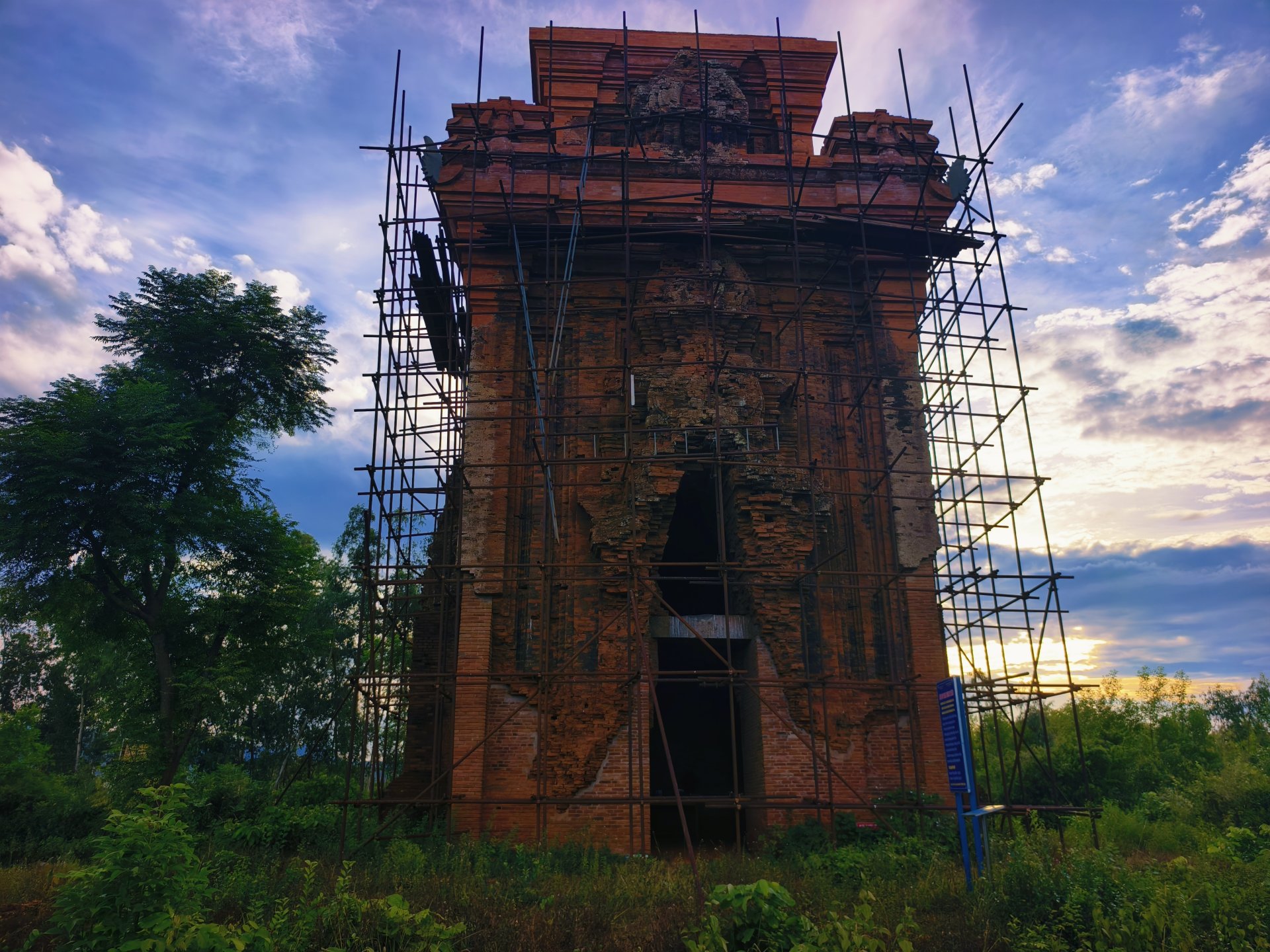
A solitary 11th–12th-century tower on the plain of Tay Son district, across the river from Duong Long. Until 1985 the tower was wrapped in a giant banyan tree whose roots had swallowed its top. The tree was removed, but the story adds a touch of mystery to the place. It's only worth the trip if you've already decided to visit Duong Long — the tower itself is in poor condition.
Binh Lam (Bình Lâm)
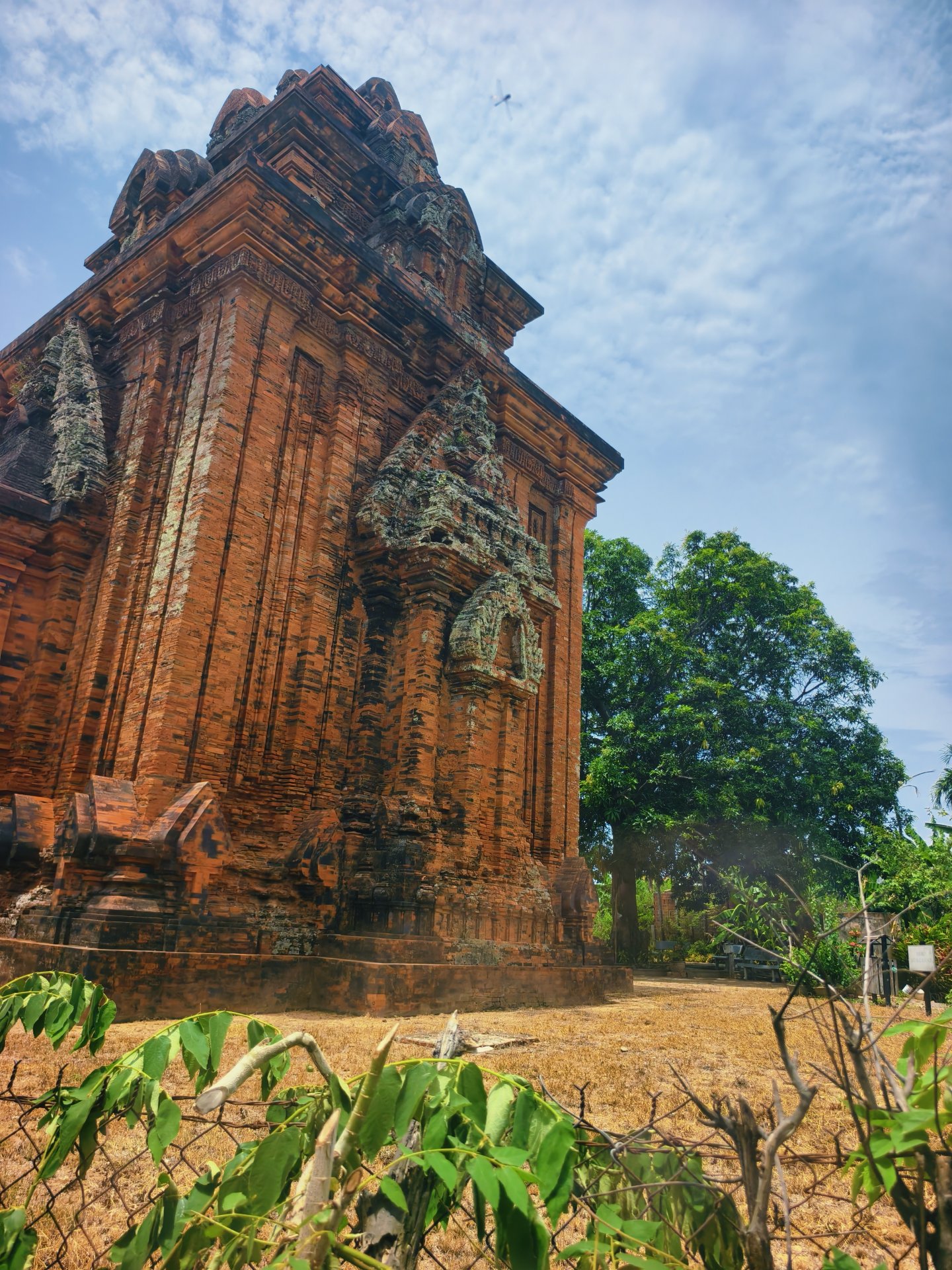
A large solitary tower near Quy Nhon from the late 10th–early 11th century, standing right at street level. It was once part of a citadel that served as the capital before it moved to Vijaya. It has retained its original brick patterns. Free admission — a convenient stop if you're passing through on the way to Quy Nhon.
Hon Chuong (Hòn Chuông) — the most mysterious
A 12-meter 12th-century tower perched on a giant granite boulder in the Nui Ba mountains, 20 km north of Quy Nhon. It was only discovered in 1993 — completely hidden from view. It can only be reached on foot along a mountain trail with some boulder-scrambling. The tower is in poor condition and getting to it isn't easy.
Phu Yen Province
Phu Yen is a one-tower province, but it boasts one of the best viewpoints on the entire route. Thap Nhan stands on a mountain right above the city, and it's a convenient stop along the way: the coastal highway links Quy Nhon and Nha Trang, and the tower sits exactly midway, just minutes off the road.
Thap Nhan (Tháp Nhạn) — symbol of the province
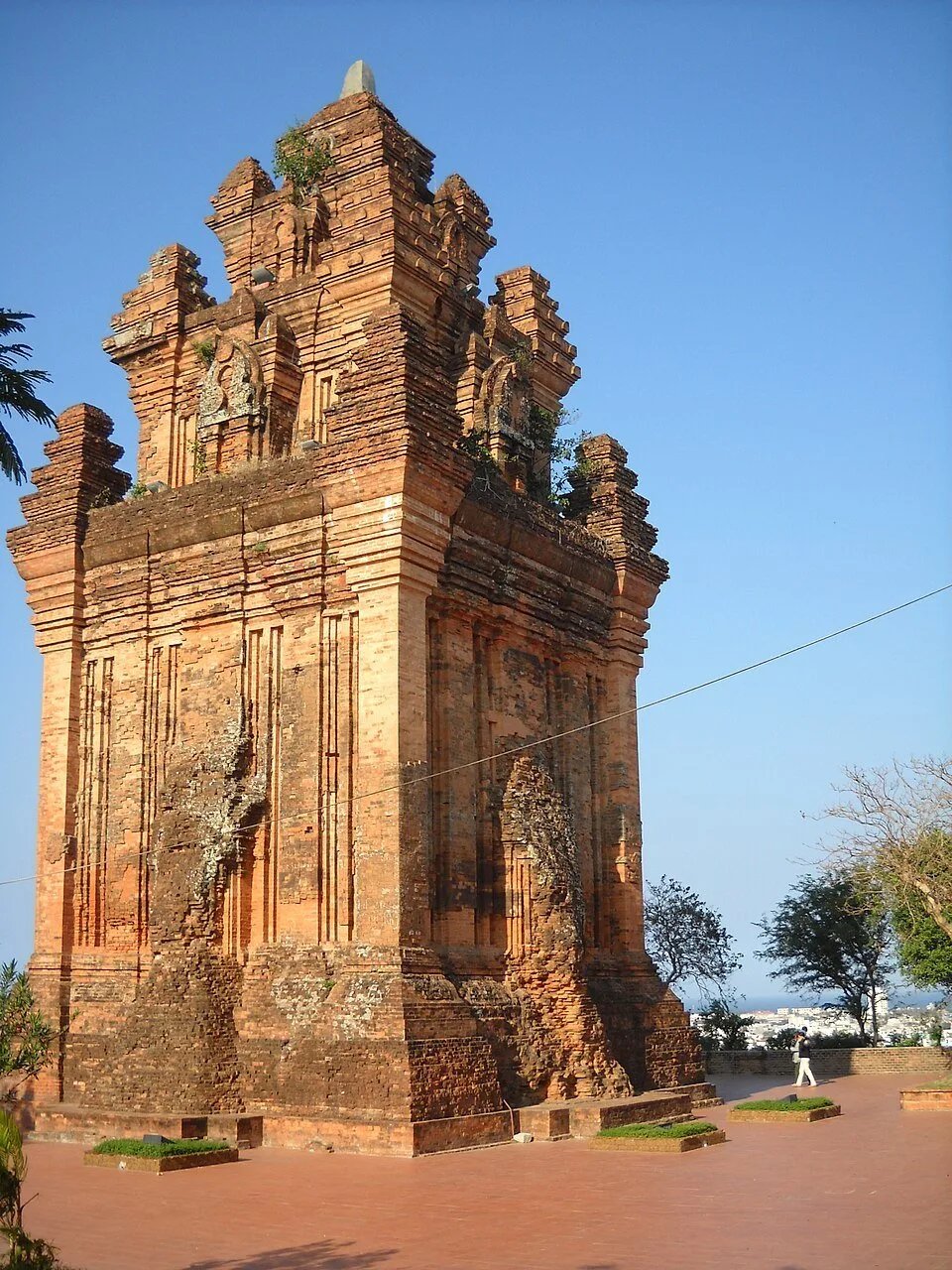
An 11th-century tower atop Mount Nhan, at an elevation of 60 meters above sea level, in the city of Tuy Hoa. Four-sided, four-tiered, 23.5 meters tall. Each side of the base measures 10 meters. Built of dark red brick without mortar. Binh Dinh style with elements characteristic of Champa's southern regions. One of the symbols of Phu Yen.
Khanh Hoa Province
Khanh Hoa is the easiest stop on the whole route: the Po Nagar towers stand right within Nha Trang, and you can reach them by taxi in ten minutes without ever leaving the city. This is the only place in this guide that requires neither a bike nor a free day — and the only one where the rituals are living practice, not a museum reconstruction.
Po Nagar (Po Nagar) — the most visited
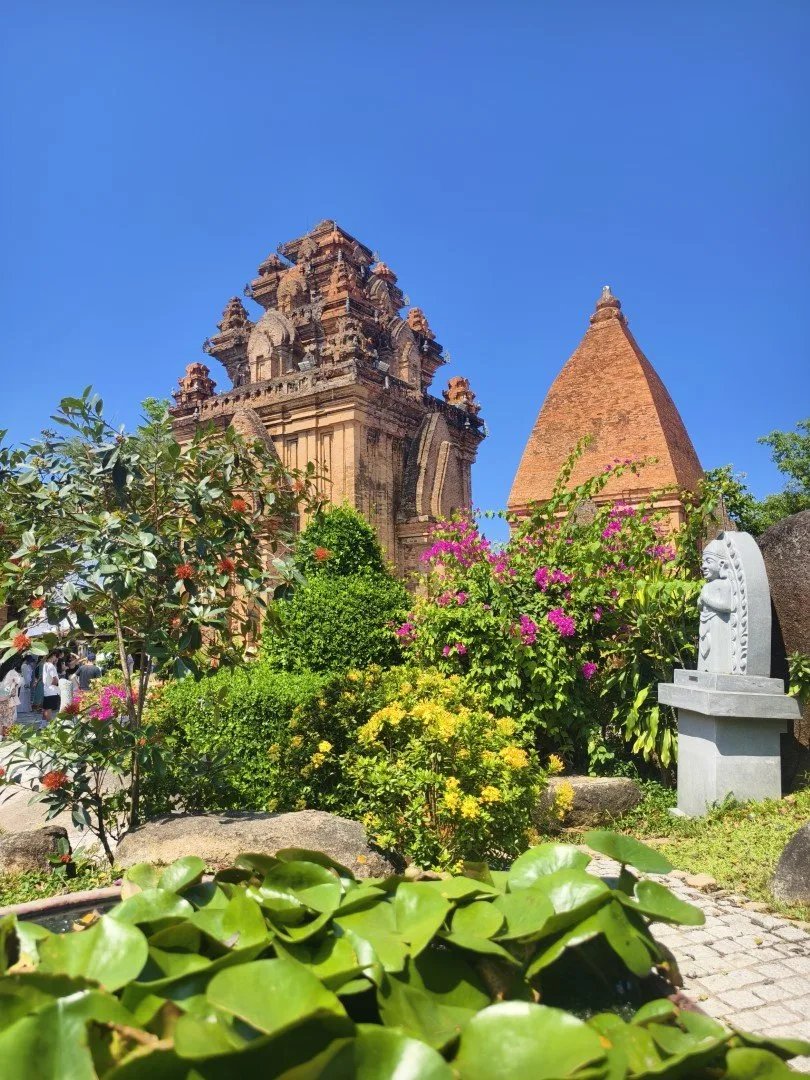
Four towers (out of an original eight) on Cu Lao hill in Nha Trang, overlooking the city and the bay. Built between the 7th and 12th centuries — the oldest surviving Cham temple complex. The central tower is dedicated to the goddess Po Nagar — the "Mother of the Kingdom," depicted seated in the lotus position with ten arms.
Po Nagar is the only Cham temple where active religious ceremonies still take place. Every year, from the 20th to the 23rd of the third lunar month, the Thap Ba festival is held here: ethnic Cham gather to bathe the statue of the goddess and perform sacred dances. The towers are surrounded by flame trees, which create a fiery backdrop during flowering season.
The Po Nagar towers are open daily from 8:00 am to 6:00 pm, and admission costs around 20,000–30,000 dong (under $1.5). The complex lies within Nha Trang — it takes 10–15 minutes to get there from the city center by taxi or motorbike. Of all the towers in Binh Dinh and Khanh Hoa, it looks the best maintained.
Ninh Thuan Province: the living heart of Champa
Ninh Thuan is Champa's last stronghold (the kingdom of Panduranga) and a place where Cham culture is still alive today. A substantial part of Vietnam's ethnic Cham population lives here, and for them the towers aren't museum exhibits but active sanctuaries. It's best to head to Phan Rang, from where you can visit 3 Cham towers.
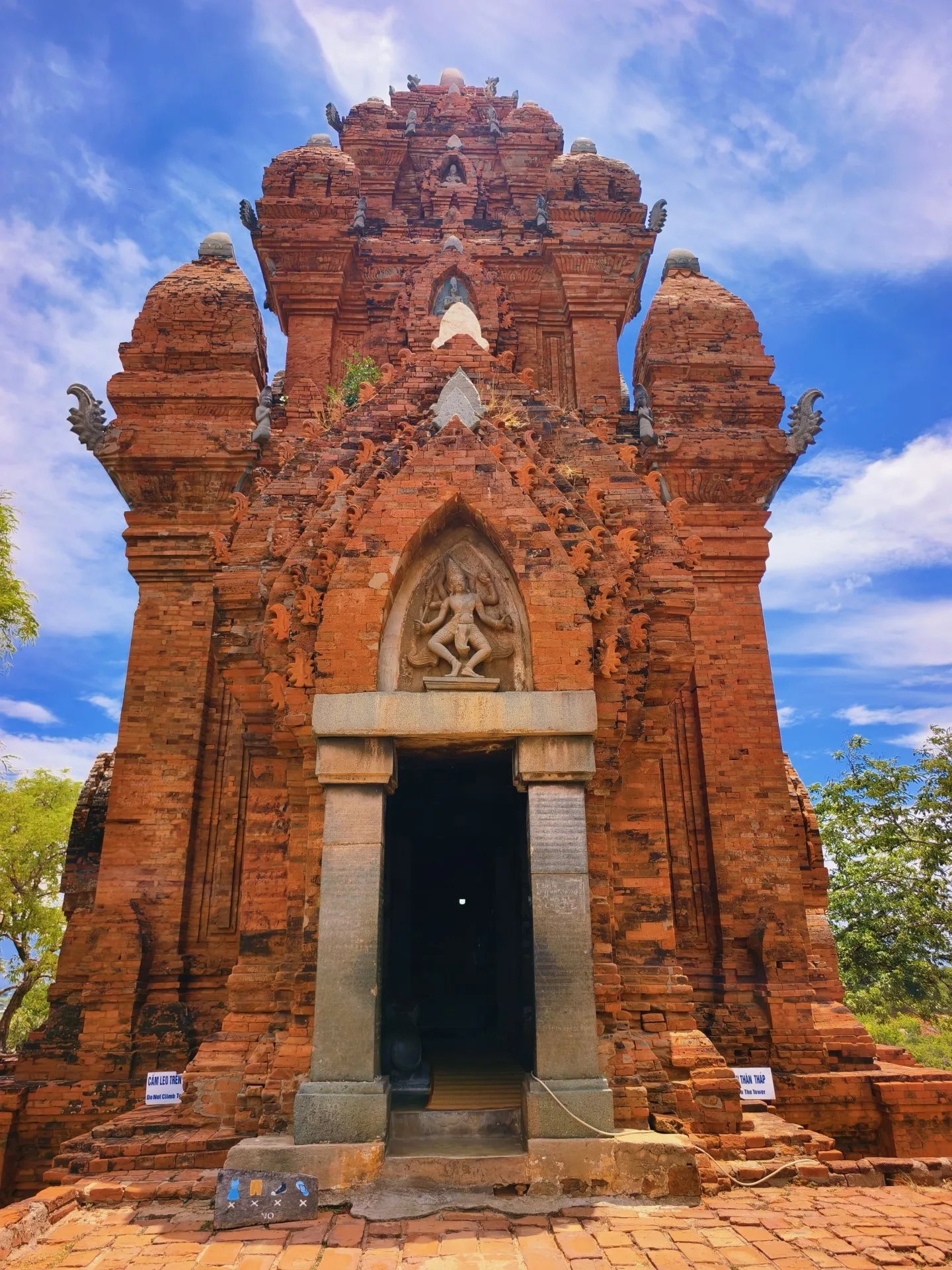
Po Klong Garai (Po Klong Garai)
Three towers on Trau Hill in Phan Rang, built in the late 13th–early 14th century — arguably the most photogenic Cham towers of all.
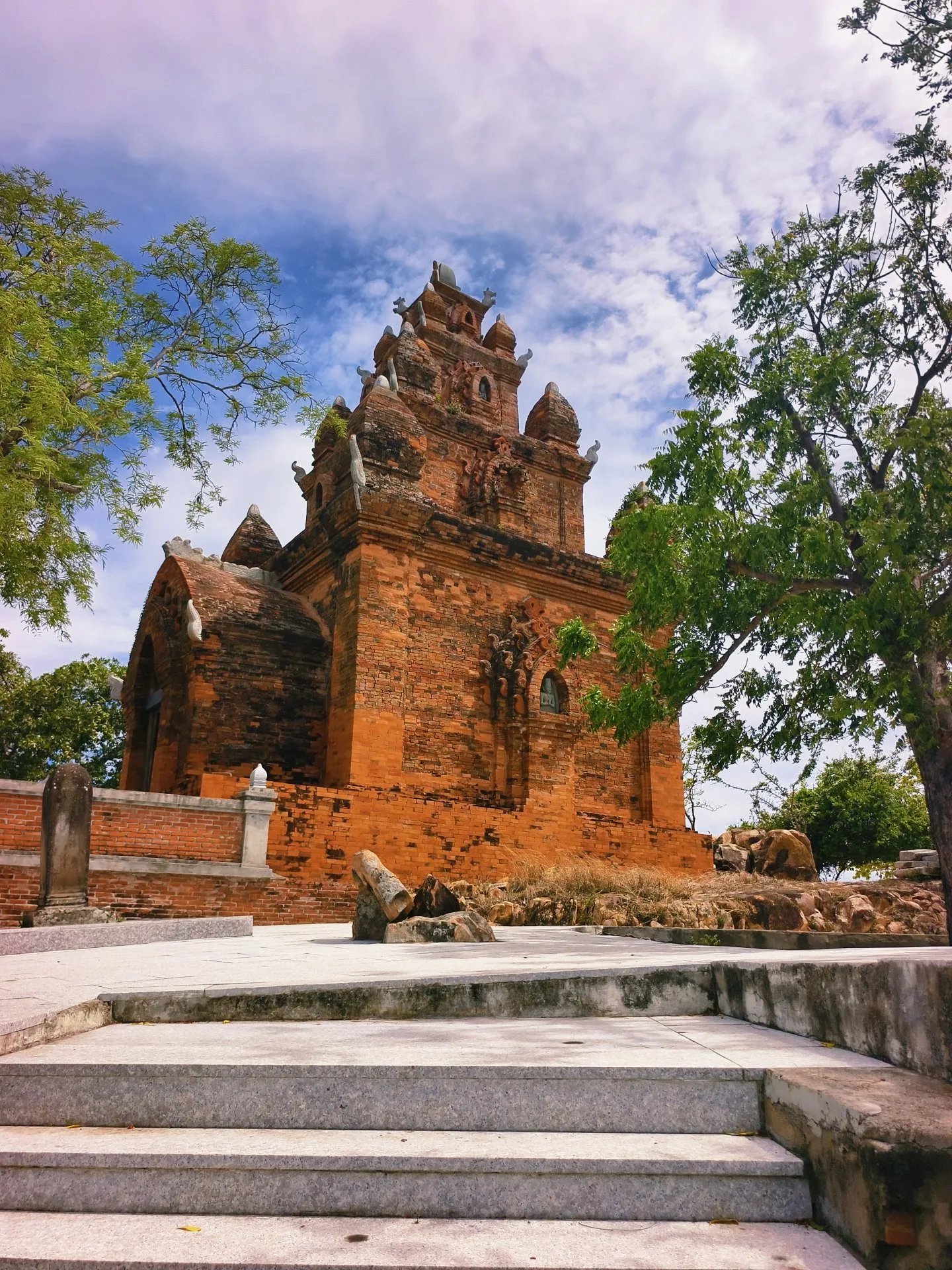
Po Rome (Po Rome)
The last Cham tower ever built in Vietnam, from the late 16th–early 17th century, honouring the deified king Po Rome.
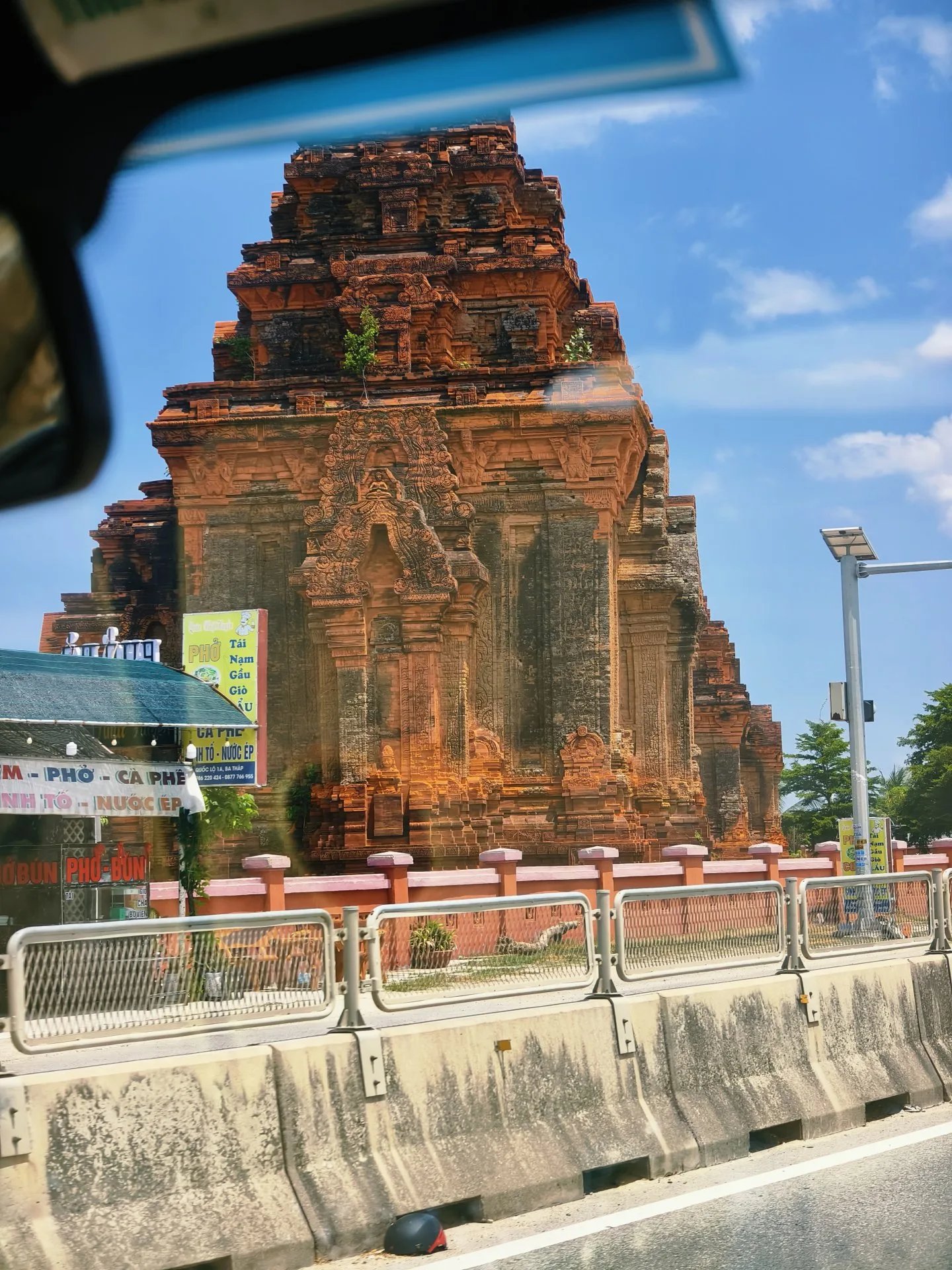
Hoa Lai (Hòa Lai)
Three towers from the late 8th–early 9th century beside National Highway 1A, in one of the oldest Cham architectural styles.
Po Klong Garai (Po Klong Garai) — the jewel of Panduranga
Three towers on Trau hill in the city of Phan Rang–Thap Cham. Built in the late 13th–early 14th century in honor of the wise King Po Klong Garai. The complex includes the main tower (kalan, over 20 meters tall), a gate tower (gopura), and a fire tower (kosagriha, 9 meters), where ritual objects were kept. Every brick is finely carved. Frescoes have survived. Arguably the most photogenic of the Cham towers — set against an arid landscape unusual for Vietnam.
Po Rome (Po Rome) — the last Cham tower
A tower on two low hills in Hau Sanh village, Phuoc Huu commune, Ninh Phuoc district, about 15 km south of Phan Rang. Built in the late 16th–early 17th century under King Po Rome (reigned 1627–1651). It's the last Cham tower ever built in Vietnam.
What makes Po Rome unique is that it isn't a temple to a god — it honors King Po Rome himself, who was deified after death for his services to his people. Inside stands a 1.2-meter statue of the king. The tower is about 8 meters tall. The Kate festival, the main Cham holiday, is held here every year.
Hoa Lai (Hòa Lai) — the oldest in the province
Three towers (of which only the foundation remains of one) beside National Highway 1A in Ba Thap village, Bac Phong commune, Thuan Bac district. Built in the late 8th–early 9th century, and a national historic monument since 1997. The Hoa Lai style — one of the earliest in Cham architecture — is recognizable by its arched doorways, octagonal pilasters, and curved-leaf motif.
Binh Thuan Province
Binh Thuan is the southern edge of the Cham world and also its quietest corner: the beach resorts of Phan Thiet and Mui Ne have long been developed for tourists, but few venture to the towers just half an hour from the coast. The scenery here is different too — not rice paddies, but dry hills and thorny scrub.
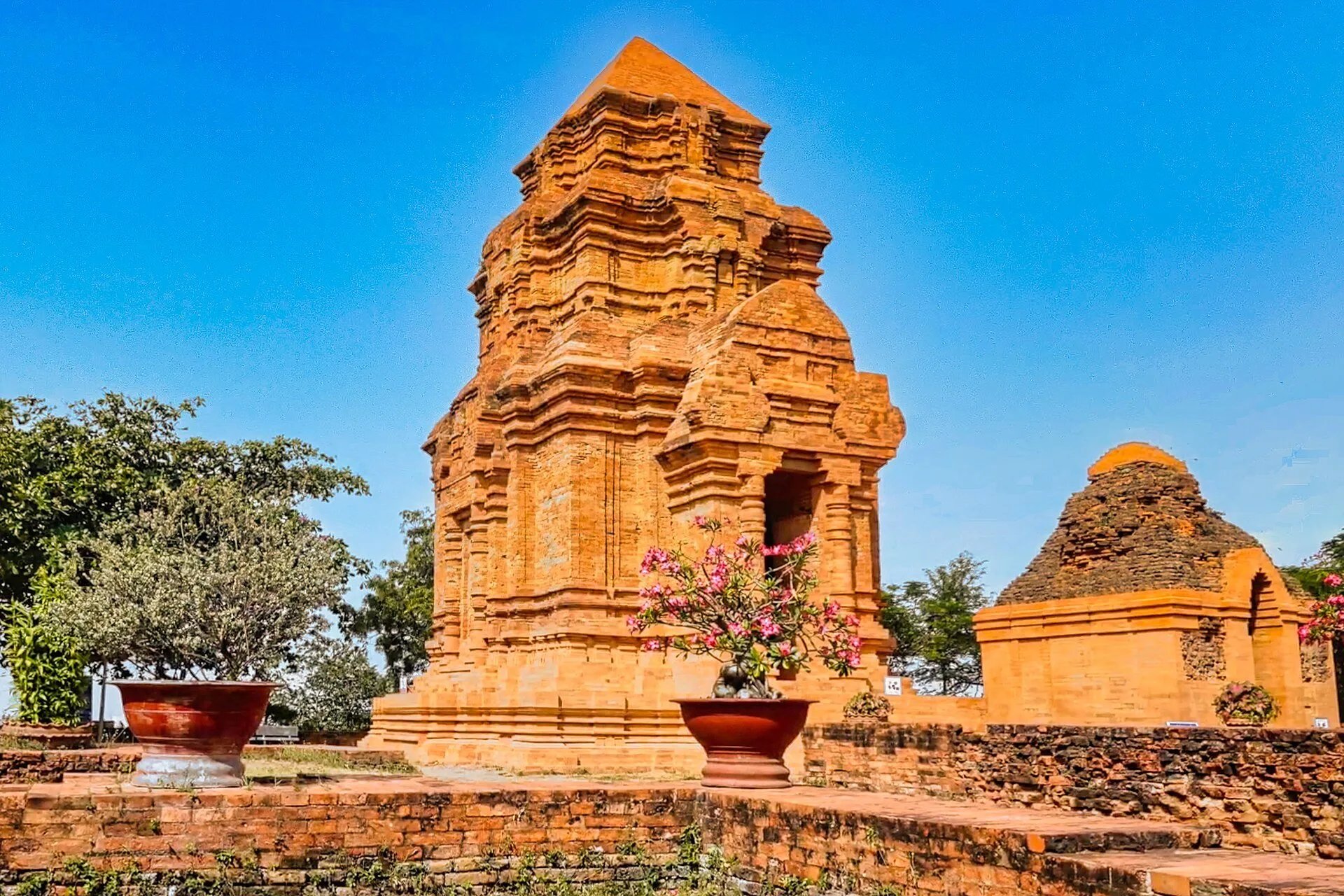
Po Sah Inu (Po Sah Inu)
Three structures on Ba Nai Hill near Phan Thiet, over 1,200 years old.
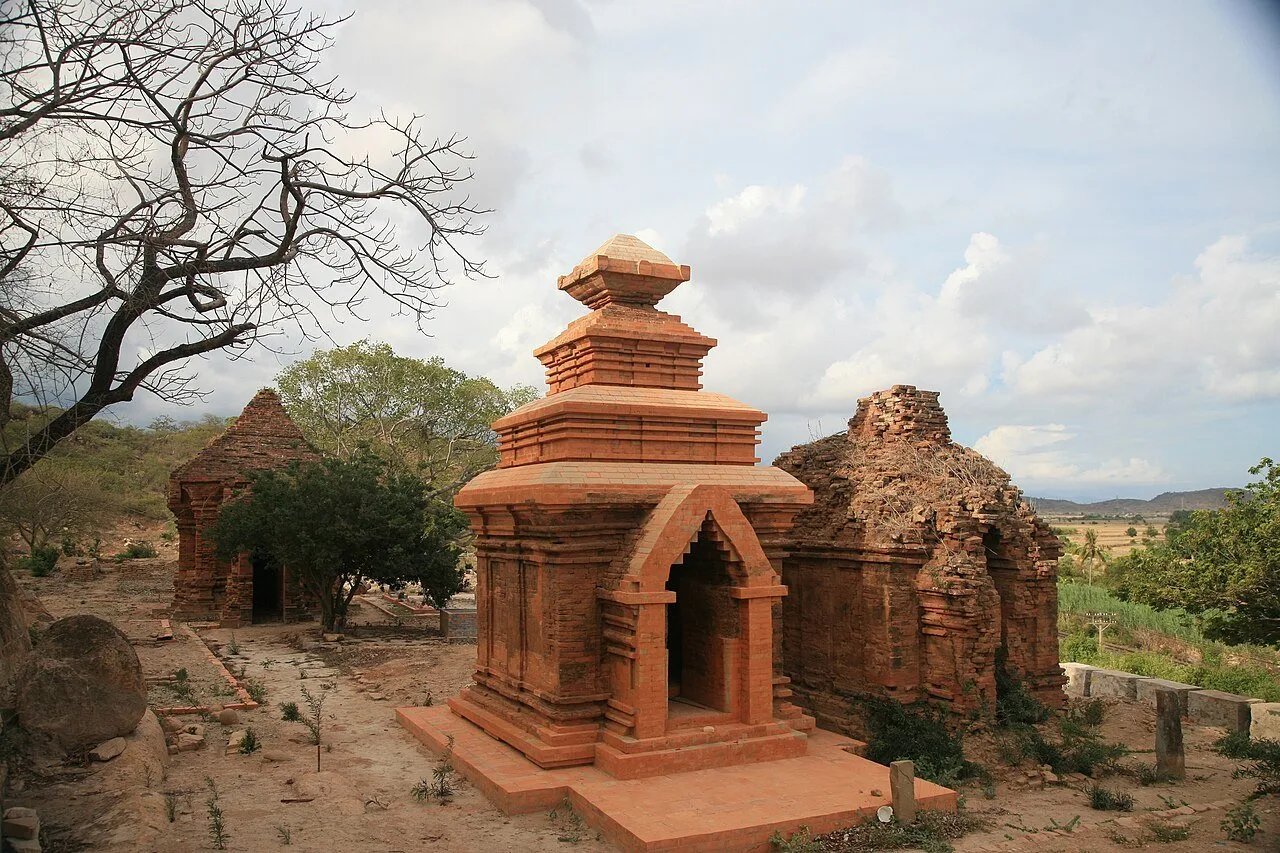
Po Dam (Po Dam)
A group of towers in Tuy Phong district — among the least visited and most atmospheric Cham monuments.
Po Sah Inu (Po Sah Inu / Poshanu)
Three structures (the main tower, an auxiliary tower, and a shrine) on Ba Nai hill, 7 km from central Phan Thiet. Built in the late 8th–early 9th century — over 1,200 years old. One of the earliest Cham structures. Built from fired brick and sandstone without mortar. Originally dedicated to Shiva, over time they came to be associated with Princess Po Sah Inu, patroness of agriculture and water, and have officially been recognized as an architectural and artistic monument since 1991.
Po Dam (Po Dam)
A group of structures dedicated to King Po Dam, in Tuy Phong district — among the least visited and most atmospheric of the Cham monuments. Of six known structures, only three survive to this day; the exact dating is disputed, with sources citing either the 8th century or the 11th–12th century. They stand well off the tourist trail, surrounded by the arid scenery of the southern coast.
Dak Lak Province: the only one in the highlands
Dak Lak isn't part of the coastal route anymore — it's a detour deep inland: the only Cham tower in the highlands stands about a hundred kilometers from Buon Ma Thuot, right by the Cambodian border. It's worth a dedicated day trip rather than a stop along the way to somewhere else.
Yang Prong (Yang Prong) — the jungle tower
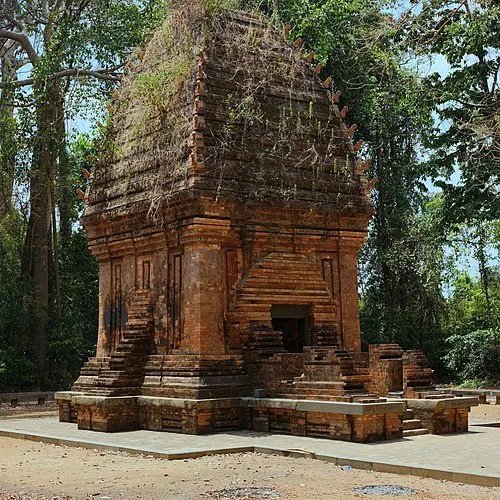
The only Cham tower in Vietnam's Central Highlands. Located in Ea Rok commune, Ea Sup district, 100 km from Buon Ma Thuot, near the Cambodian border. Built by King Jaya Simhavarman III in the late 13th century for the worship of Shiva in the form of a mukhalinga — a fertility symbol.
Yang Prong is unique for several reasons. First, it's the only Cham tower built not on a hill but in a lowland — hidden beneath the canopy of ancient forest along the Ea H'leo River. Second, the upper part of the tower widens into a giant cone-shaped dome — a form uncharacteristic of the coastal Cham towers. Local peoples — the Ede, M'nong, and Jarai — call it the "Great God"; it only received official monument status in 1991, though it had surely been a sacred site for them long before any such status.
Map of all Cham towers in Vietnam
All the points on the map — from Quang Nam in the north to Dak Lak deep inland:
- My Son (Mỹ Sơn)
- Dong Duong (Đồng Dương)
- Chien Dan (Chiến Đàn)
- Bang An (Bàng An)
- Khuong My (Khương Mỹ)
- Duong Long (Dương Long)
- Banh It (Bánh Ít)
- Thap Doi (Tháp Đôi)
- Canh Tien (Cánh Tiên)
- Vijaya Citadel (Thành Hoàng Đế)
- Phu Loc (Phú Lốc)
- Thu Thien (Thủ Thiện)
- Binh Lam (Bình Lâm)
- Hon Chuong (Hòn Chuông)
- Thap Nhan (Tháp Nhạn)
- Po Nagar (Po Nagar)
- Po Klong Garai (Po Klong Garai)
- Po Rome (Po Rome)
- Hoa Lai (Hòa Lai)
- Po Sah Inu (Po Sah Inu)
- Po Dam (Po Dam)
- Yang Prong (Yang Prong)
Architectural styles: from Hoa Lai to Binh Dinh
Cham architecture passed through several styles, each named after the place with the most characteristic monuments:
My Son E1 style (7th–8th c.) — the earliest, archaic forms, influenced by Indian and Javanese architecture
Hoa Lai style (8th–9th c.) — arched openings, octagonal pilasters, curved-leaf motifs
Dong Duong style (mid-9th c.) — Buddhist influence, larger scale
My Son A1 style (10th c.) — the classic Cham style, harmonious proportions
Binh Dinh / Thap Mam style (11th–13th c.) — Khmer influence, massiveness, sandstone reliefs with dragons and garudas
Late style (14th–17th c.) — simplified forms, the towers of Panduranga
The Cham today
The Cham haven't disappeared — about 180,000 ethnic Cham live in Vietnam (mainly in Ninh Thuan and Binh Thuan provinces), with another roughly 400,000 in Cambodia. Vietnamese Cham are split into two groups: Hindu Cham (Ninh Thuan) and Muslim Cham (An Giang, the Mekong Delta).
The Kate festival is the main holiday of the Hindu Cham, held every year in the seventh month of the Cham calendar (usually October). Ceremonies take place at the Po Klong Garai and Po Rome towers: priests in traditional dress perform ritual bathing of the statues, traditional music plays, and dances are performed. It's one of Vietnam's most authentic cultural events — and one of the least known among tourists.
Practical information
How to get there
The towers are scattered along the coast over a stretch of more than 600 km. The main bases are:
Da Nang or Hoi An — for My Son, Dong Duong, Chien Dan, Bang An, Khuong My, and the Museum of Cham Sculpture
Quy Nhon — for all 8 complexes in Binh Dinh
Nha Trang — for Po Nagar
Phan Rang — for Po Klong Garai, Po Rome, and Hoa Lai
Phan Thiet / Mui Ne — for Po Sah Inu
Best time to visit
February through May: the dry season in Central Vietnam. October: the Kate festival at the Ninh Thuan towers (if you want to see living Cham culture).
Tips
It's best to visit My Son early in the morning — tour groups from Hoi An start arriving by 10:00 am
The Binh Dinh towers can be toured in a day or two by bike from Quy Nhon
Po Nagar and Po Klong Garai are active sanctuaries. Dress respectfully
Hon Chuong requires a hike into the mountains — bring water and sturdy footwear
Start at the Museum of Cham Sculpture in Da Nang — it will give the towers meaning
Fifty stories spanning a millennium and a half — and not all of them have been told yet.
Comments
Log in to leave a comment
Nothing here yet. Be the first!