
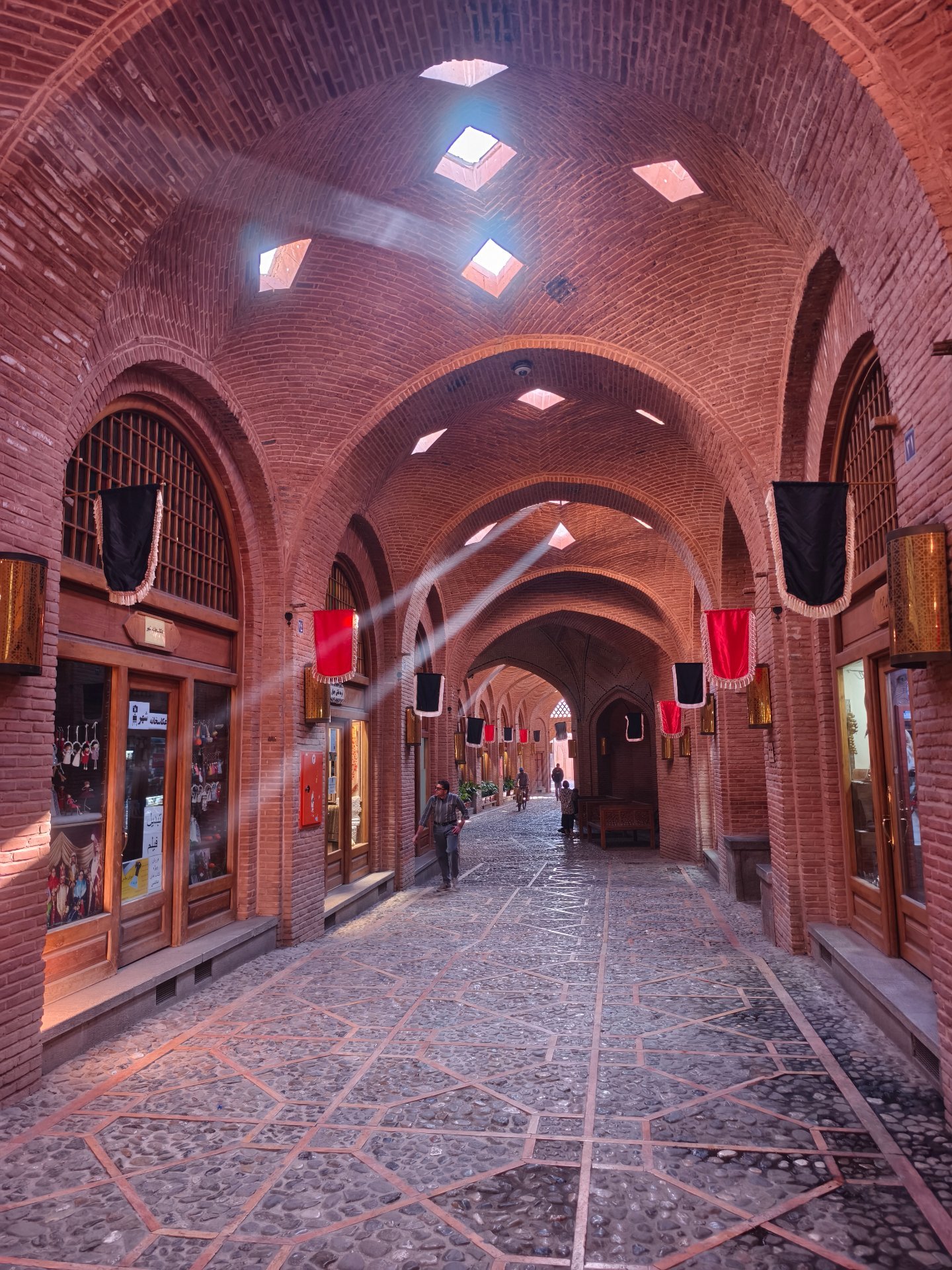
Six Iranian bazaars, from Tehran’s Grand Bazaar to lesser-known Qazvin. The route also takes in Vakil in Shiraz, Isfahan, Tabriz—home to one of the world’s largest covered bazaars—and Kashan.
Bazaars and their Persian roots
Turkey is famous for its bazaars, but the word “bazaar” comes from Persian (بازار, “bāzār”). It originally meant a market or trading square. Iran still has many historic bazaars, several of which appear in this guide.
The term spread to other languages through Persia’s extensive trading ties with India, the Middle East, and Europe. Today, it is used around the world to describe markets, often associated with the East.
In Iranian cities, bazaar streets run through the centre. Mosques and bathhouses stand among the shops, and commercial life has gathered here for centuries. Persian bazaars also smell surprisingly pleasant, contrary to the stereotype. This guide visits six, from Tehran’s best-known market to Qazvin’s less-visited bazaar.
6. Tehran Grand Bazaar
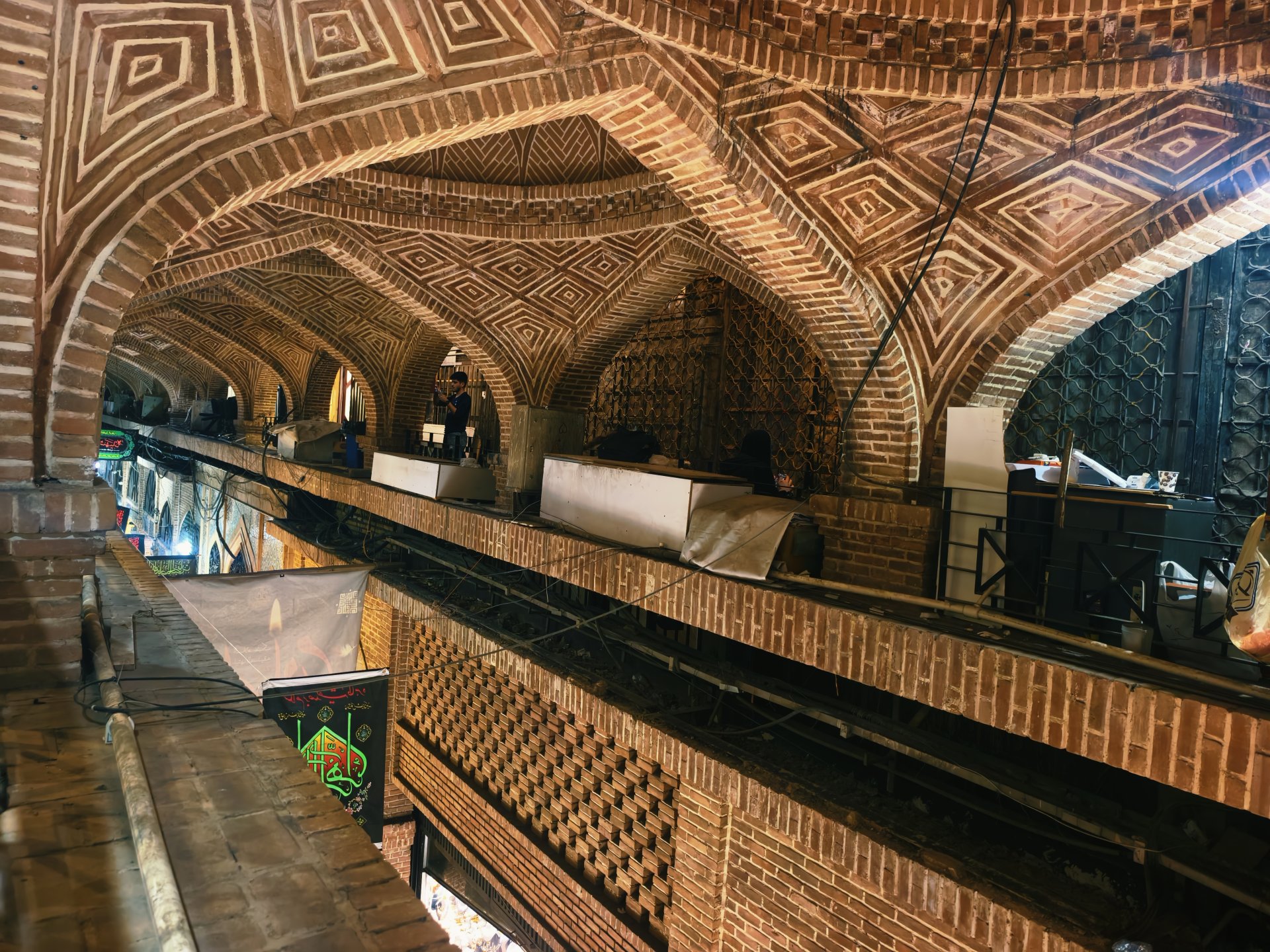
The city of Tehran itself feels like one enormous bazaar. Walking through the centre, you can find entire rows of shops selling the same category of goods. Strolling through these areas can be tiring, with large crowds and motorbikes constantly moving around. The density of commercial space is astonishing.
It is hard to tell where these shopping streets begin and end; they blend into the city. No one can give the bazaar’s exact length: by various estimates, its rows of shops stretch for tens of kilometres.
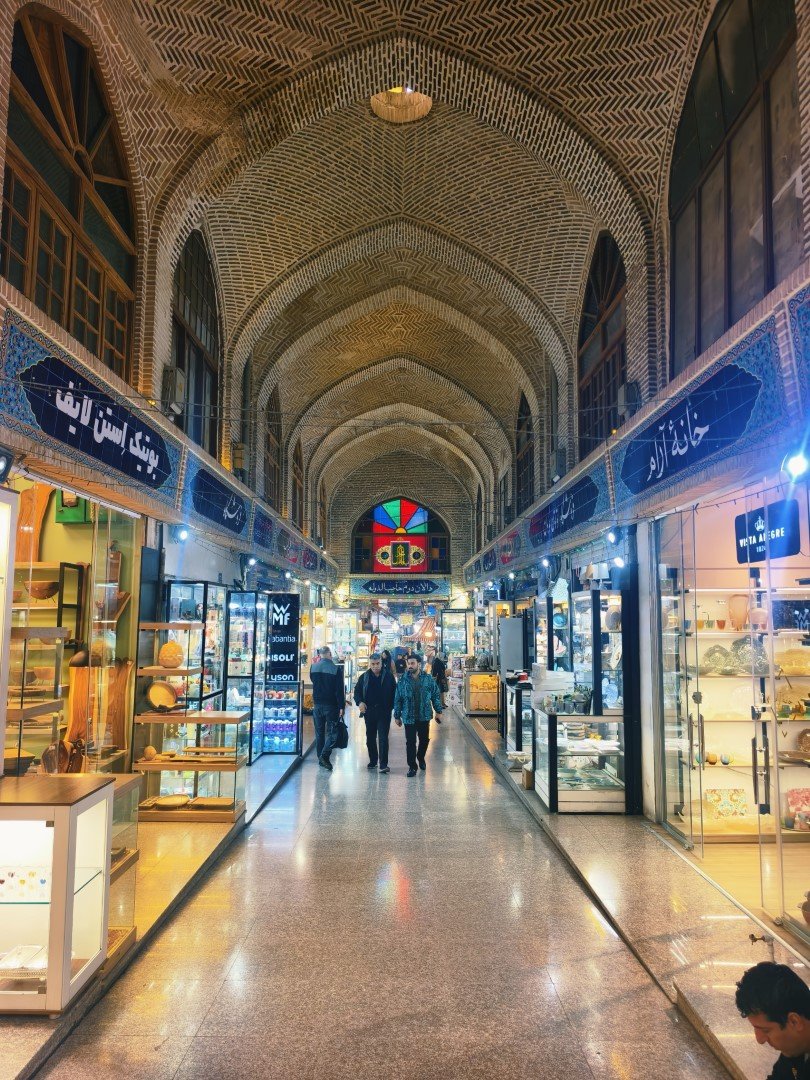
Somewhere in the centre, near Golestan Palace, lies a covered area known as the “Grand Bazaar.” It greets visitors with vaulted ceilings and patterned arches. Standard tourist souvenirs are rare here, but you can soak up the atmosphere of a place buzzing with life. Concerts, festivals, and theatrical performances are held in the bazaar.
In the past, Tehran’s bazaar was a gathering and discussion place for merchants and religious leaders such as Ayatollah Khomeini, who used it to voice popular discontent that led to the Islamic Revolution.
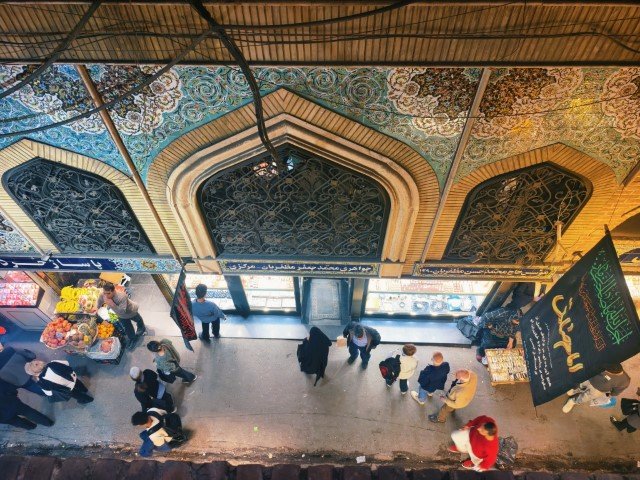
The bazaar is also linked to one of the darkest episodes in Russian-Iranian relations. In January 1829, a year after the end of the Russo-Persian War of 1826–1828, a crowd angered by the terms of the Treaty of Turkmenchay gathered here. It moved towards the Russian embassy, where a massacre took place. Alexander Griboyedov—a diplomat, orientalist, and author of Woe from Wit—was among those killed.
5. Vakil Bazaar in Shiraz
What is Shiraz famous for? Some people think of the wine of the same name—a lovely legend, but nothing more. Geneticists established long ago that the syrah grape comes from the Rhône Valley and is linked to Shiraz only by a similarity in sound. And in any case, no one will pour you wine in Iran: alcohol is prohibited. Others think of Yesenin’s “Persian Motifs,” which has its own irony: the poet never visited Persia. He imagined the entire cycle, inspired by Hafez, a fourteenth-century poet from Shiraz who celebrated the roses and gardens of his home city. So both the wine and Russian poems about Persia are merely echoes of Shiraz.
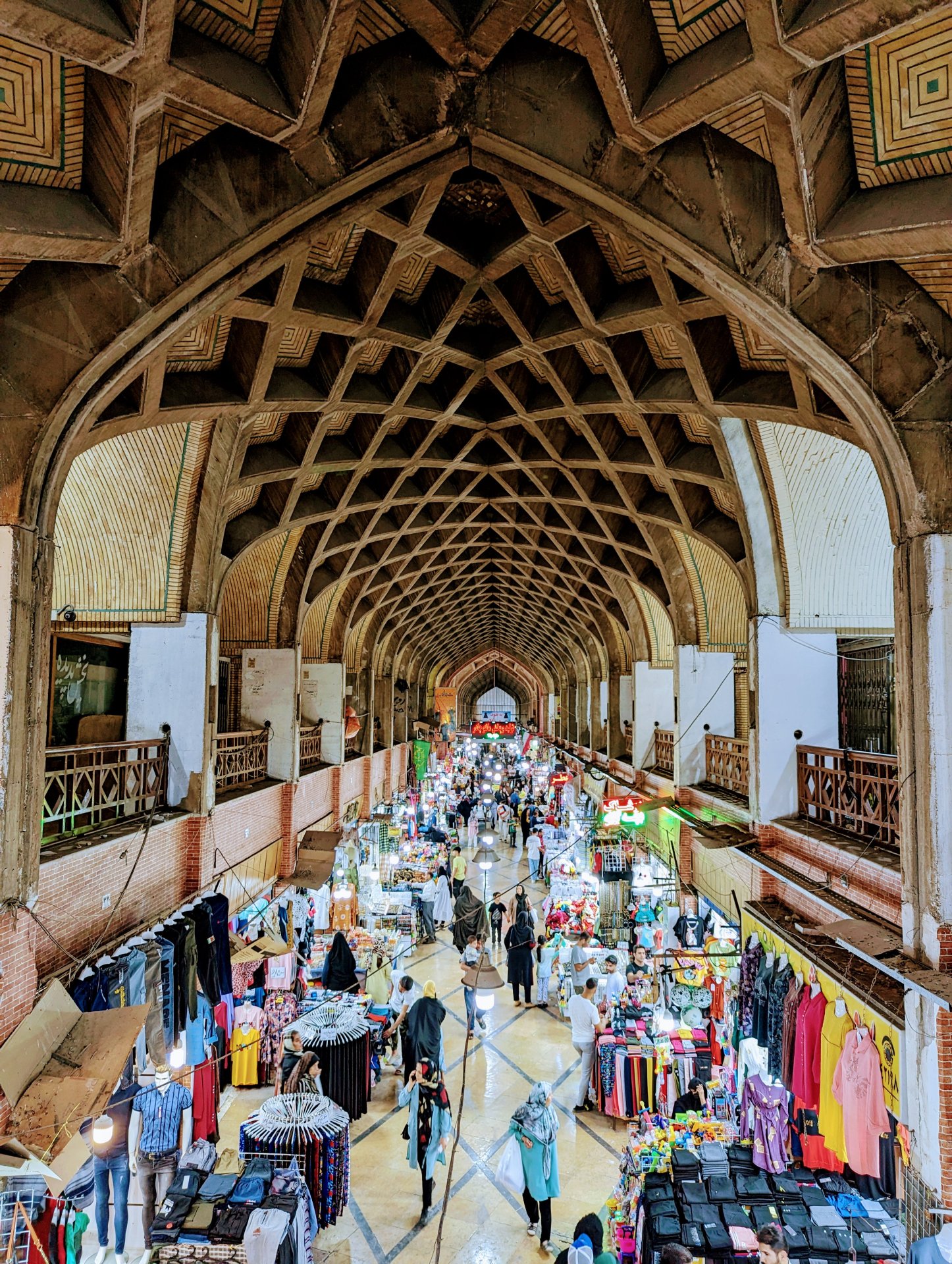
Vakil Bazaar is younger than the city’s fame: it was built in the eighteenth century, when Karim Khan Zand made Shiraz his capital and rebuilt it on a scale worthy of Isfahan. The citadel, mosque, bathhouses, and bazaar were constructed as a unified complex. The name refers to the ruler’s title: Karim Khan declined the title of shah and called himself “Vakil al-Raaya,” meaning “representative of the people.”
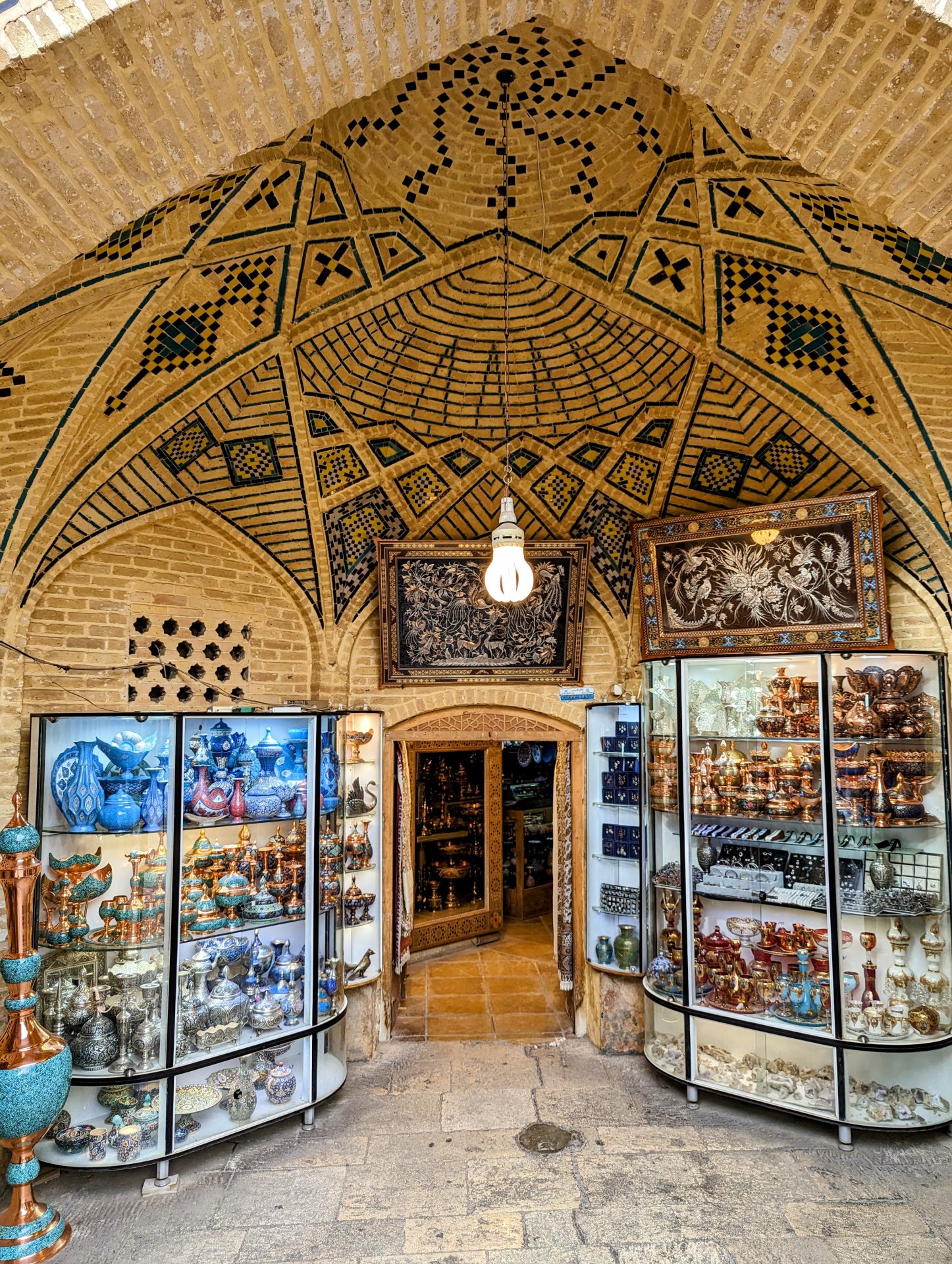
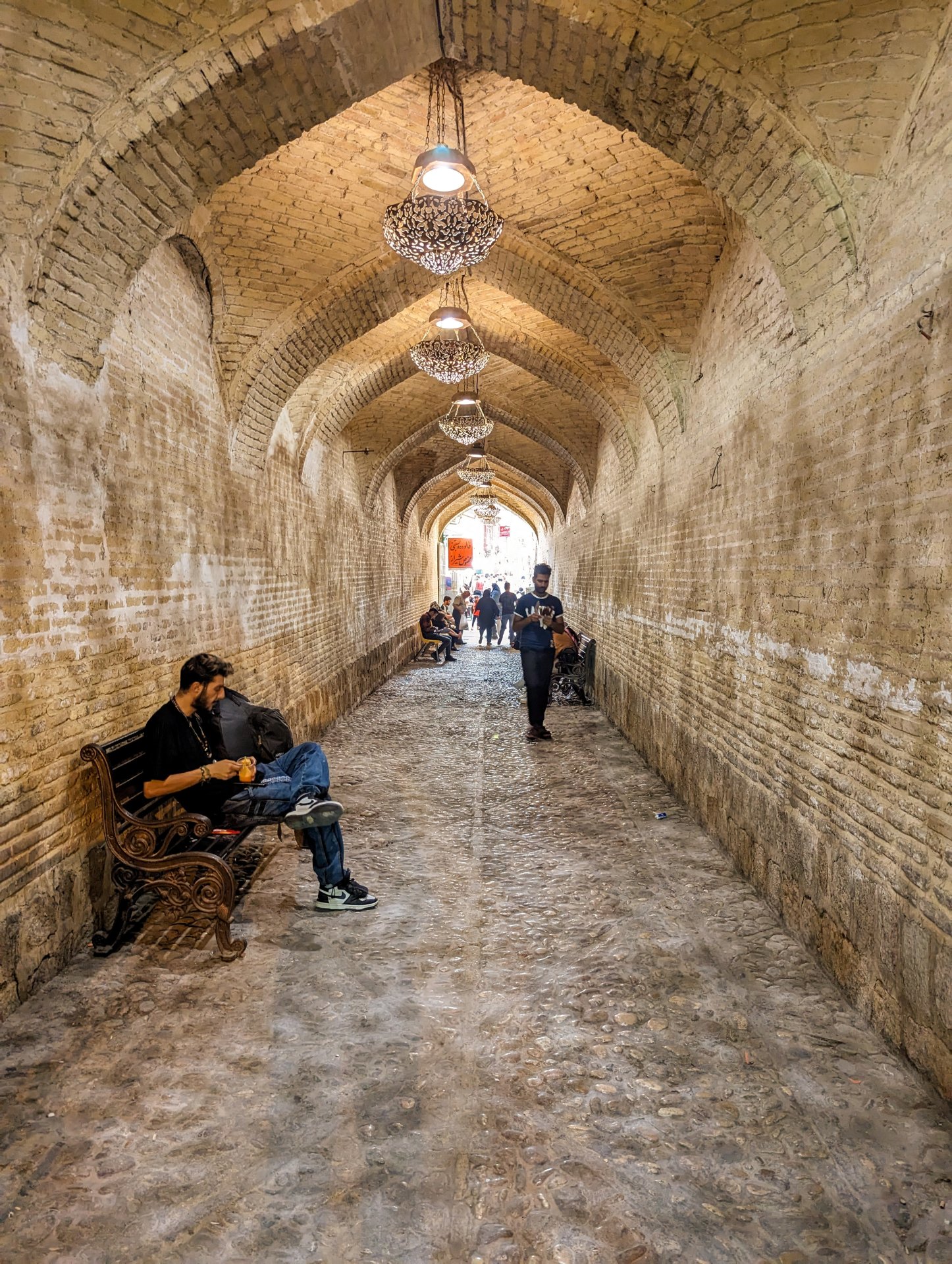
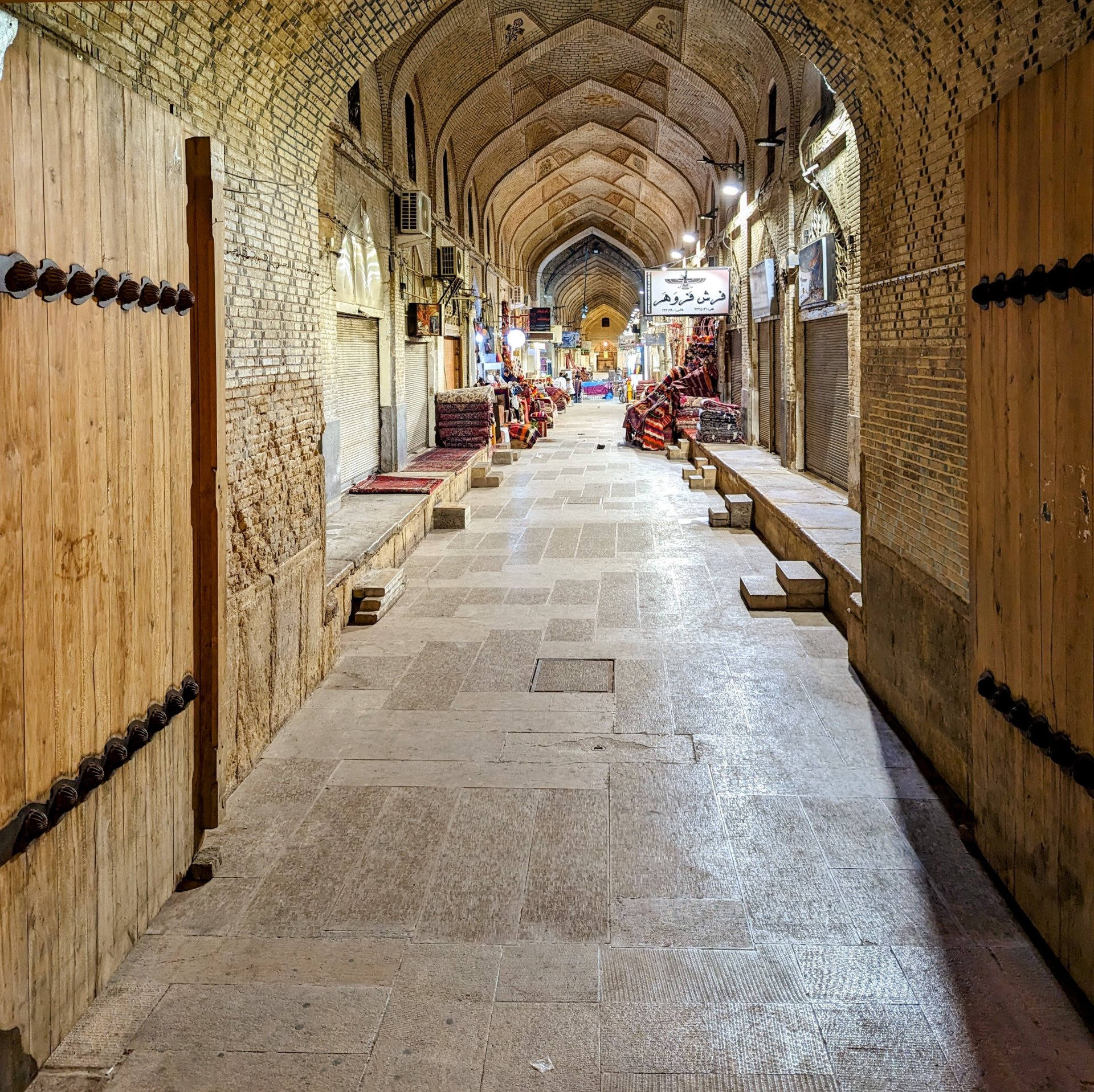
Vakil’s main street is a broad corridor beneath high brick vaults that keep it cool even in the heat of summer. Winding side passages branch off from it, and that is where the bazaar truly opens up: inner caravanserais with quiet courtyards, antique shops, and cosy cafés serving traditional Shirazi cuisine. Be sure to try “lubia polo,” rice pilaf with beans, and for dessert, “masghati,” a translucent sweet made with rose water, starch, and saffron.
Just a few steps from the shopping rows is a museum of traditional baths: Vakil Hammam, built by the same Karim Khan. The one thing to watch out for in the bazaar crowds is pickpockets: they love large markets just as much as travellers do.
4. Bazaar in Isfahan
Persians say of Isfahan, “Isfahan is half the world.” To understand where that confidence comes from, let’s start further back. If you have visited Bukhara, Samarkand, or Turkestan, you will have seen blue mosques decorated with glazed tiles—the so-called Timurid architecture. Isfahan’s artisans had a great deal to do with it: after conquering Persian lands, Timur gathered the best of them and took them away to build palaces across his empire.
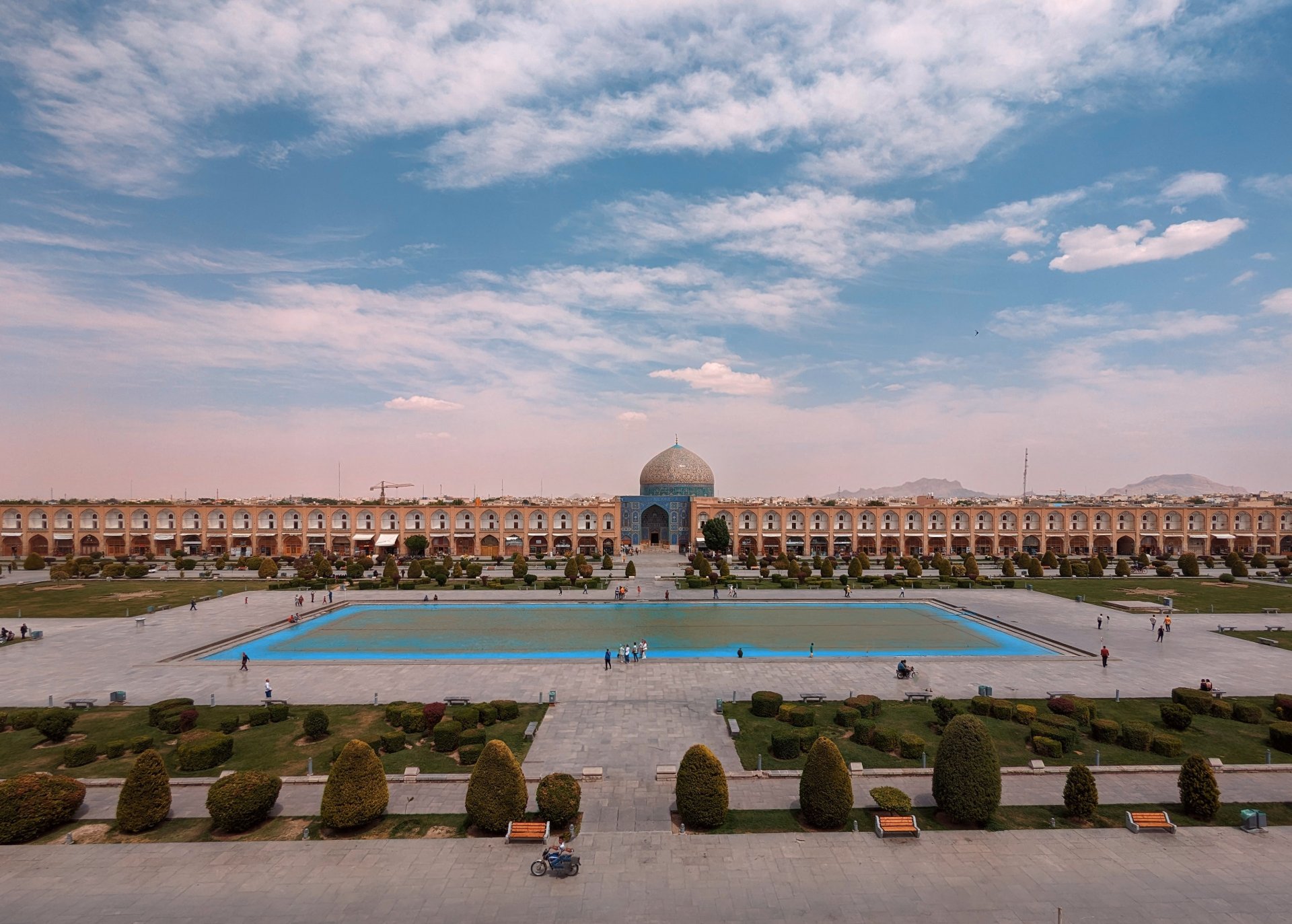
Over time, Timur’s empire fell, leaving many architectural monuments behind. Later, a new state arose in the Iranian part of his conquests: Safavid Persia, with Isfahan as its capital. Shah Abbas I, inspired by Timurid architecture, decided to turn his capital into a centre of art and culture. Thus Naqsh-e Jahan Square (“Image of the World”) came into being—one of the world’s largest squares and a UNESCO World Heritage Site. The saying about half the world was coined around that time: under Abbas, the city truly felt like the centre of the universe.
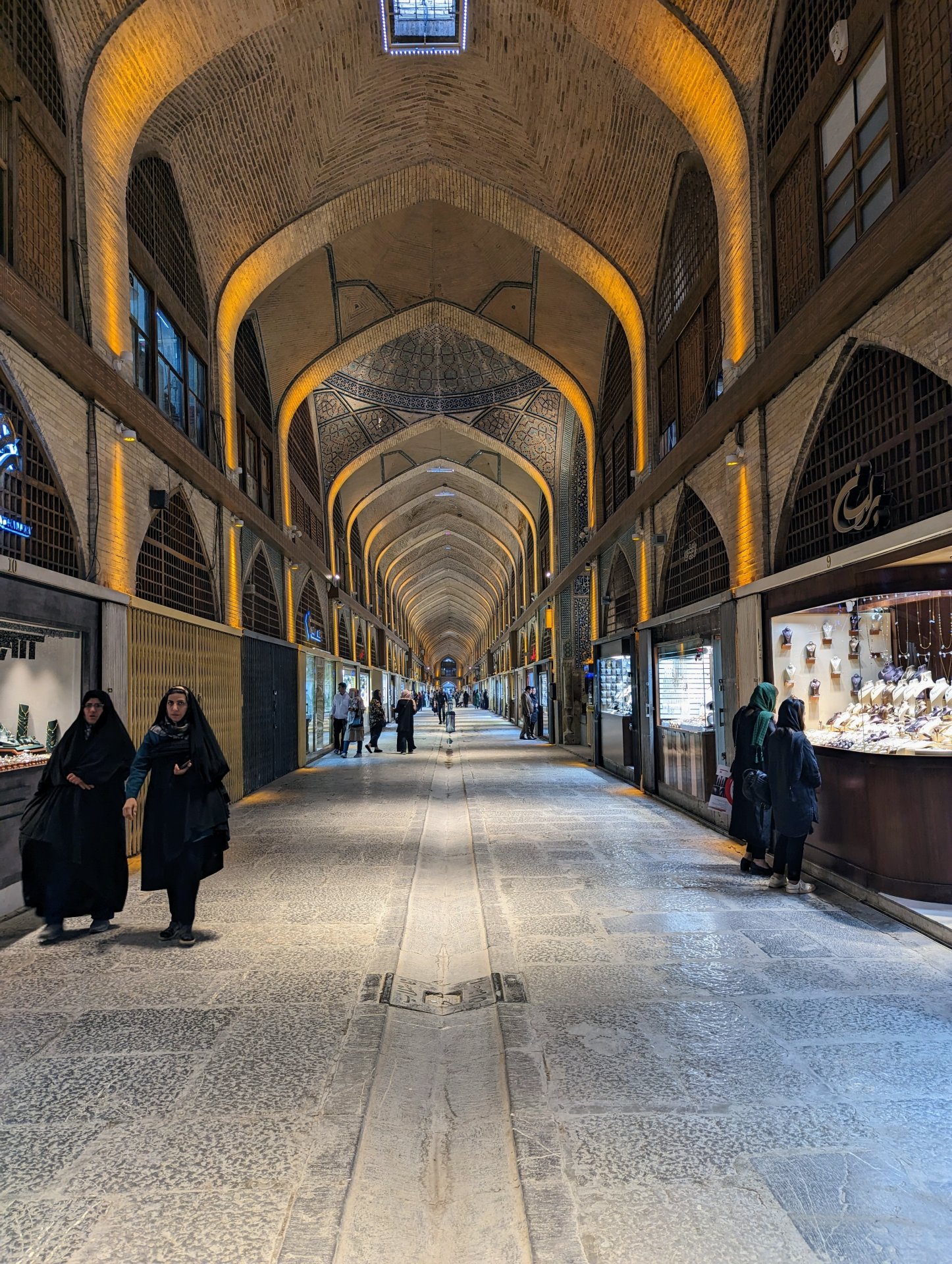
Isfahan’s bazaar hardly looks like a bazaar at all; it is part of a palace complex. Ali Qapu Palace faces the square from the west and served as the ceremonial gateway to the shah’s residence. The square itself is ringed by two-storey shopping arcades, while the covered bazaar street begins to the north, beyond the Qeysarieh Gate. It runs two kilometres into the city, all the way to the old Friday Mosque.
Unlike Tehran, the atmosphere here is calm and unhurried. The bazaar sells carpets, souvenirs, paintings, boxes, antiques, and much more. Many items are made right before visitors’ eyes. The signature colour of these rows is turquoise: this is minakari, painted enamel. Blue plates are decorated right there behind the counter; the artisan paints the pattern with a fine brush, and you can watch for as long as you like.
3. Tabriz Grand Bazaar
If Tabriz’s bazaar had a guestbook, it would read like a history of great journeys. Marco Polo listed Tabriz among the thriving trading centres that drew merchants from India and China in search of silk and textiles. Ibn Battuta marvelled at its network of caravanserais, which made the city one of the busiest hubs on the Silk Road. Our own Afanasy Nikitin also passed through on his way from India.
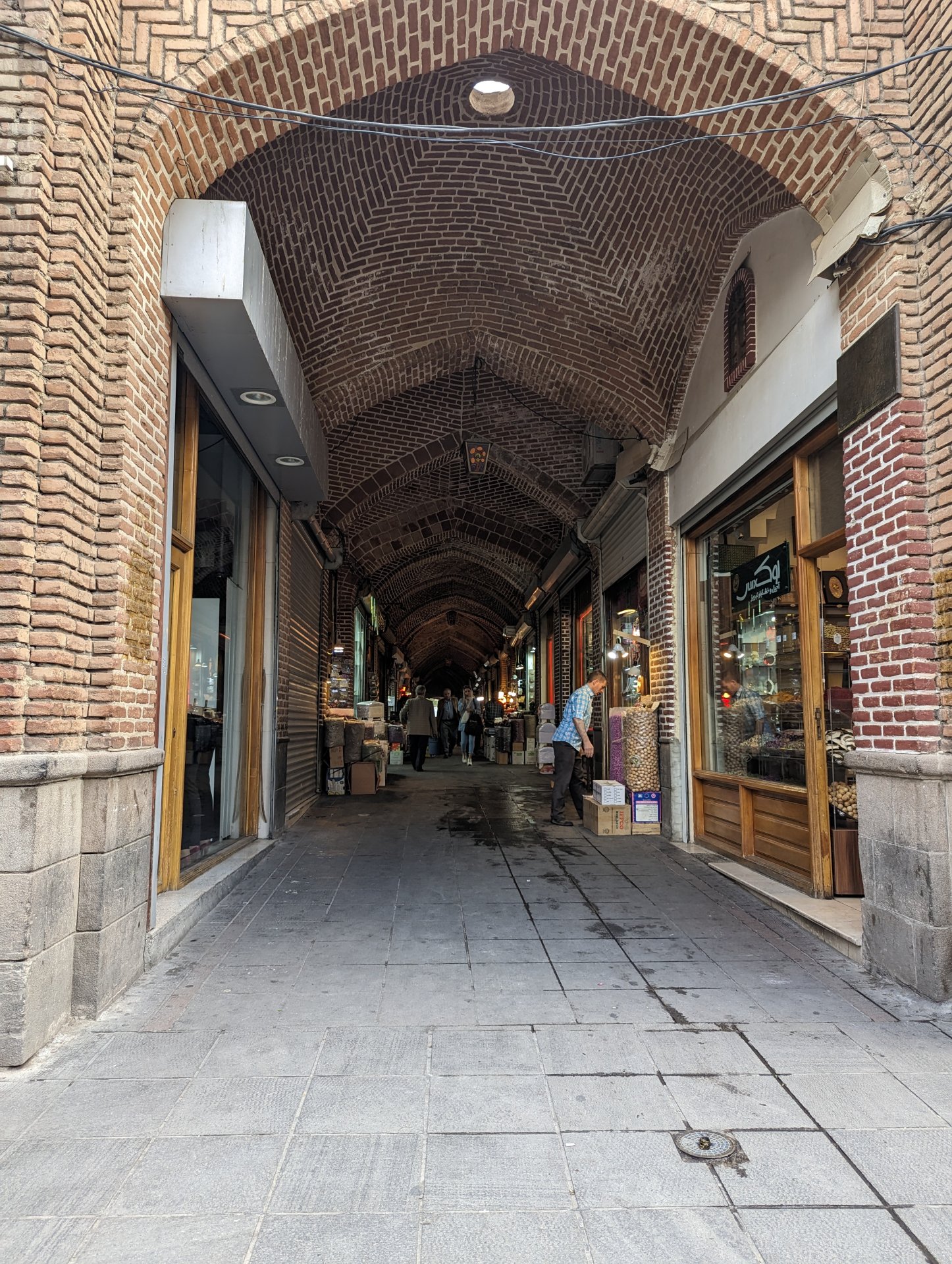
The reason is simple: the city stands at the crossroads of three major trade routes, and the bazaar grew naturally from this intersection so long ago that no one can name an exact date. Travellers were already writing enthusiastic descriptions of it in the thirteenth century.
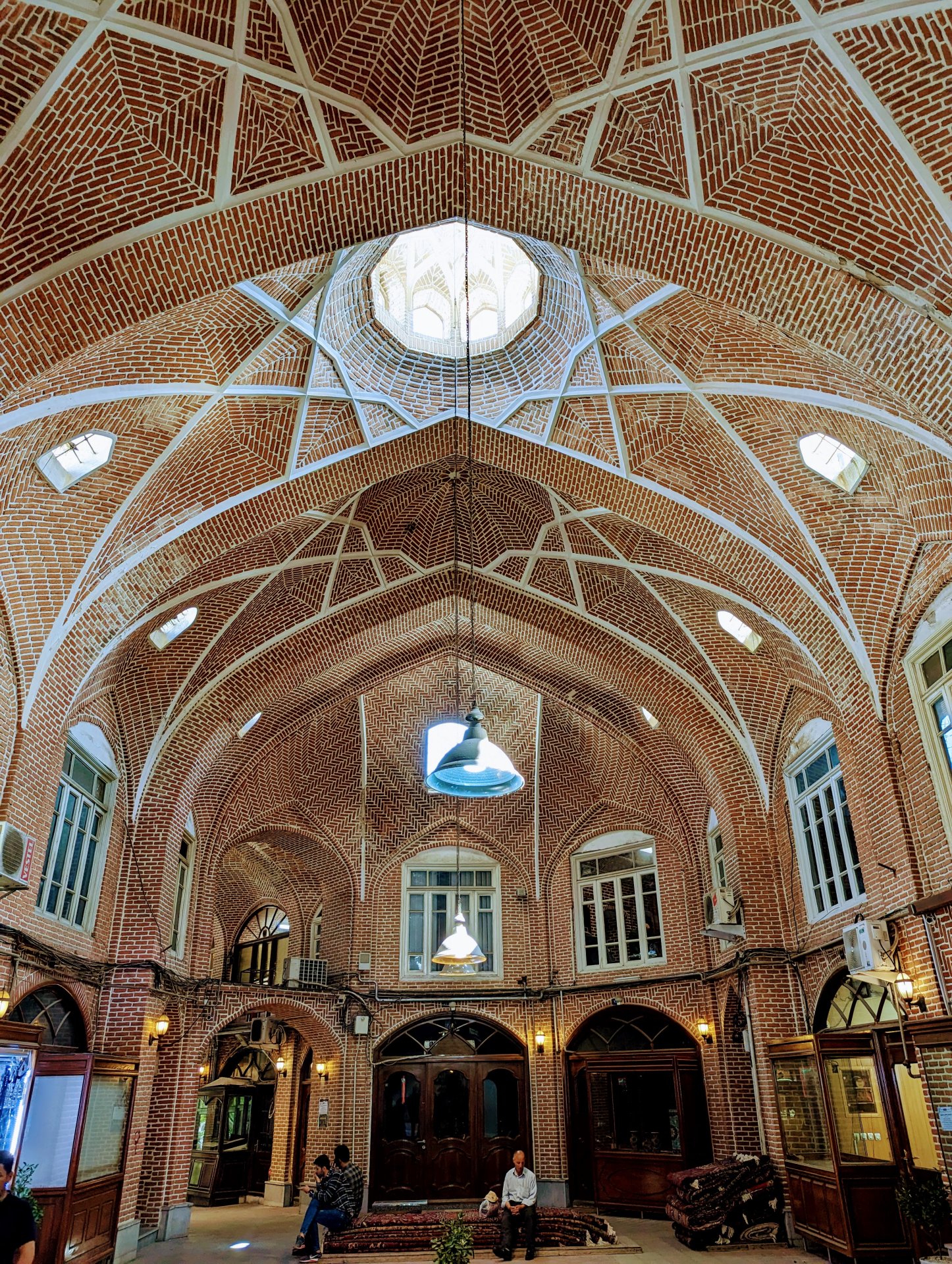
The bazaar reached its peak in the sixteenth century, when Tabriz was the Safavids’ first capital. The court later moved to Qazvin and then to Isfahan. Its present brick appearance is the result of rebuilding after the devastating earthquake of 1780.
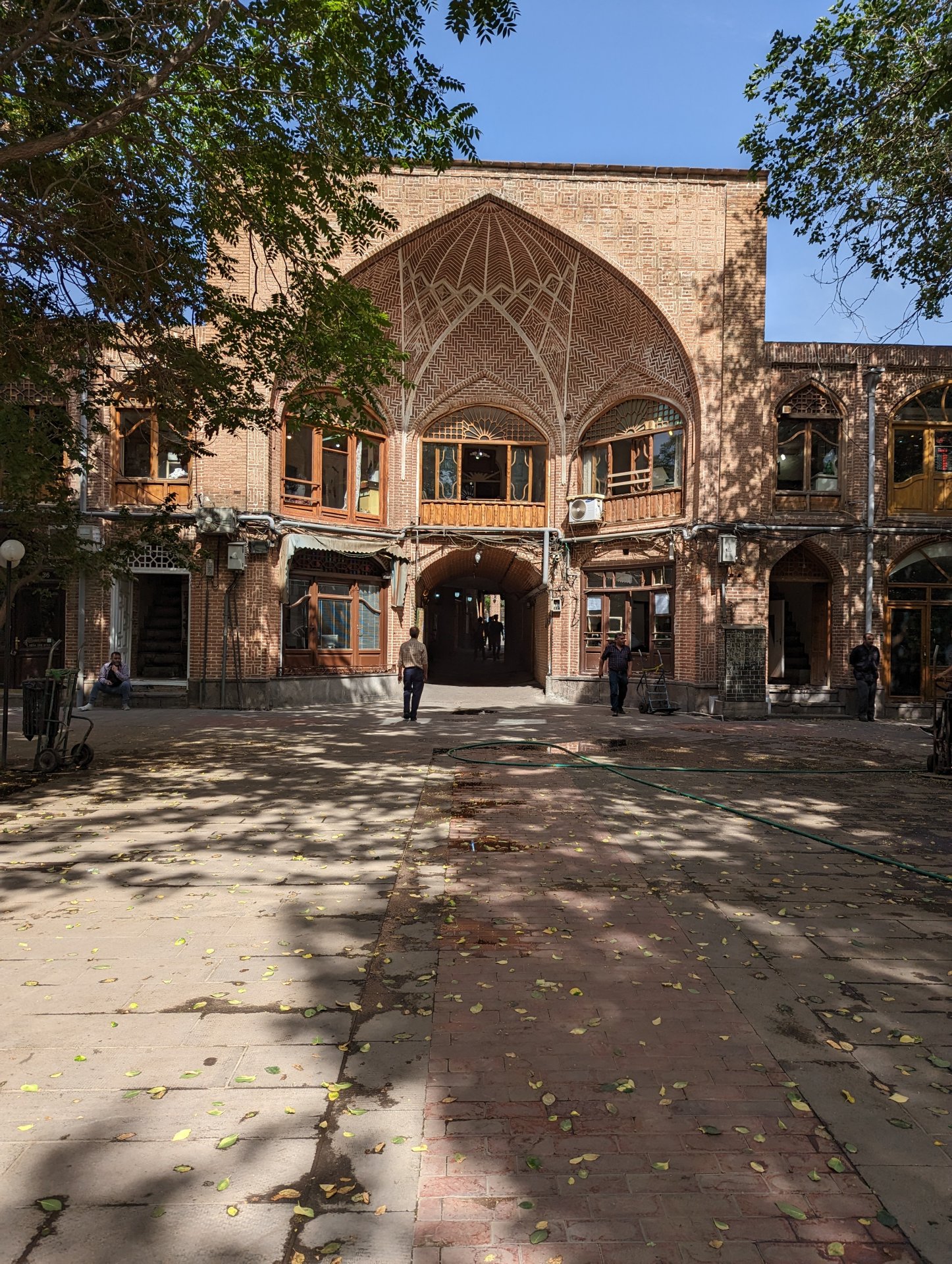
Today, Tabriz Bazaar is a UNESCO World Heritage Site and is considered one of the world’s largest covered bazaar complexes. Its main currency is carpets: the finest Persian carpets are woven here, and everything else revolves around them—mountains of sweets and dried fruit, jewellers’ shops, and teahouses. On major dates, trade takes a back seat: the bazaar remains a place where the city gathers, for celebrations and mourning ceremonies alike.
2. Kashan Bazaar
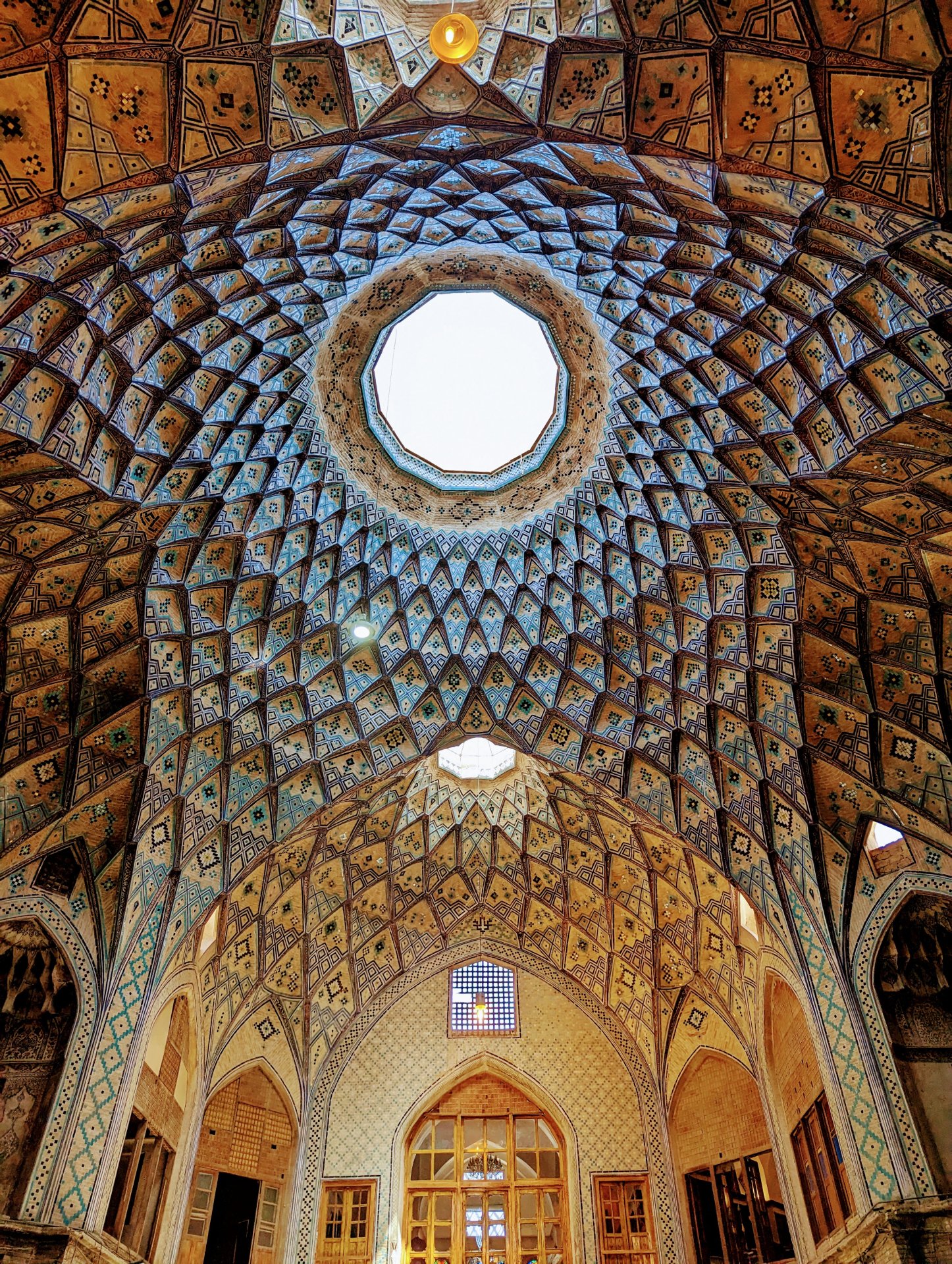
Kashan is a merchant oasis city on the edge of the Dasht-e Kavir desert. Caravans stopped here for millennia; merchants grew wealthy and built mansions like palaces, while the bazaar was and remains the heart of this life. Today, its old caravanserais house teahouses, workshops, and small hotels, so the shopping rows blend almost imperceptibly into the city, and the city into the bazaar.
The dome of Amin al-Dowleh, built in the nineteenth century, draws particular attention and is rightly considered a masterpiece of Persian architecture. At noon, sunlight streams through the oculus in shafts where dust dances.
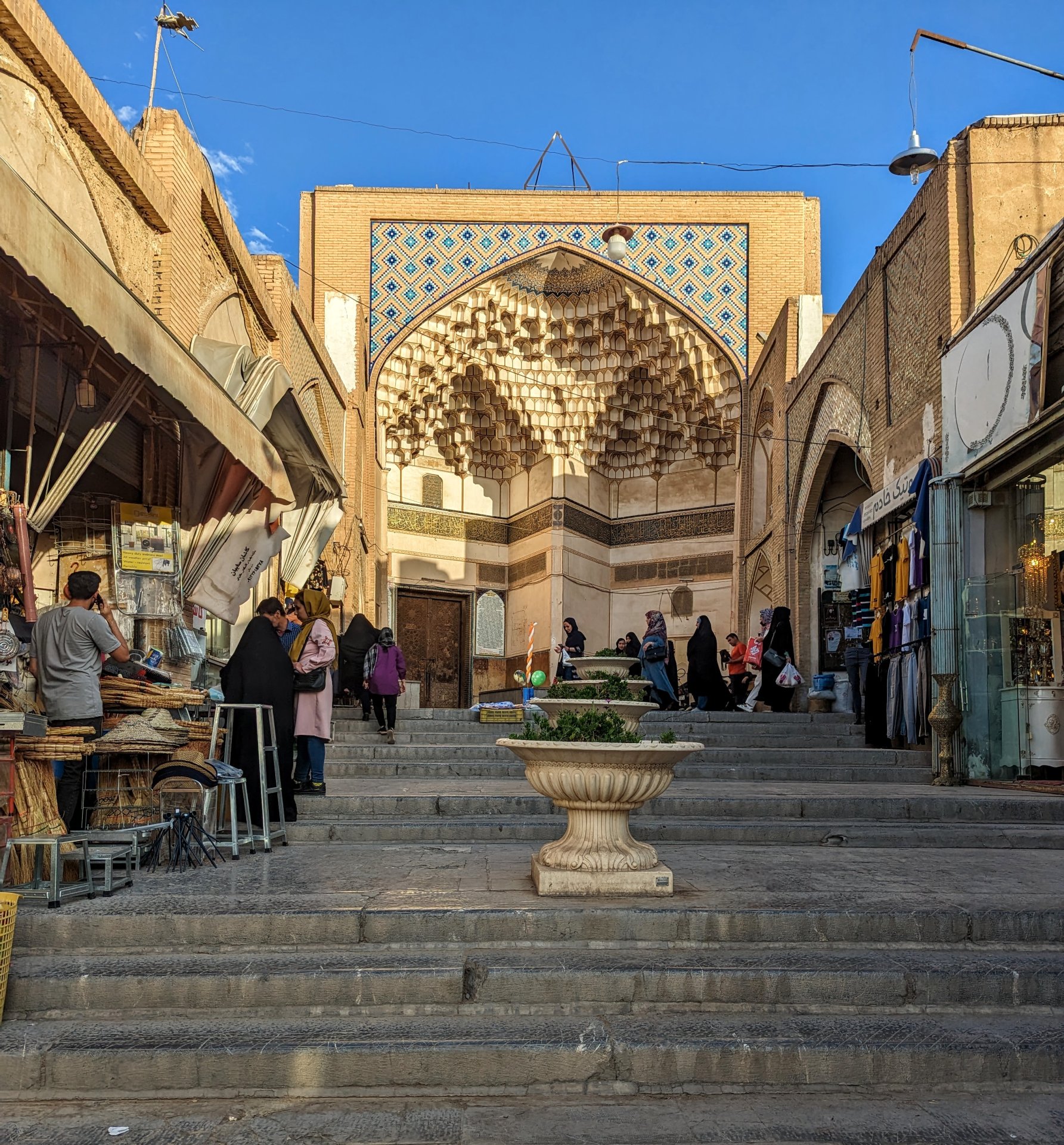
You can find ceramics, textiles, rose water, and handicrafts in the bazaar. Don’t miss the local teahouses and a chance to try traditional tea with halva.
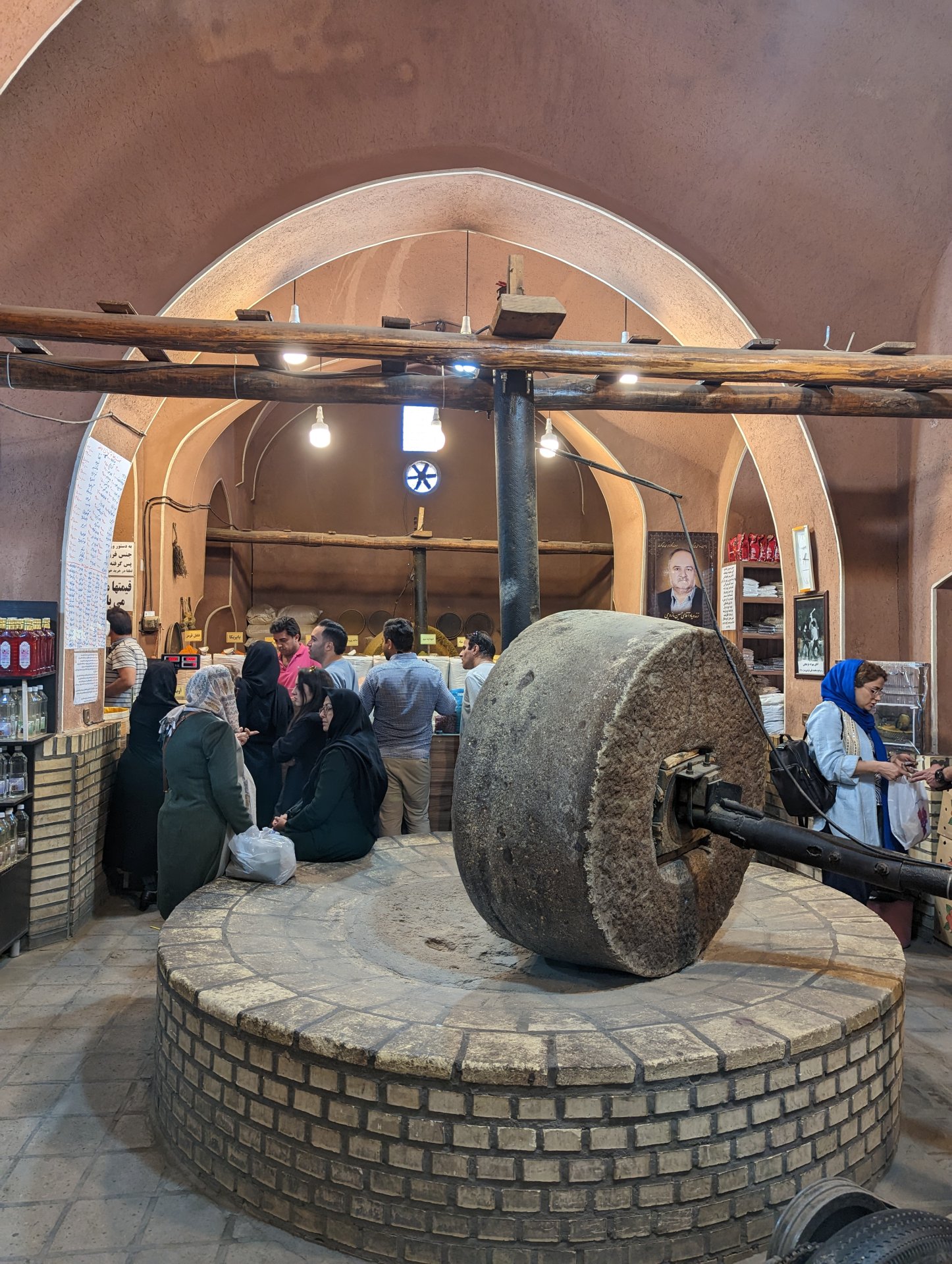
Be sure to try rose-water drinks and look out for local crafts. Kashan ceramics, for example, are unique. If you like something, buy it there; you may not find the same selection elsewhere.
1. Qazvin Bazaar
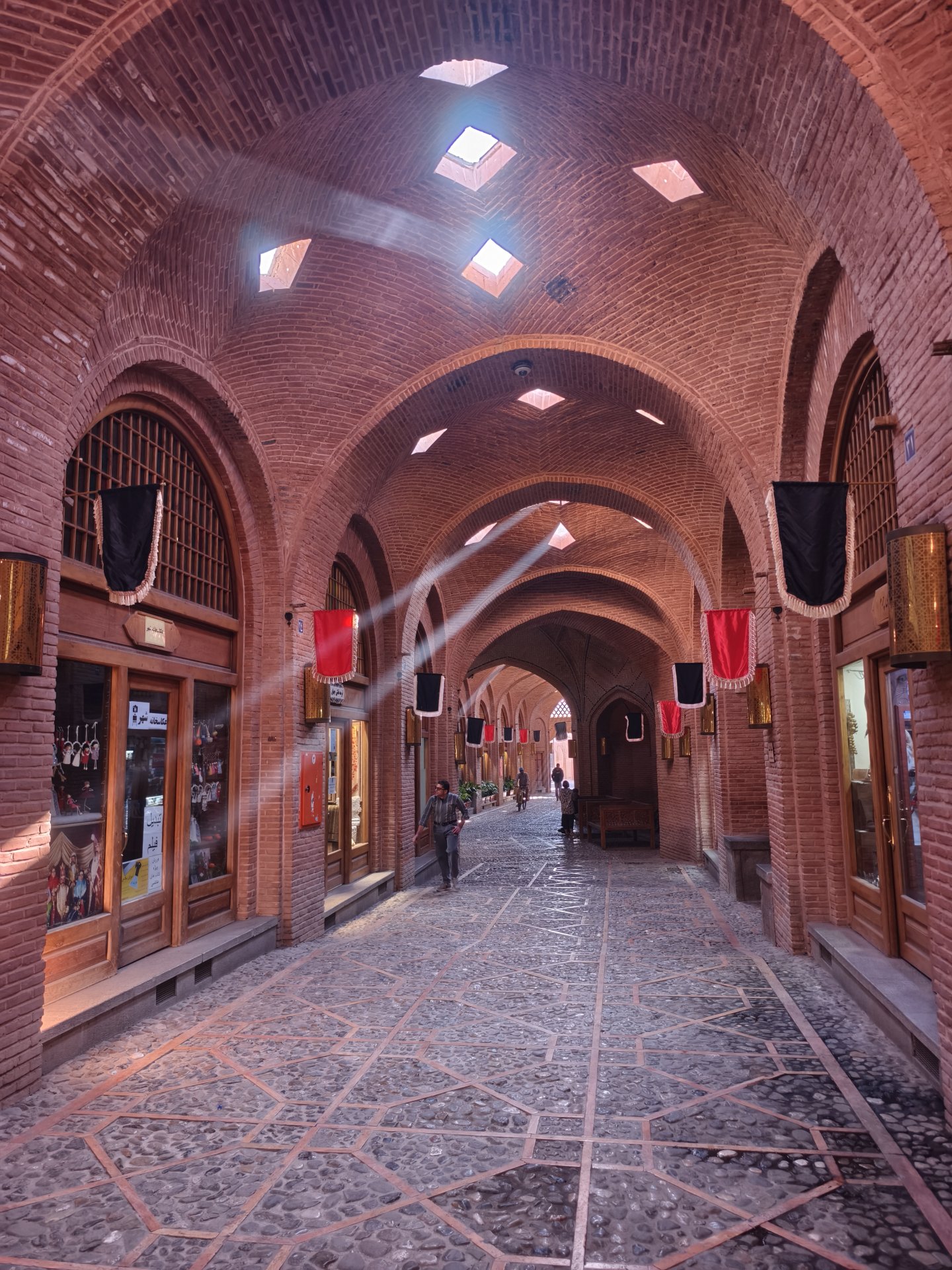
Qazvin rarely appears on tourist itineraries, and that is a shame. In the sixteenth century it was the capital of Safavid Persia, before Shah Abbas moved the court to Isfahan. The city inherited a grand bazaar from that era, and it has continued to grow ever since.
Imagine dozens of hectares of covered streets. The layout is almost like a chessboard: corridors connect mosques, timchehs (commercial pavilions), and spacious courtyards. Light filters through openings in the brick vaults, while the walls flash with kashikari, glazed tiles with traditional patterns.
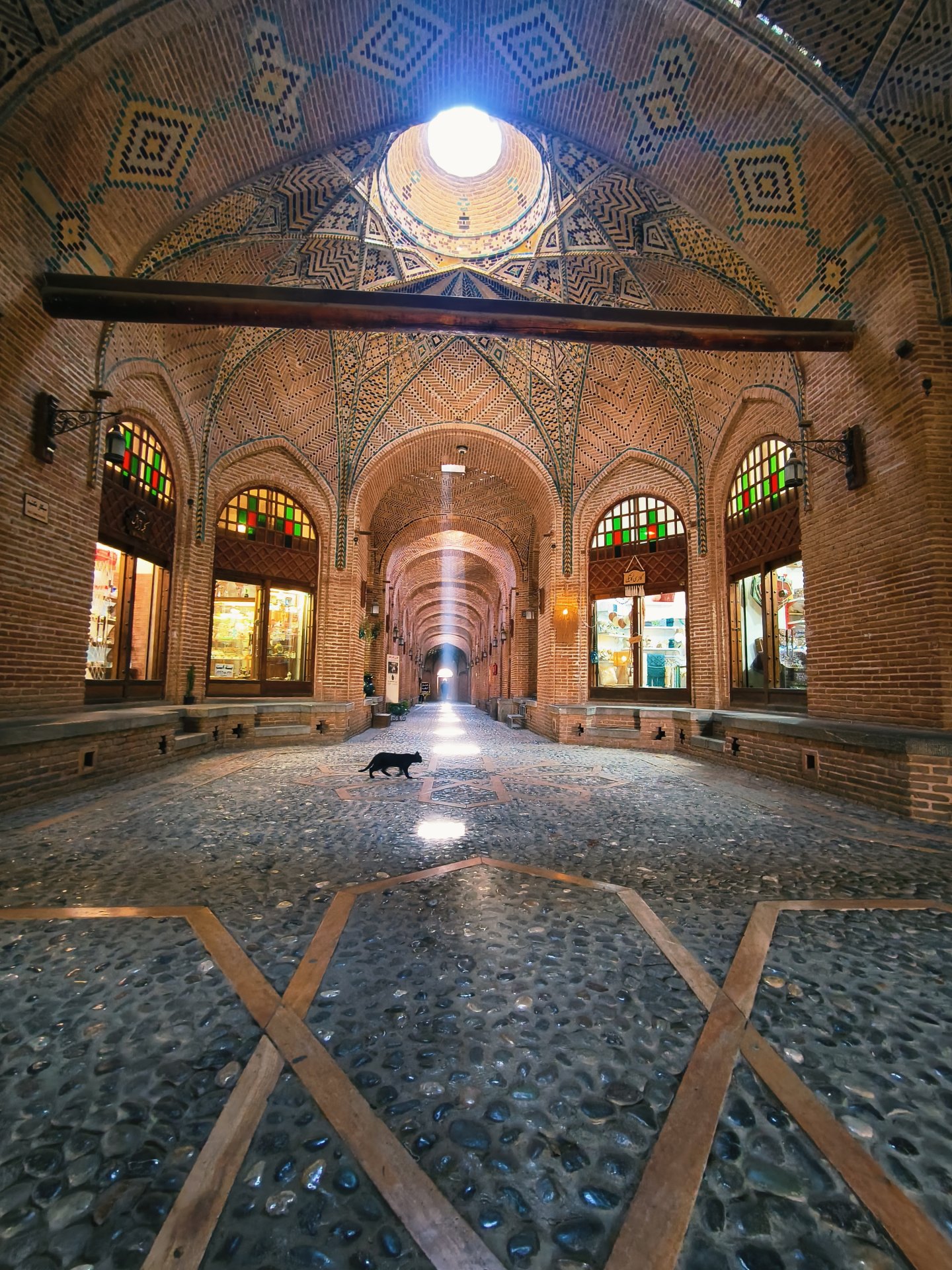
The main discovery in this maze is the Saad al-Saltaneh complex. Historically, it was built not as an ordinary market but as Iran’s largest covered urban caravanserai. It was constructed in the late nineteenth century, during the Qajar era, as a major trade and logistics hub for merchants doing business along the route from Tehran to Russia and Europe. Today, it has been carefully restored and turned into a cultural centre with galleries and craft shops. Sitting there with tea and admiring the graceful arches of the Qajar era is a pleasure in itself. For a sense of the Safavids, head to Qeysarieh, the oldest part of the bazaar. Its high brick vaults are impressive, as is the feeling that little has changed here in the past four hundred years.
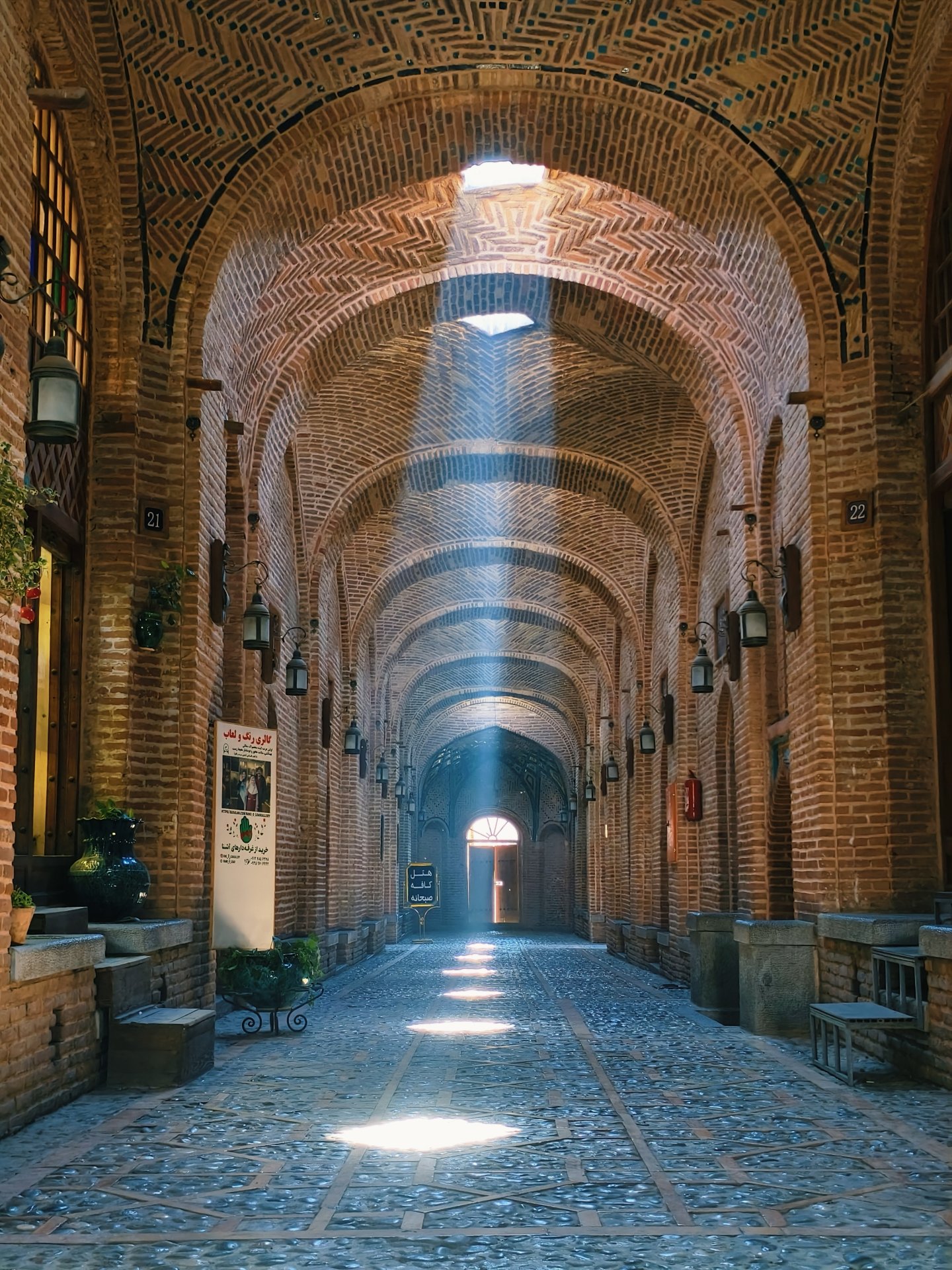
Qazvin sees few tourists. Visitors are treated as guests rather than passing customers.
In Tehran it made a revolution; in Shiraz it inspired poets; in Isfahan it extended the palace; in Tabriz it was a Silk Road hub; in Kashan it was a workshop; in Qazvin it was an inn halfway to Europe. Here, the bazaar is not a market attached to a city but the heart around which the city grew: beneath these vaults, people have made deals, composed poems, welcomed caravans, and seen eras pass for centuries.
Kerman, Qom, and Yazd have bazaars too. If your route takes you to one of these cities, plan a stop. For a first visit, these six are plenty. You can bargain in an Iranian bazaar, but make time to sit down for tea.

Comments
Log in to leave a comment
Nothing here yet. Be the first!