 Города и дороги
Description
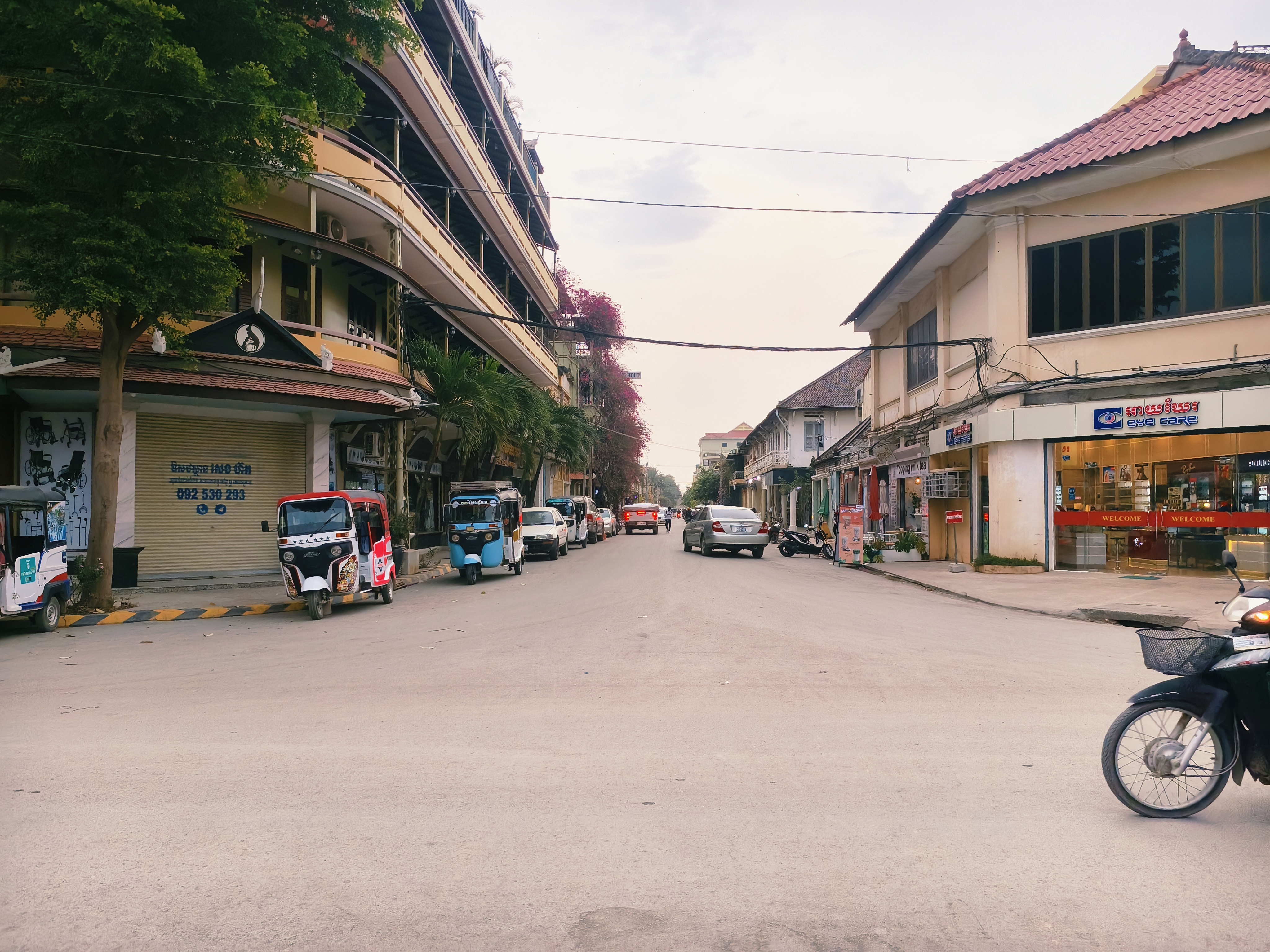
Cambodia's slow colonial provincial town — the Phare circus, the bamboo train, hilltop temples and rice-field bike rides.
Wiki
Battambang is a case where "the second-largest city" turns out to be quiet, low-rise and slow: you come not for a checklist but for the atmosphere of a colonial province, bike rides through rice fields and an evening at the circus. Two days open the town up almost completely, if you split the route sensibly.
Why come, and for how long
Battambang slots naturally between Siem Reap and Phnom Penh — a stop along the way rather than a dead end. Two days is enough: one for the town itself and the French quarter on foot, another for the country loop (the bamboo train, Phnom Sampeau, Wat Banan) by tuk-tuk or motorbike, with the Phare circus in the evening. If you like taking things slowly and taking photographs, add a third day; the crowds that wear you down in Siem Reap are absent here.
The town's real value for the independent traveller is the contrast: ordinary Khmer life without tourist pressure, cheaper and calmer than its neighbours, but with the same set of "wow" ingredients — ancient Khmer ruins, caves, bats, a circus — all within reach.
What is genuinely worth seeing
- Phare Ponleu Selpak — not just a circus but a social arts school for local young people. The show is live, the acrobatics are close to Cirque du Soleil standard but on an intimate scale. Book ahead in high season and arrive around sunset; the school grounds are worth seeing in their own right.
- Phnom Sampeau — the grim and the spectacular in one place: the Killing Caves, an unvarnished memorial to victims of the Khmer Rouge, and the evening flight of millions of bats from a cave at the foot of the hill, a free half-hour show that starts around sunset. Plan your day so you are here at dusk.
- The bamboo train (norry) — a platform on wheels running along a narrow-gauge track. The original line has closed and the tourist version operates at Banan village: an attraction rather than transport, but short and good fun.
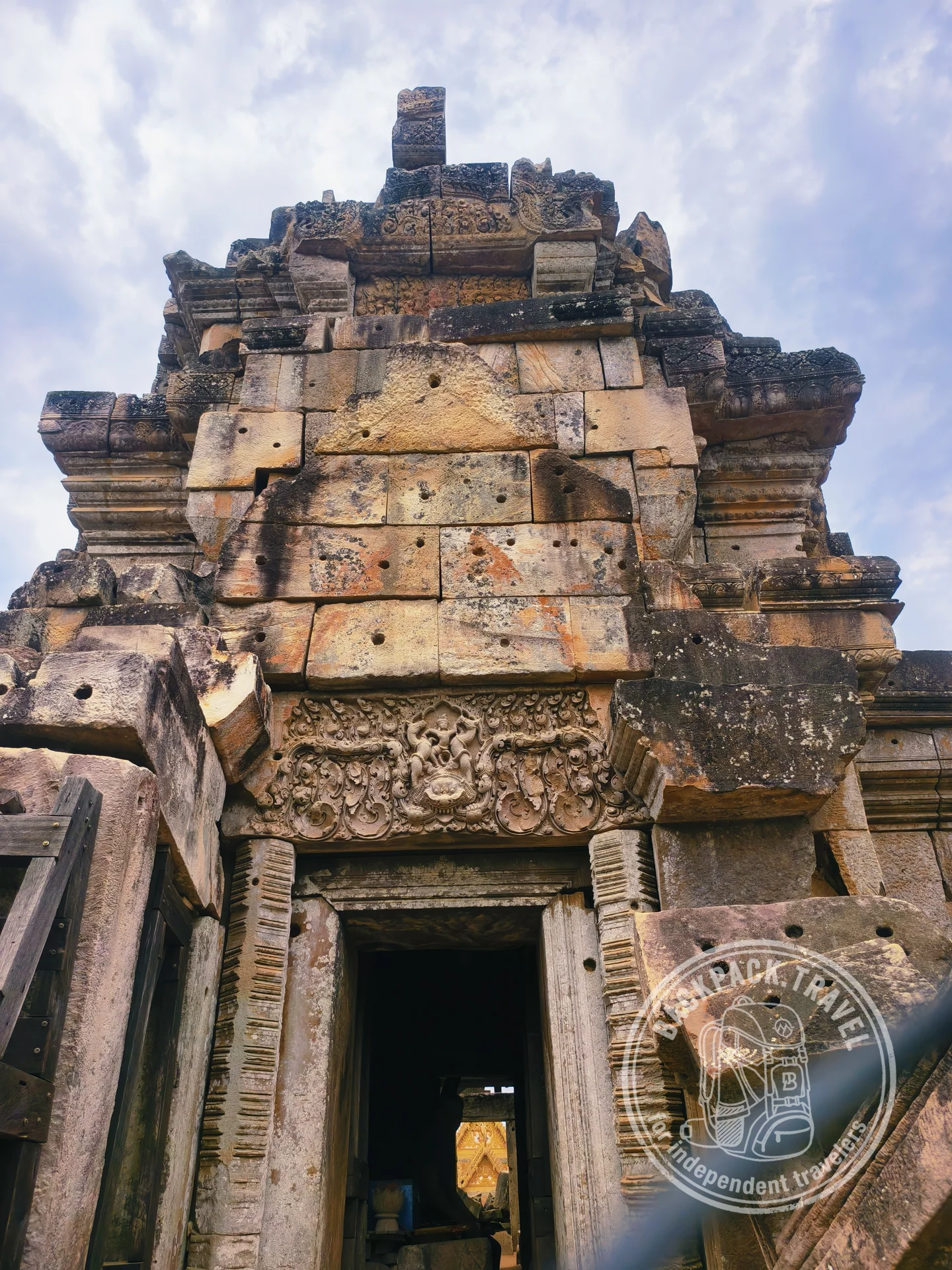
- Wat Banan — an eleventh-century hilltop temple up 358 steps. A miniature Angkor with no queues, and a view over the rice fields from the top.
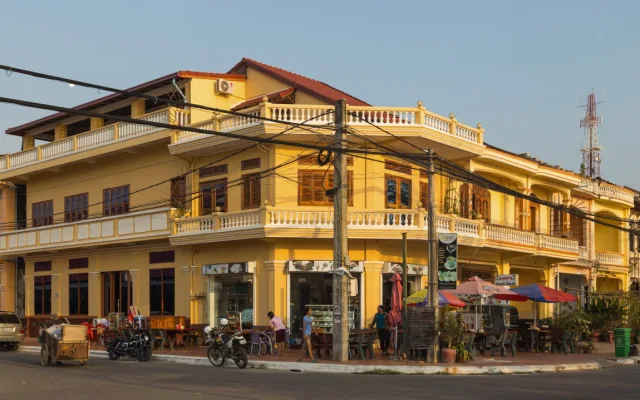
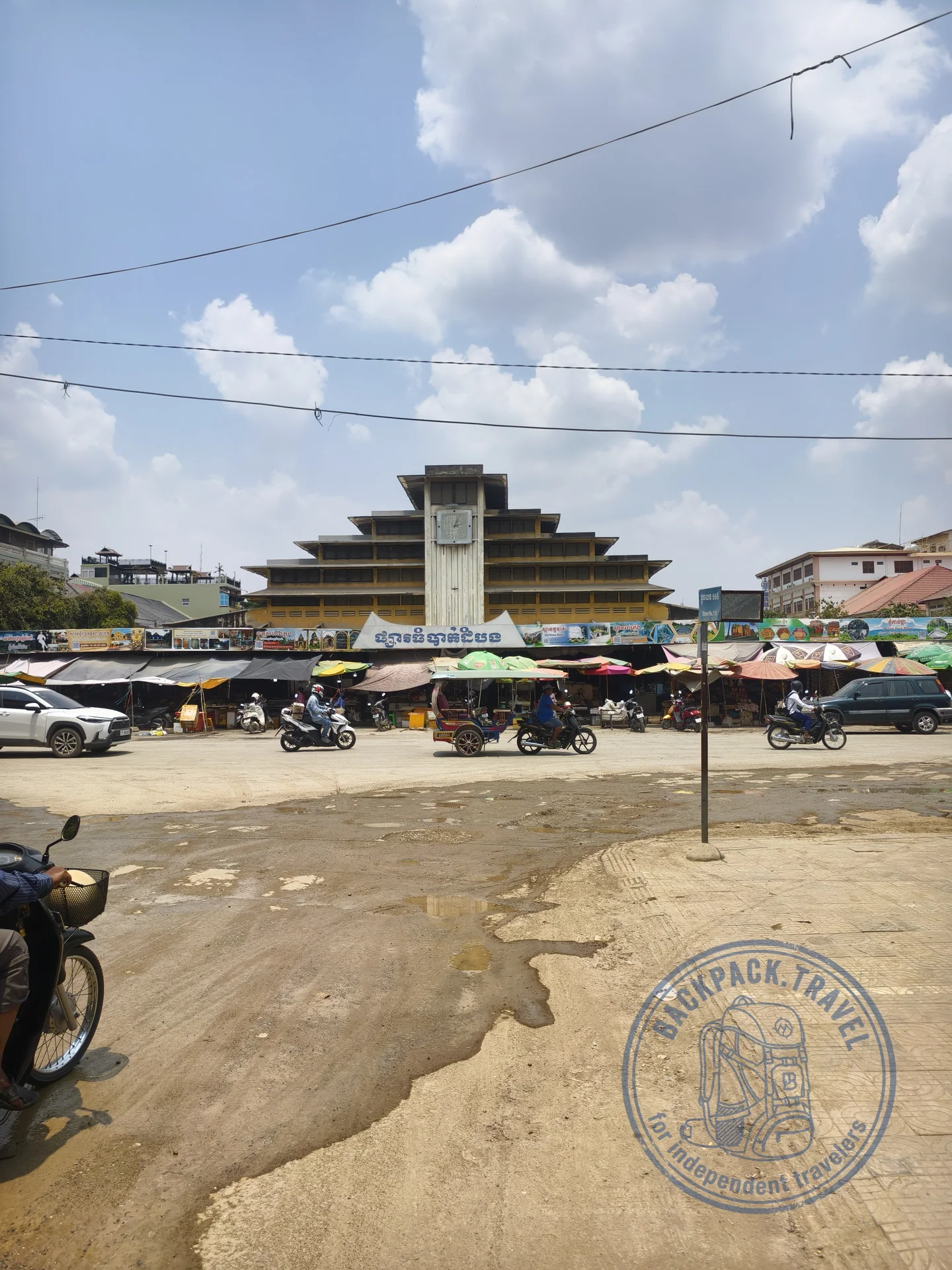
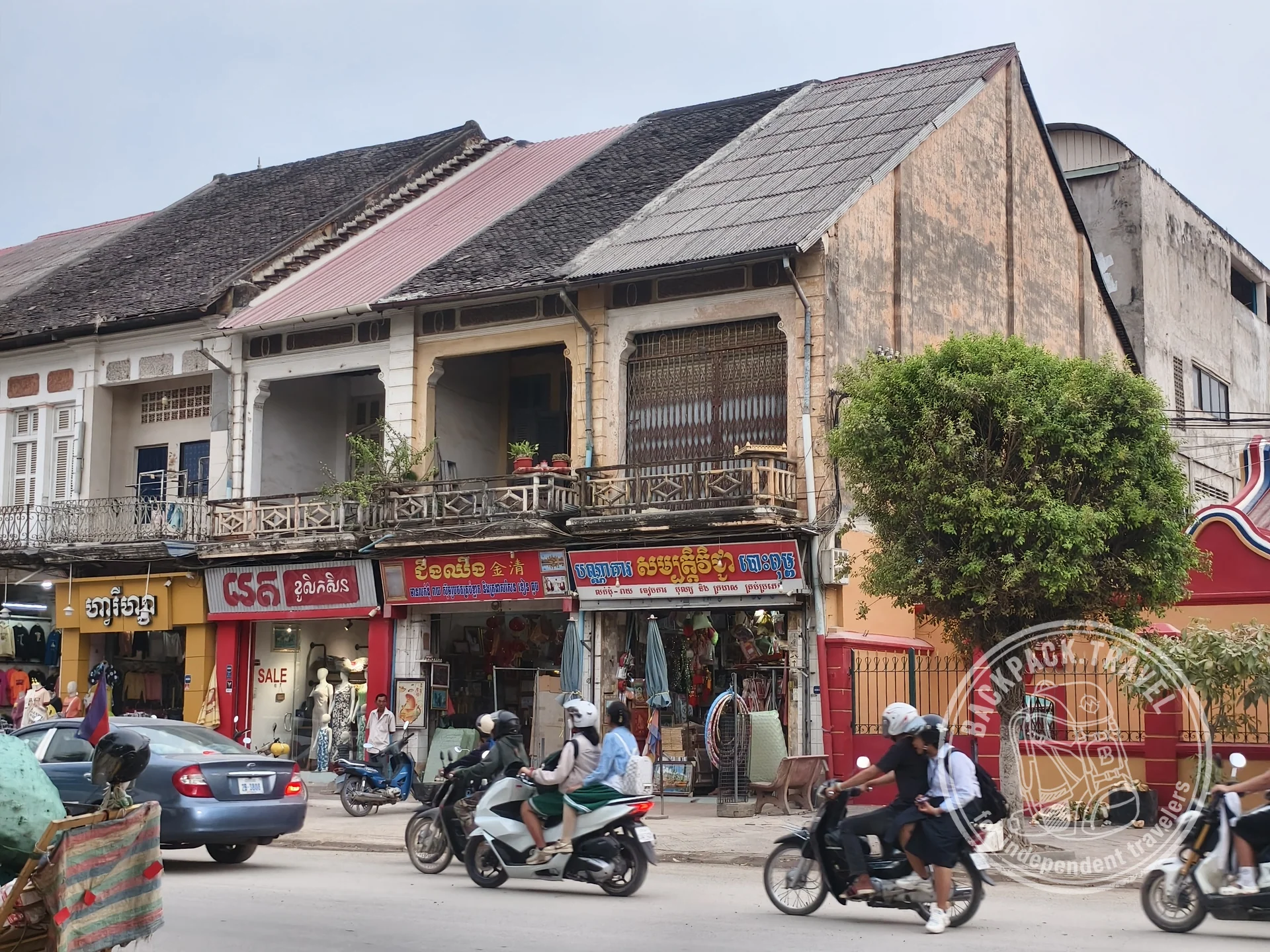
- The French quarter along the Sangkae river — pastel two-storey buildings and the Art Deco Psar Nat market. Two hours on foot covers it, best in the morning or at sunset.
Getting there and getting around
There are no scheduled passenger flights. People arrive overland: bus or minivan from Siem Reap (about three hours, $5–8) or Phnom Penh (five to six hours). In the dry season there is a colourful but slow boat across the Tonlé Sap from Siem Reap (around $20, half a day on the water) — worth it for the journey rather than the speed.
The town is flat and compact, and the centre is genuinely walkable. For the country loop, take:
- A bicycle ($1–2 a day) — for the town and the nearer fields.
- A tuk-tuk for the day ($15–20) — the best option if you want the bamboo train, Phnom Sampeau and Wat Banan in one run; agree the route and the price beforehand.
- A scooter — if you ride confidently; petrol is about $1 a litre.
Prices are as of 2026. Cambodia uses the riel, but almost everything is quoted in US dollars.
Where to stay
Stay near the river and the old quarter: this is where the cafés, the tuk-tuks and the evening life are concentrated, all within walking distance. The east bank of the Sangkae is calmer, the west (by the market) livelier. Accommodation is cheaper than in Siem Reap — decent guesthouses and boutique hotels in colonial buildings at genuinely budget rates.
Food and money
The cooking is Khmer: amok (fish in coconut curry), lok lak, num banh chok rice noodles for breakfast, and tropical fruit. Street food at the popular stalls is good and safe. As a guide: lunch in a café $3–5, dinner in a restaurant $10–15. Dollars and riel both circulate — change under a dollar usually comes back in riel, which is normal.
Where to save: a bicycle rather than a tuk-tuk inside town, street stalls rather than the tourist cafés on the riverfront, and a shared tuk-tuk for the country loop (split the fare with others from your guesthouse).
When to go
- November to April — dry, 25–32°C, good for getting out of town. The peak is December and January.
- April — hot, and Khmer New Year (Chaul Chnam Thmey) falls then: everything is lively and festive, but a good deal shuts for a couple of days.
- May to October — rain. The rice fields are emerald and the photographs are the best of the year, but the dirt roads to the temples and fields wash out, so allow extra time and do not count on the further points.
Common mistakes
- Coming for a single day to tick it off — that loses the whole point of a slow town; two nights is better.
- Misjudging the time to Phnom Sampeau — the bat flight is tied to sunset, and if you are late you miss it.
- Skipping the circus because of the word "circus": it is one of the strongest experiences the town offers.
- Planning a packed country itinerary in the rainy season — the roads will let you down.