Description
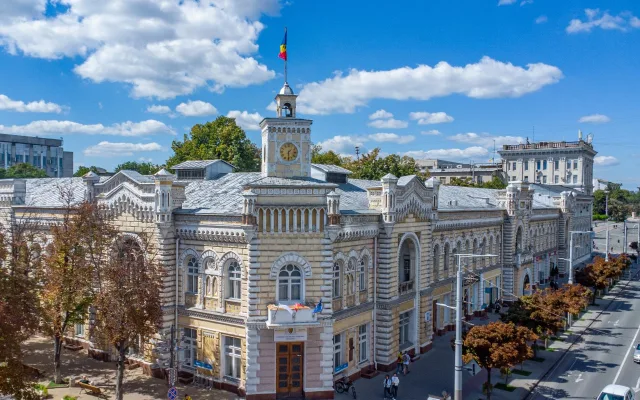
An underrated capital: Moldovan wine cellars within an hour of the centre, broad Soviet-era avenues, low prices and warm hospitality off the tourist trail.
Wiki
Chișinău is one of those capitals almost nobody visits on purpose, and quite wrongly so: it is cheap, calm and good to eat in, and within an hour's drive lie some of the largest wine cellars in Europe. Two days cover the city without hurrying, and half of that time is best given to the wineries outside town.
Why come here
Chișinău is useful to the independent traveller for three reasons. First, it is a base for wine tourism: Moldova is a significant wine-producing country, and its two biggest cellars, Cricova and Mileștii Mici, are 15–20 km from the centre. Second, the prices: this is one of Europe's cheapest capitals, where dinner with wine will not dent a budget. Third, the feel of a city without crowds — there is almost no mass tourist infrastructure, but there is genuine hospitality and a living, unmuseumed centre.
The city was almost entirely rebuilt after the Second World War, so little historic fabric survives; the centre reads as a formal example of Soviet town planning, with wide avenues, greenery and monumental buildings. Do not come for architectural masterpieces — come for the overall impression, and for the wine.
Getting there and getting around
- Airport to centre. Chișinău airport sits a few kilometres to the south-east. A city bus runs into town, and taxis and transfers are available; the journey takes about half an hour. Order taxis through an app — it is cheaper and saves haggling.
- In the city. The centre is compact and entirely walkable: the main points are strung along Ștefan cel Mare Boulevard. For outlying districts there are minibuses and trolleybuses; fares are trivial and paid in cash to the driver.
- To the wineries. Cricova and Mileștii Mici admit visitors only on organised tours with a tasting, and these must be booked in advance — there is no walk-in entry. The simplest options are a tour from the city or a taxi. You are driven through the underground galleries in an electric car; wandering them on your own is not allowed.
- Further afield. Castel Mimi is about 35 km away, Old Orhei 55–60 km. Without a car you can reach the town of Orhei by scheduled transport, but the monastery is easier on a tour or in a hire car.
Two days in the city
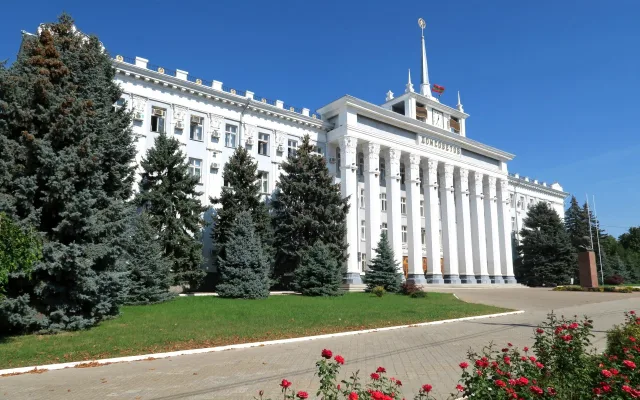
Day 1 — the city on foot. Start at Ștefan cel Mare Park and the statue of the voivode, then the Nativity Cathedral with its free-standing bell tower and the Triumphal Arch opposite. Next to them is Great National Assembly Square with the government building, the ceremonial heart of the country. Give the rest of the day to a walk along Alexandru cel Bun Street and what remains of merchant Chișinău, the only surviving fragment of the pre-revolutionary city. Spend the evening in a Moldovan restaurant.
Day 2 — wine. Half a day or a whole one at Cricova, with its nearly 120 kilometres of underground galleries, or at Mileștii Mici, whose wine collection is in the Guinness Book of Records at around one and a half million bottles. If time and a car allow, add Castel Mimi, built in the French château style, or the cave monastery of Old Orhei on a spectacular bend of the river Răut, one of the most photogenic places in the country.
A word of advice: pick one winery rather than two — a tasting plus the drive eats up half a day.
Food and prices
The cooking is filling and straightforward: mămăligă (cornmeal porridge) with brânză cheese and crackling, plăcintă (a stuffed flatbread), sarmale (cabbage or vine-leaf rolls), zeamă (chicken soup) and mititei (grilled sausages). All of it goes with the local wine, which here is a staple rather than a souvenir.
Chișinău really is cheap: lunch in a local café comes to roughly $8–14, and dinner with wine in a decent restaurant rarely hurts. Street plăcintă and the market will feed you for almost nothing. Wine is better bought in city shops or at the winery itself than at the airport. Prices are as of 2026.
Practicalities: when to come, where to stay, what to watch for
- When. Late summer and autumn are best, the harvest and wine-festival season; the National Wine Day falls in early October. Winter is quiet and raw.
- Where to stay. In the centre, along Ștefan cel Mare Boulevard — everything is walkable from there. Accommodation is cheap, and flats work out better value than hotels.
- How long. Two days is enough: one for the city, one for wine. Allow more only if you plan several wineries or a trip to Gagauzia or Transnistria.
- Safety. The city is calm and the centre is comfortable at night; ordinary care against pickpockets on public transport is enough.
- Common mistakes. Turning up at a winery without a booking; planning two tastings in one day; assuming English is understood everywhere — basic Romanian or Russian goes a long way. And do not try to fit Old Orhei, the castle and the cellars into a single day: it will not work.