 Города и дороги
Description
An oasis city on the eastern edge of Xinjiang, known for its melons and for the mausoleums of the Hami kings, rulers whose tombs combine Islamic and Chinese architecture.
Wiki
Hami (Kumul in Uyghur) is the eastern gateway of Xinjiang: beyond it Gansu begins. This is an oasis at the foot of the eastern Tian Shan, at an altitude of around 760 metres, with some 670,000 inhabitants at the 2020 census. The caravan route from China into the Western Regions ran through Hami, and Marco Polo passed this way in the early 14th century, calling the town Camul. The main local distinction is the Kumul Khanate, a semi-independent domain whose rulers held on under the Qing empire and then under the Republic of China until the 1930s. They left behind the only serious monuments the city has.
What to see
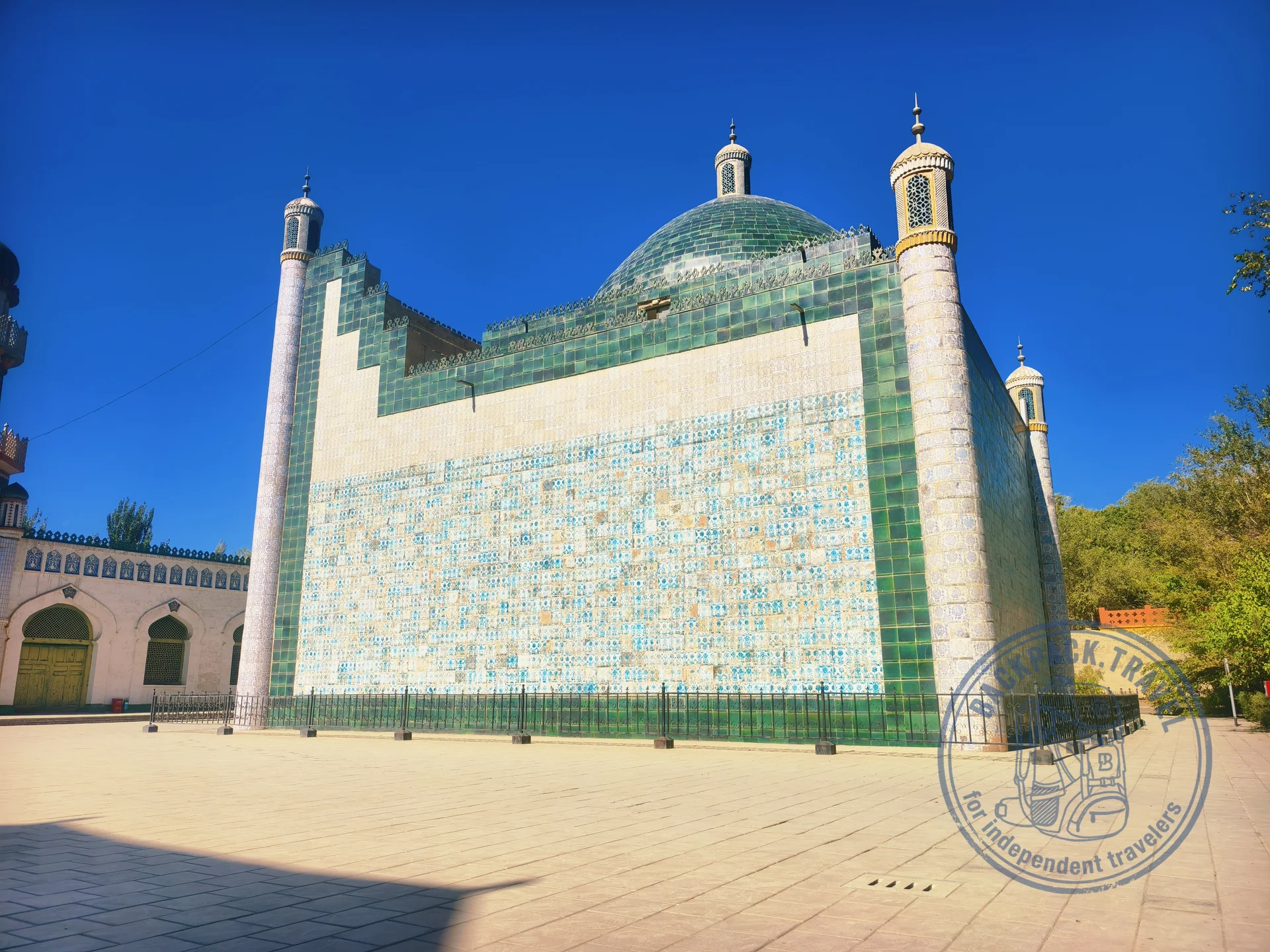
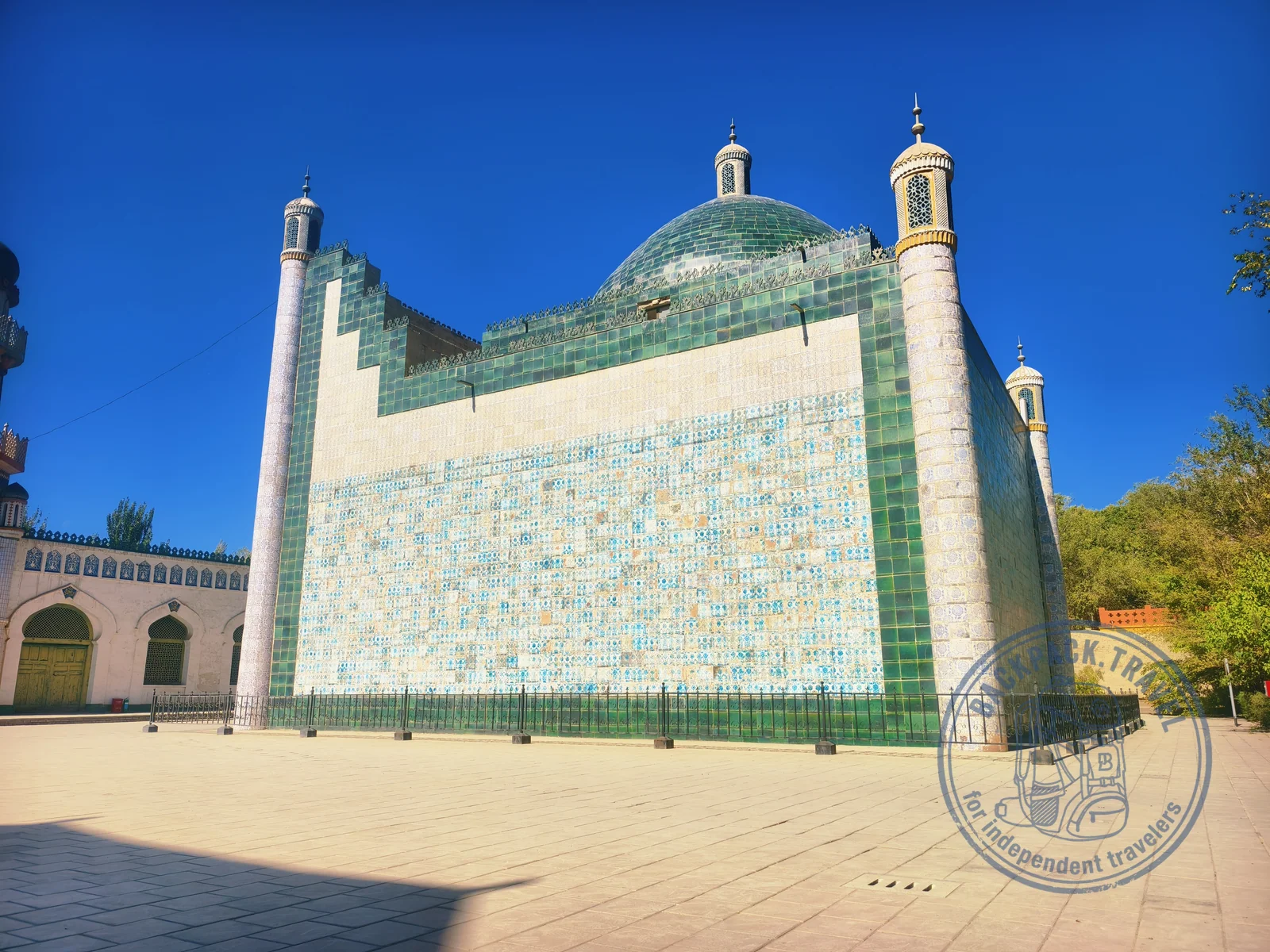
- The Mausoleum of the Hami Kings is the essential stop. The complex took shape around 1840 and served as the burial place of several generations of rulers and their families. The architecture is mixed: the main domed mausoleum is faced with glazed brick in the Islamic tradition, while beside it stand pavilions with the upturned eaves of the Chinese type. Adjoining the complex is a large mosque with a flat roof resting on carved wooden pillars and a painted ceiling. The combination of the two traditions reads more clearly here than anywhere else on the route.
- The Palace of the Hami Kings was the residence of those same rulers. The original was destroyed during the Kumul Rebellion of the 1930s, and the present building was raised anew in the 2000s. It is a reconstruction rather than a monument; it is worth going in for the exhibition and for an understanding of how the khanate was put together.
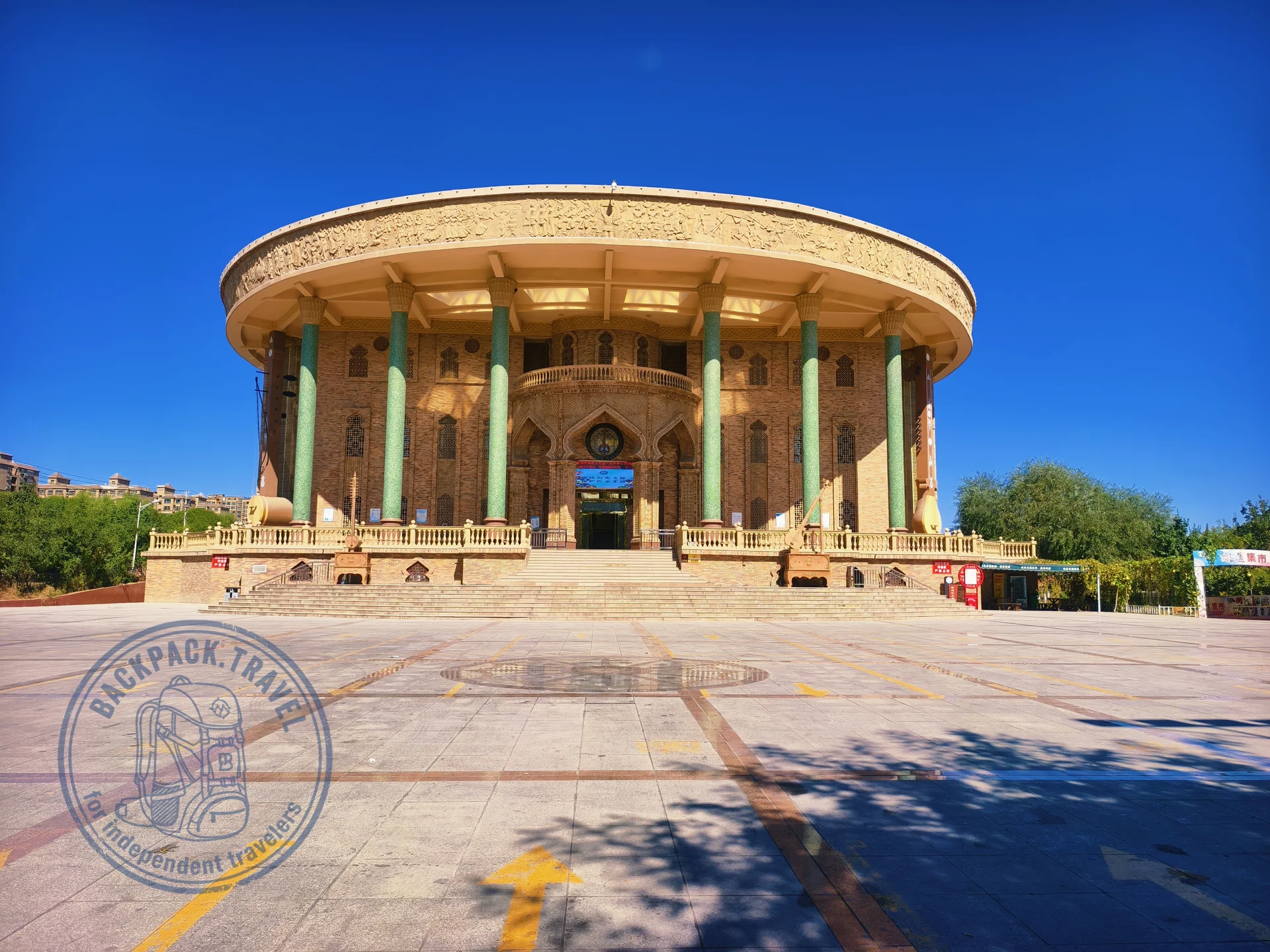
- The Hami Museum is a local history collection on the same street. Besides Silk Road archaeology, it is known for its palaeontology section with fossilised dinosaur eggs.
- Hami melons are the local brand, famous across the whole of China. The season falls in late summer and autumn, when they are sold along the roads and in the markets, and they are worth it.
Beyond the city lies the eastern Tian Shan: the Karlik and Barkol ranges rise to almost 4,900 metres, and further north stretches the steppe plateau of Barkol Kazakh Autonomous County, with pastures and a climate quite unlike that of the baking oasis. A trip out there requires a car and a day of its own.
How much time to allow
If you are breaking up a long journey, two or three hours are enough for the mausoleum of the kings and the palace. Half a day is already a fair allocation for the city: it adds the museum and the market. An overnight stay is justified when you need a breather between Turpan and Dunhuang and would rather not travel a full day straight, while two days make sense only if you are heading into the mountains or out to the Barkol steppes.
Hami almost always works as a stop along the way rather than as a destination in its own right.
Getting there
The city sits on the Lanzhou-Xinjiang high-speed line, in service since the end of 2014, and that is its main practical advantage. High-speed trains reach Turpan in about an hour and a half and Urumqi in around two and a half to three hours. Eastwards on the same line is Liuyuan South station, from which people continue to Dunhuang, and beyond that Jiayuguan and Zhangye. There is also an airport 12-13 km north-east of the centre, but with a train timetable like this, few people need it. The city's monuments stand close to one another and are easy to cover on foot.
When to go and what to keep in mind
- The climate is sharply continental and dry: January averages around minus 10 °C, July around plus 27 °C, and annual precipitation is on the order of 44 mm.
- The best time is May to June and September to October. In autumn tolerable weather and the melon season coincide.
- The region runs on Beijing time, but locals often count by "Xinjiang time", two hours behind.
- Carry your passport with you: document checks are routine in Xinjiang. A foreigner cannot stay in just any hotel, so this is something to establish in advance.
Who won't enjoy it
Hami is the most modest city on the whole Silk Road route. There is one genuinely strong site here, one modern replica and a local history museum; there is no old town, nothing to do in the evening, and the buildings are ordinary and recent. If you have a week for Xinjiang and Gansu, Hami will be the first thing to drop out of the plan in favour of Turpan and Dunhuang. A stop makes sense in two cases: when you need a night's rest in the middle of a long journey, or when you are curious about what the power of a local Muslim dynasty embedded in the Chinese empire looked like — the mausoleum of the kings shows that better than any explanation.