 Города и дороги
Description
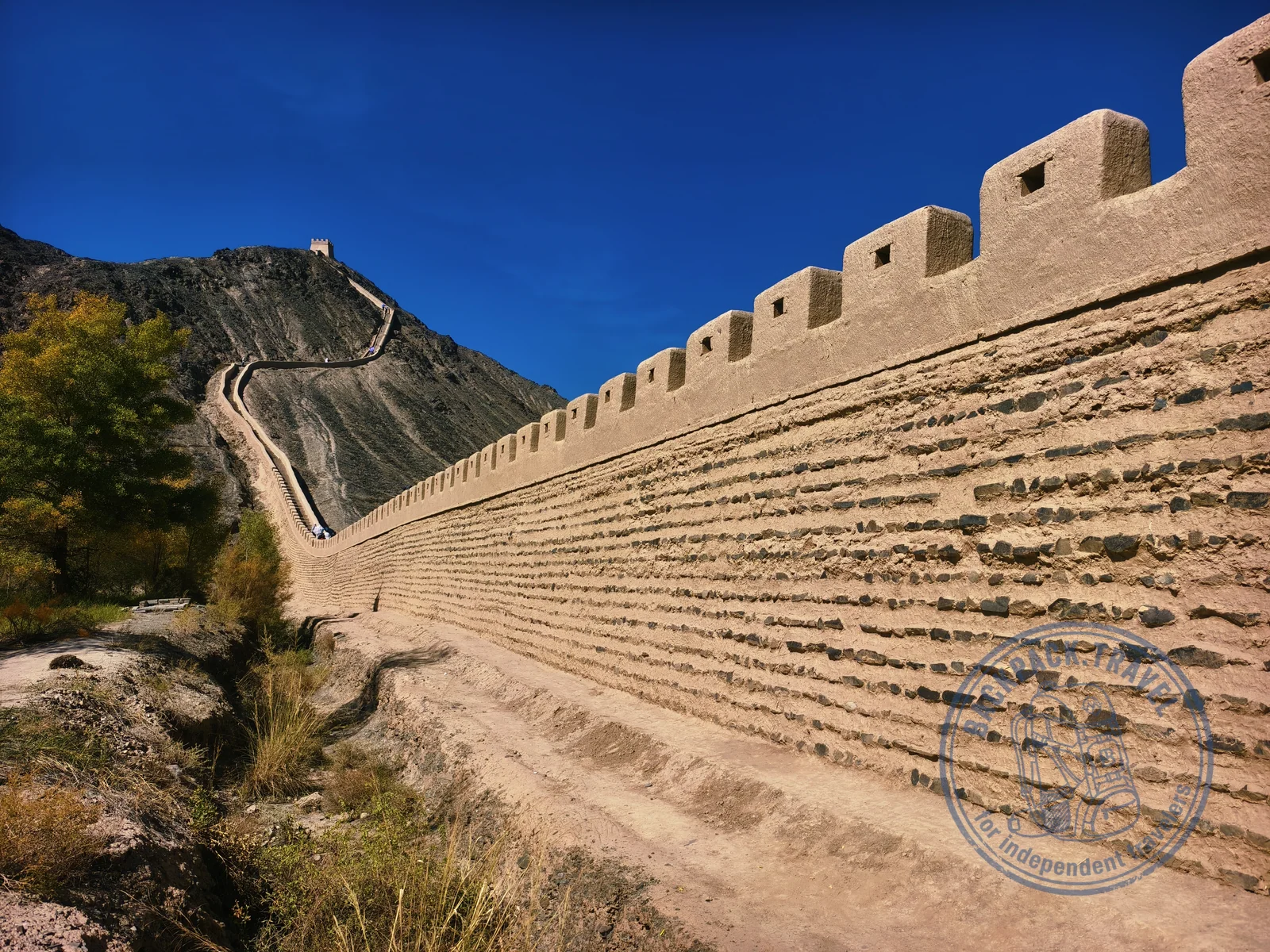
The western pass of the Great Wall: a fortress in the middle of the desert where the wall breaks off, and the Overhanging Wall running up the slope of the Heishan range.
Wiki
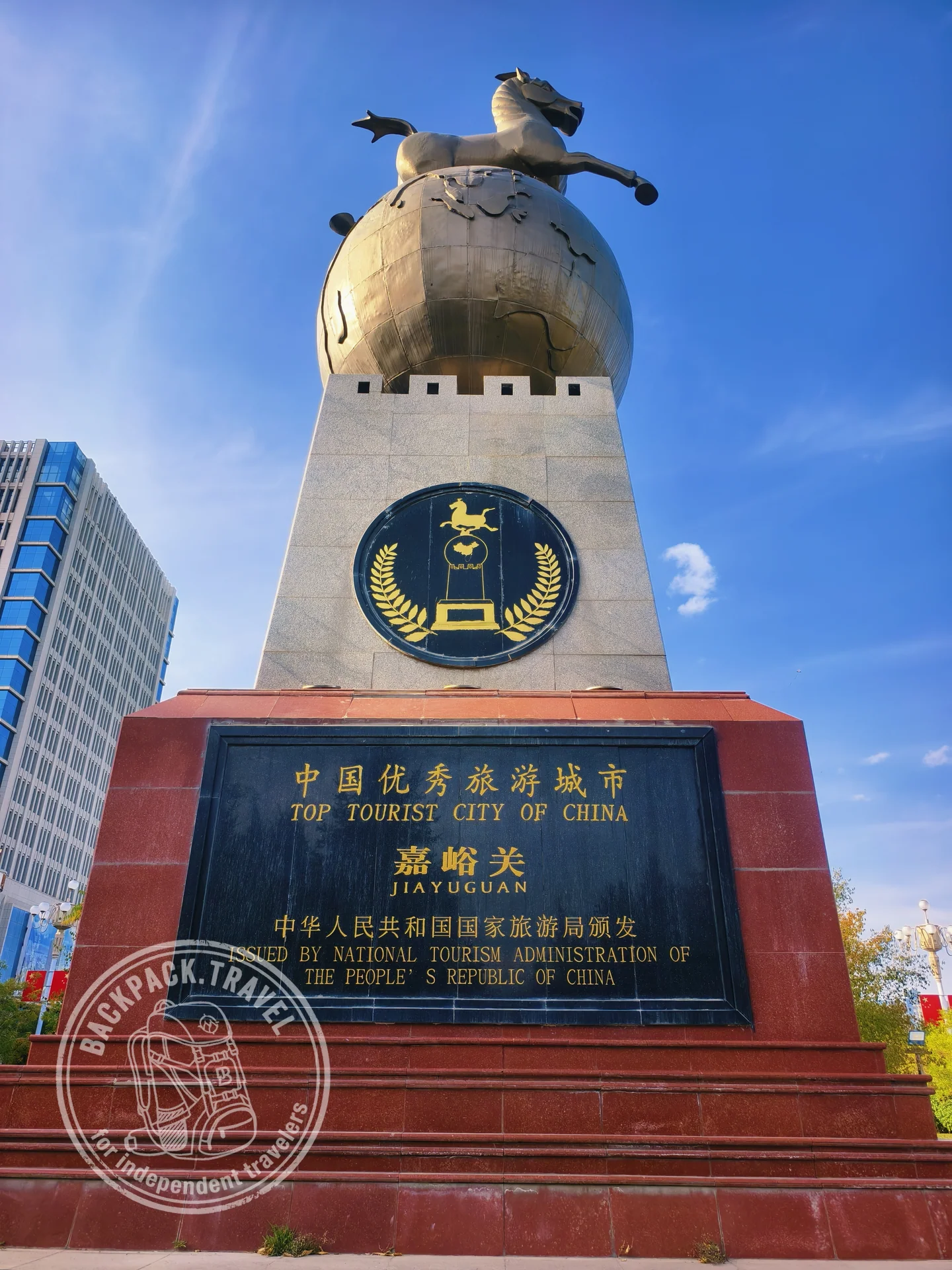
Jiayuguan is a city at the narrow point of the Hexi Corridor, between the Heishan range and the snow-covered Qilian Mountains. This is where the Great Wall of China ends: further west the Ming empire built nothing. The fortress on the pass was called the "First Pass Under Heaven", and in Ming times merchants and embassies from Central and Western Asia entered China through it. Everything people come here for fits into a single day, but it is the clearest example of an imperial frontier you will find.
What to see
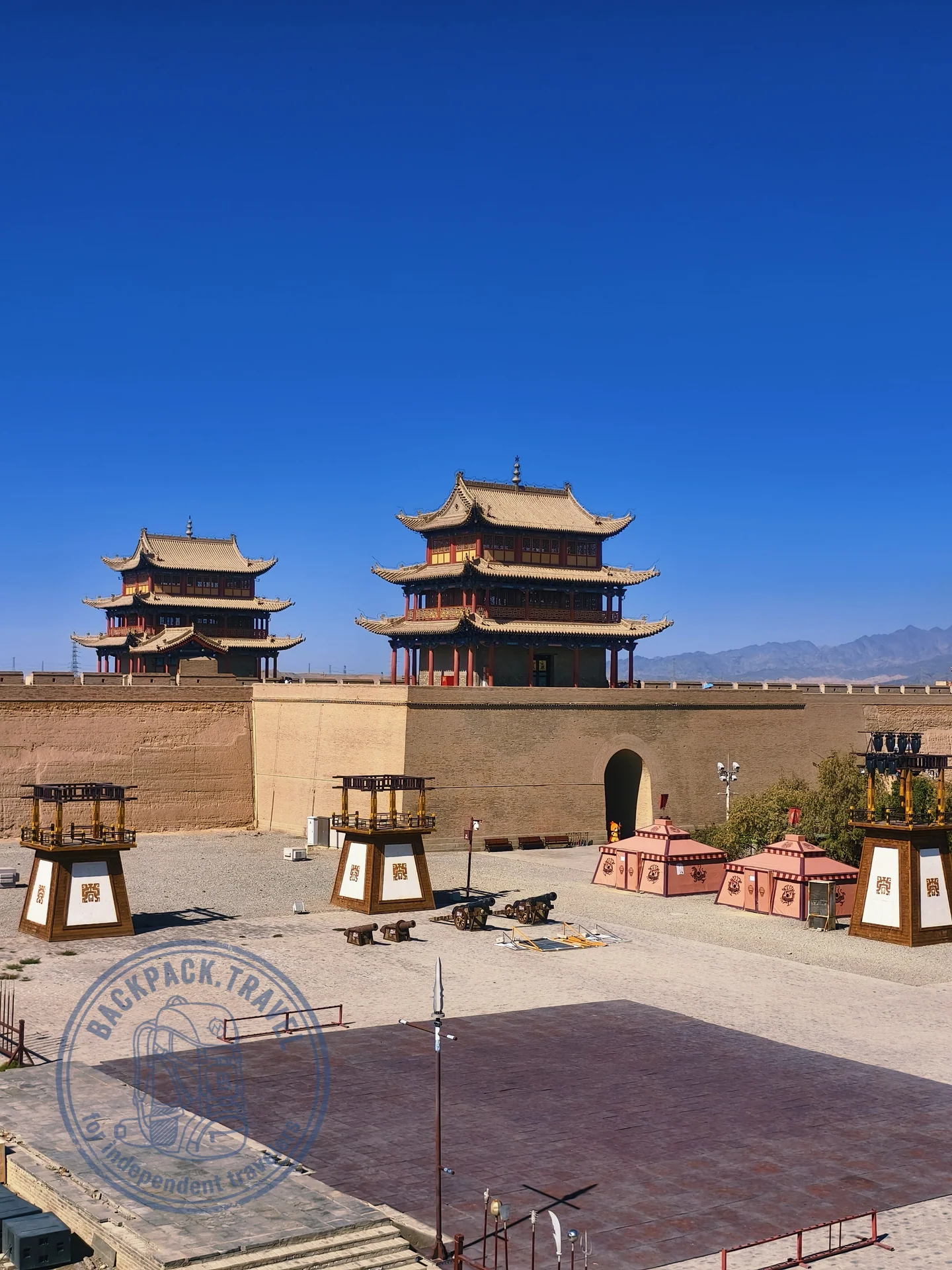
- Jiayuguan Fort is the main attraction. It was founded around 1372, at the start of the Ming dynasty, and later strengthened out of fear of an invasion by Timur. The fort is a trapezoid in plan: the walls run 733 metres around, the area exceeds 33,000 square metres, the walls stand about 11 metres high, there are gates on the east and the west, and towers at the corners. This is the most complete of the surviving passes of the Great Wall, and it is usually compared with Juyongguan and Shanhaiguan. Tradition has it that a single brick was left over during construction, and it still lies on one of the gate buildings. The Great Wall was added to the UNESCO list in 1987.
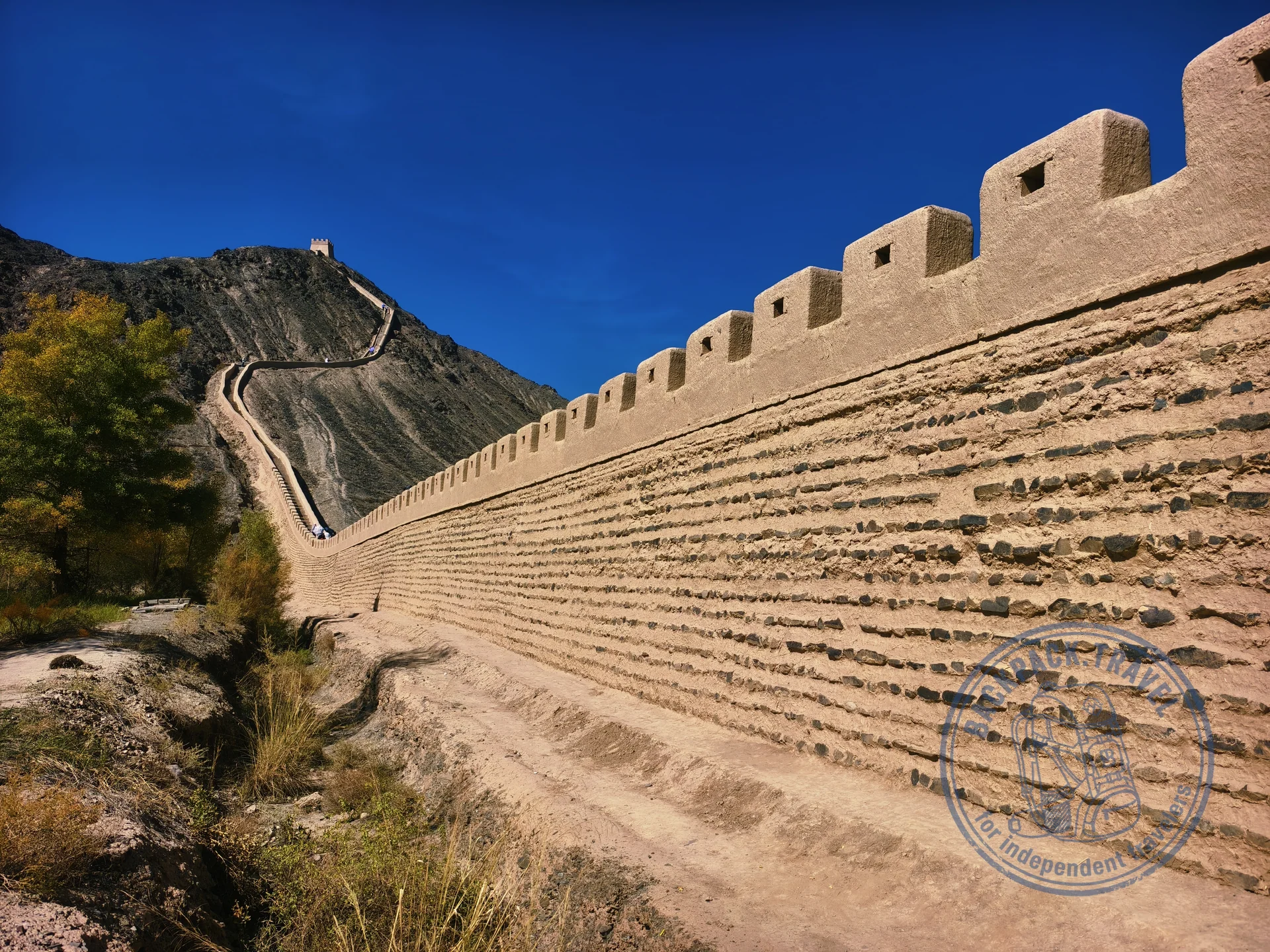
- The Overhanging Great Wall is a section roughly 8 km to the north, on the northern slope of Heishan, built in 1539. The wall runs steeply down the ridge, which is where the name comes from; about 750 metres of rubble-and-loess masonry survive today. A staircase leads to the top, and the climb is short but steep.
- The First Beacon Tower of the Great Wall is the westernmost signal tower, put up in that same year of 1539 under the supervision of Li Han. It stands on a cliff almost 60 metres above the Taolai River; the mud-brick stump itself is modest, and what makes it interesting is its position above the canyon.
- The Wei and Jin tombs are a necropolis near the settlement of Xincheng, about 18 km to the east. Over an area of some 13 square kilometres more than a thousand burials of the 3rd and 4th centuries have been counted, and over seven hundred painted bricks with scenes of daily life were found in them: ploughing, hunting, feasts and music. One tomb is open to visitors.
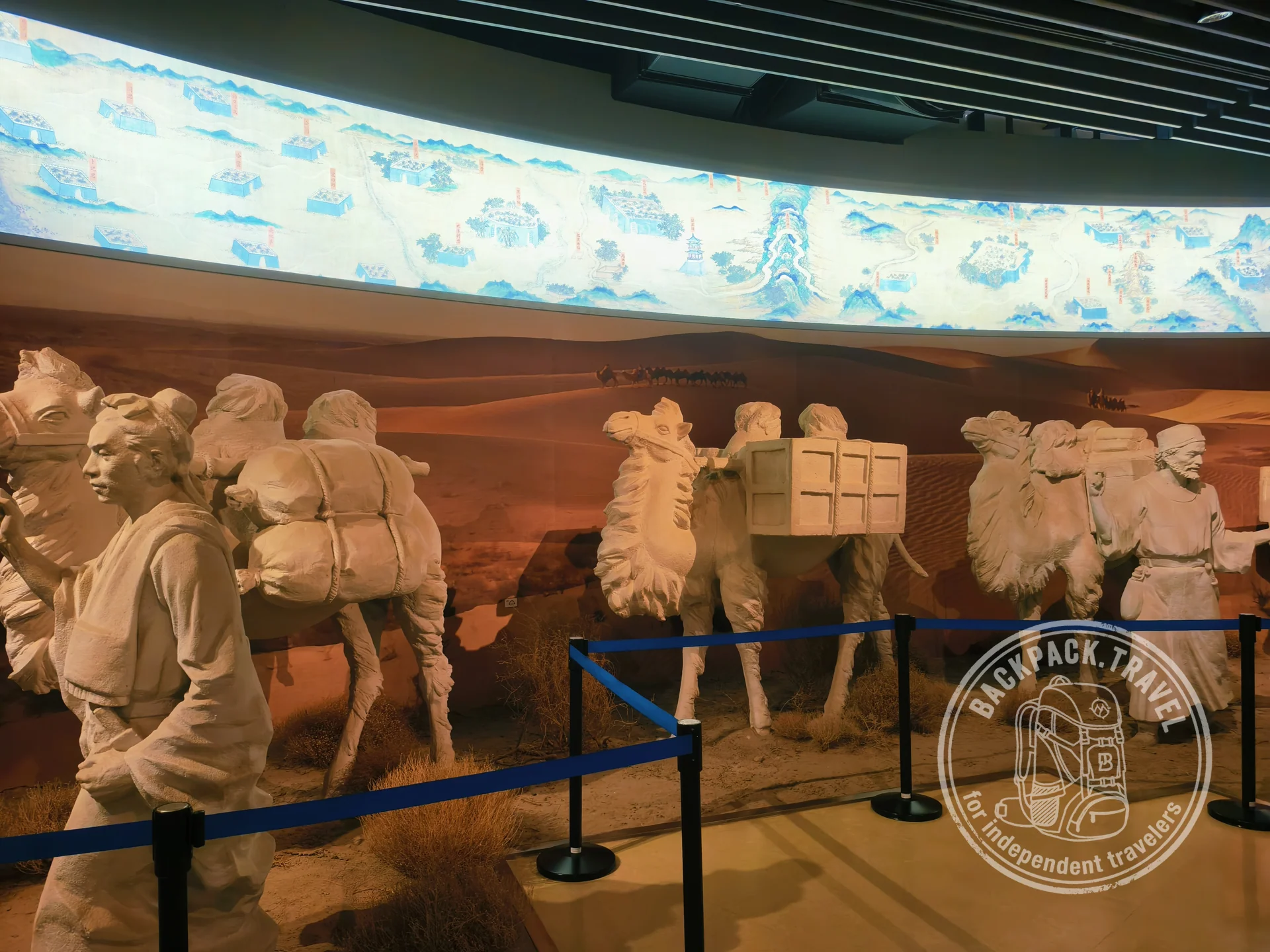
- The Great Wall Museum was the first museum in China devoted to the history and construction of the wall. It is useful for making sense of what you are looking at.
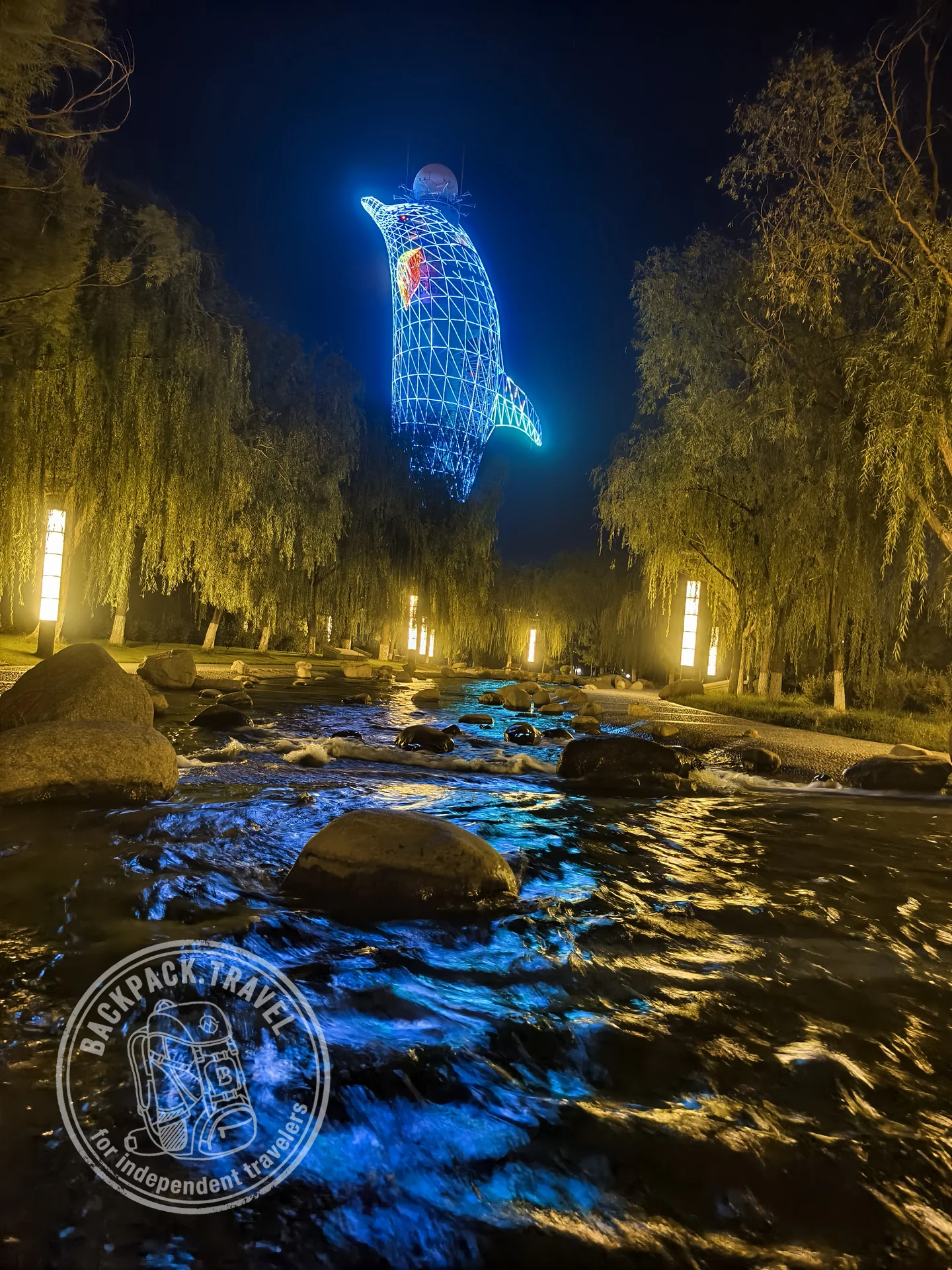
- The "Western Pearl" meteorological tower is the modern landmark of the city, 99 metres high, with a radar on top and viewing floors.
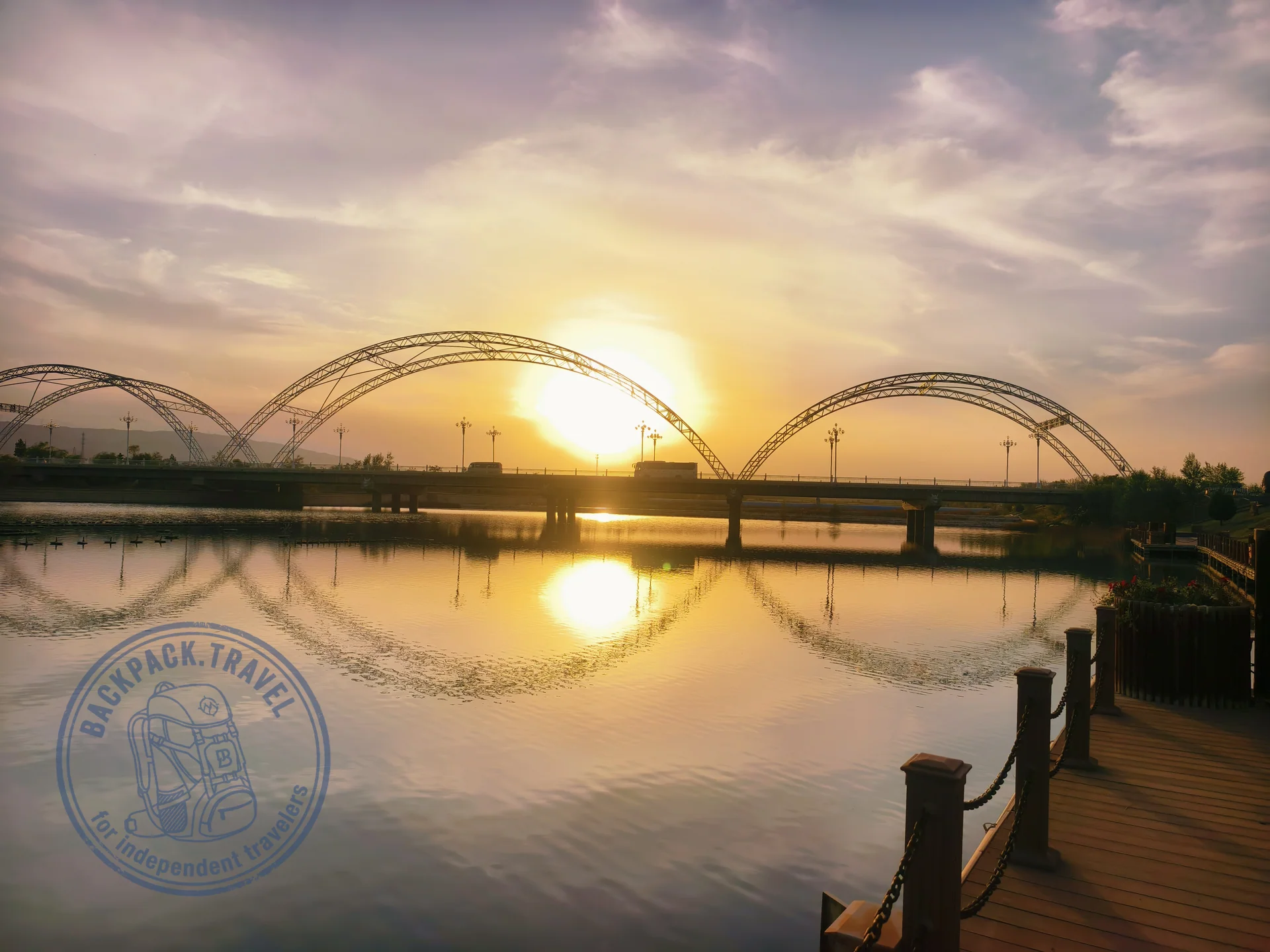
- South Lake Park is a city park with water and greenery in the middle of the Gobi. There is nothing to see, but after the dusty fort it is a pleasant place for an evening walk.
How much time to allow
Half a day covers the fort alone: walking round it takes an hour and a half to two hours, and as much again goes on the journey and on the queue in season. The best option is a full day, when the fort, the Overhanging Wall and the First Beacon Tower are combined into a single circuit by car. A day and a half to two days are needed if you add the Wei and Jin tombs and the museum.
There is nothing to do in Jiayuguan for longer than two nights. The sites are scattered across the desert with eight to twenty kilometres between them and there is almost no public transport, so count on either taxis or a car with a driver for the day.
Getting there and when to go
The city sits on the Lanzhou-Xinjiang high-speed line, and trains come in to Jiayuguan South station. Zhangye is about 212 km away, an hour or more by high-speed train; in the other direction lies Liuyuan South, from which people continue to Dunhuang, and beyond that Hami, Turpan and Urumqi. The logical chain on the route is Dunhuang, Jiayuguan, Zhangye.
- May to June and September to October are the best months: it is less hot, the air is clearer, and the Qilian Mountains are visible with their snow.
- Summer brings heat and a dusty wind on the exposed walls, with no shade anywhere.
- Winter is cold and windy, but the fort against the snowy mountains looks imposing; allow for the short hours of daylight.
Who won't enjoy it
If you are expecting a long stone wall like the one near Beijing, you will be disappointed: here the Great Wall is clay, rubble and low ramparts, and the main sight is essentially a single fort. The fortress has been thoroughly restored, and some of the buildings look new. There is no city as such: Jiayuguan is an industrial centre with nowhere to walk and nothing to do in the evening. Without a car the trip turns into expensive taxi rides between sites scattered across the Gobi. But if you are interested in where and how the empire drew its western border, this is the most legible point on the entire Silk Road.