Description
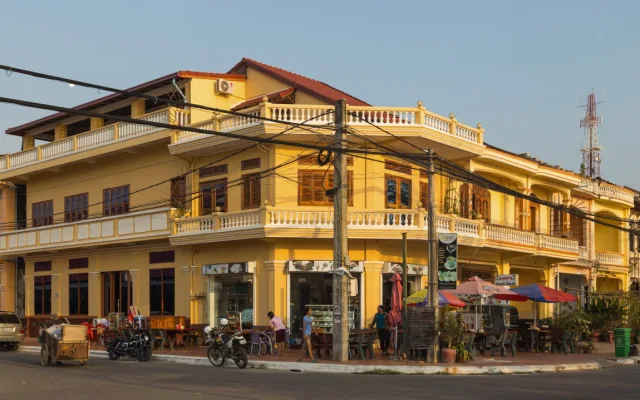
A sleepy riverside town in southern Cambodia — French colonial shophouses, world-famous pepper farms and the Bokor plateau.
Wiki
Kampot is a small provincial town in southern Cambodia, strung out along the slow river of the same name a few kilometres from the Gulf of Thailand. Around forty thousand people, a surviving stock of French colonial buildings, a pepper that is famous worldwide and a thoroughly relaxed pace of life have made it one of the most appealing places in the region for anyone who values quiet and unhurried travel.
History and the shape of the place
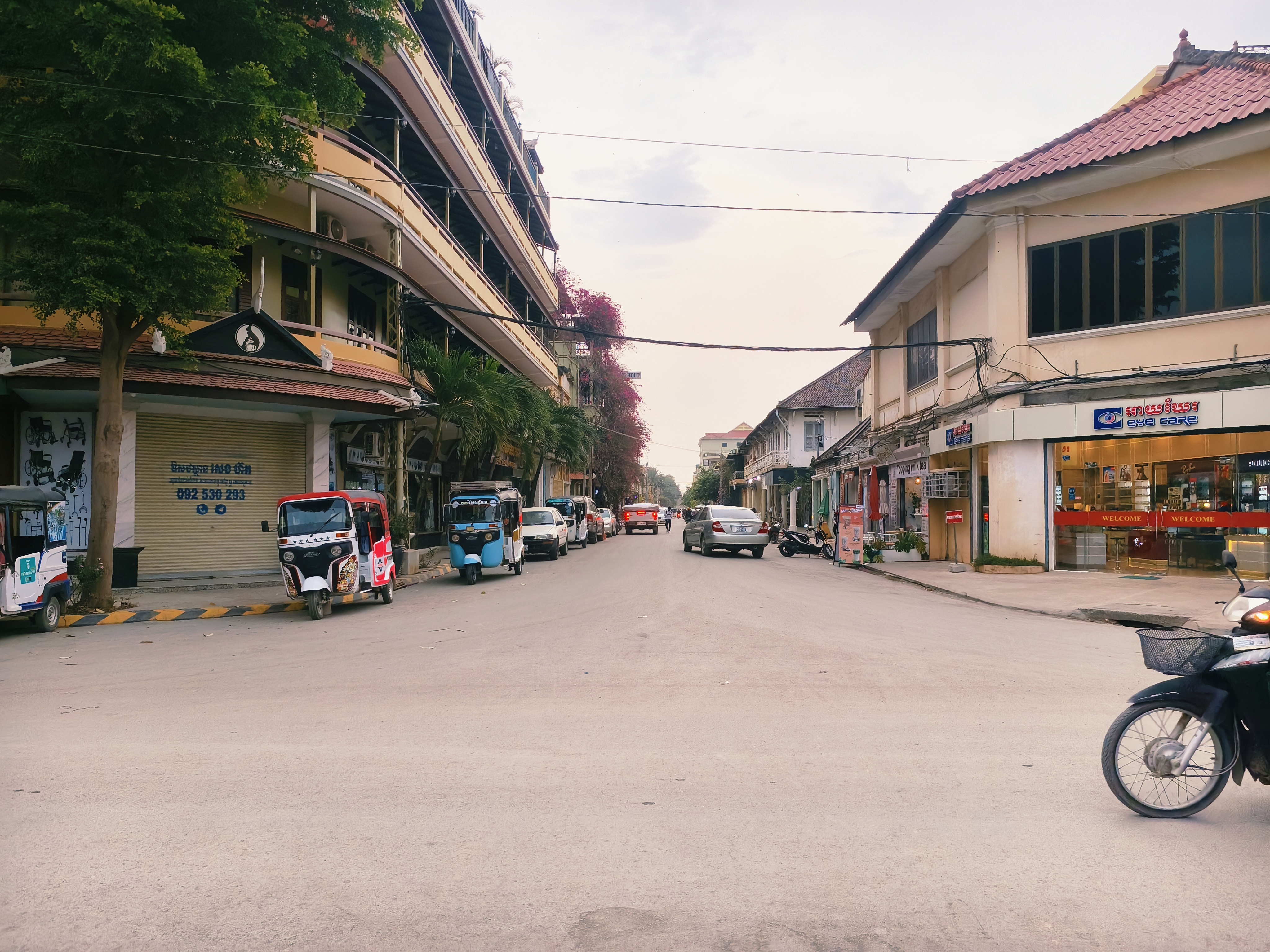
Kampot was founded as a trading port in the colonial period and remained the country's main sea gate until the deep-water harbour at Sihanoukville was built. That period is written into the centre: low stuccoed buildings with arcaded galleries, shutters and time-darkened façades line the riverfront and the narrow streets of the old quarter. Many have been restored as guesthouses, bakeries and workshops; others stand half-abandoned, which gives the town a particular melancholy photogenic quality. The river splits the space in two: residential streets and the market on one bank, rice fields, palms and the silhouette of a mountain range on the other.
What to see
- Bokor Hill Station — the dominant natural and historical feature of the area. On the plateau inside the national park stand the ruins of a French hill resort of the 1920s: the empty shell of the casino, an old Catholic church, a water tower. A winding surfaced road climbs to the top, and in clear weather the viewpoints look out over the whole coast.
- Pepper plantations — the calling card of the province. Farms around the town run tours explaining how the vine is grown, with tastings of the green, black, red and white grades.
- Phnom Chhnork cave — a karst grotto sheltering a pre-Angkorian brick temple dedicated to Shiva. The building is over a thousand years old.
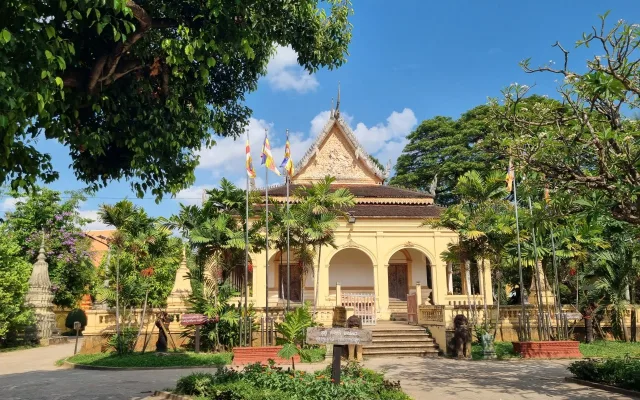
- Phnom Sorsia — a neighbouring limestone hill with a working Buddhist temple, stairways and caves full of bats.
- The salt fields — flat mirrored pans between Kampot and Kep, at their best at sunset.
- River trips — evening boat outings along the river to watch fireflies in the mangroves.
Around Kampot
Twenty-five kilometres away is the seaside town of Kep, a former colonial resort with a crab market right at the water's edge; the local speciality, crab braised with fresh green pepper, counts as one of the country's culinary emblems. From there it is half an hour by boat to the near-deserted Rabbit Island (Koh Tonsay), with simple beaches and bungalows. The region is compact enough to cover the main points on a hired scooter or by tuk-tuk in a day or two.
Food and pepper
Kampot pepper carries a protected geographical indication — as with champagne, only the product from this district may use the name. It is prized for a bright, layered aroma and used by cooks around the world. The local cooking is straightforwardly Khmer: fish amok curry, beef lok lak, num banh chok rice noodles, and an abundance of tropical fruit and seafood. Along the riverfront are cafés serving European bread and coffee, an echo of the French past.
Practicalities
Kampot sits conveniently between Phnom Penh and Sihanoukville, a few hours by bus or minivan from either, and there is a rail link as well. The best time to visit is the dry season, roughly November to April, when rain is rare and the Bokor road gives no trouble. Payment is in US dollars and Cambodian riel, with cash preferred. Life here is noticeably cheaper than in the region's tourist centres: a modest lunch costs a few dollars, and scooter hire and tuk-tuk rides are inexpensive.
How much time to allow
Three days is enough to take the town in without hurrying: one for slow walks around the colonial centre and the riverfront, ending with the firefly boat; a second for the climb to Bokor and the cave temples; a third for an outing to Kep with its crab market and salt fields, and if you fancy it the boat over to Rabbit Island. That rhythm matches Kampot's own — measured and contemplative.