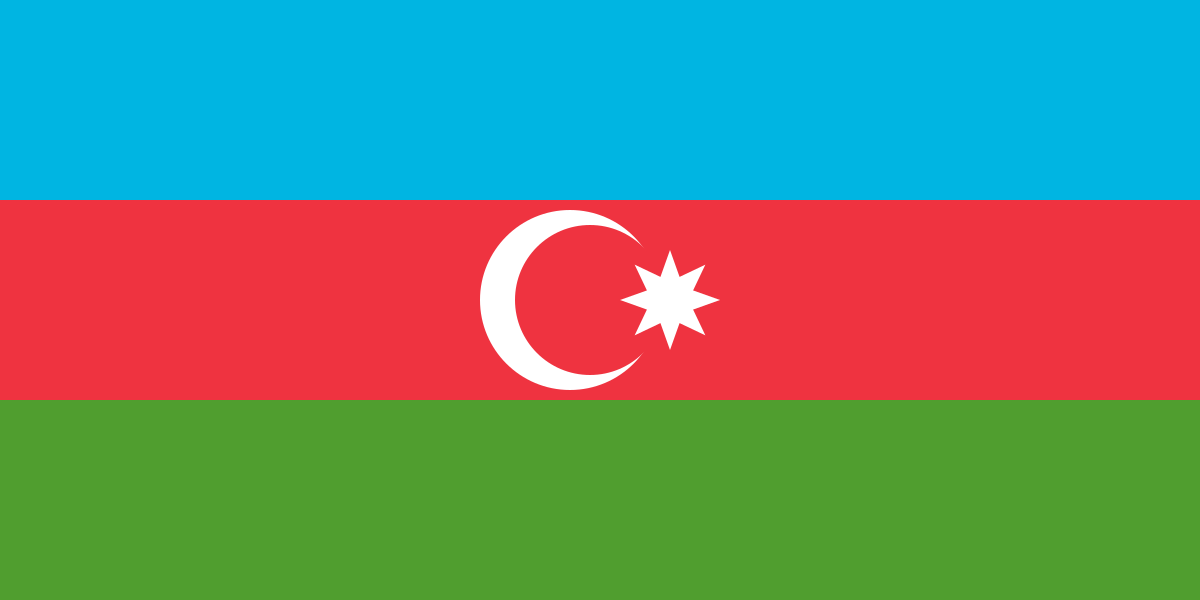
Azerbaijan
AZThe Land of Fire, straddling Europe and Asia — Azerbaijan startles with the contrast between ultra-modern Baku, all Flame Towers, and the caravanserais of the old city. Mud volcanoes, the burning hillside of Yanar Dag, the Zoroastrian fire temple at Ateshgah: fire is everywhere. Beyond the capital lie the Greater Caucasus, medieval Sheki with its khan's palace and the vineyards of Gabala. The cooking is among the finest in the Caucasus, and Russian is widely understood.
Where to go #
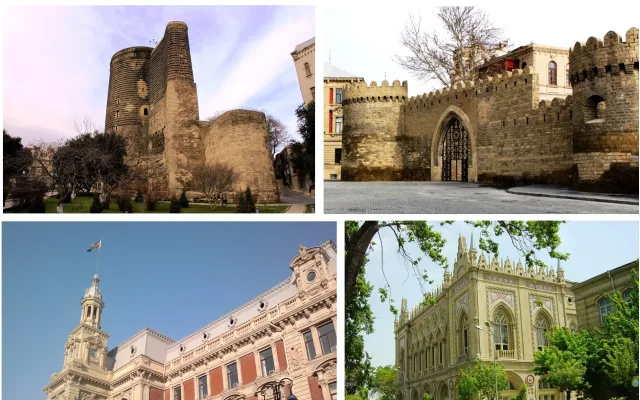
Baku
Azerbaijan's capital on the Caspian: the walled old town of Icherisheher, the Maiden Tower and the Flame Towers of the oil era.
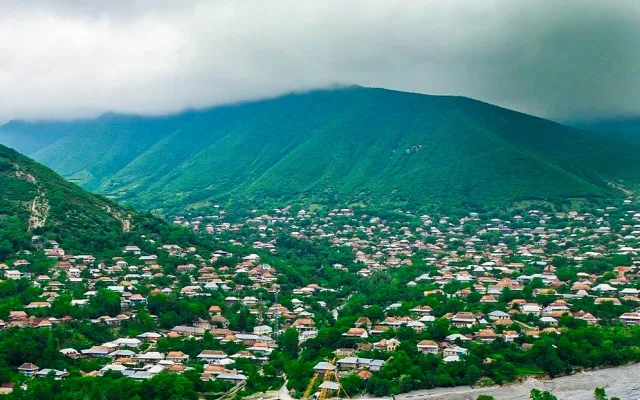
Sheki
Sheki is a historic town in Azerbaijan, known for the Palace of the Sheki Khans, its silk-making tradition and medieval caravanserais.
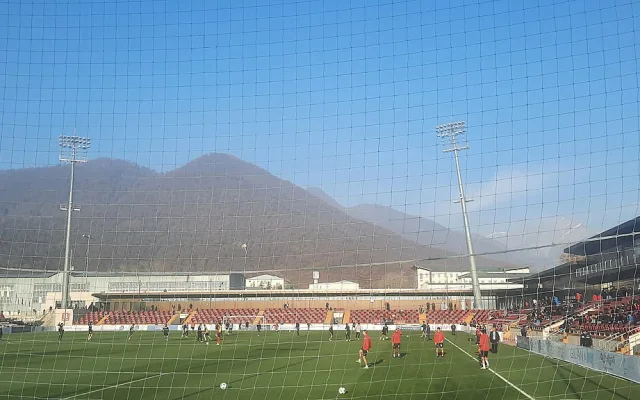
Gabala
Azerbaijan's best-known mountain resort: the Tufandag cable car, Lake Nohur and waterfalls in the foothills of the Greater Caucasus.
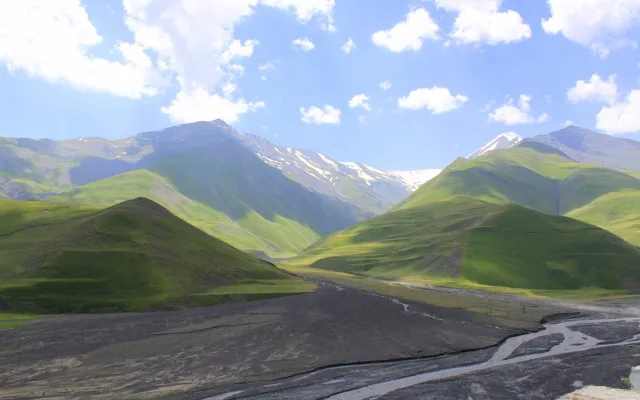
Quba
A quiet mountain town in northern Azerbaijan: the Jewish quarter of Red Town, carpets, orchards and the road up to Khinalig.
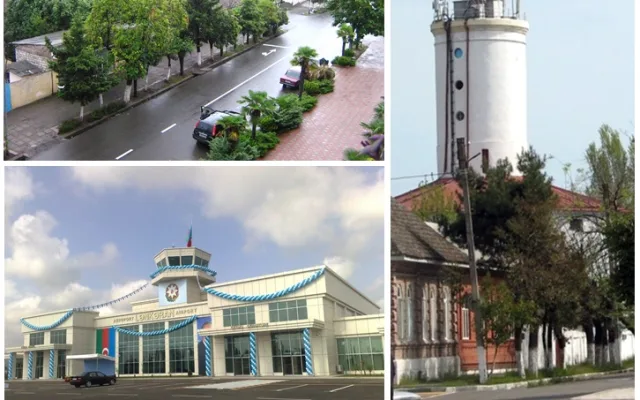
Lankaran
Azerbaijan's subtropical south on the Caspian: the Hyrcanian relict forest, tea plantations and distinctive Talysh cooking.
What to see #
Icherisheher: Baku's old city is a living museum, and the things to see are the Maiden Tower and the Palace of the Shirvanshahs.
Wander the narrow lanes, which have doubled for half the Middle East in various films.
Heydar Aliyev Center: A building with no straight lines anywhere, and worth seeing from the outside even if you go no further.
Inside there are strong exhibitions, including national craft displays and a vintage car collection.
Gobustan: Worth a trip for 6,000 prehistoric rock carvings and the Martian landscape of bubbling mud volcanoes.
Be aware that the last few kilometres are on a dirt track, covered by battered local taxis rather than your own car.
Ateshgah and Yanardag: The old fire-worshippers' temple and the permanently burning hillside are best combined into one outing.
Yanardag only really works at dusk or after dark, when the flames actually show.
Palace of the Sheki Khans: A masterpiece assembled from thousands of pieces of coloured glass without glue or nails.
Entry is cheap, and the way the light moves through the interior stays with you.
Tufandag: In Gabala, take the gondola above the cloud line for Caucasus panoramas.
There are decent cafes at the top, a swing over the drop and viewing platforms built for photographs.
Khizi: The pink and red hills are the most photogenic thing within a day of the capital.
Come in clear weather, when the stripes take on their full boiled-sweet intensity.
Prices #
Currency: The manat is pegged hard to the dollar at about 1.70. Notes and coins are in circulation and the design deliberately echoes European banknotes.
Exchange: Bring dollars or euros in cash and change them at any bank branch at the official rate. The airport desks are fair, so change a small amount there for the ride into town.
Cards: Visa and Mastercard are accepted widely in Baku, Amex much less so, but outside the capital and at any market it is manat cash only.
ATMs: Machines are common in the cities and take foreign cards, with modest fees. A Wise or Revolut card avoids the conversion markup, though the fixed peg means the rate barely moves anyway.
Tipping: Larger restaurants often add ten percent to the bill. If they have not, leaving a small amount in cash is the polite move.
| Item | Price (USD) |
|---|---|
| Street qutab | 1.20 |
| Doner in lavash | 2.50 |
| Lunch in a cafe | 10.00 |
| Dinner for two | 40.00 |
| Pot of tea | 4.00 |
| Cappuccino | 3.50 |
| Bottle of water | 0.40 |
| Metro ride | 0.30 |
| Taxi across Baku | 4.00 |
| Hostel bed | 15.00 |
| Guesthouse | 35.00 |
| Four-star hotel night | 90.00 |
| Museum ticket | 9.00 |
| Litre of petrol | 0.80 |
Getting around #
Getting in: Baku's Heydar Aliyev airport has direct flights from London, Paris, Milan, Vienna, Frankfurt and Istanbul, with budget carriers on several of those routes, plus easy connections through Dubai and Doha. Note that the land borders are closed to individual travellers, so arriving by air is effectively the only option.
In the capital: Baku has a good modern bus network and a clean three-line metro. You need a BakiKart from the terminals to pay, since drivers do not take cash.
Taxis: Ignore the drivers touting on the street, who will multiply the fare for a foreigner. Use Bolt or Uber, where a city ride costs almost nothing and the route is tracked.
Car hire: A car gives you the regions, but central traffic is dense and takes adjusting to. There are speed cameras everywhere and the limit changes constantly, so watch the signs.
Intercity buses: Services run from the central station to every major town at low fares. Tickets are cheap, but the older minibuses are cramped and the air conditioning is a lottery.
Trains: Comfortable modern trains connect the main cities and are the best way to travel here. Book in advance on the official site, as the good departures fill up.
Funicular: A small car runs from the seafront up to the viewpoint for the best views in the city. It closes for maintenance from time to time, in which case a taxi does the same job in two minutes.
Where to stay #
The old city: Sleeping inside Icherisheher gives you the atmosphere, at the cost of small windows and street noise. In exchange, the main sights and the historic bathhouses are on your doorstep.
Central districts: Around Nizami or 28 May metro is quieter and more practical for a longer stay. Prices are about a quarter lower and the seafront boulevard is a fifteen-minute walk.
Apartments: The booking sites list plenty of well-renovated flats at budget-hotel prices. The obvious choice for independent travellers who want a kitchen.
Guesthouses: In the smaller towns, family guesthouses replace hotels and are considerably warmer places to stay. You will be fed a large breakfast and pointed at the best trails nearby.
Caravanserais: In Sheki you can sleep in a genuine medieval merchants' inn. The rooms are austere under stone vaults, but the experience justifies it.
Resort hotels: Gabala and the Caspian coast have modern complexes with pools and spas. Service is good, though they tend to sit some way from anything else.
What to eat #
Plov: The culinary heart of the country, saffron rice in dozens of recognised variations. The celebratory shah plov, baked inside a crust of pastry, is the high point and worth ordering in a proper restaurant.
Street food: Qutab, thin flatbreads filled with herbs, meat or pumpkin, are the snack of choice. Avoid the dubious stalls around the stations and stick to established places in the old centre.
Piti: In Sheki, try the mutton and chickpea stew slow-cooked for eight hours in clay pots. It is overrated in the capital, so go north for the real thing.
Sac: A mountain of meat and vegetables on a searing metal pan brought to the table on coals. Portions are built for a group, so do not over-order alongside it.
Dovga: A yoghurt soup thick with herbs and chickpeas, served hot or cold. It settles the stomach after a run of heavy meat dishes.
Tea: Served in armudu glasses with an array of jams made from fig, quince or walnut. Teahouses are for long conversations, not for a quick drink.
Safety #
Overall: One of the calmer countries in the region for independent travel. You can walk central Baku late at night without concern and there is a constant police presence.
Scams: Be wary of persistent touts and street taxi drivers who inflate an agreed price. Confirm the total before you accept any service.
Politics: Relations with neighbouring Armenia remain a raw subject, so avoid the discussion entirely. Visiting border areas without permission is prohibited by law, and it is worth reading your own government's travel advisory on that.
Roads: Drivers do not reliably yield at crossings, so pay attention. Off the main routes in the mountains the surface deteriorates, and those roads should only be driven in daylight.
Health: Do not drink tap water, buy bottled. Summer sun is aggressive, so sunscreen and a hat are worth packing.
Dress: Society is secular, but cover shoulders and knees at mosques and in rural villages. In the capital young people dress however they like and visitors face no real restrictions.
Etiquette and culture #
Hospitality: Warmth towards guests is a matter of identity rather than manners. If you are invited for tea, accept, because it is the fastest route into understanding the place.
Novruz: The spring festival at the end of March stops the country for a week. Accommodation is hard to find, but the bonfires, sweets and street celebrations are worth timing a trip around.
Carpets: Weaving is treated as high art, and the museum in Baku is built in the shape of a rolled carpet. Learn the regional patterns, because every motif carries a meaning.
Religion: The population is mostly Muslim but the state is firmly secular. Alcohol is sold openly and the bars in Baku stay open as long as there are customers.
Mugham: A unique tradition of modal singing that counts as national heritage. Visit the dedicated centre on the boulevard to hear it done properly.
Cinema: The capital was a significant filming location in the Soviet era and many of the locations survive. Tracking them down makes a good themed walk through the old town.
Connectivity #
Operators: Azercell, Bakcell and Nar cover the country. Tourist SIMs at the airport start around 25 manat, while city shops charge 15 to 20, and you need your passport either way.
eSIM: Airalo and similar international providers work fine and get you online immediately on landing. Convenient if you would rather not queue at a counter with your passport.
The IMEI rule: If you stay longer than 30 days, your phone's IMEI must be registered at imei.az or at a post office. Otherwise the slot for a local SIM is blocked until the state fee is paid.
Coverage: 4G is strong in Baku and the regional centres. In the mountains and remote villages the signal disappears, so download offline maps first.
Wi-Fi: Free in most hotels and restaurants, and there is a city network in the capital. For calling a Bolt or Uber you want your own data rather than public Wi-Fi.
Apps: Google Maps handles the lanes of Icherisheher well enough. Track city buses with BakuBus, and note that you will not normally need a VPN here.
Phrasebook #
| English | Azerbaijani | Pronunciation |
|---|---|---|
| Hello | Salam | Sa-LAM |
| Thank you | Sağ ol | Sagh ol |
| Yes / No | Bəli / Xeyr | Beh-LEE / Kheyr |
| How much is it? | Bu neçəyədir? | Boo ne-che-ye-DEER |
| That's expensive | Bahadır | Ba-ha-DUR |
| Cheap | Ucuzdur | Oo-jooz-DUR |
| Please | Zəhmət olmasa | Zeh-MET ol-ma-SA |
| I don't understand | Başa düşmürəm | Ba-SHA dush-mu-REM |
| Sorry | Bağışlayın | Ba-gush-LA-yun |
| Water | Su | Soo |
| Tasty | Dadlıdır | Dad-lu-DUR |
| Tea | Çay | Chai |
| Where is...? | ...haradır? | ha-ra-DUR |
| Help | Kömək edin | Ker-MEK e-DEEN |
| Beautiful | Gözəldir | Ger-zel-DEER |
| Good | Yaxşı | Yakh-SHUH |
| Brother, mate | Qardaş | Gar-DASH |
| Goodbye | Sağ olun | Sagh o-LOON |
| Enjoy your meal | Nuş olsun | Noosh ol-SOON |
| A discount, as a favour | Hörmət | Her-MET |
Good to know #
Registration: Watch the 15-day rule, since registration problems are the most common trouble visitors have. Keep the hotel's confirmation on your phone until you are through departures.
Season: Baku summers are punishing, so aim for May or September. The mountain regions stay comfortable even in July thanks to the altitude and the forest.
Haggling: At markets and souvenir stalls bargaining is not merely allowed but expected. Open at about thirty percent below the asking price and treat it as conversation.
Maps: Download offline maps, because GPS drops out inside the old quarters. The transit apps know the bus routes and arrival times well.
Tickets: Entry to the popular sites such as the Maiden Tower has risen noticeably and queues start early. Turn up at opening to avoid waiting in full sun.
Power: Standard European two-pin sockets at 220 volts, so travellers from the UK or North America need an adapter but nothing more.