
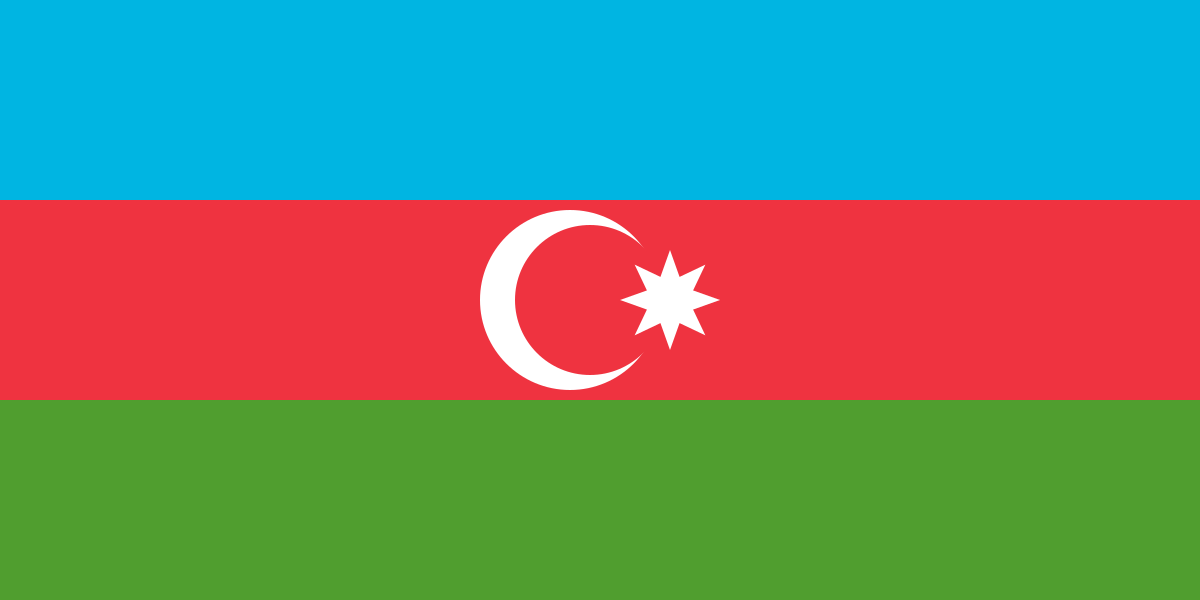
Safety in Azerbaijan
A rating built from four independent indices, plus scams, laws and what to do when something happens
Rating calculated from the indices below
Indices checked on 10.08.2026
Specifically: the Armenian border area.
There is no fighting, but do not approach the line of separation or enter these territories from the other side: people are detained and banned from the country.
Position in global indices
Save these before you fly
The general picture
Overall: One of the calmer countries in the region for independent travel. You can walk central Baku late at night without concern and there is a constant police presence.
Scams: Be wary of persistent touts and street taxi drivers who inflate an agreed price. Confirm the total before you accept any service.
Politics: Relations with neighbouring Armenia remain a raw subject, so avoid the discussion entirely. Visiting border areas without permission is prohibited by law, and it is worth reading your own government's travel advisory on that.
Roads: Drivers do not reliably yield at crossings, so pay attention. Off the main routes in the mountains the surface deteriorates, and those roads should only be driven in daylight.
Health: Do not drink tap water, buy bottled. Summer sun is aggressive, so sunscreen and a hat are worth packing.
Dress: Society is secular, but cover shoulders and knees at mosques and in rural villages. In the capital young people dress however they like and visitors face no real restrictions.
How tourists get scammed
Baku is a safe city with very low street crime, and the centre is calm at night. Schemes against tourists are few.
Taxis at Heydar Aliyev airport. Private drivers quote triple. The official purple London Cab taxis run on meters, and Bolt and Uber cover the city.
Carpets. The Azerbaijani carpet is a genuine art object, which is exactly why the scheme survives: an "antique" woven last year sells at antique prices. There is a second problem too: exporting genuinely old carpets requires a permit.
"Guides" in Icherisheher. In the Old City you are offered a walk and commentary at a verbally quoted price, with more demanded at the end.
Teahouses near tourist sites. Added items on bills are rare but worth checking.
Currency exchange. The manat is pegged to the dollar, offices are plentiful, and deception is rare. Change at banks.
Gobustan and the mud volcanoes. Drivers at the entrance offer to "run you out to the volcanoes" for a sum that grows along the way. Agree the whole thing in advance.
What gets you fined or jailed
Nagorno-Karabakh and Armenian stamps are the most important point. Azerbaijan keeps records of people who have visited Karabakh without its permission, and such a visit means a ban on entering the country, generally for life. An Armenian stamp in your passport is not itself prohibited but raises questions at the border and can lead to a long conversation. If you plan both countries, go to Azerbaijan first.
Registration. Foreigners must register their place of stay within 15 days. Hotels do this automatically. In private accommodation, registration goes through the migration service.
Drugs. The law is very strict, sentences are long, and there is no bail.
Drones. Import without permission is prohibited and devices are confiscated at customs. Flights over Baku and oil infrastructure are prohibited.
Photography. Military installations, checkpoints, oil platforms and industrial zones must not be photographed.
Border territories. Areas along the line of contact and the Armenian frontier are closed and still hold mines. Tourist routes do not go there.
Politics. Public criticism of the authorities, social media included, creates problems. Foreigners have been detained.
Health: vaccines, medicines, care
Vaccinations. None mandatory.
Water. Not from the tap, Baku included: it is heavily chlorinated and unpleasant, and network quality in the regions is inconsistent. Bottled water is cheap.
Heat. Baku reaches 40°C in summer at high humidity off the Caspian; inland areas are drier and hotter. Shade is hard to find.
The Caspian. Do not swim within Baku: the water is contaminated with petroleum products. Clean beaches lie further north around Nabran and on the Absheron peninsula outside the city.
Mud volcanoes. Gobustan looks harmless, but the mud can be hot and crater rims crumble. Do not go right up to the vent.
Healthcare. Public provision is middling. Baku has good private clinics — Bona Dea, Central Hospital — working to international standards. The regions have little. Insurance is needed.
Food. The cuisine is rich and meat-heavy, and local water and unfamiliar dairy cause more upset stomachs than anything else.
Emergency numbers: 102 police, 103 ambulance, 112 unified.
Police: how to handle them
Azerbaijan sits in the lower half of the Corruption Perceptions Index, but police in Baku are pointedly correct with tourists — the country invests in its reputation as a destination.
Tourist police. Operating in central Baku in uniforms marked Tourism Police and speaking English. They help willingly, including with everyday matters like finding an address.
Traffic police. Cameras are very numerous and fines arrive automatically. Settling on the spot has all but gone in Baku but occurs in the regions.
Document checks. Keep your passport or a copy with you.
Reporting theft. Reports are taken and certificates for insurers issued; the process runs normally and in Russian.
Languages. Russian is widely understood, especially in Baku and among older people. Younger people and tourism staff speak English.
What actually matters. Foreigners' problems in Azerbaijan stem not from crime but from the political and territorial question: Karabakh, the border areas and photography. That is where a mistake is expensive.
What else to check
The rating is built from open international indices and foreign-ministry advisories; links to the primary sources are in the cards above. Conditions change faster than annual reports come out — check current travel advice before you go.