Description
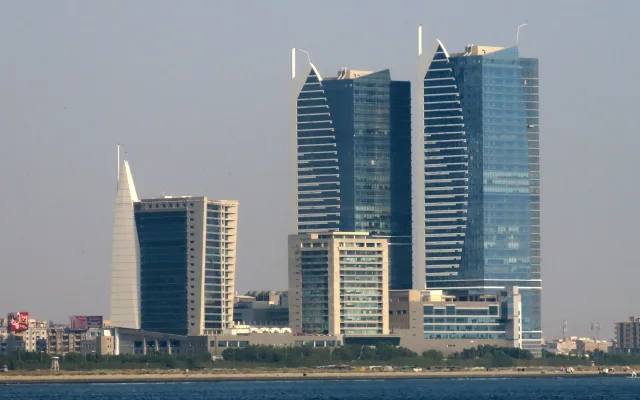
Pakistan's largest city — the Jinnah Mausoleum, the National Museum and the beaches at Hawke's Bay.
Wiki
Karachi is not the Pakistan of the postcards: not mountains and forts but a giant seaside metropolis living on trade, money and food. People come not for the architecture but to feel the country's real rhythm — and the city usually serves as the point of entry or a stopover before Sindh, Mohenjo-daro or the coast.
Is it worth coming, and for how long
Two days in Karachi is ample. There are few classic sights and they are scattered across an enormous city — the value here is not a list of monuments but the atmosphere, the bazaars and the food. The optimum: one day for the centre (the mausoleum, the museums, the colonial buildings, Empress Market), a second for the coast and unhurried eating. If you are in transit, you can manage the essentials in a day.
Getting there and getting around
Jinnah International Airport is the largest in the country, with direct flights from the Gulf, Turkey and Asia. From the airport to the centre, take a taxi; it is easier and safer to book through an app (Careem and InDrive are the local equivalents of Uber), so there is no haggling and you see the price in advance.
Within the city:
- Taxi apps — the main way to move around. Cheap by a traveller's standards and more reliable than street rickshaws.
- Rickshaws and Qingqi — full of character and very cheap, but agree the fare before getting in.
- On foot the city is barely navigable: the distances are long, pavements are notional and the traffic is aggressive. Walking works only within particular districts, such as Saddar or the Clifton seafront.
Allow time for traffic — it is serious here, especially at peak hours.
What is actually worth seeing
- Mazar-e-Quaid — the visual landmark and chief symbol of the city; the grounds are extensive and lit at night.
- Frere Hall and Empress Market — a concentrate of British colonial architecture, with the old centre of Saddar and its book stalls and shops nearby.
- Mohatta Palace and the National Museum — for art and the archaeology of the Indus valley (Harappa, Mohenjo-daro).
- Clifton Beach (Sea View) — not for swimming (the water is dirty and the crowds heavy) but for the atmosphere: camels, grilled corn and local families in the evening.
- Manora Island — a ferry from Keamari, a lighthouse and an old fort; a half-day trip for those with time to spare.
The beaches at Hawke's Bay and Sandspit outside the city are quieter and cleaner, but take longer to reach and are better not visited alone.
Where to stay
Stick to Clifton and DHA (Defence) — relatively calm, prosperous parts of the city with restaurants, cafés and decent hotels. Closer to business life and the colonial buildings is Saddar, but it is noisy and chaotic. There is almost no cheap backpacker hostel segment here: Karachi is not a tourist hub, and accommodation is mostly hotels.
Food
Food is the one thing worth coming to Karachi for in its own right. The city is considered the culinary capital of the country.
- Karachi biryani — spicy, aromatic, a local point of pride.
- Nihari — slow-cooked meat, the classic breakfast.
- Haleem, paya, seekh kebab — filling and full of character.
- Street snacks: golgappa (pani puri), samosa, gola ganda (shaved ice with syrup).
Lunch at a local place is 830-1,700 PKR ($3-6), dinner at a well-known restaurant such as Kolachi or Bundu Khan on the seafront 3,300-8,300 PKR ($12-30). Prices are as of 2026. Try street food in busy places with a heavy flow of people — the turnover is high and the ingredients fresher. Alcohol is essentially unavailable to visitors; the norm is fresh juice, lassi and chai.
Safety and practicalities
- Check the current situation before travelling — conditions in particular districts change. Stay around Clifton and DHA, and avoid the outskirts and unfamiliar quarters, especially after dark.
- Do not walk at night, and do not display valuables or a phone in a crowd or in a rickshaw.
- Dress modestly, covering shoulders and knees; this matters particularly for women and removes unwanted attention.
- Carry cash in rupees in small notes — cards are far from universally accepted.
- The summer heat and humidity are exhausting; go out in the morning and evening, and drink only bottled water.
When to go
The best season is November to February: neither hot nor humid. Summer, and May and June in particular, is hard going in the heat and damp, and the rains can flood the streets. Spring and autumn are a tolerable compromise.
Common mistakes
- Trying to "walk the city" — it does not work; plan around taxis.
- Coming for a beach holiday — Sea View is not for swimming.
- Underestimating the traffic and the distances — two sights at opposite ends of the city cannot be combined in a couple of hours.
- Avoiding street food out of caution — it is the main reason to stay longer.