Description
The capital of Tatarstan — the UNESCO Kremlin, the Kul Sharif mosque, the Syuyumbike tower and the Kazanka embankment.
Wiki
Kazan is the capital of the Republic of Tatarstan and one of the oldest cities of the Volga region, with a history running back more than a thousand years. Set where the Kazanka flows into the Volga, the city joins the Turkic and Slavic worlds, Islam and Orthodoxy, antiquity and modern architecture, for which it deservedly carries the unofficial title of Russia's "third capital".
History and general character
Kazan began as a frontier fortress of Volga Bulgaria, later became the centre of the Khanate of Kazan, and in 1552 was taken by the armies of Ivan the Terrible and absorbed into the Russian state. The change of eras left visible traces: within a single Kremlin, Muslim and Christian shrines stand side by side. Today about 1.3 million people live in the city, and its Kremlin is on the UNESCO World Heritage list. The ethnic make-up reflects the history of the region — Tatars and Russians form the bulk of the population, and the two state languages, Tatar and Russian, are heard on the streets in equal measure.
Main sights
- The Kazan Kremlin — the heart of the city and a UNESCO monument. A kremlin is a walled citadel, the fortified core of an old Russian city; these white stone walls hold the leaning Syuyumbike tower, about 58 metres high, the 16th-century Annunciation Cathedral, the presidential palace and memorial buildings. From the Kremlin hill a view opens over the expanse of the rivers.
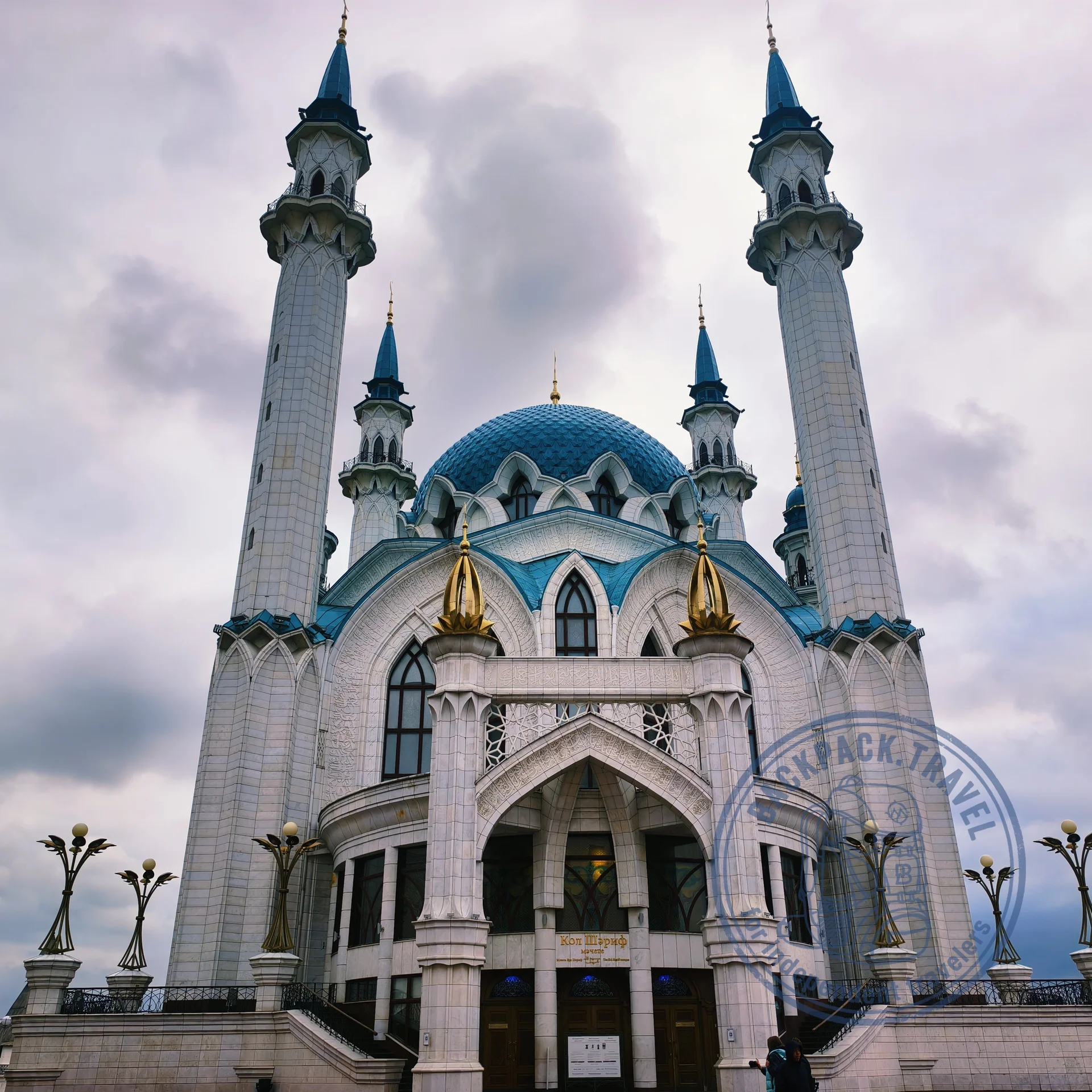
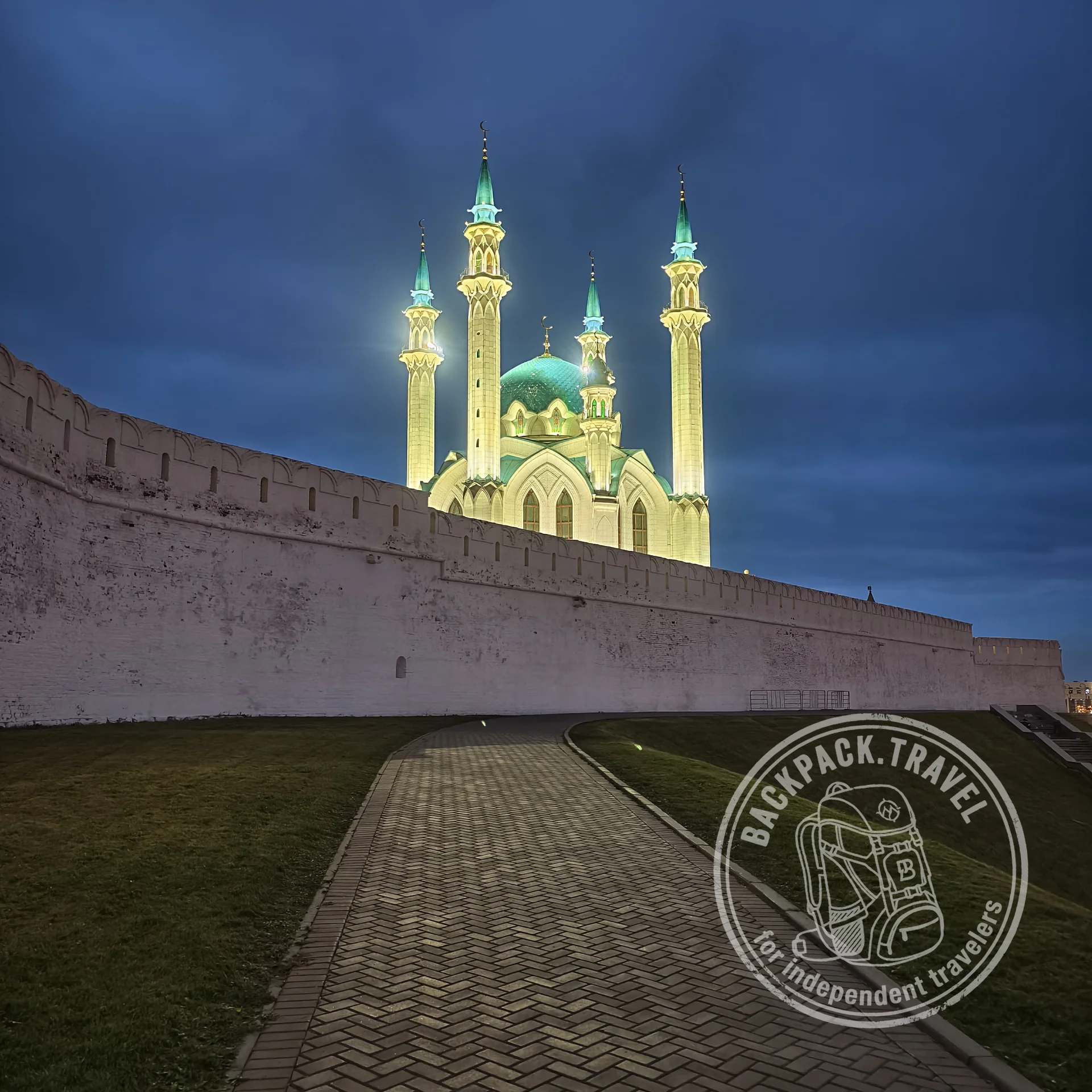
- The Kul Sharif Mosque — one of the largest in Europe, rebuilt by 2005 on the site of the mosque destroyed in the storming of 1552. Its blue domes and slender minarets have become the calling card of Tatarstan.
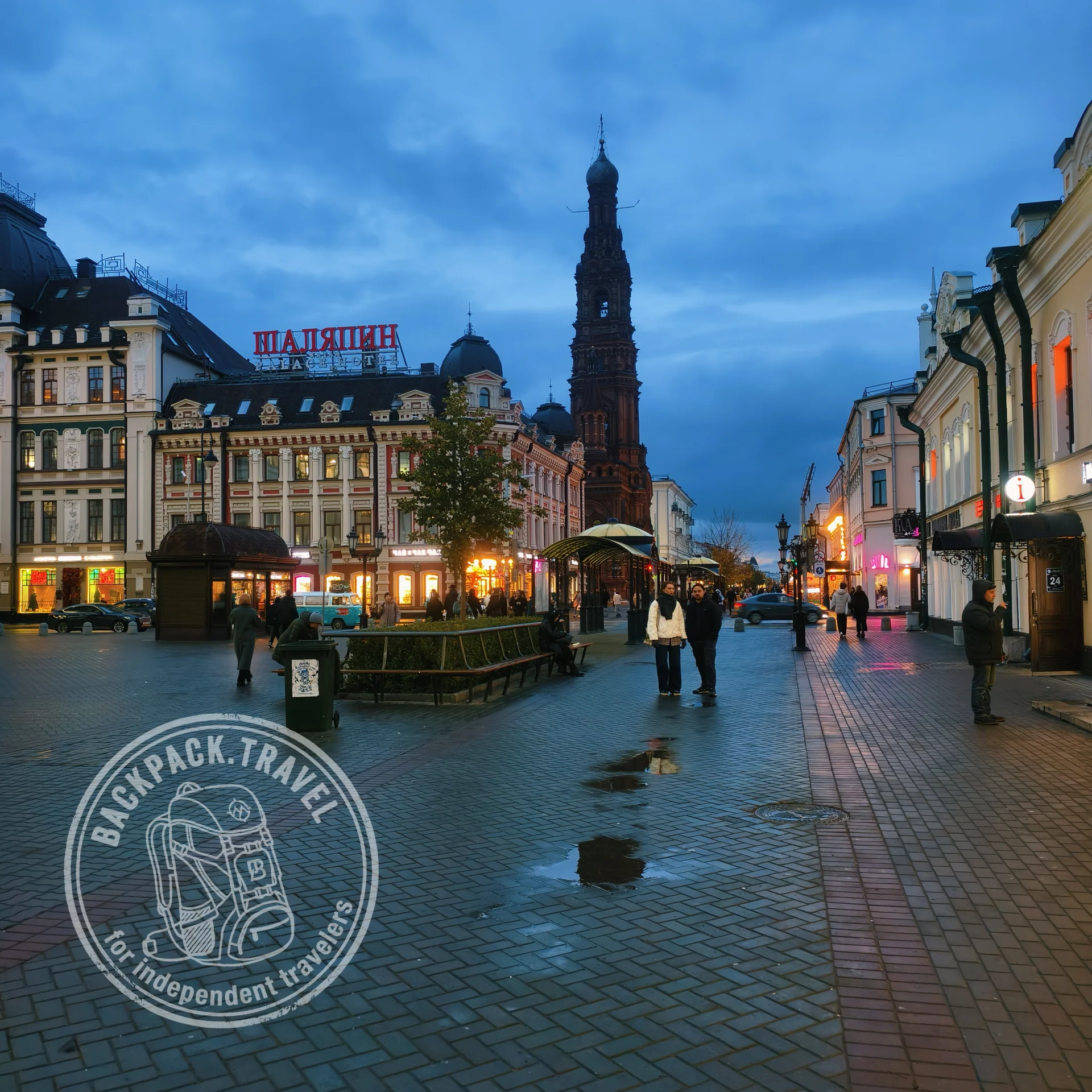
- Bauman Street — a pedestrian boulevard about a kilometre and a half long, with fountains, sculptures, cafes and shops selling national crafts.
- The Old Tatar Quarter — an atmospheric district along Lake Kaban, where merchants' mansions, old mosques and wooden houses of the 18th and 19th centuries survive.
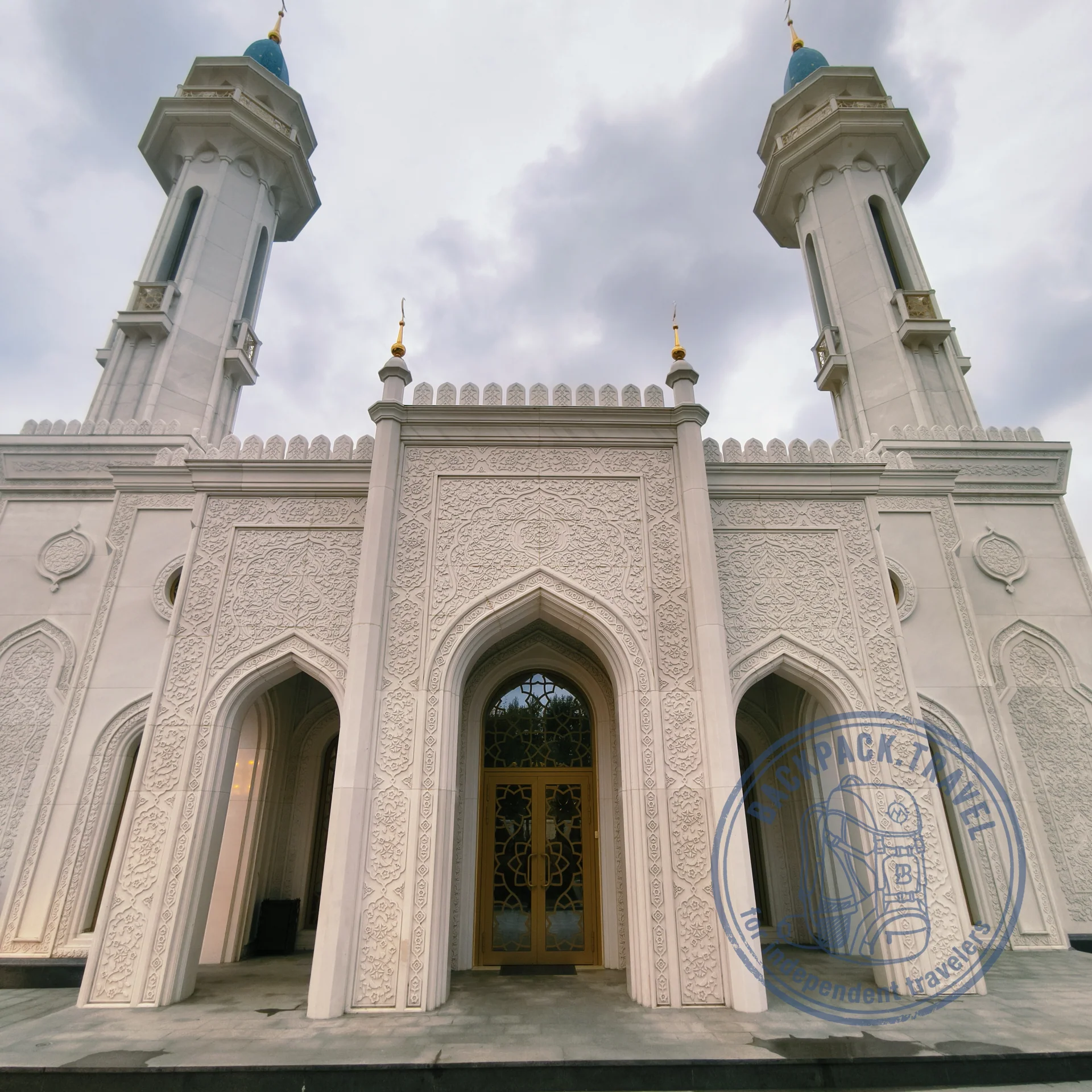
- The Temple of All Religions — an unusual architectural ensemble combining the symbols of different faiths in a single composition.
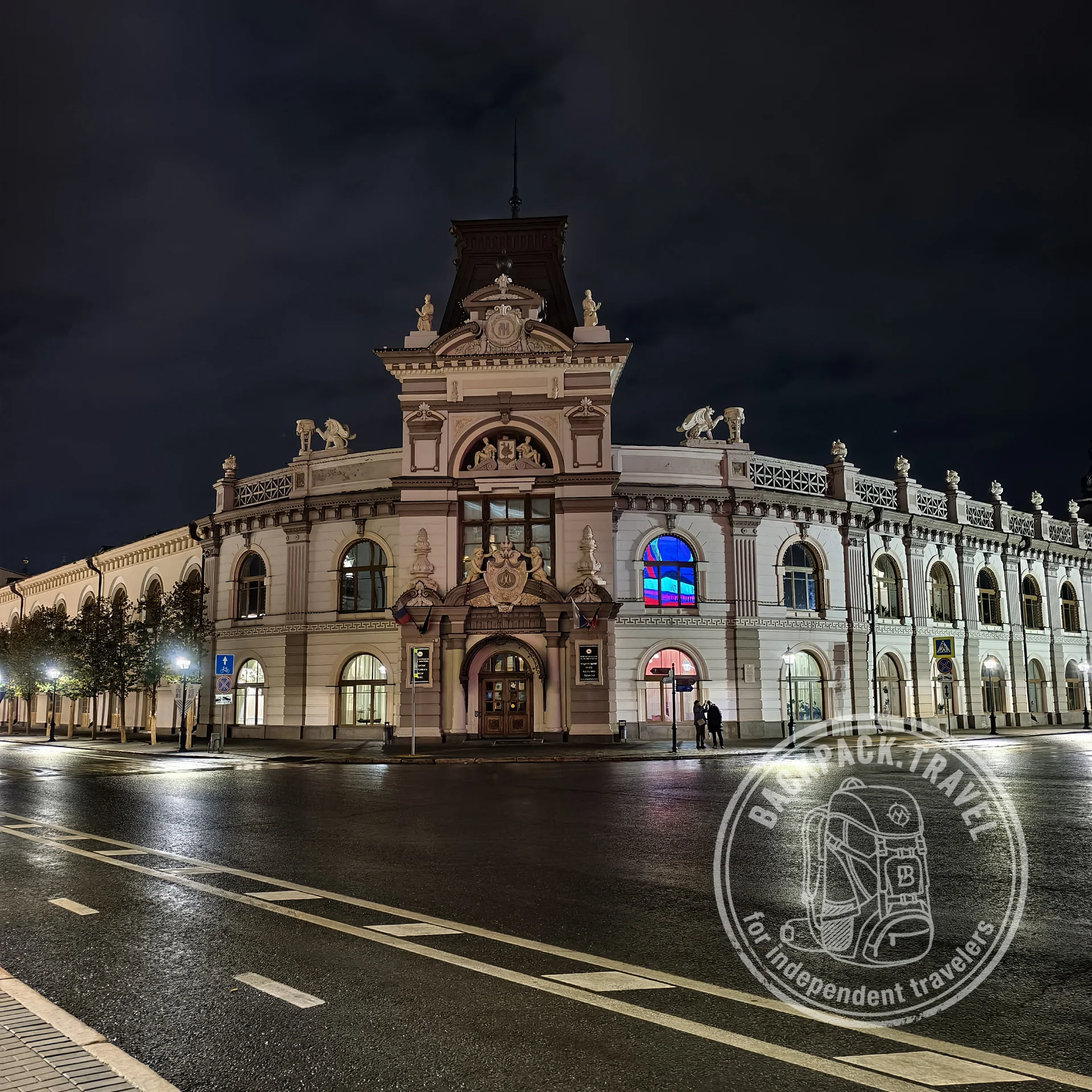
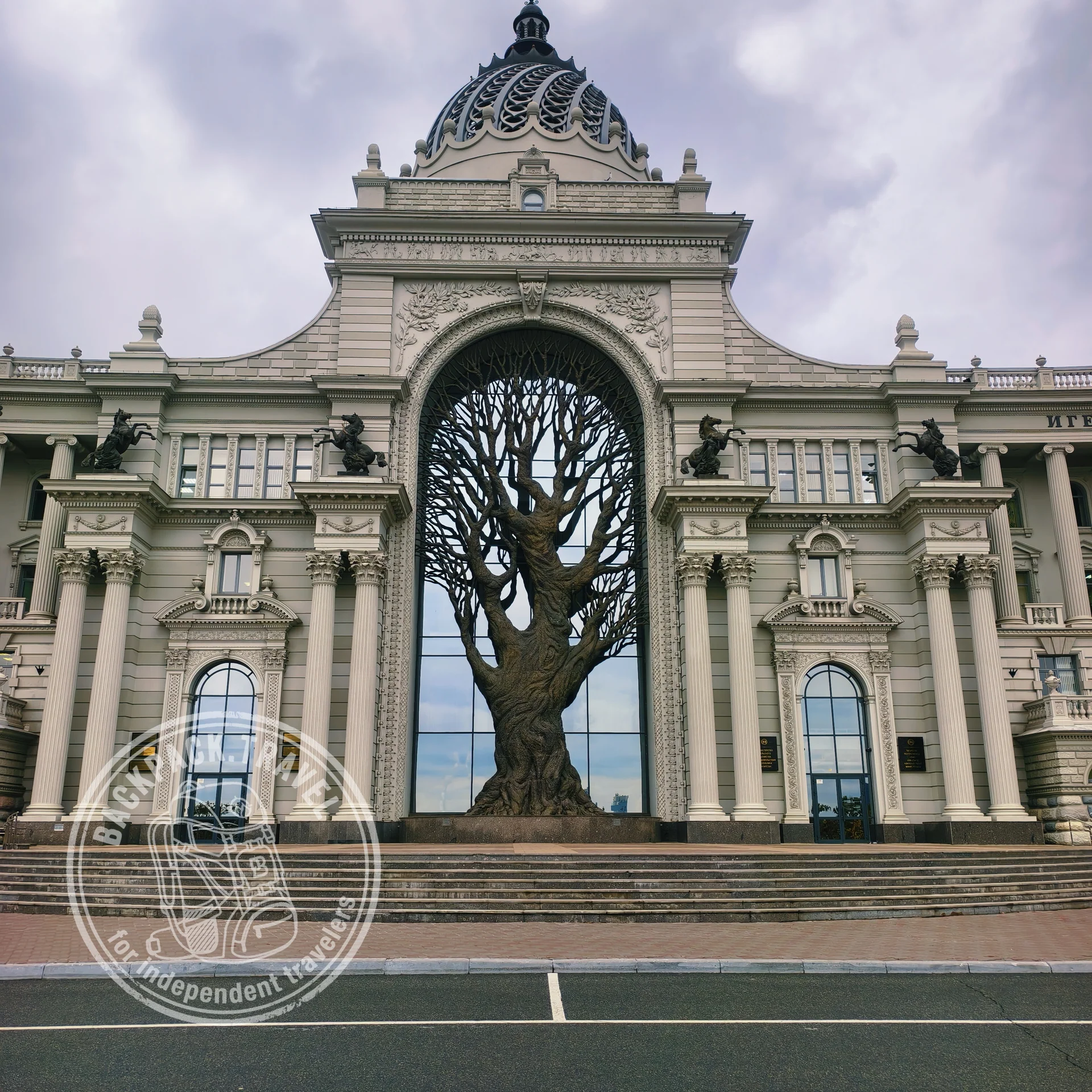
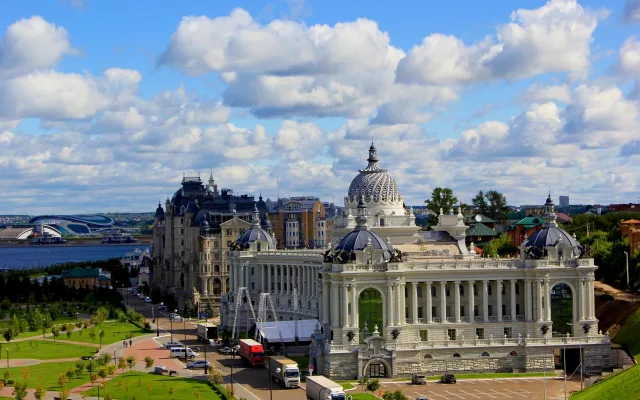
- The Palace of Farmers — a striking eclectic building with a bronze tree in its central arch, especially expressive when lit at night.
- The Kazanka embankment and the Kazan family centre — a popular place to walk, with a panorama of the Kremlin.
Around the city
Beyond the city it is worth setting aside a day for excursions. The island town of Sviyazhsk, about 60 km away, is a fortress founded in the 16th century with monasteries, and the Assumption Cathedral of its monastery is also on the UNESCO list. The Raifa Bogoroditsky Monastery, in a pine forest about 30 km from Kazan, is a working monastery by a picturesque lake. Anyone interested in antiquity will find the Bolgar settlement further south along the Volga rewarding — the cradle of statehood in the Volga region.
Food
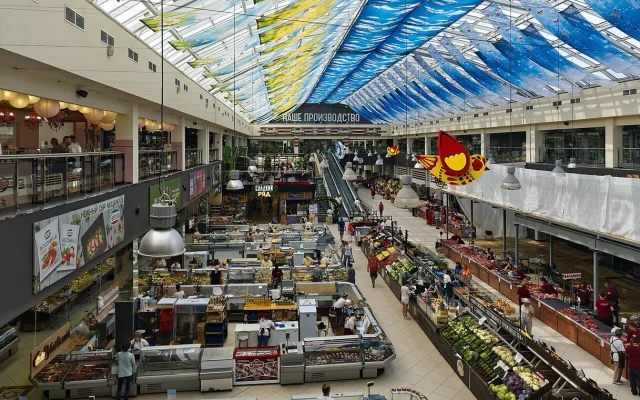
Tatar cooking is a reason to travel in itself. Be sure to try echpochmak (a triangular baked pastry with meat and potato), chak-chak (a honey sweet made from fried dough), peremyachi, kystyby, the substantial belesh pies and dishes made with horse meat. Among drinks, herbal tea and ayran are popular. National food is served both in inexpensive canteens and in the restaurants of the Old Tatar Quarter; Russian cooking is also widely available.
What to fit into three days
- Day 1. The Kremlin, the Kul Sharif Mosque, the Syuyumbike tower, then a walk along Bauman Street and Tukay Square.
- Day 2. The Old Tatar Quarter and Lake Kaban, the Kazanka embankment, the Palace of Farmers and the evening views under illumination.
- Day 3. A trip out to Sviyazhsk or the Raifa Monastery, and the river landscapes of the Volga region.
Practicalities
Kazan is connected to the country's major cities by rail, by road and through an international airport. Within the city the metro, trams, buses and taxis are convenient; the historic centre is compact and easily covered on foot. The best time to travel is late spring, summer and early autumn, when the embankments are open and river cruises run on the Volga. The city is attractive in winter too, thanks to the New Year markets and the snowy views of the Kremlin. Signage and menus are often duplicated in both languages, which makes travel comfortable for visitors.