Description
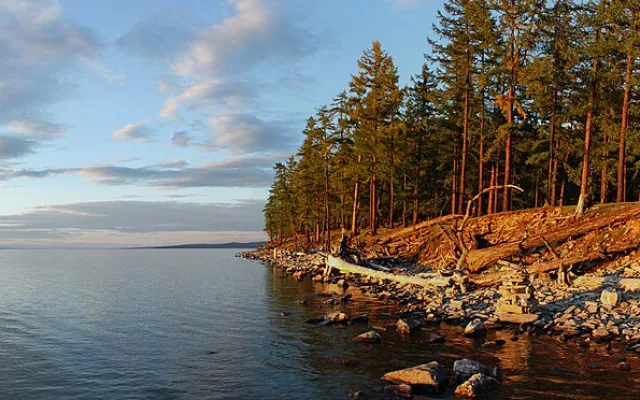
A village on the southern shore of Lake Khövsgöl — the blue pearl of Mongolia, horse tours and Tsaatan shamans.
Wiki
Khatgal is a small village in the south of Khövsgöl aimag (province), set at the source of the Egiin Gol river at the southern end of Lake Khövsgöl. For most travellers it is the main gateway to "the blue pearl of Mongolia", one of the largest freshwater bodies in Central Asia.
Overview
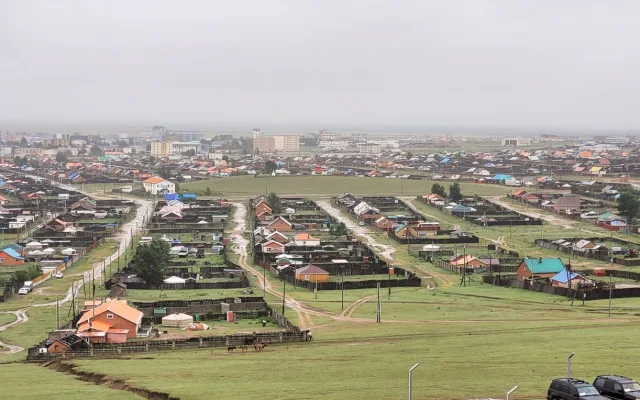
Khatgal belongs to the Alag-Erdene sum (district) and lies roughly 100–120 km north of the provincial centre, Mörön. The village stretches along the shore at an altitude of about 1,645 metres above sea level. The permanent population is small — a few thousand people — but in summer it multiplies with tourists, guides, horse handlers and the owners of guest gers.
The settlement owes its existence to trade: in the late 19th and early 20th centuries there was a transhipment point here on the route for goods between the Russian Empire and Mongolia, and cargo vessels worked on the lake. From that era it has kept the look of a quiet northern village of wooden houses, which is uncharacteristic of the steppe part of the country.
Lake Khövsgöl
Khövsgöl (Khövsgöl nuur) is the heart of the whole region and the reason people come. It is a deep tectonic lake some 136 km long and up to 262 metres deep, holding a colossal reserve of the purest fresh water. Geologically and in character it is related to Lake Baikal to the north, and is often called its "younger brother".
The water is so clear that the bottom is visible several metres down, and its colour ranges from turquoise near the shore to deep blue out in the open. The shores are framed by larch and cedar taiga, mountain ranges and alpine meadows. The lake and the adjoining territory form part of a national park, home to elk, roe deer and musk deer, and among birds to geese, ducks and raptors.
Things to do
Three days in Khatgal allow you to combine an active holiday with getting to know the local culture.
- Horse routes. Riding trips along the western shore are the calling card of the region. One-day and multi-day tours lead through forest and meadow to viewpoints.
- On the water. In summer there are boat and small-craft trips, and fishing (grayling, lenok and burbot) subject to the park's rules.
- Walking and cycling excursions along the shore paths and to the surrounding hills with their panoramic views.
- Kayaking and swimming for the hardiest: the water stays cold even at the height of summer.
- In winter the lake freezes and the ice becomes a road — an ice festival is held in early March, with races, sculptures and games.
The Tsaatan people and shamanism
The Khövsgöl region is one of the few places in the world where the way of life of the Tsaatan (Dukha) survives, nomadic reindeer herders of Turkic origin. They live in urts, conical tent dwellings, north of the lake in the taiga, and raise reindeer, migrating after the herds. Trips to their camps are organised through Khatgal.
Closely bound up with the culture of the Tsaatan and the Buryats is shamanism, the traditional belief in the spirits of nature, of ancestors and of the masters of a place. Ovoo (cairns of stones) on the passes and shores, ribbons tied to trees and rites honouring the lake remain a living part of everyday life.
Food
Meals in the guest gers are built on a Mongolian base: boiled mutton and beef, soups with home-made noodles (guriltai shol), steamed buuz dumplings and khuushuur, fried meat pasties. A special place belongs to the dairy products of the nomads: dried curd aaruul, urum cream skins, airag (fermented mare's milk) and salted milk tea. Thanks to the closeness of the water, fish appears on the menu more often than usual.
Practical information
- Getting there. The standard route is a flight or a drive from Ulaanbaatar to Mörön, and from there 2–3 hours by road to Khatgal. The road is partly surfaced.
- Season. The best time is June to September, when it is warm and the tourist camps are open. A winter visit requires serious preparation for the cold.
- Accommodation. Ger camps and family guesthouses along the shore predominate; facilities are usually shared and electricity can be limited.
- What to bring. Warm clothing in any season, a raincoat, insect repellent, cash (cards are almost never accepted) and a supply of water or the means to purify it.
Travelling responsibly
Khövsgöl is a source of drinking water and a protected natural area. It is forbidden to pollute the shores, to wash with soap in the lake or to leave rubbish. When visiting the reindeer herders' camps it is important to respect your hosts' way of life and to ask before taking photographs. Careful treatment of the fragile northern environment is the condition on which the "blue pearl" will keep its clarity for future visitors.