 Города и дороги
Description
A town at the confluence of the Moskva River and the Oka, with a red-brick kremlin of the sixteenth century, posad streets and pastila, revived here as a craft. One of the most convenient day trips out of Moscow.
Wiki
Kolomna stands at the confluence of the Moskva River and the Oka, a little over a hundred kilometres from the capital, and it is the most convenient day trip out of Moscow: suburban trains run there directly, and everything of interest fits into a single walk. A red-brick kremlin of the sixteenth century has survived here, around it lies the merchants' posad with its low-rise houses, and on top of all that has grown an industry of museums you can taste, built on pastila and kalachi.
The Kremlin and Cathedral Square
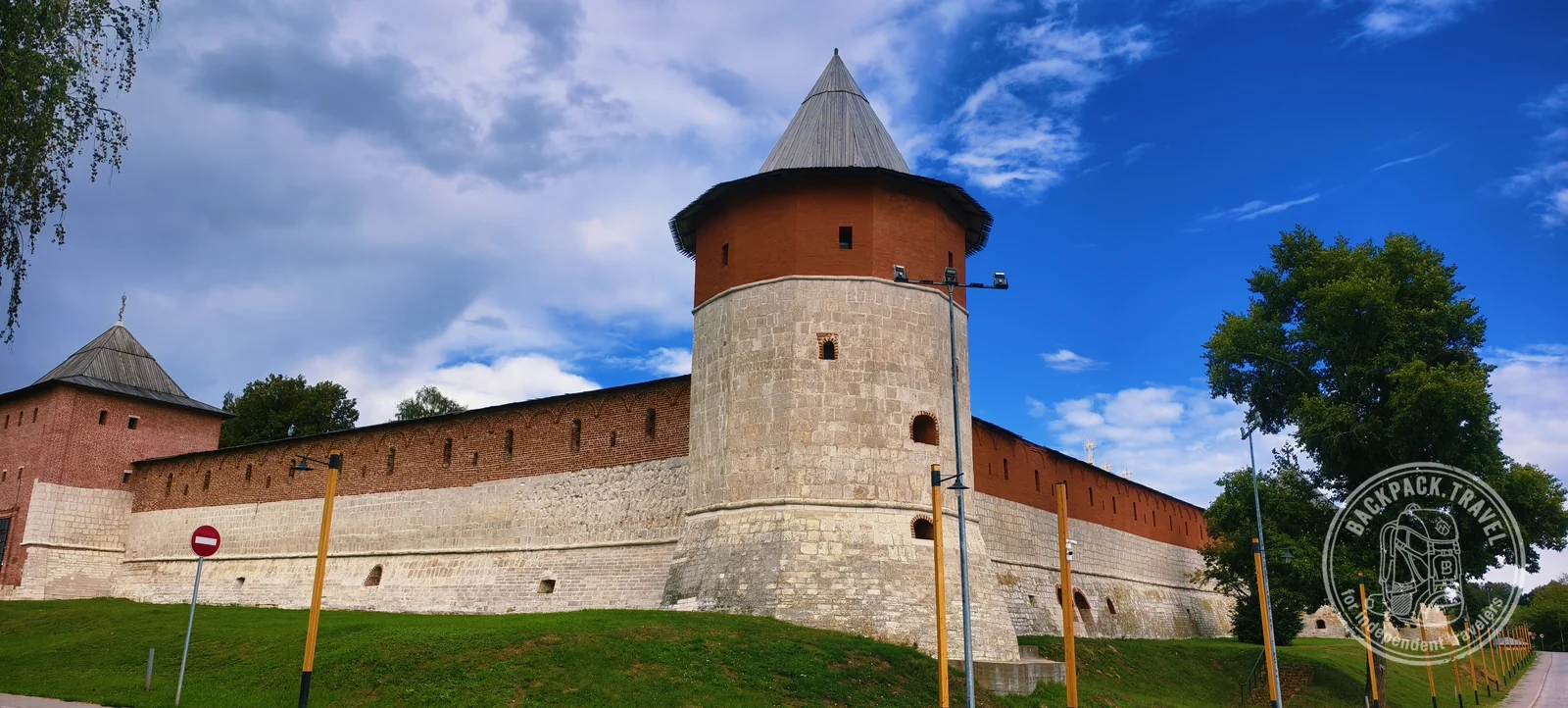
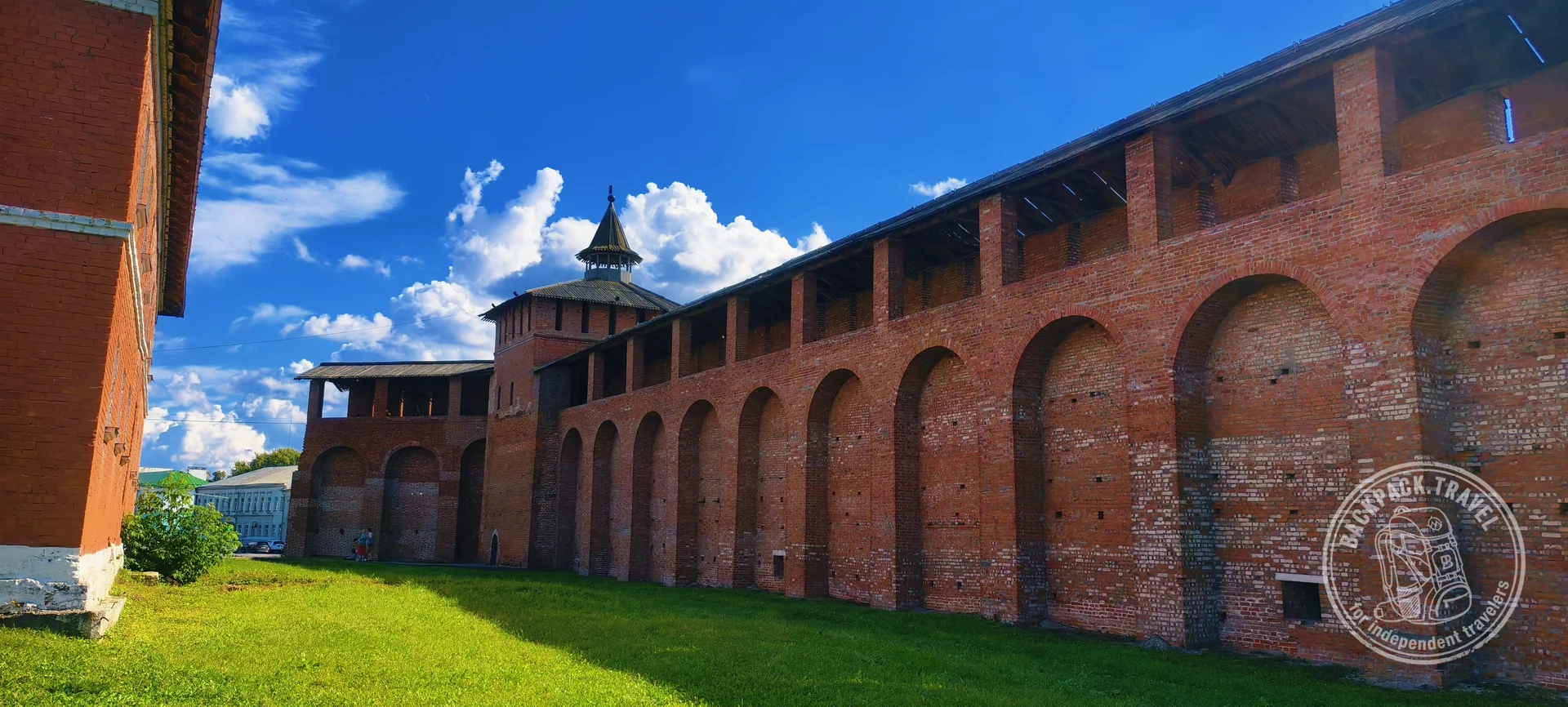
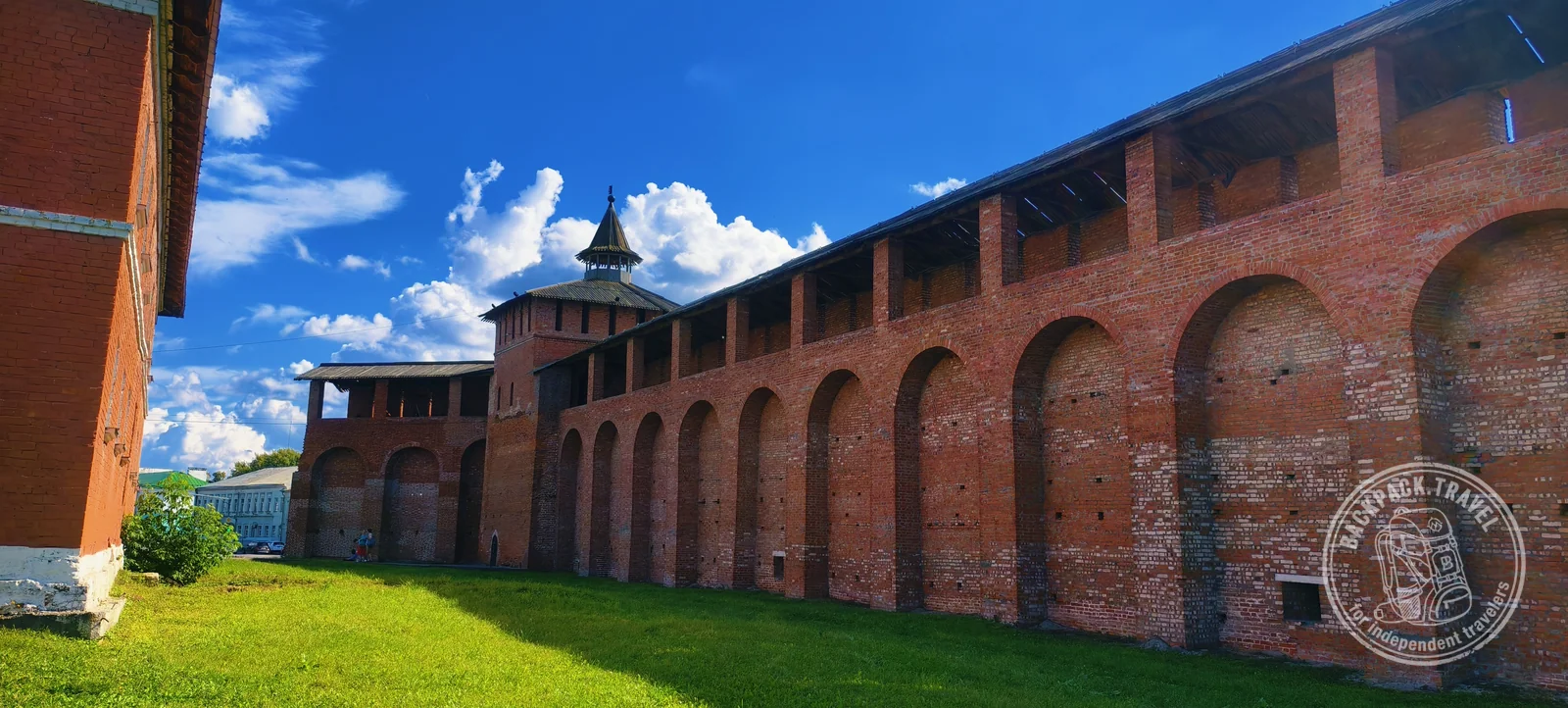
The fortress was built under Vasili III, from 1525 to 1531, on the site of a wooden one that had burned down. About a third of the walls and seven of the seventeen towers have survived to our day; the rest was taken apart for bricks by townspeople in the eighteenth and nineteenth centuries.
- The Kolomna Kremlin is not a museum with a ticket office but a living quarter: there are residential houses inside the walls, working churches and cars driving past. Entry to the grounds is free, and you can walk the perimeter in about an hour.
- Marinkina Tower (also known as the Kolomenskaya Tower) is the tallest, at around 31 metres. The name is linked to Marina Mniszech: according to tradition she was held prisoner here, while a more folkloric version has her turning into a magpie and flying out through an arrow slit. There is an exhibition inside, and the climb is ticketed.
- Cathedral Square is the most coherent spot in town: the Cathedral of the Dormition (the first church on this site was founded by Dmitry Donskoy after his victory on the Vozha), a tented bell tower, the Tikhvin Church and the Novo-Golutvin Convent, known among other things for its monastery cats.
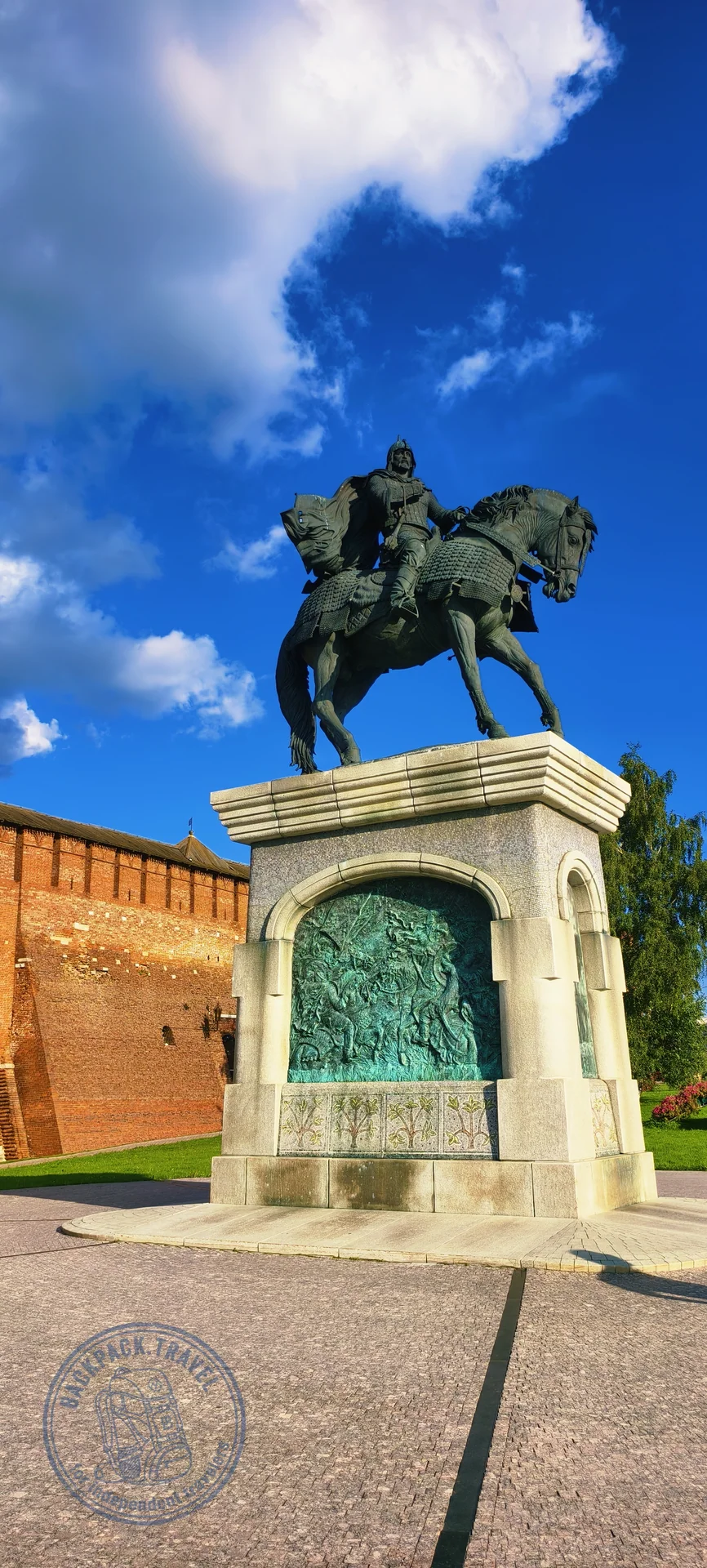
- The monument to Dmitry Donskoy stands in front of the wall by Marinkina Tower: the prince gathered his army here before the Battle of Kulikovo, and the connection with Kolomna runs deeper than it seems.
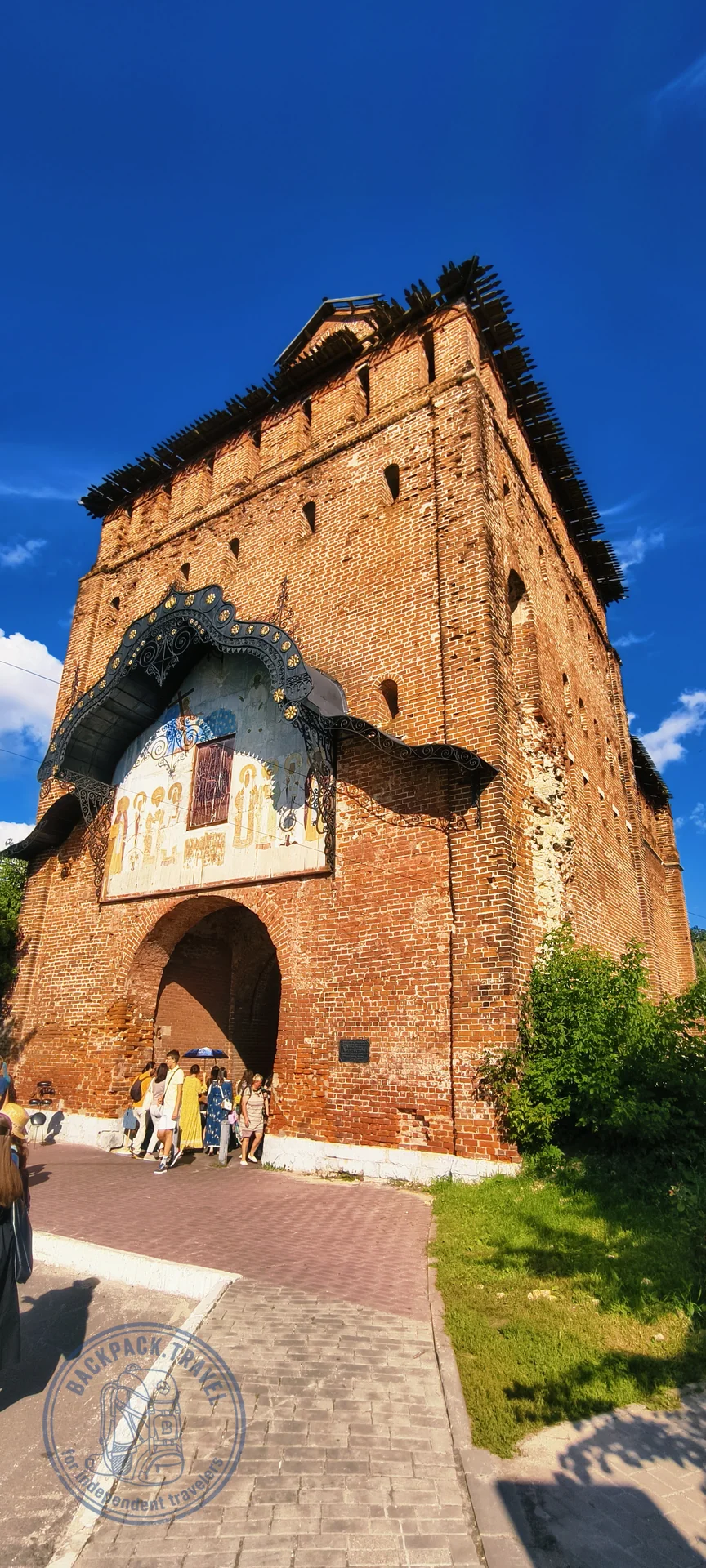
The ceremonial entrance is the two-tiered Pyatnitskie Gate, and it is the easiest way in.
The Posad and the Bell Tower
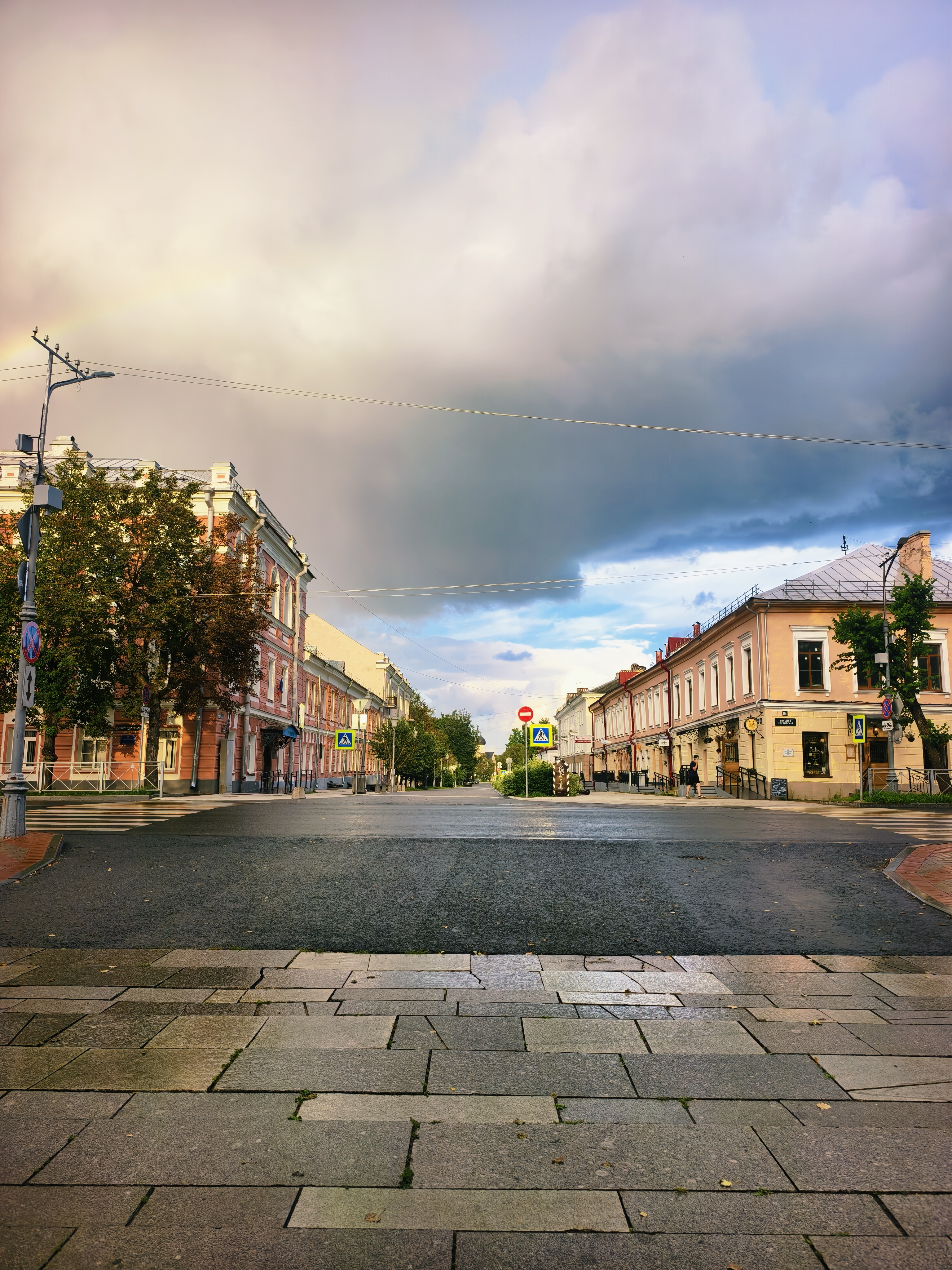
Beyond the kremlin begins the posad, blocks of one- and two-storey houses with almost no Soviet building among them. The streets worth walking are Lazareva, Posadskaya and Oktyabrskoy Revolyutsii.
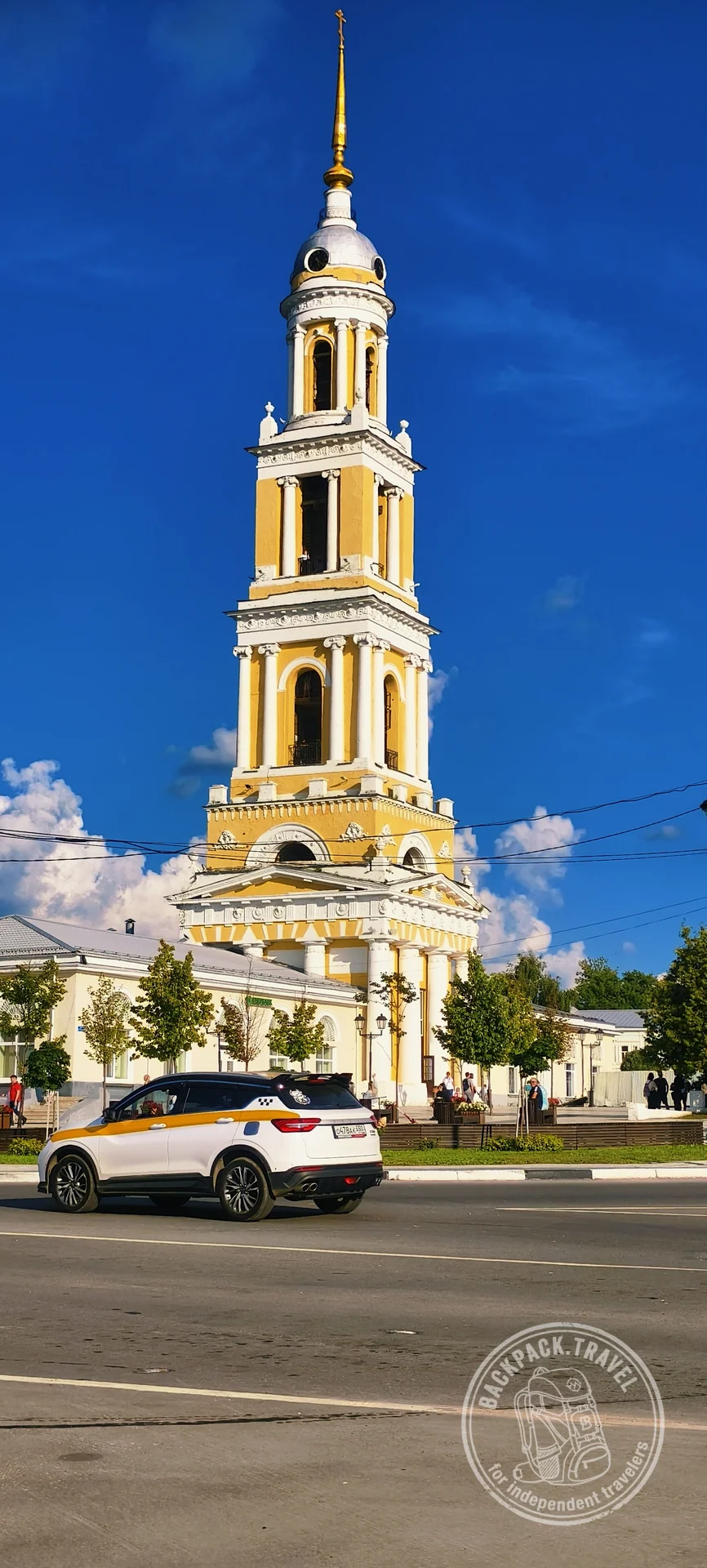
The main vertical of this part of town is the bell tower of the Church of St John the Evangelist on Zhitnaya Square: five tiers in the Empire style, about 67 metres tall, built in the first half of the nineteenth century. Together with Marinkina Tower it works as Kolomna's second landmark.
Museums worth a trip in their own right
- Kolomna Pastila on Posadskaya Street and the Pastila Museum Factory are two different venues with theatrical programmes and tastings based on reconstructed historical recipes.
- The Kalachnaya by the Pyatnitskaya Tower bakes kalachi in front of you in an oven, following the old method.
- Artkommunalka. Erofeev and Others is a reconstructed communal flat of the 1960s, built around the fact that Venedikt Erofeev worked in this building as a loader.
Places on the programmes with a guided tour and tea are few, and at weekends they are taken well in advance. Turning up on a Saturday and hoping for the best is a sure way to be left without pastila or kalach.
Getting there and how much time to allow
Suburban trains leave from Kazansky station and take some two to two and a half hours, and there are faster express services as well. You need to get off at Kolomna station rather than Golutvin: from there it is about fifteen minutes on foot to the kremlin. By car, take the M-5 highway, and on Fridays and Sundays allow for traffic jams.
Half a day is enough for the kremlin, Cathedral Square and the view of the river. The ideal format is a full day, which adds the posad, the bell tower and one museum with a programme. Two days with an overnight stay are worth allowing if you want two or three museums without rushing plus a walk along the bank of the Oka; it is better to sleep in the posad than near Golutvin.
The logical pairing is Zaraysk: less than an hour away by car, and together the two towns add up to a weekend in the southern part of the Moscow region. On public transport the combination is awkward.
Who will not enjoy it
If you are expecting a monumental fortress on the scale of Pskov, the Kolomna Kremlin will disappoint: it is fragmentary, the walls break off, and inside there is an ordinary residential street with wires and cars. If the format of the museum as a staged performance, with actors in costume and tea served to a script, is not for you, half of the local programme will turn out to be surplus, and without it the day shrinks to three hours. And bear in mind that at weekends the posad fills up with coach groups, so the quiet of a provincial town is not something to expect here.