Description
Livingstone is a town in Zambia known for its closeness to Victoria Falls. It offers rafting, a bungee jump over the gorge and the Livingstone Museum.
Wiki
Livingstone is Zambia's second tourist centre and its southern gateway to the great Victoria Falls. Set on the bank of the Zambezi at the border with Zimbabwe, the town combines its role as a base for adventures on the water with an unhurried colonial character and the status of former capital of Northern Rhodesia.
History and character
The settlement grew up in the early 20th century as the administrative centre of Northern Rhodesia, a role it held from 1911 until 1935, when the capital moved to Lusaka. It takes its name from the Scottish missionary and explorer David Livingstone, who in 1855 became the first European to see the falls and named them after Queen Victoria. The local Lozi and Tonga peoples had long known them as Mosi-oa-Tunya, "the smoke that thunders".
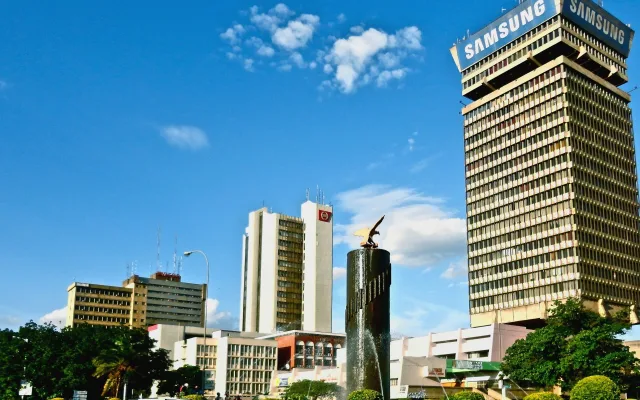
Around 130,000-150,000 people live in Livingstone today. The central Mosi-oa-Tunya Road keeps its old Edwardian buildings with verandas and tin roofs, and the atmosphere here is noticeably calmer and cheaper than on the Zimbabwean bank. It is about 10 kilometres from town to the falls.
Victoria Falls and around
The reason to come is a waterfall 1,708 metres wide and up to 108 metres high, inscribed on the UNESCO World Heritage list and counted among the seven natural wonders of the world. The Zambian side offers roughly a quarter of the panorama, but you come right up to the water, and the paths give a sense of personal closeness to the force of it.
- Knife Edge Bridge — a footbridge over the gorge, where the spray drenches you in high-water season and rainbows appear in clear weather.
- Boiling Pot — the churning basin at the foot of the falls, reached down a steep path in about half an hour; the Victoria Falls Bridge is in full view from here.
- Devil's Pool — a natural rock bath at the very lip of the drop, open only in the dry season (roughly August to January) and only with a guide.
- Livingstone Island — an islet on the crest of the falls, bound up with the story of the explorer himself.
Adventure
Livingstone has a fair claim to being the adrenaline capital of southern Africa. From the Victoria Falls Bridge, which links Zambia and Zimbabwe, there is a bungee jump of around 111 metres, along with a giant swing and a zipline across the gorge. Downstream, in the Batoka rapids, runs one of the most powerful white-water stretches in the world — rafting the Zambezi is possible in the dry season, when the water level drops.
Helicopters and microlights fly over the cascade and the bend of the river; the "flight of angels" lasts from ten to twenty-odd minutes. Gentler options include sunset cruises on the upper Zambezi to watch hippos and crocodiles, along with kayaking and tiger fishing.
Wildlife
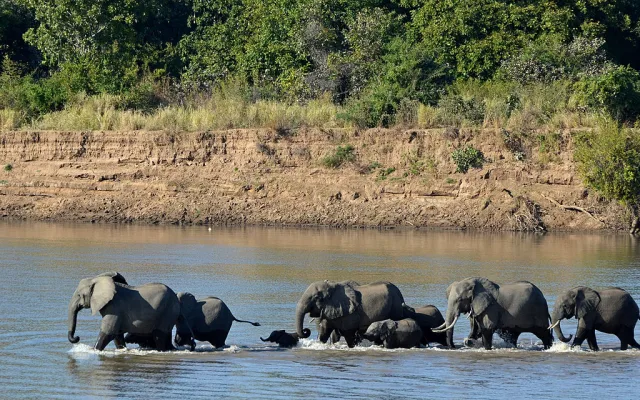
The small Mosi-oa-Tunya National Park lies right beside the town. There are no predators, but you can see elephants, giraffes, zebras, antelope and protected white rhinos at close range — a convenient mini-safari for anyone short of time. For a more serious safari within a day, Botswana's Chobe park and its vast elephant herds are within reach.
Culture and museums
The Livingstone Museum is the oldest and largest in the country, holding archaeological finds, ethnographic collections of Zambia's peoples, and David Livingstone's own belongings, letters and maps. The Railway Museum with its historic locomotives is worth a look nearby, along with displays of local crafts. Cultural visits to the surrounding villages introduce the daily life of the Tonga and Lozi.
Food
The foundation of the Zambian table is nshima, a stiff porridge of maize meal eaten by hand, dipped into sauces, stewed meat or vegetables (relish). Beef and chicken barbecue are popular, along with river bream and kapenta, small fish served dried or fried. City cafés and lodges also serve international food, and the markets sell seasonal fruit and groundnuts.
Practical information
- When to go. The water peaks from March to May, when the falls are at their most tremendous but the spray blocks the view. The dry season (August to January) suits rafting and Devil's Pool.
- Getting there. Harry Mwanga Nkumbula International Airport takes flights from Lusaka, Johannesburg and other hubs; from Victoria Falls in Zimbabwe you can cross the border on the bridge.
- How long. Around three days works well: one for the falls themselves, one for an adventure or a cruise, and one for the museum, the park or a trip to Chobe.
- Money and visas. The currency is the Zambian kwacha, though many tours are priced in dollars. For visiting both sides of the falls, the KAZA visa, valid in Zambia and Zimbabwe, is convenient.