Description
The gastronomic capital of France, city of the Lyonnais bouchons, silk and Renaissance courtyards.
Wiki
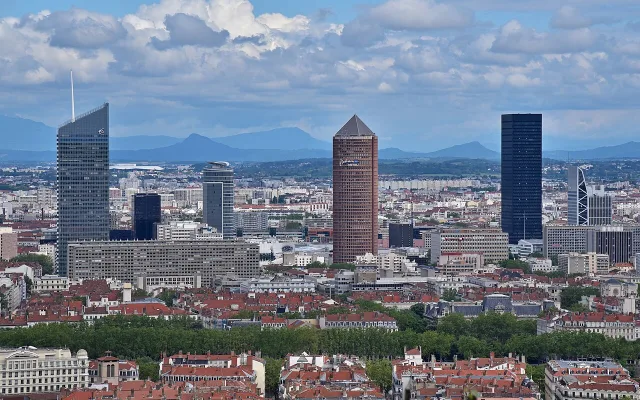
Lyon is France's second-largest urban area, spread across the confluence of two rivers, the Rhone and the Saone, in the historic Rhone-Alpes region. Founded by the Romans in 43 BC as Lugdunum, it was the capital of Gaul and later made its name in silk and fine cooking; today it is the acknowledged gastronomic capital of the country, and its historic centre is on the UNESCO World Heritage list.
A little history
Ancient Lugdunum was the largest city of Roman Gaul, an administrative and trading hub at a crossroads of highways. A Roman theatre and an odeon survive from that era on the hill of Fourviere, and concerts and plays of the Nuits de Fourviere festival are still staged in them. Through the Middle Ages and the Renaissance the city grew rich on fairs, banking and printing. Real prosperity came with silk manufacture: in the 18th and 19th centuries Lyon became the European capital of weaving, and the canut weavers of the Croix-Rousse quarter went down in history for the workers' revolts of the 1830s.
Quarters and districts
Lyon is divided into nine arrondissements, but for a traveller its historic quarters are more interesting.
- Vieux Lyon (Old Lyon) — the largest ensemble of Renaissance building in France, at the foot of Fourviere. Its speciality is the traboules, covered passageways cutting through courtyards and buildings, once used by weavers to carry silk in bad weather. Here too is the cathedral of Saint-Jean with its 14th-century astronomical clock.
- Croix-Rousse — the "hill of those who work", the former centre of silk weaving, with the high ceilings of its workshops, a bohemian atmosphere and panoramic views.
- Presqu'ile — the peninsula between the rivers, the commercial and business heart of the city, with Place Bellecour, one of the largest squares in Europe, and Place des Terreaux with its Bartholdi fountain.
- Confluence — a modern district on the spit where the rivers meet, with the futuristic Musee des Confluences, devoted to natural history and human civilisations.
Main sights
- The Basilica of Notre-Dame de Fourviere — the symbol of Lyon, on the top of the hill. Its interior is astonishing for its gilded mosaics and stained glass, and the esplanade offers the best view of the city and the meeting of the rivers. You can ride up on the old funicular.
- The Institut Lumiere — a museum in the family mansion of the brothers who shot the first film in history here in Lyon; this is where cinema was born.
- The Gallo-Roman museum at Fourviere (Musee Lugdunum) — a rich collection of mosaics, inscriptions and everyday objects from ancient Lugdunum, next to the excavated theatres.
- The old town hall, the opera house and the Parc de la Tete d'Or — one of France's largest city parks, with a botanical garden, a lake and a free zoo.
- The Festival of Lights (Fete des Lumieres) — four December nights when facades, squares and embankments become canvases for light installations. The festival goes back to a vow made by the citizens to the Virgin Mary and draws millions of spectators.
Gastronomy
Lyonnais cooking is rich, filling and built on local produce. Its emblem is the bouchon, a small family-run eating house with a homely atmosphere. The menu runs to andouillette (a tripe sausage), pike quenelles in nantua sauce, warm chicken-liver salad, saucisson with pistachios, stewed offal and the festive pink praline tart. The culinary revolution of the 20th century is associated with Paul Bocuse, whose name is carried by the central covered market, Les Halles de Lyon Paul Bocuse — the place for aged cheeses, foie gras, oysters and chocolate. The food is rounded off by the wines of the Rhone valley and neighbouring Beaujolais.
Practicalities
About three days is the right length for a first visit: one day for Old Lyon and Fourviere, one for the Presqu'ile, Croix-Rousse and the markets, and one more for the museums and Confluence.
- Getting there. The TGV takes roughly two hours from Paris. Saint-Exupery International Airport is linked to the centre by the Rhonexpress express tram.
- City transport. A well-developed network of metro, trams, funiculars and buses, plus Velo'v bike hire. A single ticket is valid on all modes.
- When to go. Spring and early autumn are pleasant for walking; December is worth timing for the Festival of Lights, though accommodation for those dates should be booked well ahead.
Compact, handsome and genuinely delicious, Lyon combines a Roman inheritance, Renaissance streets and a reputation as the country's culinary capital, while remaining far less overloaded with tourists than Paris.