Description
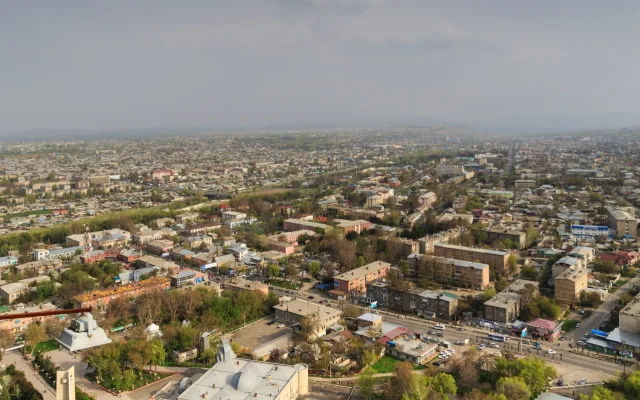
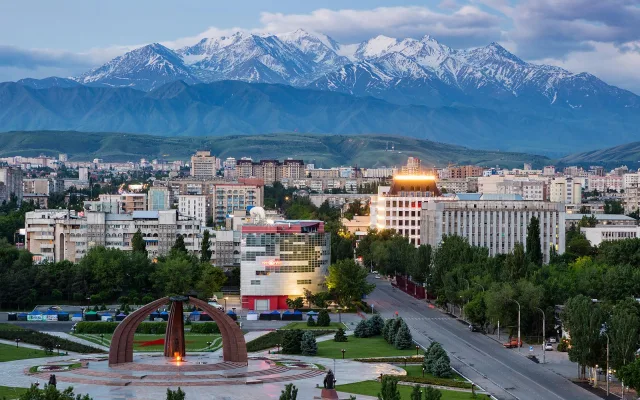
Osh is Kyrgyzstan's second city, known for the sacred mountain of Sulaiman-Too on the UNESCO World Heritage list and for its strong Uzbek cultural character.
Wiki
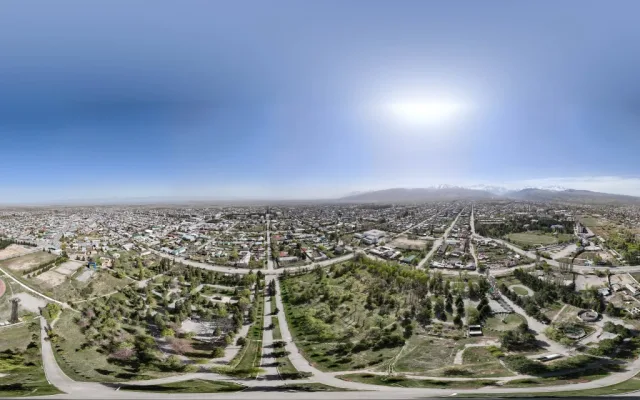
Osh is Kyrgyzstan's southern capital, a compact city where Uzbek plov at the bazaar, a sacred mountain covered in petroglyphs and the starting point for serious mountain routes all come together. For the independent traveller it is above all a staging post on the way to the Pamirs, the Alay or the Uzbek Ferghana valley — but the city is worth a couple of days in its own right.
What is genuinely worth seeing
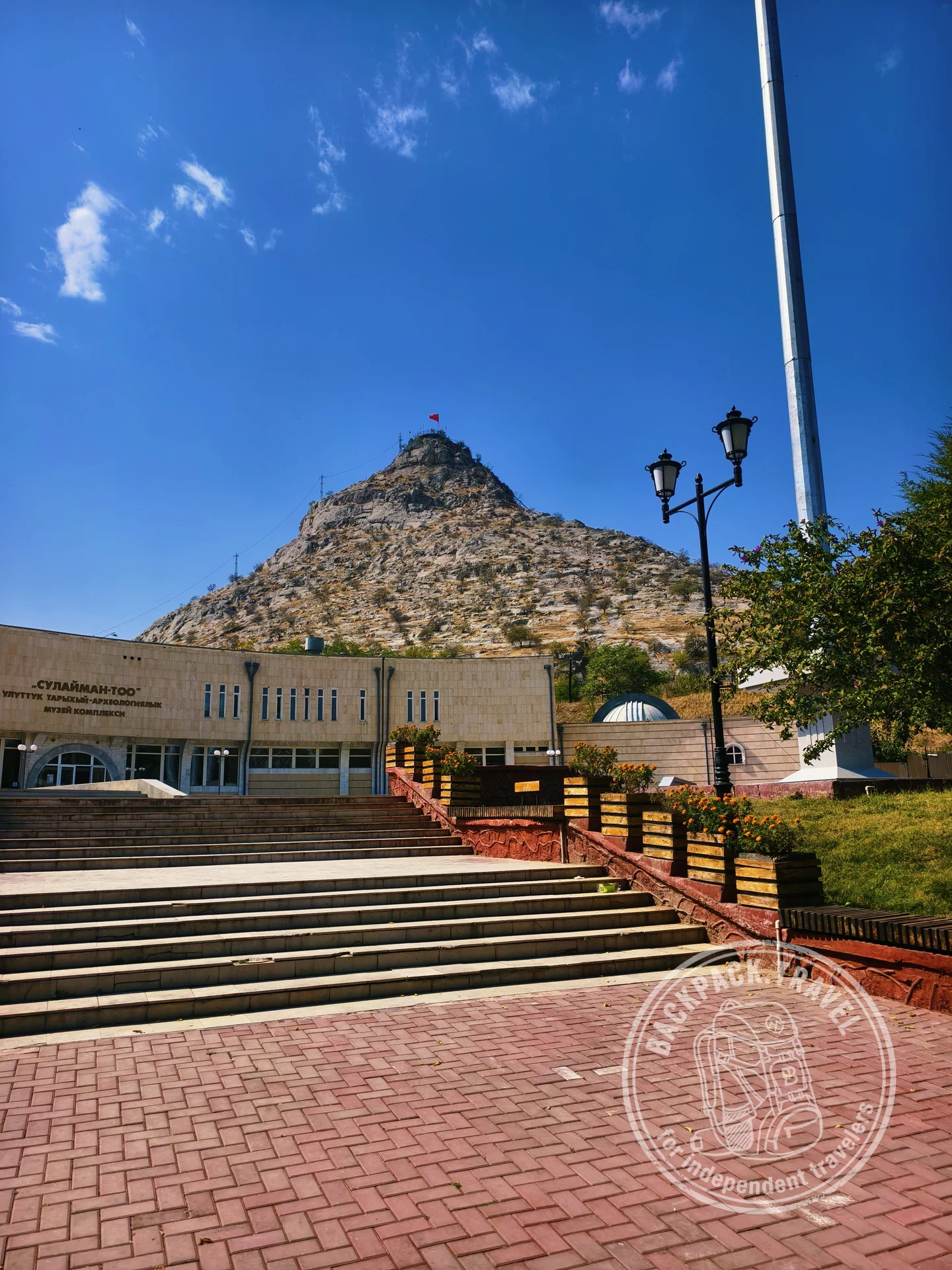
Sulaiman-Too is the essential sight. The rocky mountain juts up in the middle of the city; the climb takes 20 to 40 minutes on a marked path, and water and decent shoes both help. At the top is "Babur's house", a small mosque on the site of a structure founded by Babur in the early sixteenth century and rebuilt in 1989, and a panorama of the whole of Osh from which the layout of the city becomes instantly clear. A museum occupies an artificial cave in the hillside, and admission is cheap. The petroglyphs and the cult site are thousands of years old, and this is still a living place of pilgrimage: behave accordingly.
Osh bazaar is the second reason people come. It is not a souvenir stop but a working market strung out along the river Ak-Buura: spices, dried fruit, nuts, fabrics, embroidered caps, knives. It is also the cheapest place to eat and the best place to feel the Uzbek character of the city. Come in the first half of the day, when trading is at its height.
The rest takes a few hours: the Rabat Abdulla Khan Mosque (sixteenth to seventeenth century), the regional history museum and a walk through the centre. With a spare day, add the Uzgen minaret (twelfth century, an hour to an hour and a half away), with its Karakhanid architecture and old town.
Getting there and getting around
Osh airport is a few kilometres from the centre, 15 to 20 minutes by taxi. There are flights from Bishkek — a fast and often cheap alternative to the long road through the mountains — and from a number of cities in the region. Overland, Osh is linked to Bishkek by a highway over the passes; that is a long journey by minibus or shared taxi, so allow most of a day.
Everything inside the city is close together: the centre is compact, and the key points — the mountain, the bazaar, the museums — are all walkable. For longer trips there are minibuses and taxis; ordering a taxi through an app (Yandex Go works here) saves haggling on the street. For the Alay, Sary-Tash and the Pamir Highway, look for shared jeeps or a car with a driver, as there is almost no public transport that way.
Osh as a mountain base
Many people come to Osh precisely for what lies to the south.
- The Alay valley and Tulpar-Kul lake — high country at 3,000 to 4,000 metres, and the starting point for the base camp of Lenin Peak (7,134 m). Trekking here is realistic for non-climbers: views of a seven-thousander without a technical ascent.
- Sary-Tash — the junction village where the borders meet, and where the Pamir Highway heads off into Tajikistan. A key point if you are going to Murghab and the Pamirs, and you will need the Tajik visa and the GBAO permit arranged in advance.
- Arslanbob — the largest relict walnut forest in the world, about four hours away. At its best in autumn, during the nut harvest.
If trekking is the goal, plan extra days on top of these two: mountain weather turns fast and the logistics are slow.
Where to stay and how long
Base yourself near the centre and Sulaiman-Too — from there both the bazaar and the cafés are walkable. There is a decent choice of guest houses and hostels, many of them geared to travellers on the Pamir Highway and willing to help with transport and route information. Two days is the norm for taking in the mountain, the bazaar, the museums and one trip nearby without rushing. If Osh is the start of a long mountain route for you, add a day for shopping, rest and arranging your onward transport.
Food and money
The cooking is Uzbek-Kyrgyz and very filling: Ferghana plov, lagman, manti, kebabs, samsa from the tandoor and fresh flatbread. Eat at the bazaar and in the chaikhanas — tastier and by far the cheapest. Osh feels like an inexpensive city: street food and lunches cost very little, and accommodation is budget.
Cash rules: cards are accepted reluctantly, especially at the bazaar and on transport, so keep local som on you. There are plenty of exchange offices, and rates in town are usually better than at the airport.
When to go, and what to keep in mind
- Season — from late spring to early autumn. Summer in Osh itself is hot, but it is the only window for the mountains; for the Alay and Lenin Peak that means July and August.
- Safety — the city is calm, and ordinary everyday attention at the market and in crowds is enough.
- Borders — Osh sits right by the Uzbek frontier, with the crossing to Andijan close by. For Tajikistan and the Pamirs, sort out the paperwork in advance; it cannot be arranged on the spot.
- Respect — Sulaiman-Too and the mosques are active places of worship: modest dress and quiet are appropriate.
The classic mistake is to allow half a day for Osh in passing and see nothing but the bazaar. Give the city two days: it works both as a destination in itself and as the gateway south.