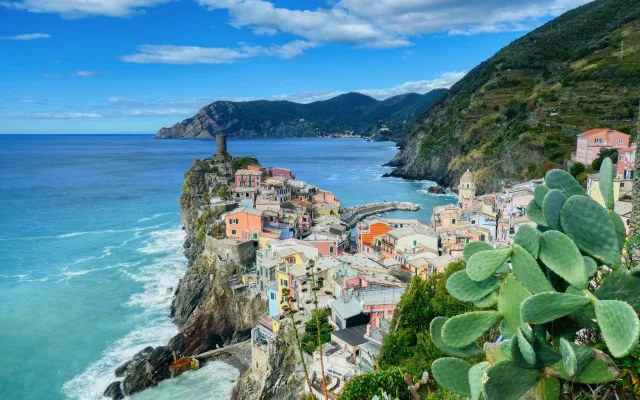
Description
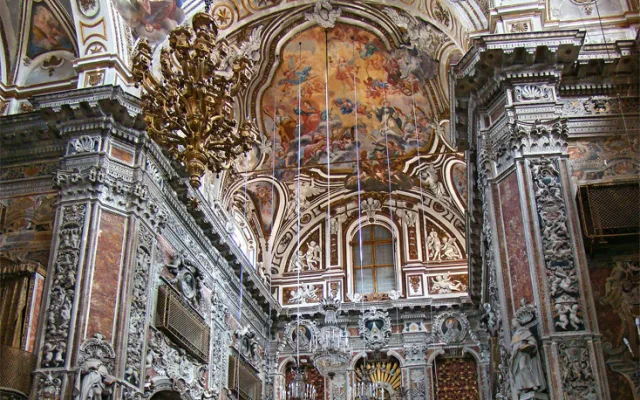
Palermo — the capital of Sicily, known for its Arab-Norman cathedrals, the bustling Ballarò market, street food like panelle, and the traces left by centuries of conquest.
Wiki
The capital of Sicily and the fifth-largest city in Italy — around 670,000 inhabitants, making it the most multicultural city in the Mediterranean. Founded by the Phoenicians in the 8th century BC, it passed through the hands of Greeks, Romans, Vandals, Byzantines, Arabs (831–1072, as capital of the Emirate of Sicily), and Normans (1072–1194, the golden age of Arab-Norman culture). The result is a blend found nowhere else on earth. UNESCO recognised Arab-Norman Palermo in 2015.
Top Sights
- Norman Palace and Palatine Chapel — a UNESCO World Heritage site and the supreme masterpiece of Arab-Norman art, with 12th-century gold mosaics in the Byzantine style.
- Palermo Cathedral (Cattedrale di Palermo) — a 12th-century Arab-Norman structure housing the tombs of Frederick II Hohenstaufen and Roger II.
- Monreale (Duomo di Monreale) — a UNESCO site 9 km away, with even more spectacular 12th-century mosaics (6,500 sq m).
- Cefalù Cathedral — the third UNESCO site in the Arab-Norman ensemble, 70 km from Palermo.
- Quattro Canti (Four Corners) — a Baroque crossroads at the heart of the old city.
- Pretoria Fountain (Fontana Pretoria) — a Renaissance marble fountain adorned with nude statues, nicknamed the Fountain of Shame.
- Vucciria, Ballarò, Capo — Palermo's three main markets; Ballarò in particular is the most authentic, Arab in spirit.
- Teatro Massimo — the largest opera house in Italy (third in Europe after Paris and Vienna), featured in The Godfather Part III.
- Palazzo della Zisa — a 12th-century Arab-Norman summer palace.
- Capuchin Catacombs — the mummified remains of around 8,000 people from the 16th to 19th centuries, one of Italy's most extraordinary sites.
- Mondello Beach — the main city beach, 11 km from the centre.
Food and Prices
Palermitan cuisine is among the best in Italy and arguably the finest on Sicily: arancini, pasta con le sarde, panelle, sfincione (Palermitan pizza), cannoli, granita, and a thriving street-food scene (panino con la milza — a spleen sandwich, not for the faint-hearted). Lunch at a trattoria runs 12–22 EUR (about $14–25); dinner at a restaurant, 25–50 EUR ($29–58). A glass of Etna Rosso costs 4–7 EUR ($5–8). A litre of petrol is around 1.70 EUR ($2), and a city bus (AMAT) costs 1.40 EUR ($1.60); taxis run 8–15 EUR ($9–17). Prices are as of 2026.
Getting There and Around
Palermo Falcone–Borsellino Airport (PMO) is 35 km from the city and served by Lufthansa, Ryanair, easyJet, and Vueling. The Trinacria Express train to the centre costs 6.50 EUR ($8) and takes about an hour; a flat-rate taxi is 40 EUR ($46). From Rome, the flight takes one hour (40–90 EUR / $46–104). From mainland Italy you can also take the overnight Naples–Palermo ferry (10 hours, 60–130 EUR / $69–150). Within the city the compact historic centre is best explored on foot; AMAT buses and taxis cover the rest.
When to Go
April to October brings temperatures of 18–30 °C. May–June and September–October are the sweet spot. Summer (July–August) is hot — 30–38 °C — and busy. The Festino di Santa Rosalia on 14–15 July is the city's biggest festival. Winters are mild (10–16 °C) with frequent rain.