 Города и дороги
Description
The country residence of Peter I on the shore of the Gulf of Finland: the Grand Cascade with its Samson, the Sea Canal, and parks whose fountains run without a single pump, on the drop in elevation alone.
Wiki
Peterhof is the seaside residence of Peter I on the southern shore of the Gulf of Finland, 30 km from the center of St Petersburg. Construction began in 1712 and the ceremonial opening took place on 15 August 1723. Since 1990 the ensemble has been on the UNESCO list together with the historic center of St Petersburg.
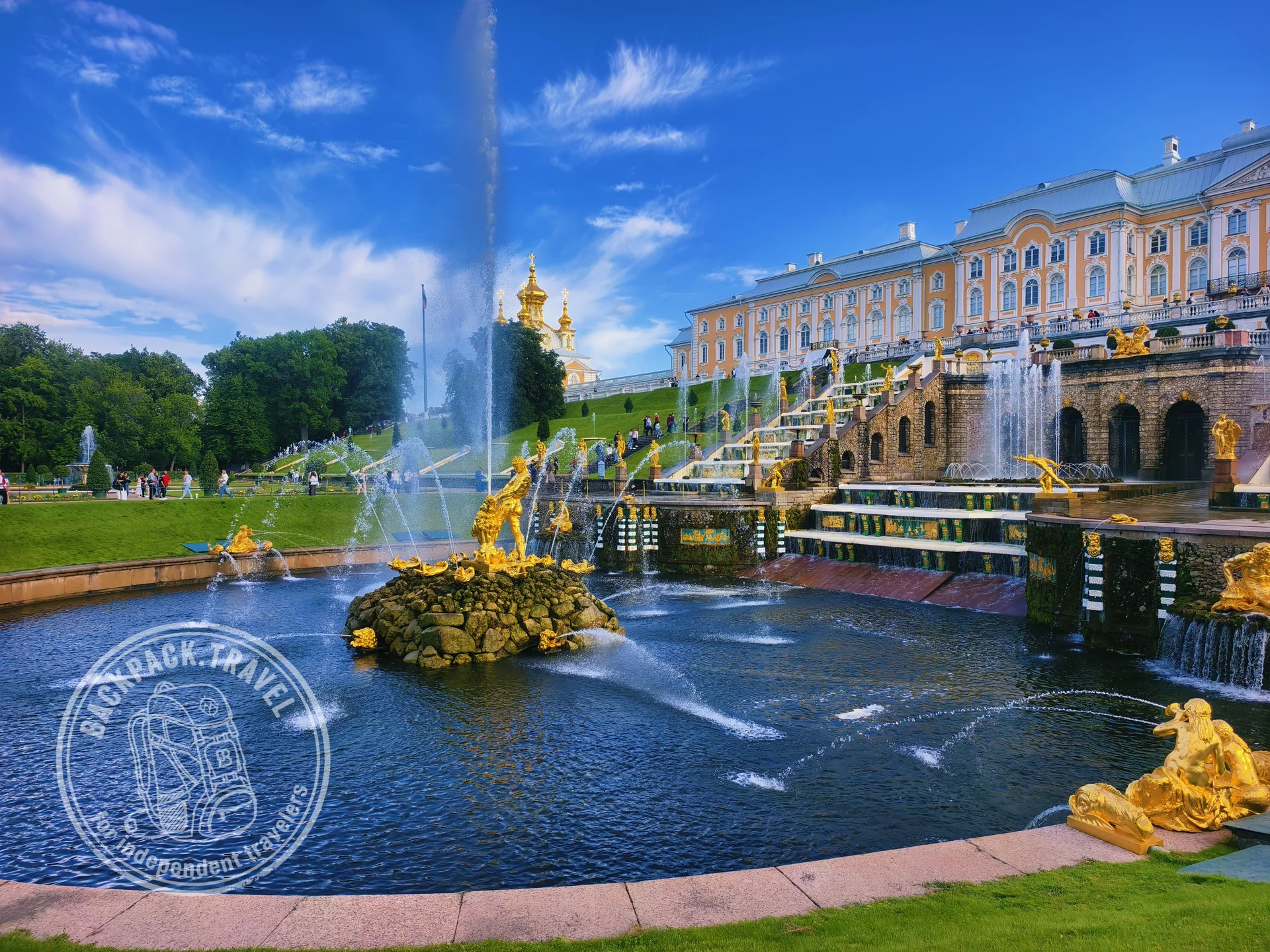
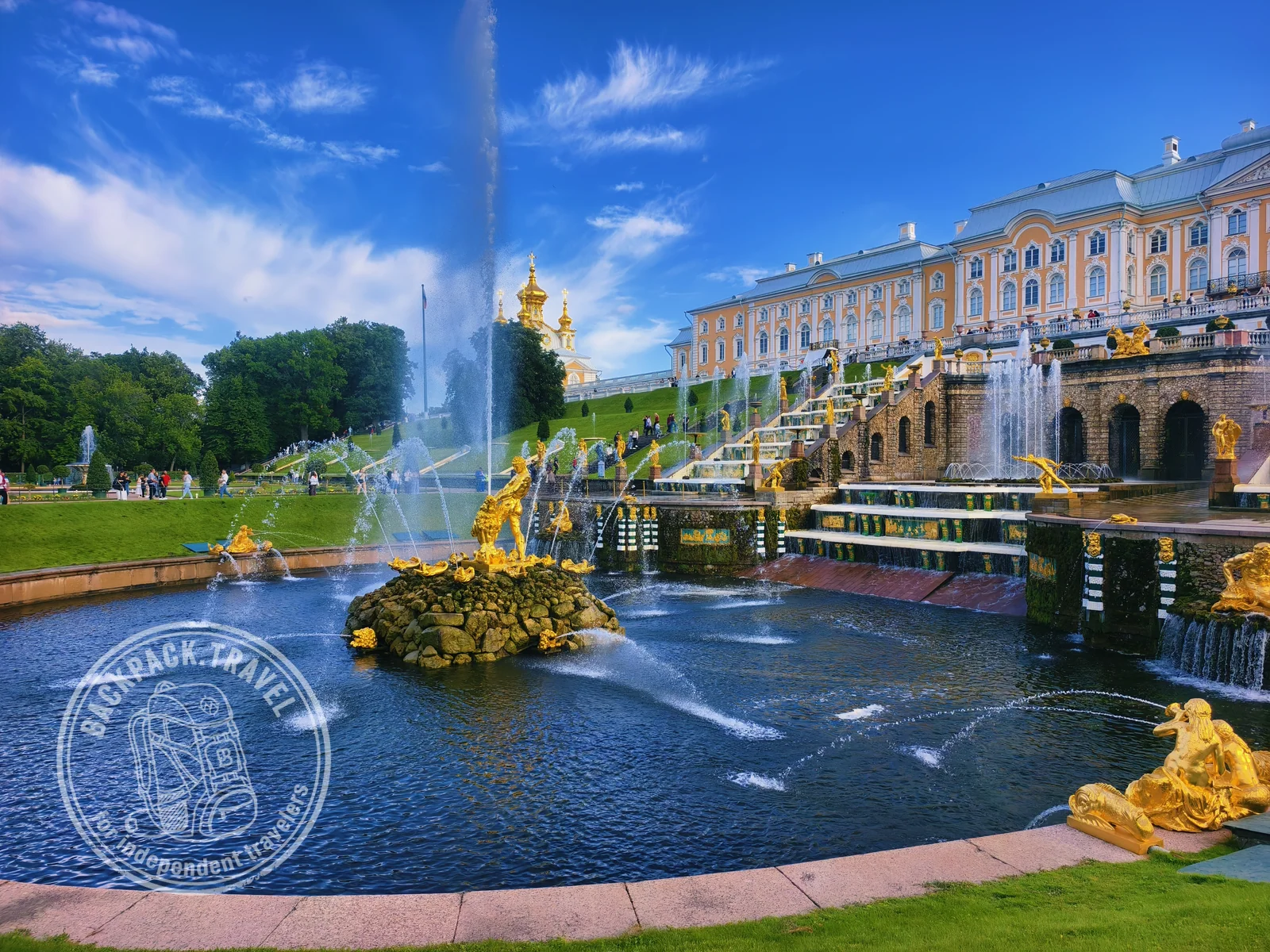
The Grand Cascade and Samson
The main stage was built between 1714 and 1724: three waterfall staircases, a grotto, 64 fountains and more than two hundred gilded statues, vases and reliefs.
At the center of the composition stands Samson Tearing Open the Lion's Jaws, installed in 1735 for the twenty-fifth anniversary of the Battle of Poltava. The lion is part of the Swedish coat of arms and Peter was likened to the biblical Samson, so this is a monument to victory. The first statue, by Rastrelli, was made of lead, and at the beginning of the 19th century it was replaced with a bronze one after a model by Kozlovsky. Samson was lost during the war, and the present figure was recreated by Simonov and Mikhailov, with the fountain switched on again on 14 September 1947. The jet rises some twenty meters.
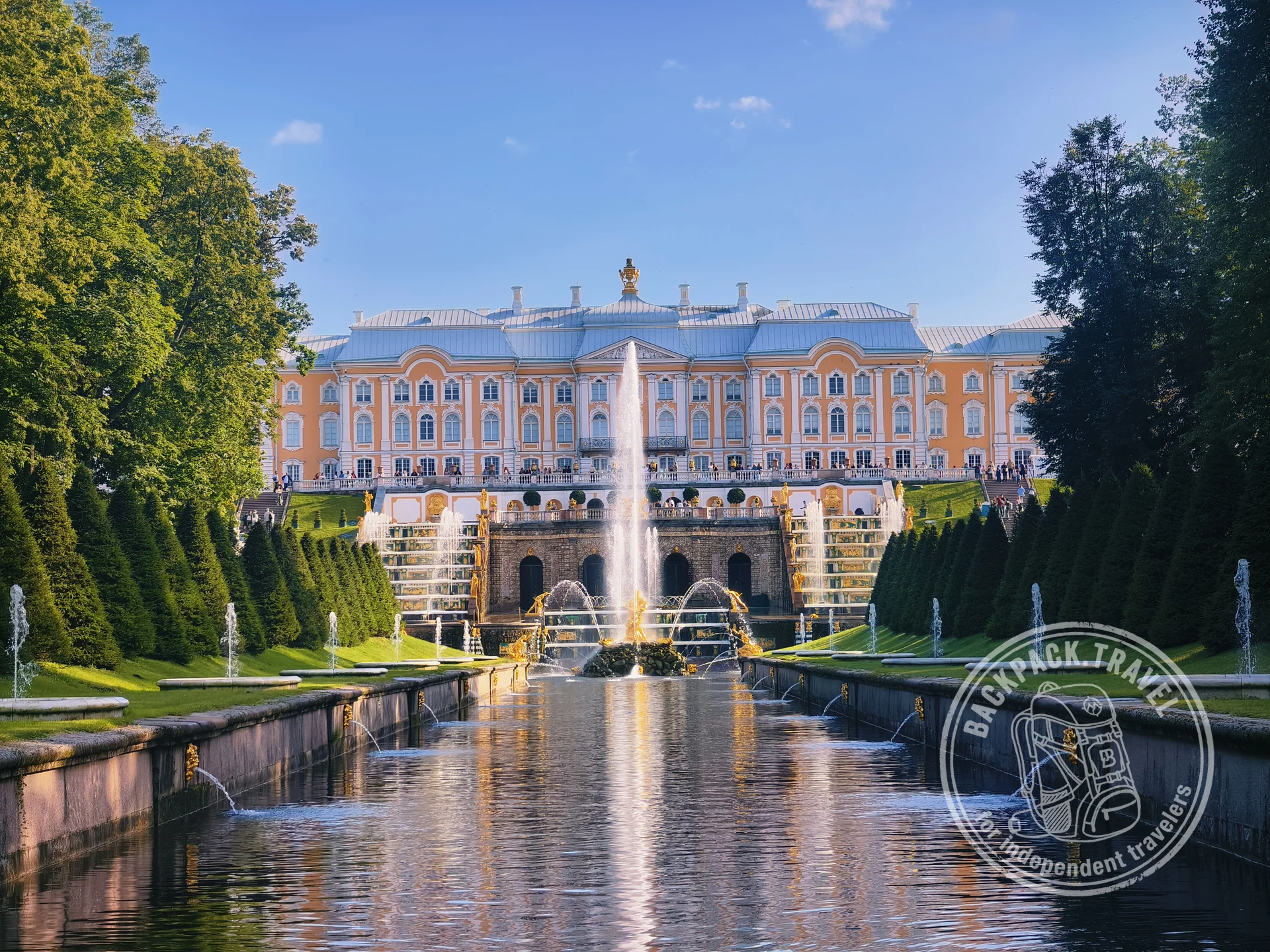
From the cascade basin the Sea Canal runs down to the gulf, with an Avenue of Fountains of twenty-two basins. This is the axis along which the palace should be viewed, since the ensemble was laid out to be read from the water.
How it works without pumps
The fountains run by gravity, without a single pump and without electricity, on the principle of communicating vessels. The water is brought from the Ropsha Heights some twenty-five kilometers to the south, and the natural drop of between seventy and a hundred meters is enough to lift the jets. The feasibility of the water conduit was established in August 1720 and the channel was dug in seven months under the hydraulic engineer Vasily Tuvolkov. The water was released on 8 August 1721 in Peter's presence, and by the following morning it had reached Peterhof.
The parks
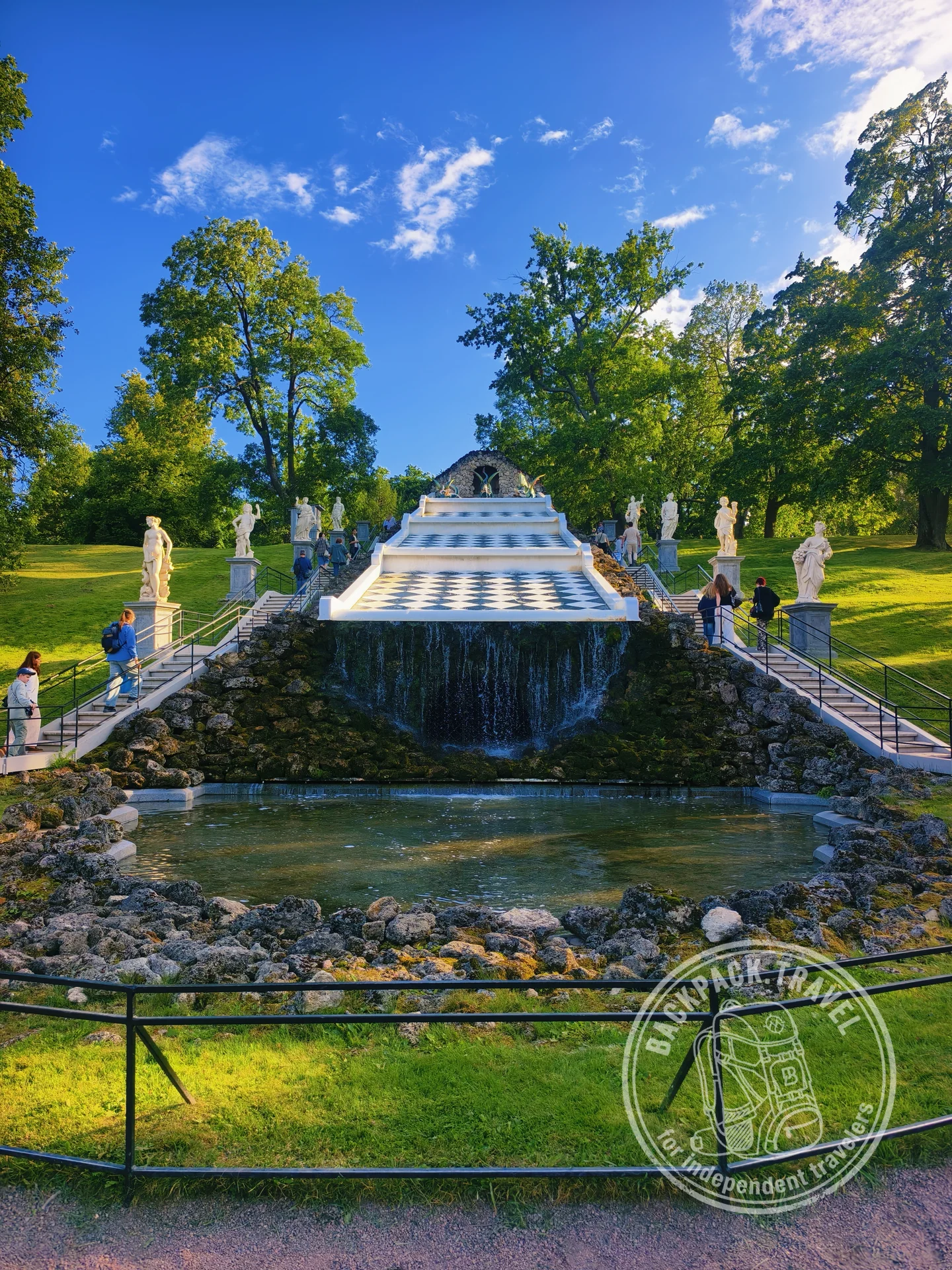
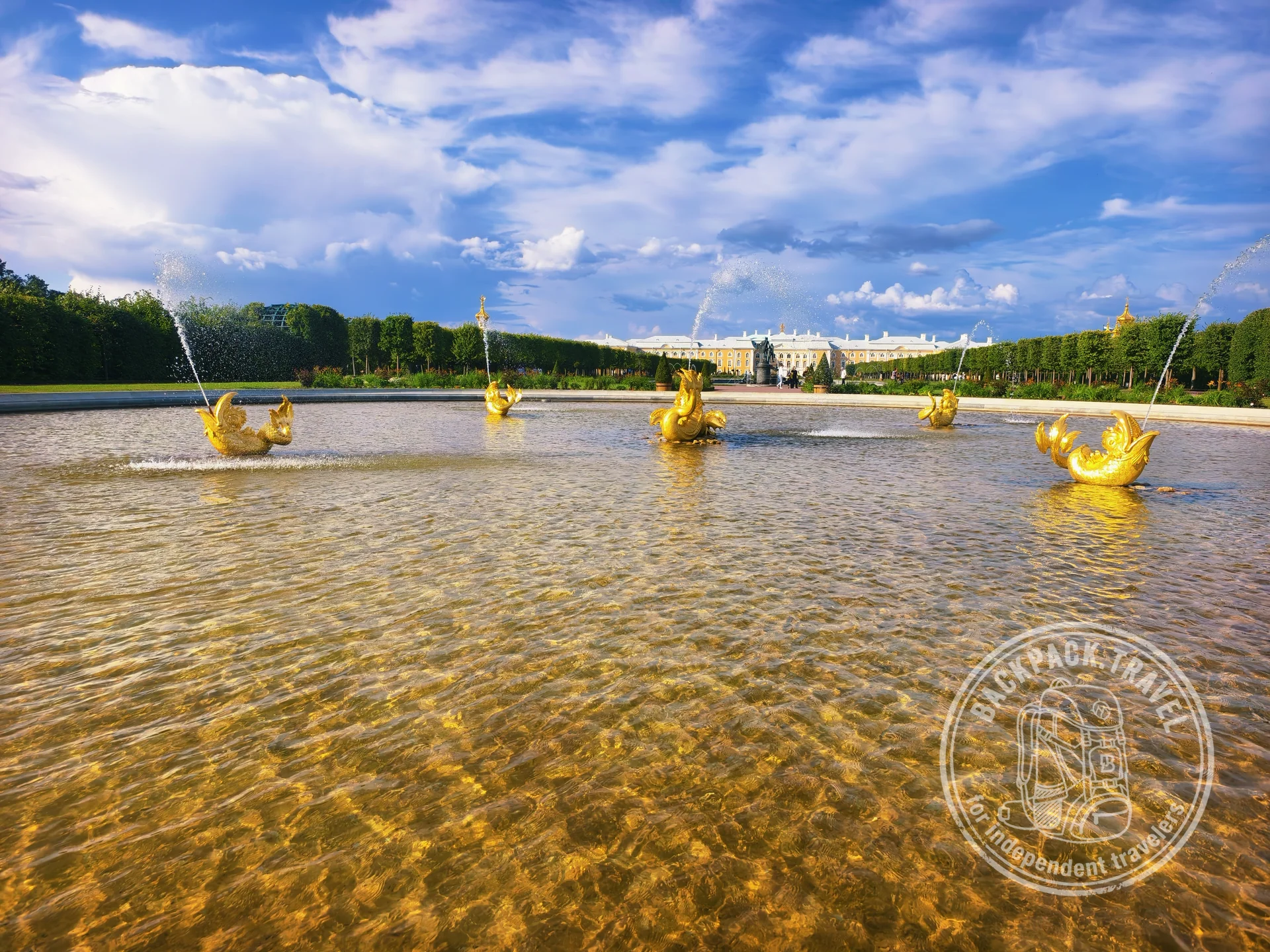
- The Lower Park — 102.5 hectares stretching two and a half kilometers along the gulf, with around a hundred and fifty fountains and four cascades: besides the Grand one there are the Chessboard Hill with its dragons, the Golden Hill and the Lion Cascade.
- The Upper Garden — 15 hectares in front of the palace, with five fountains headed by the Neptune; it reopened after a long restoration on 31 May 2024.
- The trick fountains — the Umbrella, the Little Oak and the Benches: some switch on to a timetable and others are triggered by someone stepping on a stone.
- The palaces are paid for separately from the park: Monplaisir at the water's edge, Marly and the Hermitage.
Seasons
The fountains work only in the warm half of the year: the season usually opens at the end of April with a ceremonial start and closes in the second half of October, with the exact date depending on the frosts. During the day they are not on for the whole of the park's opening hours, but roughly from mid-morning until evening.
In winter the park is open but the water is off, the sculptures are boxed up for protection, and entry becomes free. There is no point coming for the fountains in winter, though for a snow-covered park and the gulf it makes perfect sense. The Upper Garden is always free, entry to the Lower Park is charged in season, and the opening hours and rates change every year.
The Cathedral of Saints Peter and Paul
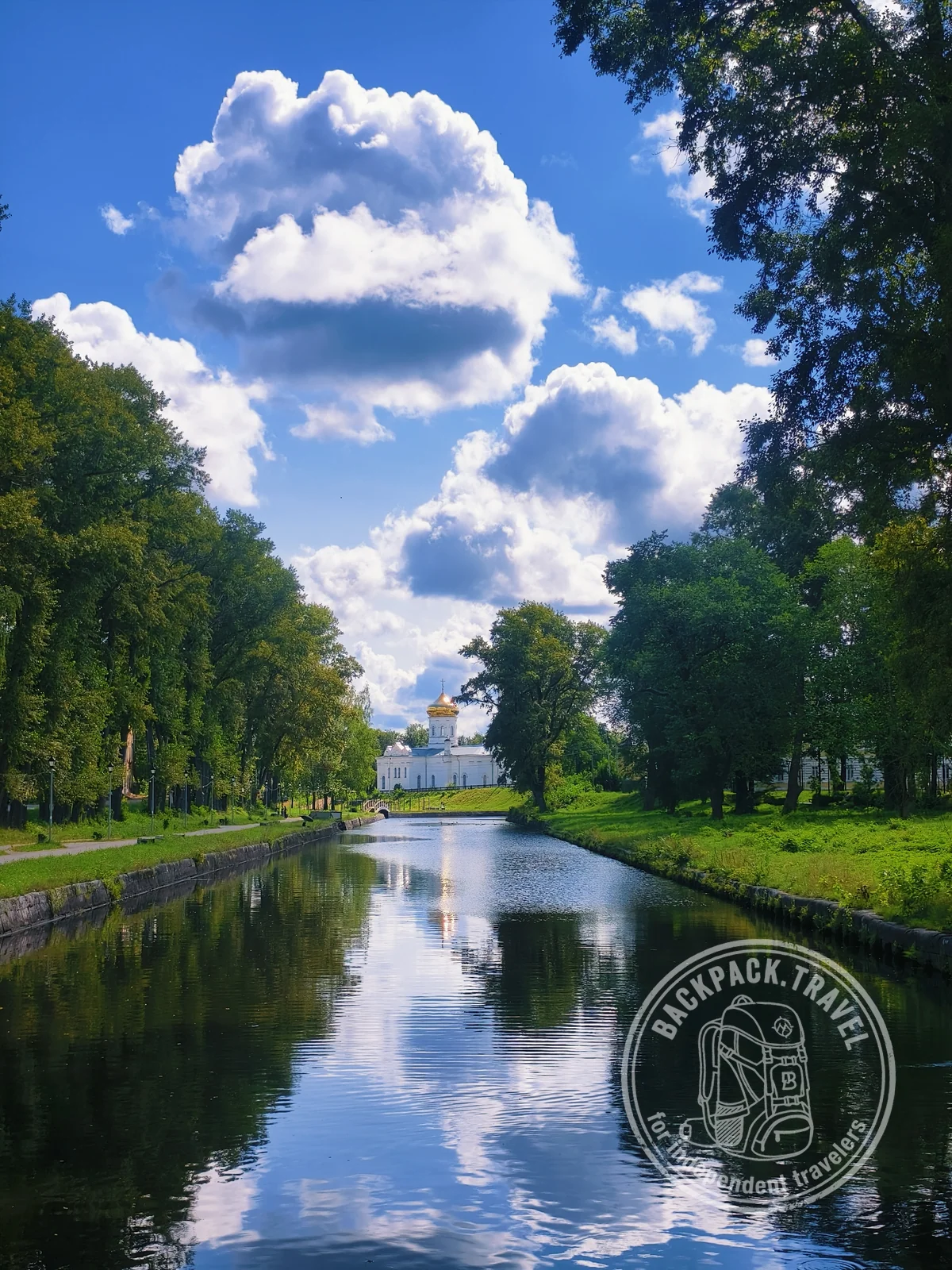
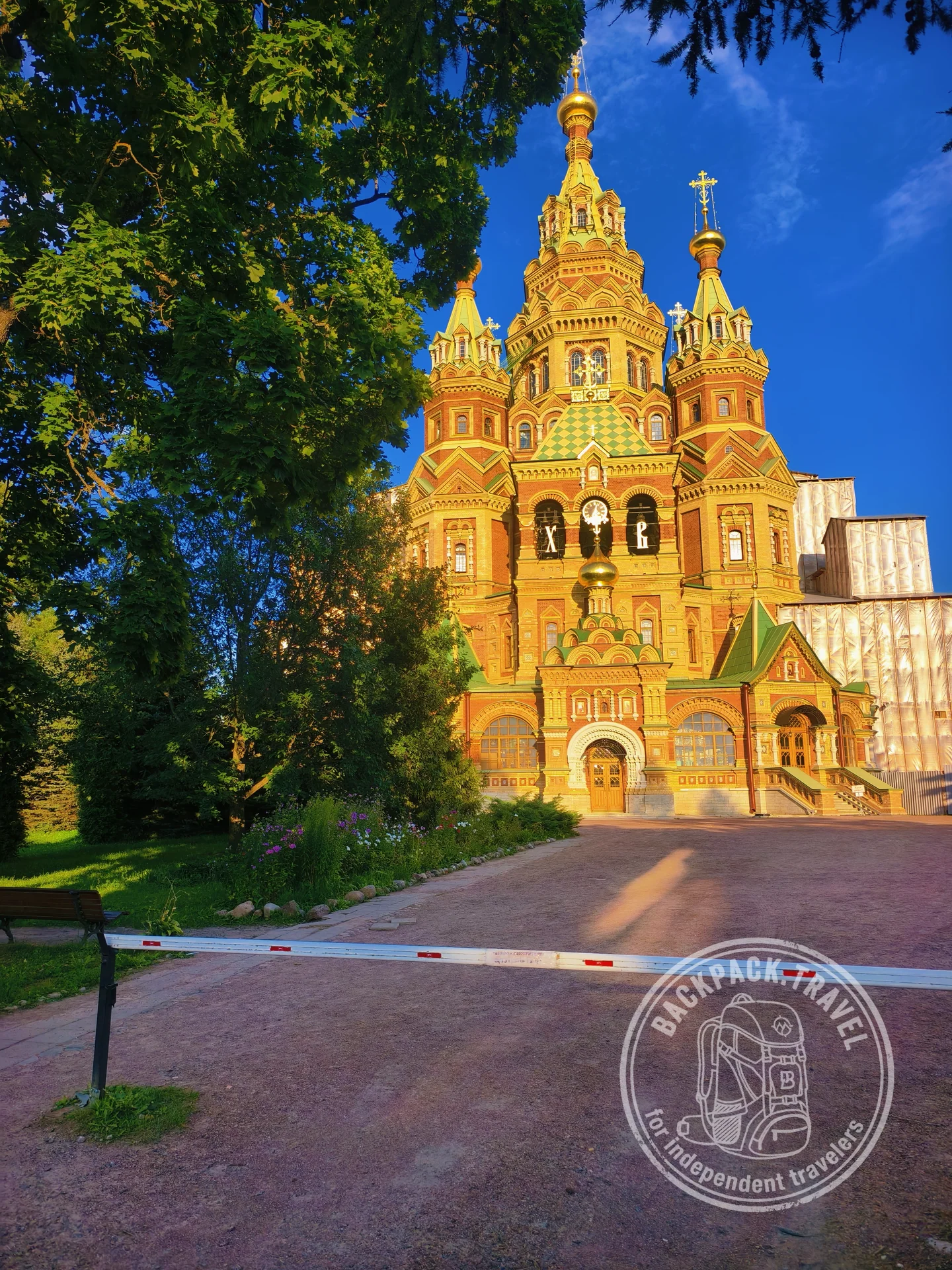
This five-tented church by Olgin Pond is the town's second landmark, standing about seventy meters high. The site was chosen personally by Alexander III and the design was made by Nikolai Sultanov, with the foundation laid in 1895 and the consecration in 1905. The cathedral was closed in 1938 and returned to the church in 1989. There is a viewing platform under the tents, and the conditions for going up should be checked at the church.
Getting there and how much time to allow
The most spectacular way to arrive is the Meteor hydrofoil, which runs from piers in the center of St Petersburg straight to the landing stage of the Lower Park in about forty minutes, during the navigation season. From the pier you step straight into the park, so you need an entry ticket in any case. The suburban train from the Baltiysky station to Novy Peterhof takes some thirty to forty minutes, and from there it is ten minutes by bus. Buses also run from the Avtovo and Prospekt Veteranov metro stations directly to the park entrances, though the route numbers change from time to time.
Half a day is enough for the Lower Park, the Grand Cascade and the trick fountains at a brisk pace. A full day lets you add one or two palaces and the Upper Garden. Two days are needed if you also want neighboring Alexandria and Oranienbaum. Come for opening time, because by midday in high season there is a dense crowd at the cascade.
Who won't enjoy it: anyone who cannot bear organized tourism on an industrial scale, since July here means queues at the entrance and groups treading on your heels. Those arriving in the shoulder season should understand that the main attraction will simply not be running. And remember that almost everything here was recreated after the war: the restoration is of a high order, but this is not an untouched 18th century. For quiet, go to neighboring Alexandria.