Description
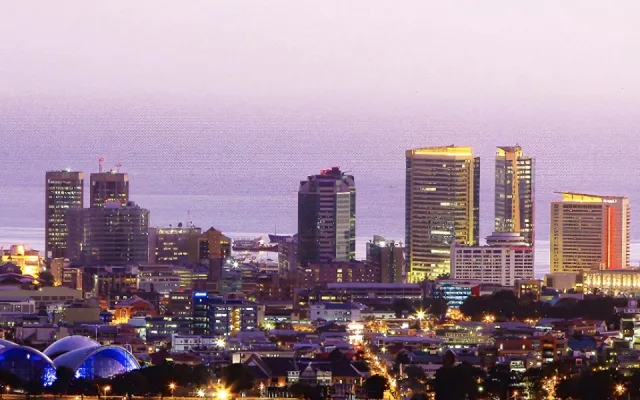
Trinidad's second city in the island's southwest — San Fernando Hill and Indo-Caribbean cuisine.
Wiki
Trinidad's second-largest city sits in the industrial south of the island. Tourists usually stop here for the oil-town atmosphere, local Indo-Caribbean food, and the view from San Fernando Hill. It is a working city, not a postcard one — but for a couple of hours between Port of Spain and the south (Pitch Lake, Icacos beaches) it is well worth a stop.
Is it worth going, and for how long
Honestly, San Fernando is not a destination in itself but a natural base for the south of Trinidad. The city fills half a day: climb the hill, walk around the centre, eat some roti or doubles. One day is the right call if you are using it as a staging post to Pitch Lake (the liquid asphalt lake at La Brea), the beaches on the west coast, or the Caroni bird sanctuary on the road from the capital.
Getting there
- From Port of Spain. The main route runs along the Solomon Hochoy Highway, roughly 50–60 km. Three types of transport cover this corridor: PTSC scheduled buses, shared minibuses (maxi taxis, colour-coded by route — southbound ones carry specific markings), and route taxis — shared cars on fixed routes. The journey takes about an hour, longer in rush hour.
- From Piarco Airport. There is no convenient direct service — the usual approach is to head to the capital first and transfer to a maxi. If you are flying straight to the south, it is easier to arrange a private transfer in advance.
- Around the city. The centre is compact but hilly — much of it is walkable, though the climbs are noticeable. Route taxis pick up from fixed points near Harris Promenade and Library Corner; tell the driver your direction, pay cash, and have small change ready.
What to see
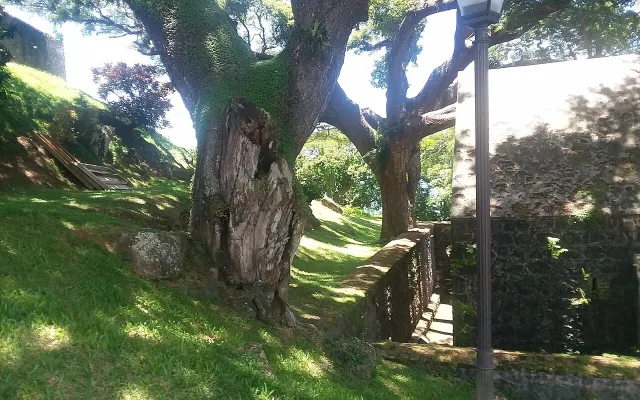
- San Fernando Hill. The city's main landmark — a hill cut by quarries, now a park with viewing platforms. A road leads to the top; you can walk or drive up. From the summit you can see the Gulf of Paria, the Point-a-Pierre industrial zone, and on a clear day the outline of Venezuela. Best visited in the morning or at sunset; midday is hot with little shade.
- Harris Promenade. The central civic axis lined with colonial buildings, the old town hall, churches and monuments. This is where you feel the city's pulse — markets, shops, street food.
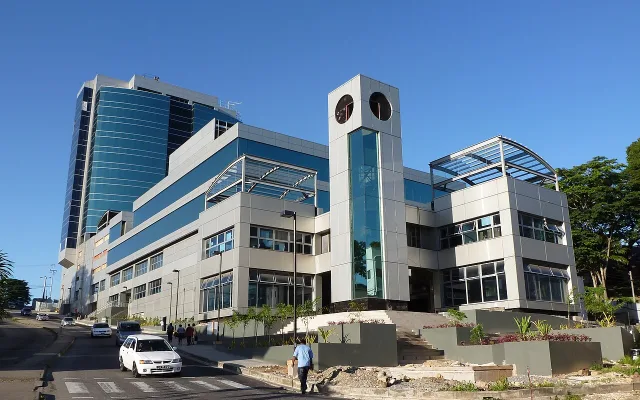
- Shopping centre and market. San Fernando is the main commercial hub of the south. Walking between High Street and the market gives a genuine slice of everyday life rather than a tourist showcase.
Food — the real reason to come
The south of Trinidad is the heartland of Indo-Caribbean cooking, and San Fernando shows it at its best:
- Doubles — two pieces of fried bara dough with curried chickpeas (channa), pepper and sauces. The classic street breakfast, costing next to nothing. Ask for "slight pepper" if you don't like heat — local Scotch bonnet peppers are serious.
- Roti — flatbread filled with curried meat or vegetables (chicken, goat, potato with channa). Dhalpuri and buss-up-shut (torn paratha) are a must.
- Bake and shark is more closely associated with Maracas in the north, but fried fish and seafood are easy to find in the south too.
- Fruit stalls, fresh juices, local sweets (barfi, kurma).
Food here feels cheap: a full street meal costs very little, and cafés and restaurants are also inexpensive by Caribbean standards.
Where to stay
Accommodation options are limited and geared more towards business travellers than tourists: a handful of hotels and guesthouses near the centre and closer to the highway. Staying near the centre makes sense if you plan to explore on foot; near the highway if you are driving south the next morning. For a full holiday, most travellers base themselves in the capital or on Tobago and take San Fernando as a single overnight stop.
Safety and practicalities
- Trinidad calls for ordinary urban caution: do not display valuables, watch your bag in markets and crowds, stick to lit streets in the evening and avoid empty areas at night. The industrial south is not a resort zone — treat it like any working city.
- Cash. Cards are accepted in supermarkets and chain outlets, but street food, route taxis and markets are cash only (Trinidad and Tobago dollars, TTD). Withdraw money before you head out.
- Climate. Hot and humid year-round. The dry season (roughly January–May) is more comfortable for walking and climbing the hill; the rainy season brings short heavy downpours.
- Carnival. If you are visiting during Trinidad Carnival (February–March), transport and accommodation across the whole island will be heavily booked — plan well in advance.
Common mistakes
- Coming to San Fernando specifically for the sights and leaving disappointed — it works best as a southern base and a food stop, not a sightseeing destination.
- Underestimating the heat on the hill — bring water and a hat.
- Counting on card payment and finding yourself without cash at a doubles stall.
- Trying to cover the whole island from one base: Tobago requires a separate ferry or flight and is not a day trip.