 Города и дороги
Description
A fishing village that turned in forty years into a city of seventeen million: China's first special economic zone, whole districts of glass skyscrapers and the parks wedged in between them.
Wiki
Shenzhen grew up on the border with Hong Kong in a little over forty years: in 1980 China's first special economic zone was established here, and a county town turned into a metropolis of more than seventeen million people. It is the youngest of the large Chinese cities and, in essence, a showcase of how the country looks today, without any antiquity but with skyscrapers, parks and a metro of a dozen and a half lines. Coming here for ancient things is pointless, whereas looking at modern China makes more sense here than anywhere else.
What to see
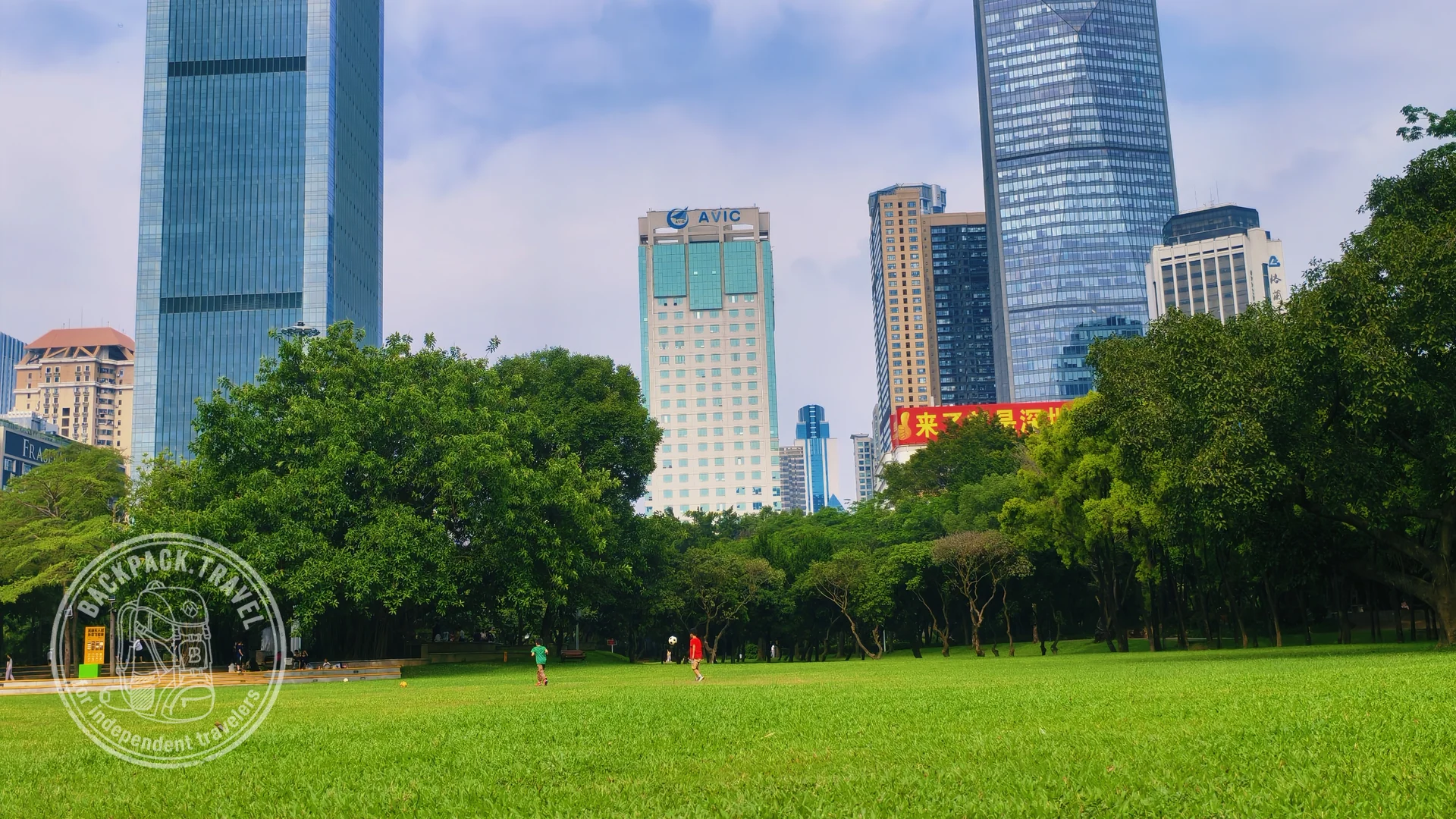
- Lotus Hill Park (Lianhuashan) is a green hill in the middle of business-district Futian, free to enter. At the top stands the monument to Deng Xiaoping, and below it runs the city axis laid out with a ruler: the square, the Civic Centre and the towers behind it. This is the best free view in the city, especially an hour before sunset.
- Lizhi Park (Lychee Park) is old by local standards, laid out at the start of the eighties on the site of the lychee orchards that gave it its name. Ponds, morning exercises and evening dancing are what fill it, and here Shenzhen stops being an office city. Alongside it stretches Central Park, a narrow green strip stitching Futian from end to end.
- Huaqiangbei is the largest electronics market in the world, several blocks of multi-storey arcades filled with boards, connectors and finished devices. Even with nothing to buy the place is worth an hour, because nowhere else can you see so plainly what the modern world is physically assembled from.
- OCT-LOFT is a former electronics factory rebuilt into a quarter of galleries, bookshops and coffee houses. It is the only place in the city built to a human scale. Not far away lies Dafen village, a district of copyist painters from which mass-produced Van Goghs and Monets have been going out into the world for decades.
- The Shenzhen Bay waterfront and the Futian mangrove reserve add up to thirteen kilometres of promenade along the water, with Hong Kong already on the far side of the bay. In winter migrating birds feed in the shallows.
- Dapeng Fortress is a Ming garrison town of the late 14th century on the eastern peninsula, the only genuinely old place within the city limits. The journey from the centre takes more than an hour.
Skyscrapers and the border
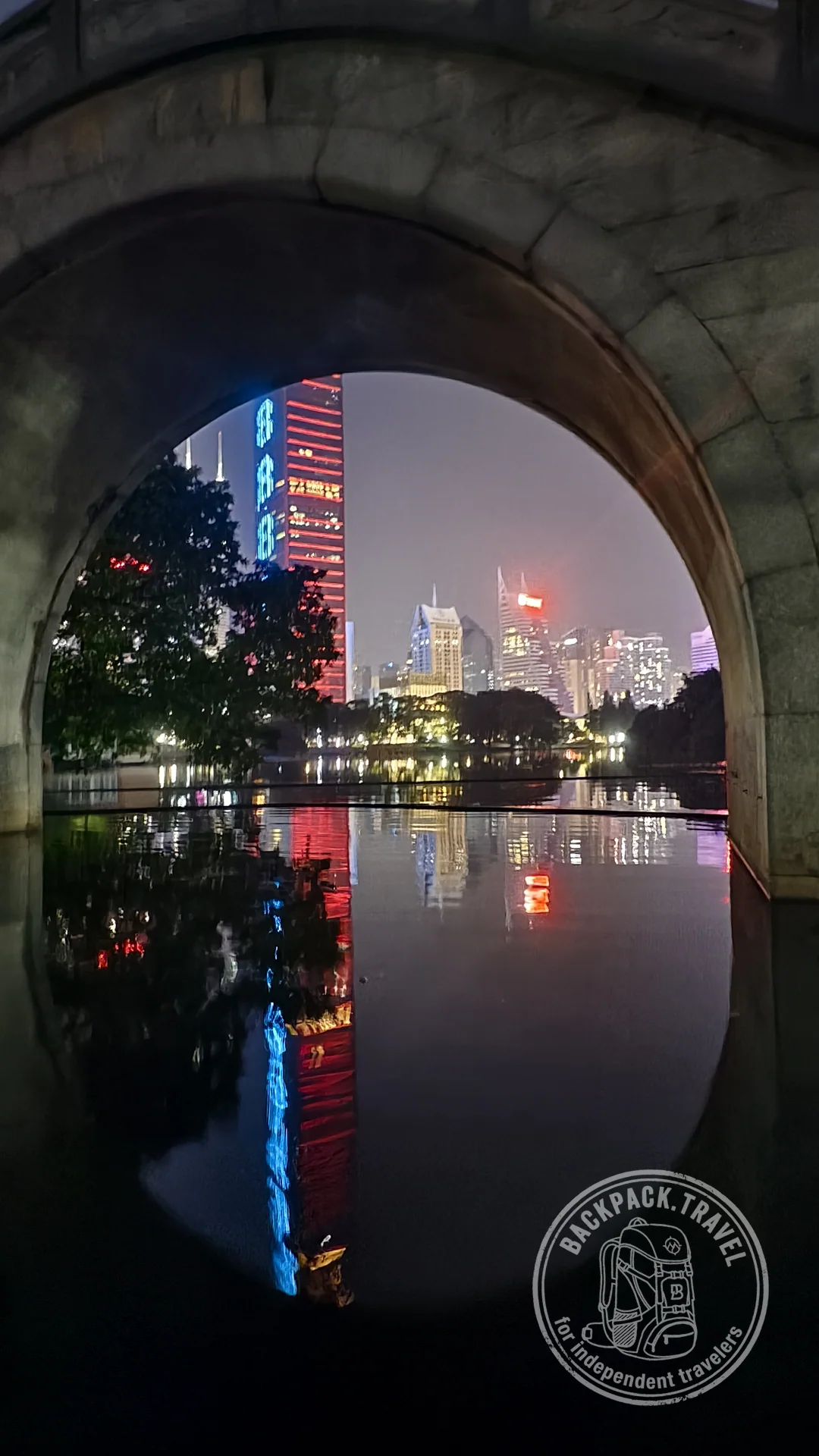
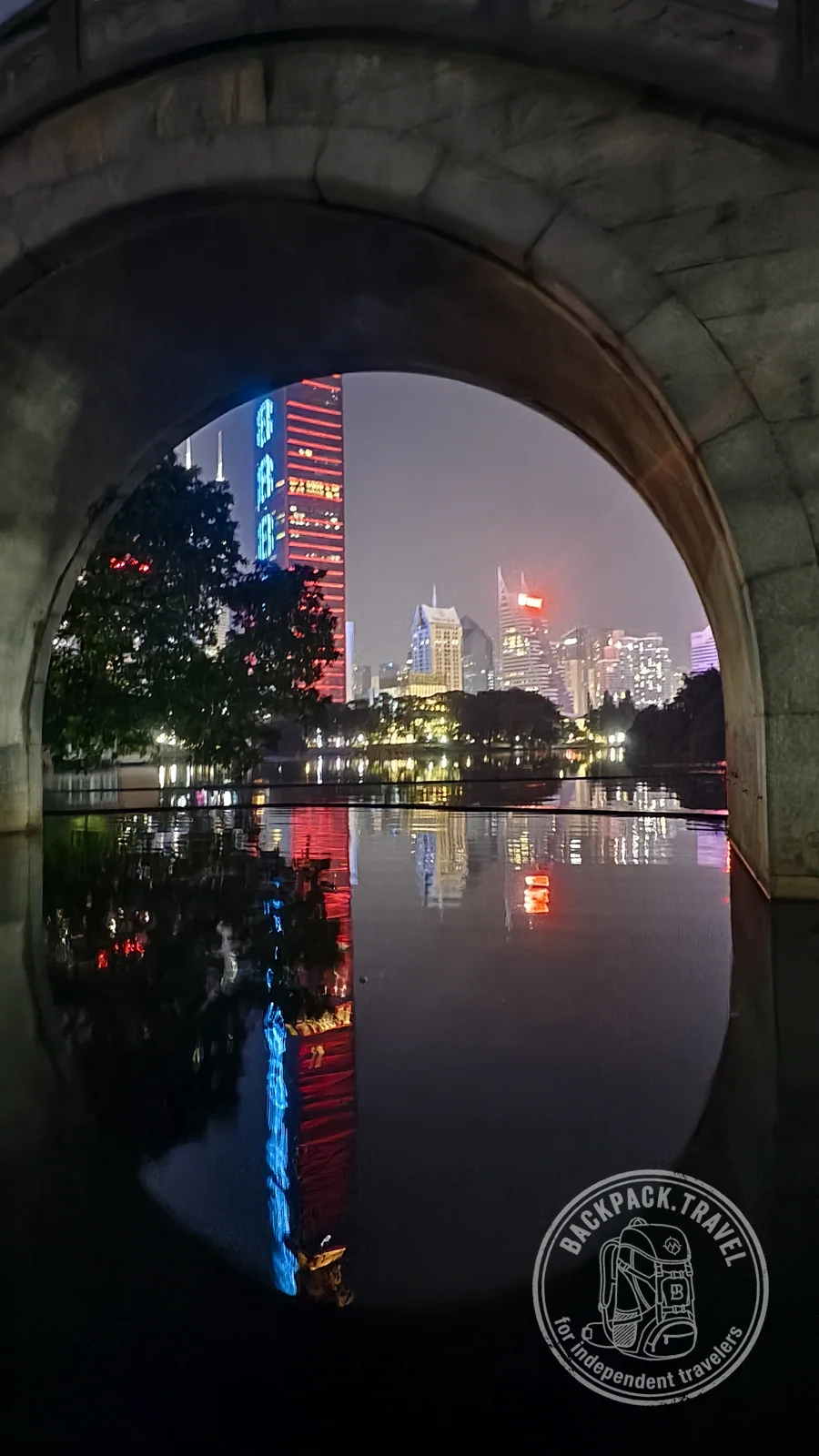
The skyline is Shenzhen's chief exhibit. The Ping An Finance Centre, 599 metres tall, holds an observation deck on the 116th floor, one of the highest in the world, but in the haze of the warm season the panorama is smeared, and from outside, from Lotus Hill or from the waterfront, the silhouette reads better. In the evening the central high-rises work as a single screen, with synchronised light animation driven across their facades at set hours.
Hong Kong across the river is a subject of its own. The metro delivers you right to the border terminals at Luohu and Futian, and from there you walk through the building to the Hong Kong side, where the railway to Kowloon begins. On weekday mornings and evenings the queues are formidable, since tens of thousands of people commute to work across the border. Hong Kong remains a separate immigration territory, and the return counts as a new entry into mainland China; the rules for entering the PRC have changed more than once in recent years, so they need to be checked against up-to-date sources.
Fees and entry
Most of what is interesting here is free: the parks, the waterfronts, Huaqiangbei, OCT-LOFT and Dafen. You pay for the observation deck in the Ping An Finance Centre and for theme parks such as Windows of the World, where the tickets are far from cheap. The metro costs next to nothing and covers almost the whole city. Cash is accepted reluctantly, everything rests on paying by phone, and linking a foreign card to the local payment apps is best arranged in advance, while you are still at home.
How much time to allow
One day is enough for the basic programme: a morning at Huaqiangbei, the day in OCT-LOFT and Dafen, sunset on Lotus Hill and the evening by the bay under the light show. Two days give you room to breathe, adding the Ping An observation deck, the Shenzhen Bay waterfront and one of the museums, and all of it without racing between interchanges. The third day is sensibly given to the east, to Dapeng Fortress, the beaches of the peninsula or the climb up Wutongshan, because the journey there takes over an hour in each direction and there is no point in squeezing it into a general day. Beyond three days the city holds you only for business, whether that is a work trip, an electronics buying run or negotiations. If Shenzhen stands in the route merely as a stopover on the way to Hong Kong, it is more honest to allow half a day for it and build no illusions.
What to combine it with
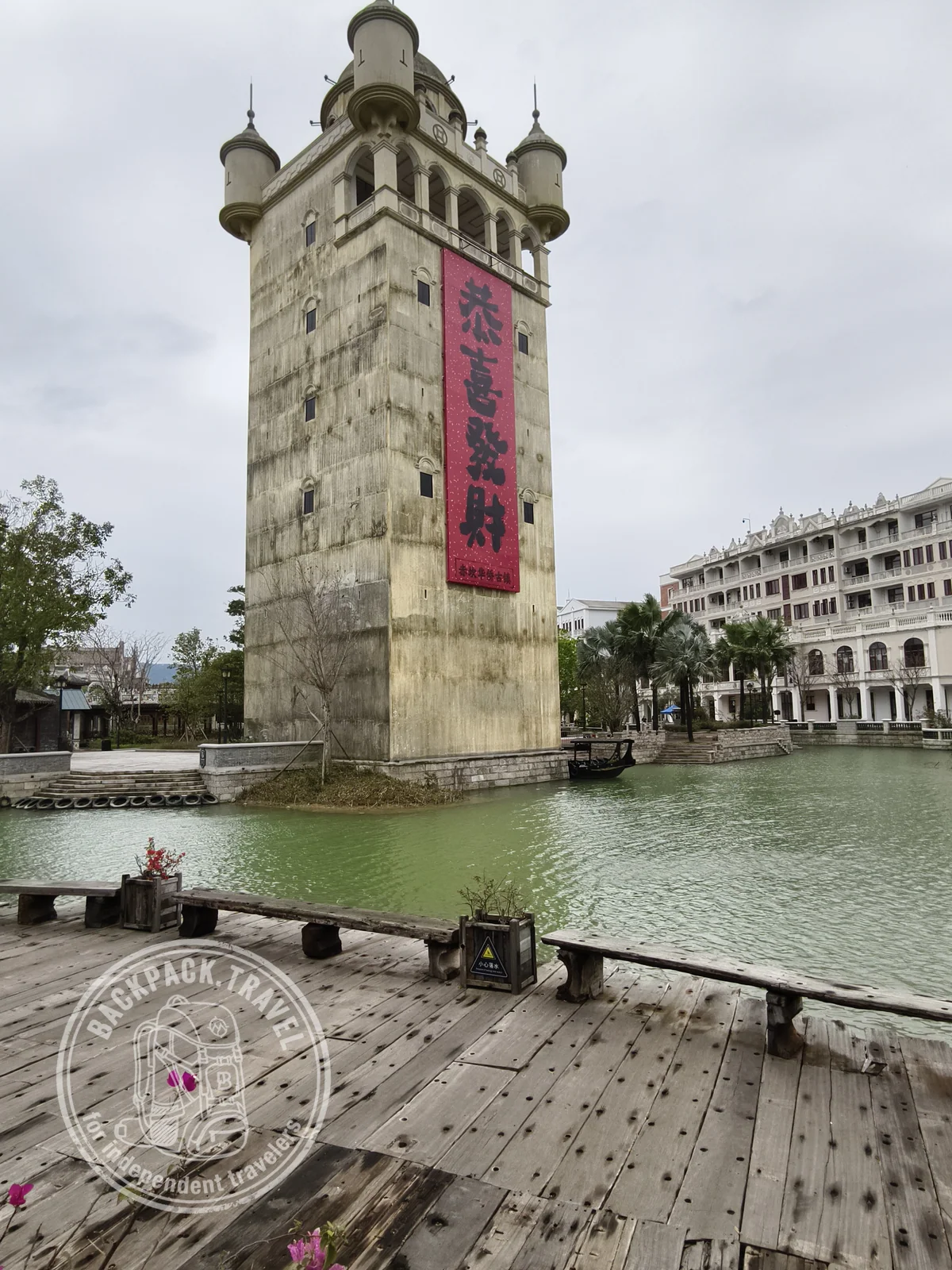
Hong Kong is literally beyond the turnstile, and from the border to its centre is less than an hour. Guangzhou is half an hour away by high-speed train, while Macau and Zhuhai can be reached by ferry or by rail across the delta. The western line takes you in an hour and a half to Kaiping with its diaolou towers, a rare case of something genuinely old turning up near Shenzhen.
When to go
October to December is the best time: dry, sunny and a little over twenty degrees. January and February are cooler and damper, but perfectly walkable. March and April bring fog and drizzle off the sea, visibility drops and the observation decks lose their point. From May to September a humid heat above thirty degrees sets in, and in the second half of summer typhoons are added to it.
Who won't enjoy it
There is almost no history here, and that is not an exaggeration: everything older than forty years fits into one Ming fort on the outskirts. The city is enormous, twenty kilometres separate one district from the next, and any walk turns into a metro ride. The skyscrapers are striking but monotonous, and the theme parks of the nineties look dated and overrated today. Street life in the usual Chinese sense is thin: the old villages inside the city were demolished or rebuilt, and in place of blocks full of noodle shops what remains is shopping centres. To anyone travelling for the real China of temples, teahouses and back lanes, Shenzhen will look like an expensive and sterile stopover.