Description
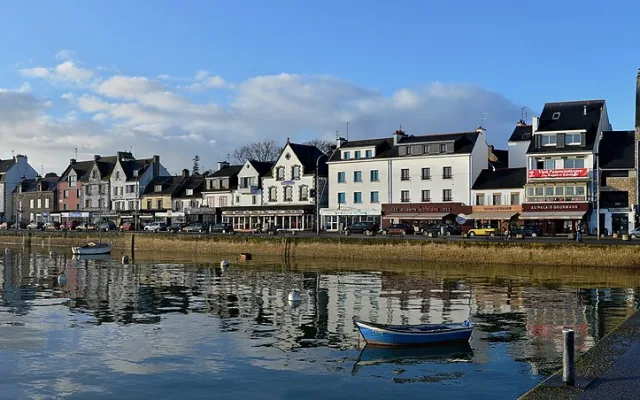
Oman's dhow-building port — working shipyards, the Al Ayjah lighthouse and the green turtles of Ras Al Jinz.
Wiki
Sur is a case where the point of the journey is not the town itself but what surrounds it: the working yards where wooden dhows are still built by hand, and the turtle reserve at Ras Al Jinz half an hour down the road. The town is quiet, compact and pleasantly provincial — an ideal base for a couple of days combining the sea, the history of Omani seafaring and the best wadis in the east of the country.
Getting there and around
The standard approach is by car from Muscat, about 200 km on good road, two and a half to three hours. The drive is scenic: part of it runs along the coast, past the wadis themselves. Intercity buses do serve Sur, but only a rental car gives you real freedom — without one you cannot reach the turtles or the wadis properly, since entry and visiting times are tied to fixed schedules and taxis over those distances are ruinous.
Inside Sur a car is useful too: the sights are scattered, Bilad Sur Fort is a few kilometres out and Qalhat is well beyond the town. The centre and the lagoon shore are pleasant on foot, but it is better to drive between points.
What is actually worth seeing
- The dhow yards — the main reason to stop in the town itself. This is not a museum reconstruction but a working operation: craftsmen assemble large wooden vessels by eye, without drawings. Come during working hours, and accept that it is a live site rather than an attraction.
- The Al Ayjah lighthouse and the old Al Ayjah quarter — across the lagoon, linked by the Khor Al Batah suspension bridge. The white lighthouse and the maze of old streets with their carved doors make the best place to catch sunset and take photographs.
- The lagoon (Khor Al Batah) — a natural harbour in the middle of town; the pedestrian suspension bridge across it is a walk in its own right.
- The Maritime Museum — a short but sensible introduction to Omani shipbuilding and the trade routes to Zanzibar and India; logical either before or after the yards.
- Bilad Sur Fort — a restored castle with towers on the edge of town, a quick stop.
- Qalhat — a UNESCO site around 25 km away: the ruins of a medieval port and the mausoleum of Bibi Maryam. Interesting for its context rather than its scale; fit it into the drive to or from Muscat.
The turtles of Ras Al Jinz
This is what people come for. Green turtles nest at the reserve, and guided night tours let you watch the females come ashore to lay. The essentials:
- Visits are only in organised groups and by ticket, normally booked in advance — in season the places go.
- There are night and early-morning outings; the morning one can be easier logistically, but what you actually see is down to luck.
- Turtles nest all year round, though activity peaks in the warm months, roughly summer into early autumn. Winter gives you fewer chances.
- No torches and no flash photography on the beach — it disorients the animals. Bring something warm: the shore is cool and windy at night.
Nearby is Ras Al Hadd, the easternmost point of Arabia, with another beach; easy to combine.
Wadis on the way
If you are driving from Muscat, do not blow past them. Wadi Shab is often called the most beautiful wadi in Oman: a boat ferries you across from the car park, then it is about an hour on foot along turquoise pools to a final waterfall inside a half-hidden cave — you have to swim, as the entrance is narrow. Bring shoes you do not mind soaking and a dry bag for your phone. Neighbouring Wadi Tiwi is quieter and greener, with an oasis and small villages. Both slot naturally into your arrival or departure day.
Where to stay and how long
Two days is enough: one for the wadis on the way in and the evening turtle outing, the second for the yards, the lagoon, Al Ayjah and sunset at the lighthouse. Staying near the centre or by the lagoon puts everything within reach. There is also the option of sleeping at the Ras Al Jinz eco-centre itself, which puts you right beside the turtles, though there is nothing else there in the way of food or entertainment.
Food, costs and practicalities
Sur is inexpensive by the standards of tourist destinations: the mainstay is simple local and Indian-Pakistani places where a filling meal costs very little. Look for fresh fish and seafood — it is a port, after all, and that is the local strength. Cafés and restaurants serving alcohol are all but absent, so plan on tea, juice and coffee.
Things to keep in mind:
- Oman is a conservative country: dress modestly in town and in public, especially away from the beaches.
- Fill up in advance — filling stations are sparse on the highway and near the reserve.
- The best season is the cool half of the year, roughly October to March, when daytime temperatures suit wadis and walking. Summer is hot, but that is when turtle sightings are most likely; decide which matters more to you.
- Cash is handy for small cafés and the market, though hotels and the reserve take cards.