Description
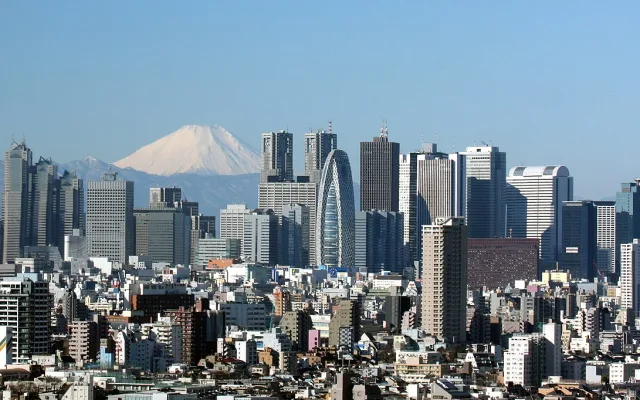
Japan's capital is a city of the future, where the traditions of haiku sit alongside neon towers and more Michelin stars than anywhere else on earth.
Wiki
Tokyo is the capital of Japan and the largest urban agglomeration on the planet, a place where ancient Shinto shrines and wooden temples stand next to neon towers, high-speed trains and a record number of Michelin-starred restaurants. It is a metropolis of contrasts: the 23 special wards are home to some 9.8 million people, Tokyo Prefecture to around 14 million, and Greater Tokyo to almost 38 million, making it the most populous agglomeration in the world. And yet Tokyo remains one of the safest, cleanest and most traveller-friendly cities on earth.
A little history
The city began as the fishing village of Edo, fortified in the 15th century. In 1603 the shogun Tokugawa Ieyasu made Edo the seat of his military government, and over two centuries it grew into one of the largest cities in the world. In 1868, after the Meiji Restoration and the fall of the shogunate, the emperor moved his residence here from Kyoto and the city was renamed Tokyo — the "Eastern Capital". The 20th century brought hard trials: the devastating Great Kanto Earthquake of 1923 and the bombing raids of the Second World War. Tokyo rebuilt itself twice and hosted the Olympic Games in 1964 and the 2020 Games, postponed by the pandemic to 2021, each time as a showcase of Japanese technological progress.
Main sights
- Senso-ji in Asakusa — Tokyo's oldest Buddhist temple, founded by tradition in 645. The entrance is marked by the giant Kaminarimon gate with its huge red lantern, and the approach to the main hall runs along Nakamise-dori, a shopping lane of traditional sweets and souvenirs.
- The Imperial Palace — the emperor's working residence right in the centre, on the site of the former Edo Castle. The inner halls are closed, but the East Gardens with the ruins of the castle walls are open free of charge.
- Shibuya Crossing — the most famous pedestrian crossing in the world, where thousands of people step off the kerb at once on the green light. Nearby stand the touching statue of the loyal dog Hachiko and the Shibuya Sky rooftop observation deck.
- Shinjuku — the business and entertainment heart of the city, with the busiest railway station on the planet. Here you will find the neon district of Kabukicho, the maze of tiny bars in Golden Gai and a free observatory in the Metropolitan Government Building.
- Ginza — the main luxury quarter, with flagship boutiques, galleries and historic department stores.
- Akihabara — the "electric town", a kingdom of anime and manga, electronics shops, arcades and themed maid cafés.
- Harajuku and its Takeshita-dori street — the epicentre of youth subcultures and kawaii fashion.
- Tokyo Tower (333 m) and Tokyo Skytree (634 m, the tallest tower in the world) — two instantly recognisable silhouettes on the skyline.
- Meiji Shrine — a majestic Shinto shrine in a quiet forest park, dedicated to Emperor Meiji and Empress Shoken.
- Odaiba — an artificial island in Tokyo Bay with futuristic architecture, shopping centres and views of the Rainbow Bridge.
Parks and museums
Ueno Park is the city's main green space and cultural centre: it holds the Tokyo National Museum (the largest collection of Japanese art), the National Museum of Nature and Science, art galleries and the country's oldest zoo. In spring the avenues of Ueno become one of the best places for cherry blossom viewing (hanami), which usually falls between late March and early April.
If you prefer the contemporary, look in at the Miraikan on Odaiba, devoted to the science and technology of the future, with robotics and a planetarium. Animation fans head for the Ghibli Museum in suburban Mitaka — a storybook space created by the makers of Spirited Away, where tickets must be bought in advance for fixed dates.
Food
Tokyo has a fair claim to being the culinary capital of the world: it has more Michelin-starred restaurants than Paris and New York. The range is enormous, from refined sushi counters to cheap but flawless noodle bars. The outer market at Tsukiji remains a street-food paradise for seafood, while the wholesale trade and the famous tuna auction have moved to the modern Toyosu market. Do try fresh sushi and sashimi, ramen and udon, tempura, okonomiyaki, and dishes made with wagyu beef.
Practicalities
Tokyo is connected to the world by two airports — Narita and Haneda, the latter much closer to the centre. Getting around means the metro and JR trains, including the Yamanote loop line that links most of the key districts. The easiest way to pay is a contactless Suica or Pasmo card, which also works in vending machines and for small purchases. Signage on trains and in stations is duplicated in English. Cash is still needed at smaller establishments and temples, and free Wi-Fi is available in stations and cafés.
A five-day route
- Day 1. Asakusa and Senso-ji, a walk along the Sumida River, and an evening ascent of Tokyo Skytree.
- Day 2. The Imperial Palace and the East Gardens, then the department stores and galleries of Ginza.
- Day 3. Meiji Shrine, fashionable Harajuku and the panorama from Shibuya Sky above the legendary crossing.
- Day 4. Museums and cherry blossom in Ueno Park, then Akihabara in the evening for electronics and anime.
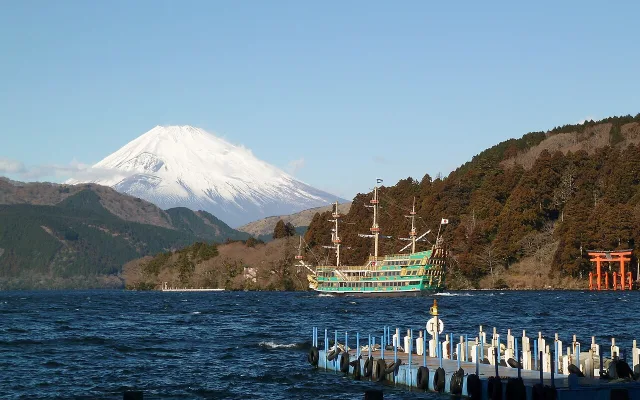
- Day 5. Odaiba island, the Rainbow Bridge and the Miraikan — or a day trip out to Mount Fuji and the Fuji Five Lakes.
Five days are enough to catch the rhythm of the city, but Tokyo is inexhaustible: each district is almost a separate town with its own character, and it is a place you will want to come back to.
Photos