Description
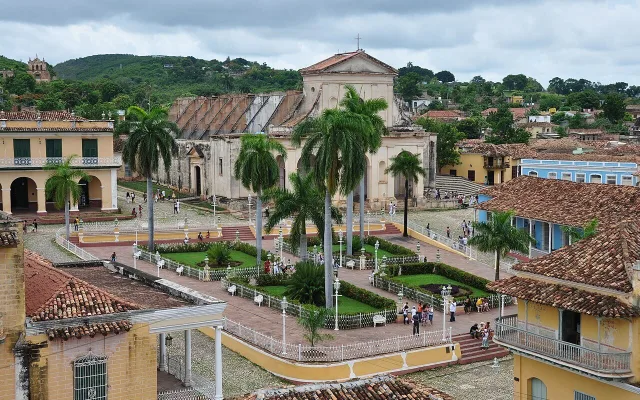
The jewel of colonial Cuba — a pastel-hued UNESCO city ringed by sugar plantations at the foot of the Sierra Escambray.
Wiki
Trinidad is one of the most picturesque colonial cities in Latin America, situated on the southern coast of central Cuba in Sancti Spíritus province. Cobblestone streets, pastel facades and terracotta tiled rooftops at the foot of the Sierra Escambray mountains create the feeling that time stopped here several centuries ago.
History and UNESCO Status
The settlement was founded in 1514 by conquistador Diego Velázquez de Cuéllar — one of the oldest Spanish towns on the island. In 1518 Hernán Cortés's expedition set out from here before going on to conquer Mexico. The city flourished in the late 18th and early 19th centuries, when the surrounding valley became the country's main sugar-producing centre: dozens of plantations worked by enslaved people brought their owners enormous fortunes, reflected in the grandeur of the city's mansions.
After the wars of independence and the abolition of slavery the industry quickly declined, and the city found itself bypassed by new rail and road connections. That isolation proved fortunate for future generations: the urban fabric changed very little, and Trinidad preserved an unusually complete colonial character. In 1988 the historic centre together with the Valle de los Ingenios (Valley of the Sugar Mills) was inscribed on the UNESCO World Heritage List. Today the city is home to around 75,000 people.
What to See in the City
- Plaza Mayor — the heart of old Trinidad, surrounded by the mansions of the sugar aristocracy, palm trees and white railings. Live music plays here in the evenings.
- Church of the Holy Trinity (Iglesia de la Santísima Trinidad) — the largest church in the neoclassical style, built on the site of an earlier church; inside, a statue of Christ of the True Cross is venerated.
- Museo Histórico Municipal in the former Cantero family palace — an exhibition on the history of the city and the sugar trade; the mansion's tower offers a panoramic view over the tiled rooftops.
- Museo Romántico (the Brunet house) — interiors and furniture from the era of prosperity, giving a vivid sense of the daily life of the planter elite.
- Museo de Arquitectura Colonial — an illustrated account of local building techniques, grilles, ceilings and house layouts.
- Museo de la Lucha Contra Bandidos — a museum in the former Convent of San Francisco; its yellow-and-green bell tower has become the city's most recognisable landmark.
- Casa de la Trova — a celebrated traditional Cuban music club where son, bolero and salsa are performed every evening.
The Valley of the Sugar Mills and Surroundings
A few kilometres to the east stretches the Valle de los Ingenios — part of the UNESCO site. The ruins of manor houses, estate buildings and industrial structures from more than seventy former plantations survive here. The main attraction is the Manaca-Iznaga Tower, standing around 45 metres tall: overseers once watched the enslaved workers in the fields from its top, and today it offers the best view over the valley. A tourist train runs out to the estates (the steam locomotive was withdrawn in 2012 and a diesel now hauls it), but services are irregular — a taxi or bus is more reliable.
South of the city, on the Ancón Peninsula, lies Playa Ancón — one of the finest beaches on the southern coast, with soft white sand and calm turquoise water. To the north rises the Sierra Escambray range with the Topes de Collantes nature park, where trails wind to waterfalls through coffee plantations and humid forest.
Food and Drink
Local gastronomy combines Spanish and Creole traditions. Staples are pork, chicken and seafood served with rice and black beans (moros y cristianos), fried plantains and root vegetables. Fresh fish and lobster from the coast are popular, as is ropa vieja — slow-cooked shredded beef. Rum is the drink of choice, along with the local cocktail canchánchara, made from rum, honey and lime.
Practical Information
Three days is an ideal amount of time: one day for walking the historic centre and visiting museums, one day for the Valle de los Ingenios and the Manaca-Iznaga Tower, and a third for Playa Ancón or the Topes de Collantes mountains. The historic centre is compact and entirely walkable, though the uneven cobblestones call for comfortable shoes.
The nearest larger towns are Sancti Spíritus and Cienfuegos, from which buses run; tourist routes connect Trinidad with Havana and Varadero. The most comfortable time to visit is the dry season, from November to April. The most common accommodation option is private guesthouses (casas particulares), which offer a closer look at everyday Cuban life.