Description
Bohemian Caribbean resort with Maya ruins above the sea, crystal-clear cenotes, and a world-class restaurant scene.
Wiki
Tulum is a Caribbean resort on the eastern coast of Mexico's Yucatán Peninsula, where ancient Maya structures sit alongside white-sand beaches and flooded cave systems called cenotes offer a gateway into the underground world. In little more than a decade and a half, this former quiet fishing village transformed into a fashionable destination with a globally recognised culinary reputation, while retaining the unhurried atmosphere of a tropical escape.
Geography and overview
Tulum lies in the state of Quintana Roo, roughly 130 km south of Cancún and 60 km from Playa del Carmen, along the stretch of coast known as the Riviera Maya. The permanent population is around 50,000. The town divides into two distinct areas: the pueblo (town centre), with budget cafés, the bus terminal and residential streets along the federal highway, and the Zona Hotelera — a strip running along the shore lined with boutique hotels, beach clubs and restaurants. The climate is tropical: the dry season runs from November through April, while the wet season lasts from May to October, bringing heavy afternoon downpours and the risk of hurricanes.
Archaeological zone and Maya heritage
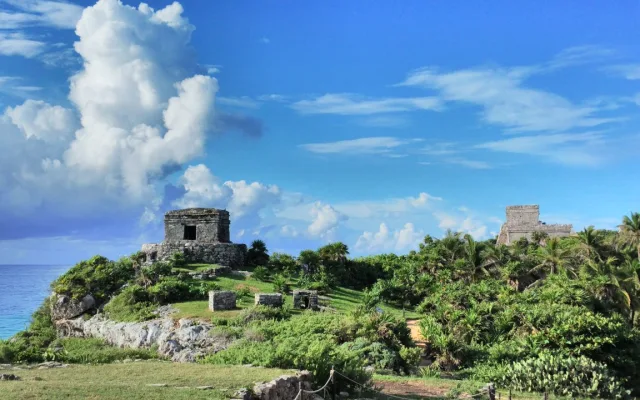
The defining image of Tulum is the ruin of an ancient walled port settlement dating from the 13th–15th centuries, perched on a 12-metre cliff above turquoise water. In the Maya language the site was called Zama — "dawn" — because it was here that the first rays of the sun were greeted. The centrepiece is El Castillo, a fortress-temple that also served as a navigational landmark for trading canoes. Nearby stand the Temple of the Descending God, with its distinctive carved relief, and the Temple of the Frescoes, which retains remnants of painted murals. Tulum was one of the few Maya cities still inhabited at the time of the Spanish arrival.
Nearby sites make worthwhile side trips into the peninsula:
- Cobá — a vast forest city 45 km away whose pyramid Nohoch Mul, 42 m tall, is considered one of the most impressive in the region; the site is explored on foot or by bicycle.
- Muyil — quiet ruins on the edge of a biosphere reserve, with access to a system of lagoons.
- Chichén Itzá — the celebrated pyramid of Kukulcán, about two hours away, easily visited as a separate excursion.
Beaches, cenotes and nature
The coastline stretches for roughly ten kilometres of fine, pale sand. Publicly accessible stretches alternate with hotel beaches; to the south the coast enters a protected area. Among the region's natural wonders are cenotes — karst sinkholes filled with clear fresh water, held sacred by the ancient Maya. Popular ones include Gran Cenote, Dos Ojos, Casa Cenote and Cenote Calavera. Many are part of the vast underwater cave network Sac Actun, one of the longest on the planet, making the area a pilgrimage site for divers and snorkellers.
To the south lies the Sian Ka'an Biosphere Reserve — a UNESCO World Heritage Site covering more than 5,000 sq km of mangroves, lagoons, coral reefs and rich wildlife including birds, turtles and dolphins. Nearby are the village of Akumal, known for encounters with sea turtles, the Xcaret and Xel-Há eco-parks, and, a few hours further south, the lagoon of Bacalar — the "lake of seven shades of blue."
Food and restaurants
Gastronomy is a reason to visit in its own right. The foundation is Yucatecan cuisine: cochinita pibil (pork slow-cooked in banana leaves with achiote marinade), the sour soup sopa de lima, papadzules, and the street dessert marquesitas. At the same time Tulum is known for concept restaurants that pair local ingredients with modern techniques, as well as a well-developed vegan and plant-based scene. Fresh seafood, tropical fruit, coffee and mezcal round out the picture. Eating cheaply is easier in the pueblo; venues in the beach zone are noticeably more expensive.
Practical information
The main gateway airport for the region is Cancún, from which comfortable ADO buses and shared transfers run to Tulum. The region is also served by the newer Tulum Airport and the Tren Maya railway project, which connects cities across the Yucatán. Within the resort, the easiest ways to get around are bicycle, scooter or taxi — the pueblo and the beach zone are several kilometres apart.
A stay of around four days is recommended: enough time to visit the ruins at sunrise, spend a day at the cenotes, take in a beach and the nature reserve, and explore the local food scene. It is worth bringing cash pesos, reef-safe sunscreen and comfortable shoes. High season falls in winter, so accommodation and tours are best booked well in advance.