Description
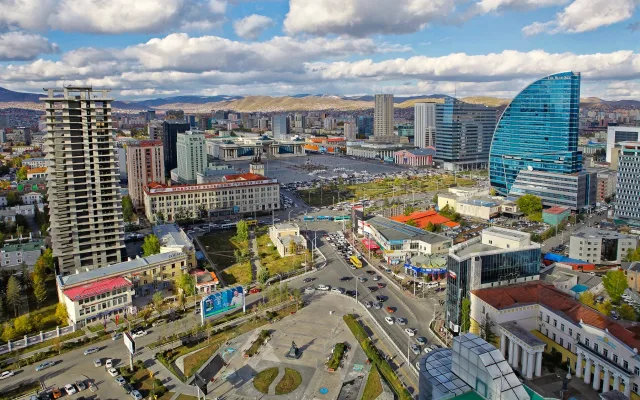
The capital of Mongolia: Gandan Monastery, the Chinggis Khaan Museum, Sukhbaatar Square and the gateway to the open steppe.
Wiki
Ulaanbaatar is the capital of Mongolia and its largest city, spread across the broad valley of the river Tuul at the northern foot of the sacred mountain Bogd Khan Uul. Almost half the country's population lives here, and it is from this political, business and cultural centre that most routes into the endless steppe and the Gobi begin.
History and the look of the city
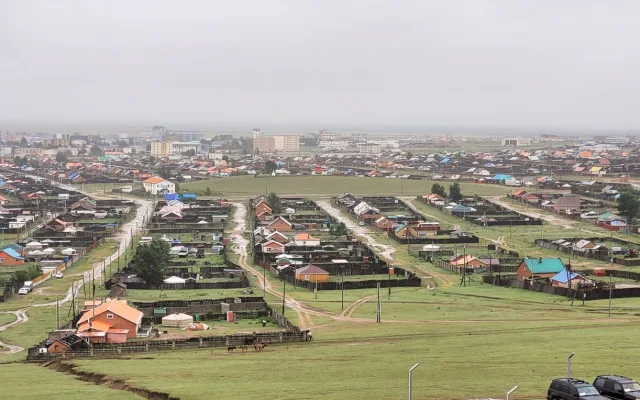
The settlement began in 1639 as a mobile Buddhist monastery-camp, and over its history it shifted location several times and went by several names, among them Urga and Ikh Khüree. Once it settled permanently in its present spot, the city took its modern name in 1924; it translates as "Red Hero". Ulaanbaatar today is a study in contrasts: Soviet housing blocks, the glass towers of the business district, and vast outer districts of traditional felt tents (gers). At an altitude of around 1,300 metres, it counts as one of the coldest capitals in the world, with long, hard winters.
The main sights
- Gandantegchinlen Monastery — the country's largest working Buddhist monastery and the centre of the revival of Mongolian Buddhism. The main temple houses a 26-metre gilded statue of Migjid Janraisig, recreated in 1996 to replace the one destroyed in the 1930s.
- Sukhbaatar Square — the ceremonial heart of the city, with the equestrian statue of Sükhbaatar in the middle and a bronze Chinggis Khaan seated in the colonnade of the Government Palace.
- The National Museum of Mongolia, on the corner of the square, runs from the Palaeolithic and the deer stones through the empire and the Manchu period to the twentieth century.
- The Chinggis Khaan Museum, opened in 2022, is a large modern collection devoted to Mongolian statehood and the empire itself.
- The Bogd Khan Palace — the winter residence of Mongolia's last theocratic ruler, and the only palace complex to survive from old Urga.
- The Zaisan Memorial on the hill to the south — a Soviet-era monument with a circular mosaic; people climb up mainly for the panorama of the city and the Tuul valley.
- The Choijin Lama Temple Museum — an early twentieth-century temple complex in the centre, now a museum of religious art with a rich collection of tsam dance masks, sculpture and thangkas.
- The Opera and Ballet Theatre — the pink building on the central square, one of the emblems of Mongolian classical performance.
- Naran Tuul Market (popularly the Black Market) — the capital's biggest bazaar, selling everything from deel national dress and horse tack to the equipment of nomadic life.
Many travellers use Ulaanbaatar as a launch point for day trips into the surroundings — to Gorkhi-Terelj National Park with its rock formations, for example, and to the giant equestrian statue of Chinggis Khaan at Tsonjin Boldog, about 50 km from the city.
Culture and food
The Mongolian capital introduces the visitor to nomadic culture. The local diet is built on meat (mutton, beef, horse) and dairy. Try buuz and khuushuur, the steamed and fried minced-meat pastries, the rich soup bantan, and the fermented milk drinks, including airag (kumis) made from mare's milk. National traditions come out most strongly during the Naadam festival, with its wrestling, horse racing and archery, and at performances of khöömii throat singing and the morin khuur, the fiddle with a carved horse's head.
Getting there and getting around
The country's air gateway is Chinggis Khaan International Airport, with flights to cities across Asia. The Trans-Mongolian railway runs through the city, linking Russia (Ulan-Ude, Irkutsk, Moscow) with China (Beijing); the journey itself becomes a memorable trip. Within Mongolia, scheduled buses and four-wheel drives leave the capital for the provincial centres. Around the city, taxis and public transport are the easiest options, though heavy traffic and rush-hour jams are worth allowing for.
When to come
The most comfortable season runs from late May to early September, when the weather is dry and warm. The peak is July, the time of the national Naadam festival. Autumn brings clear days and golden colours, while the severe winter suits only those prepared for hard frost who want to see the snow-covered steppe and winter traditions.
What to bear in mind
Three days is enough to get to know Ulaanbaatar itself: time to see the key monasteries and museums in the centre, climb to the Zaisan memorial for the panorama, visit the market and set aside a day for Terelj. The city is best treated as a convenient base and a gateway to the real Mongolia — the ger camps, the horse herds and the open country that people actually come for.