Description
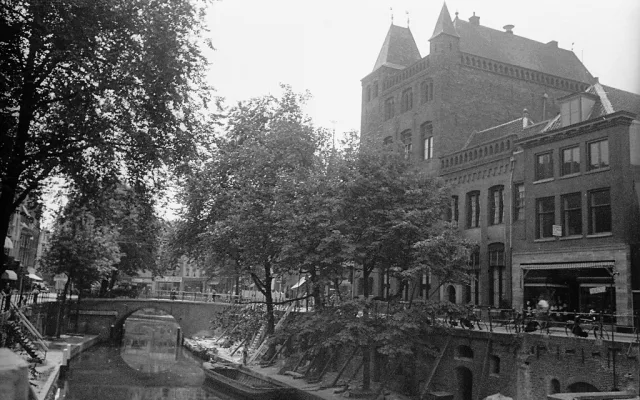
A compact university city with two-level canals, the Dom Tower, and a world-class railway museum.
Wiki
Utrecht is all too often passed through on the way between Amsterdam and the rest of the country — a mistake. It is a compact student city where the canals are unusually designed (two-tiered, with cafés right at the water's edge), and the tourist crowds are noticeably thinner than in the capital just thirty minutes away.
Why visit and what to see
Utrecht's defining feature is the Oudegracht canal and its so-called wharves: the lower level of the embankment was once a row of waterside warehouses and is now lined with terraces, bars and workshops. Simply walking along the canal and descending to the lower tier is half the experience.
Worth your time:
- Dom Tower (Domtoren) — the tallest church tower in the Netherlands and the city's symbol. Entry is by guided tour only; there are a lot of steps, but on a clear day the view stretches across the city and as far as Amsterdam. Book tickets online in advance — each time slot is capped.
- Dom Church and cloister — right next to the tower; entry to the inner courtyard is usually free and very peaceful.
- Railway Museum (Spoorwegmuseum) — not a box-ticking stop but one of the best museums in the country: vintage trains, interactive exhibits, housed in a historic former station. Works equally well with or without children. Allow a couple of hours.
- Miffy (Nijntje) — Utrecht is the birthplace of the Miffy rabbit; there is a small museum and a famous rabbit-shaped traffic light. More of interest to families.
- Rietveld Schröder House — an icon of De Stijl architecture and a UNESCO World Heritage Site. On the outskirts of the city; advance booking is required and spontaneous visits are not possible.
In a single day you can realistically cover the historic centre on foot; a second day is enough for the museums and a leisurely wander along the canals.
Getting there and getting around
Utrecht has no major airport of its own. The standard approach is to fly into Schiphol (Amsterdam) and take the train: the journey takes roughly thirty minutes, trains run frequently, and Utrecht Centraal is the busiest rail hub in the country, with excellent connections to every major Dutch city.
Within the city:
- On foot. The centre is small — from the station and the Hoog Catharijne shopping mall to the Dom Tower is about ten minutes' walk.
- Bicycle — the most local way to travel. Rental is available at the station; the city is flat and cycle lanes are everywhere.
- Buses and trams are mainly needed for the outskirts (for example, to reach the Rietveld Schröder House). Payment is by contactless card or OV-chipkaart.
One practical note: the station is connected to a large shopping centre, and it is easy to get turned around between the exit towards the centre and the one towards the bus station — follow the signs marked Centrum/Dom.
Where to stay
- Historic centre (around the Oudegracht and Dom Tower) — maximum convenience, everything within walking distance, but pricier and the bar terraces can be noisy in the evenings.
- Station area — practical for short stays and day trips around the country; the centre is still just a short walk away.
- Budget option — accommodation a little further from the water, or a hostel; the city is compact enough that even the "outskirts" means fifteen minutes on foot or five minutes by bike.
Many visitors use Utrecht as a base for day trips: Amsterdam, Rotterdam and Gouda are all quick and easy from here.
Money and food
Utrecht feels cheaper than Amsterdam, but this is still the Netherlands — prices are not low. Cafés and terraces on the canal are noticeably more expensive than places a street or two back.
Things to try and ways to save:
- Street classics: haring (raw herring), kibbeling, bitterballen with a beer, fresh stroopwafels from the market.
- Lunch is better value at bakeries and markets than at tourist terraces.
- A student city means plenty of affordable places with decent food — look for where locals sit, not tourists.
- Tap water is drinkable; there is no need to buy bottled water.
When to go and practical notes
- Best time — late spring to early autumn: warm weather, terraces are open, and you can rent a canoe and paddle the canals. April brings tulips and King's Day (the whole city turns orange, though prices and crowds rise accordingly).
- Winter is damp and dark early, but museums and the tower are queue-free.
- Weather is changeable in any season — a rain jacket or umbrella is worth carrying year-round.
Safety is high and there are no seriously troubled neighbourhoods; the usual vigilance against pickpockets in crowds and at the station applies. The main genuine hazard is cyclists: they move fast and have right of way, so when crossing the road look out for the cycle lane as well as the cars.
Common mistakes: arriving for a single day and rushing straight to the tower; failing to book the Dom Tower climb in advance; staying in Amsterdam and commuting here, when the more logical arrangement is to base yourself in quieter Utrecht and make day trips to the capital.